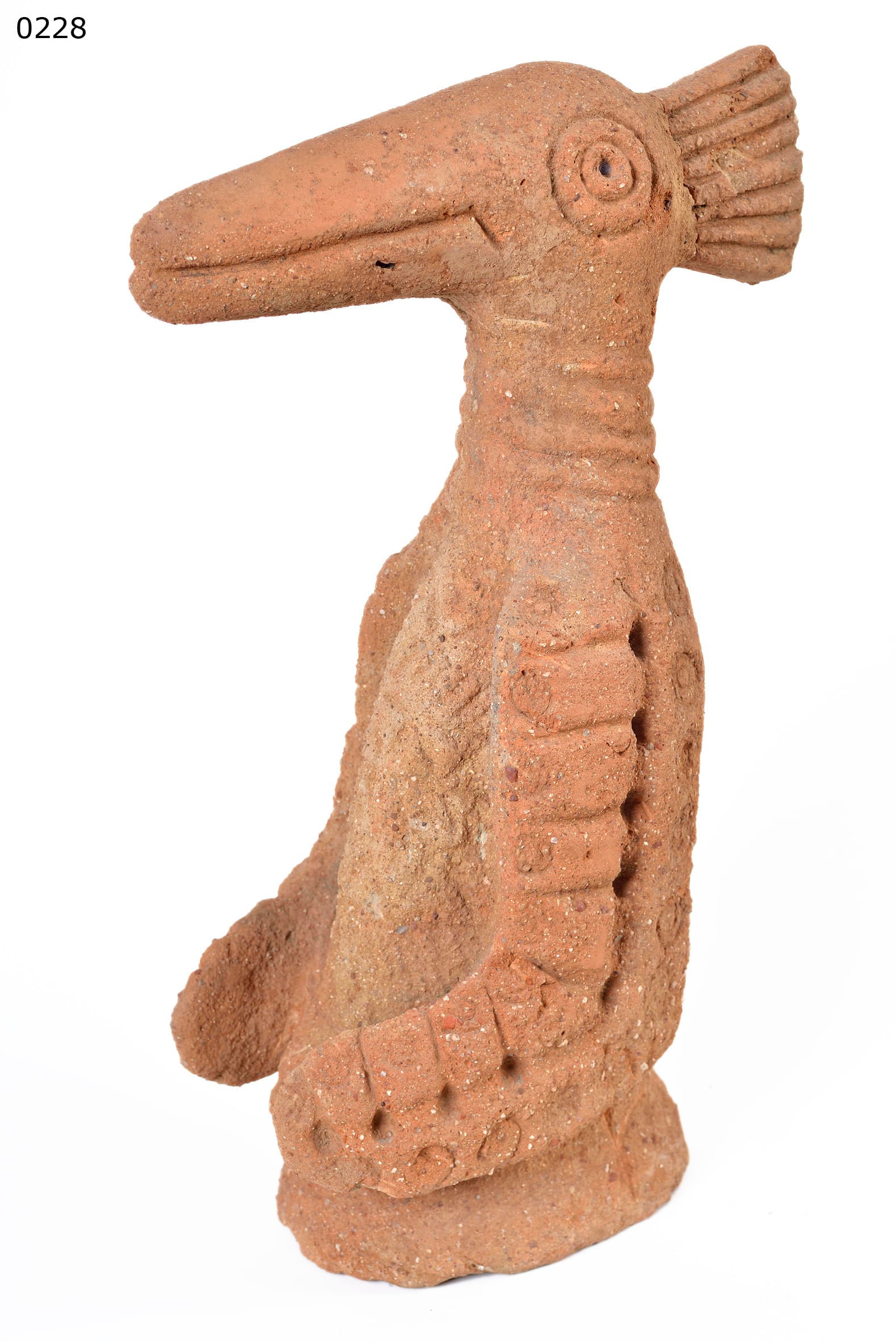
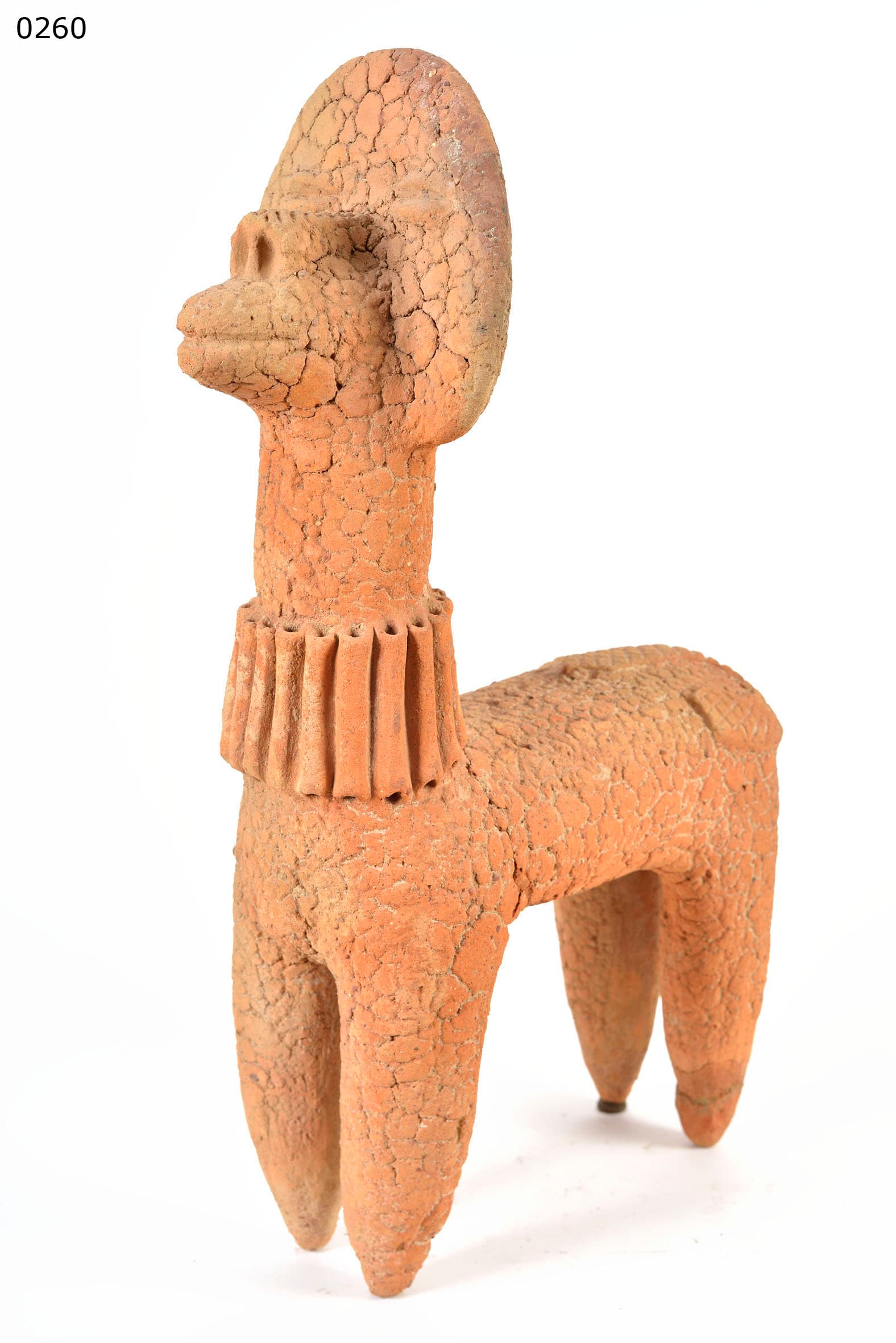
A dynamic Djenne equestrian terracotta (12th–18th C., 27 cm) from Mali — a warrior mounted on horseback, heavily laden with martial accouterments including a prominent quiver strapped to his back, the figure exhibiting masterful Djenne appliqué on the harness, rider's jewelry, and facial features, unified by a warm pale-ochre alluvial slip.
1. Martial aesthetics of the Mali empire
Unlike the highly abstract Koma equestrian, the Djenne equestrian embraces detailed narrative realism to project power.
- Historical Documentation: Artisans of the Inland Niger Delta painstakingly documented the martial reality of the medieval Mali and Songhai empires.
- Cavalry Gear in Appliqué: Elaborate application of clay coils to create the horse's bridle, the rider's arm-bands, and notably the large heavily detailed quiver of arrows offers a significant visual record consistent with 12th–16th-century Sahelian cavalry gear.
2. The cult of the warrior-hero
Equestrian figures in Djenne culture represent the apotheosis of the fama (supreme leader or warlord).
- Commemoration of Heroes: Likely commissioned to commemorate legendary founders, military heroes, or aristocratic ancestors.
- Eternal Martial Protection: By placing such an elaborate heavily armed figure in a shrine or tomb context, the lineage secured eternal protection by a martial spirit — the emphasis on the quiver suggests a master of the hunt or a veteran of the sweeping cavalry campaigns of the era.
3. Preservation and alluvial encrustation
The condition is exceptional given its complexity.
- Undisturbed Soft Burial: The survival of delicate appliqué elements — reins, quiver details, protruding limbs — indicates careful undisturbed burial in the soft Malian mud.
- Calcified Dusty Skin: The surface is veiled in a dry pale dusty patina characteristic of terracotta subjected to centuries of submersion in the Niger floodplain — drying into a tight calcified skin consistent with profound antiquity.
Summary
Standing as a highly detailed representation of medieval Sahelian military might, this Djenne equestrian is an accomplished example of ceramic engineering and narrative art. Its dynamic posture and characteristic alluvial aging are compatible with highly regarded African archaeological ceramics.
Written with AI assistance from the collection appraisal, object photography and our own research; editorially reviewed. Mistakes are possible — corrections are welcome. How we work →