A monumental Lobi forged iron zoomorphic altar figure (1st half 20th C., 86 cm) from Burkina Faso — a massive highly stylized reptilian form (crocodile or monitor lizard) with an elongated flattened body and splayed legs, encased in a thick highly textured rust scale. Part of a four-piece Lobi iron reptile set (0349, 0350, 0351, 0352).
1. Master blacksmithing and serpentine geometry
The Lobi people of Burkina Faso rely on a highly specialized blacksmith caste to forge massive protective spiritual implements.
- Ferrous Reduction: This is a notable example of ferrous reduction — blacksmiths hammered thick iron ingots to draw out the essence of the crocodile or monitor lizard.
- Leaf-Like Bodies: The forms are characterized by flattened leaf-like bodies, arrow-shaped heads, and minimalist bent legs — stripping animal anatomy to pure kinetic silhouette.
2. Thil shrines and protective divination
In Lobi theology, thila (sing. thil) are invisible tutelary spirits that dictate the rules of the community.
- Physical Spirit Anchors: When a diviner determines a thil requires a shrine (dithil), the family must commission a blacksmith to forge iron figures as physical anchors.
- Threshold Crossing Symbols: The crocodile and monitor lizard are creatures of two worlds (water and earth) — potent symbols of threshold crossing, rainmaking, and ancestral connection. These massive iron staffs were thrust directly into earthen altars to protect the lineage from witchcraft, disease, and drought.
3. Ferrous oxidation and sub-saharan weathering
The extreme patination is consistent with shrine use in the harsh environment of Burkina Faso.
- Elemental Cycling: The piece has not been chemically treated or polished — retaining a dense flaky deep-orange and brown rust crust.
- Heavy Scale: This specific heavy scaling is consistent with the result of cyclical exposure to intense Saharan heat and seasonal torrential rains while planted in an outdoor Lobi shrine.
Summary
Part of a monumental four-piece Lobi iron reptile set, this zoomorphic altar figure represents a highly developed tradition of sub-Saharan blacksmithing. Its severe elemental oxidation and profound spiritual geometry make it a significant ethnographic object.
Written with AI assistance from the collection appraisal, object photography and our own research; editorially reviewed. Mistakes are possible — corrections are welcome. How we work →
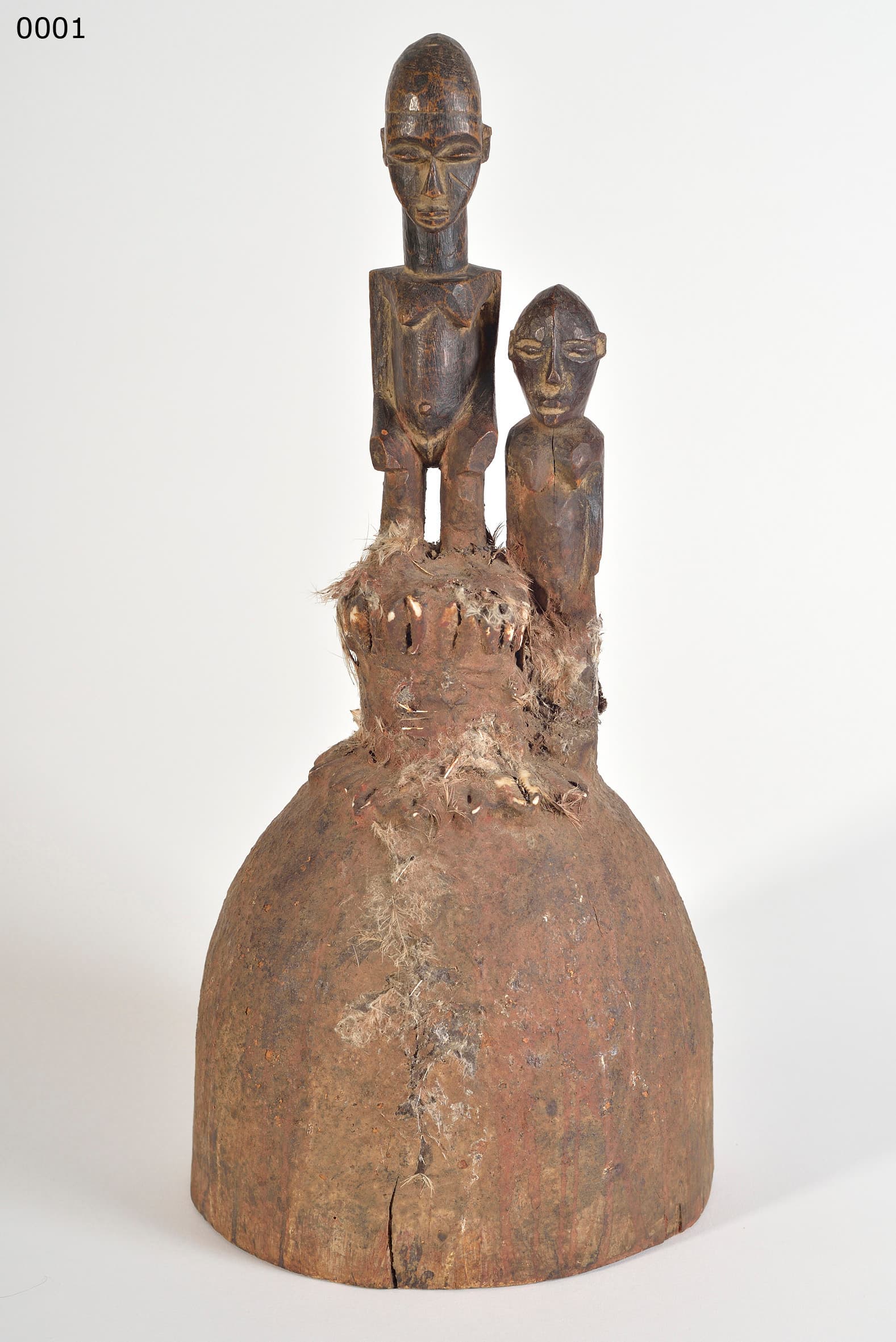
shrine altar with BATEKE couple
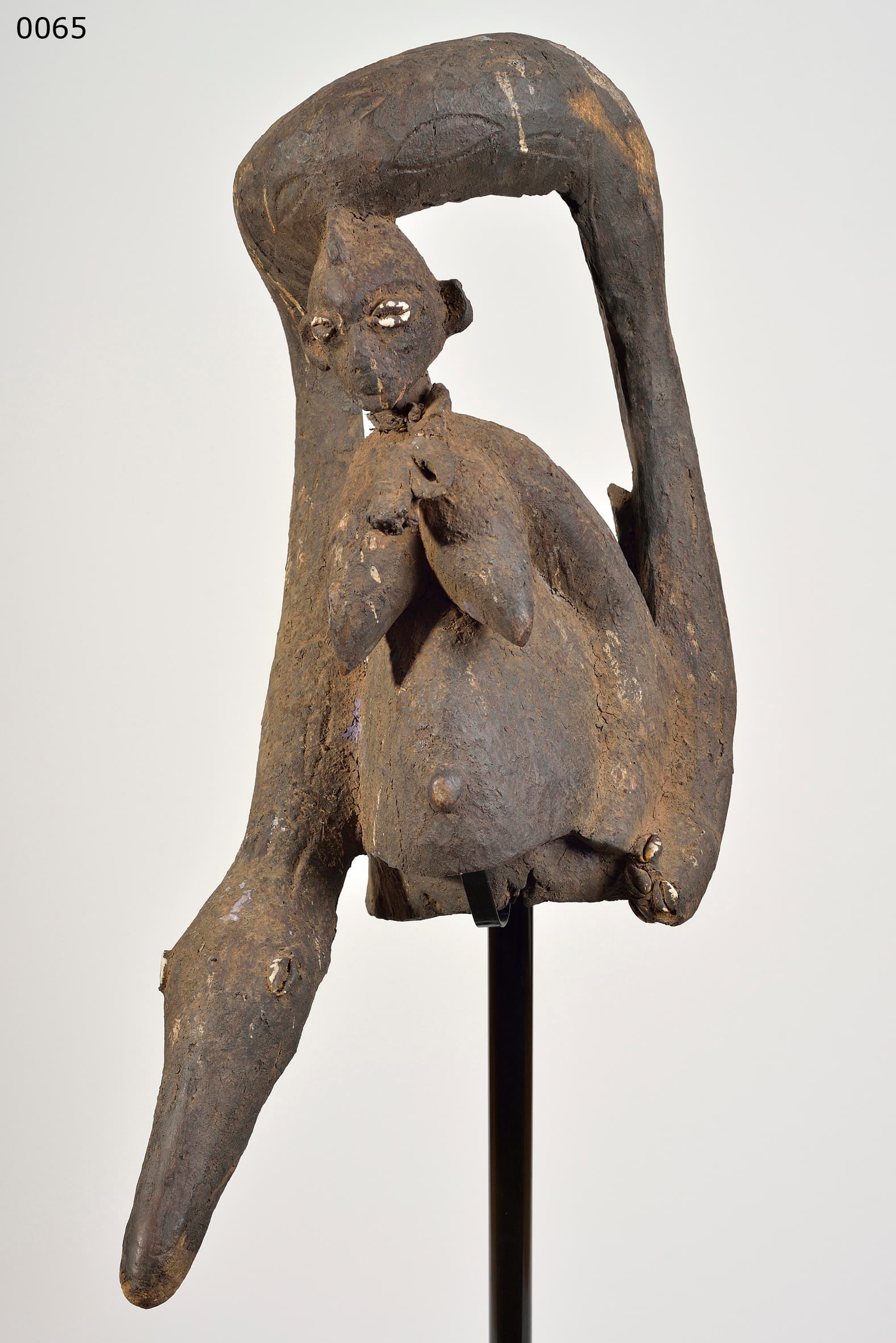
rare head crest mask
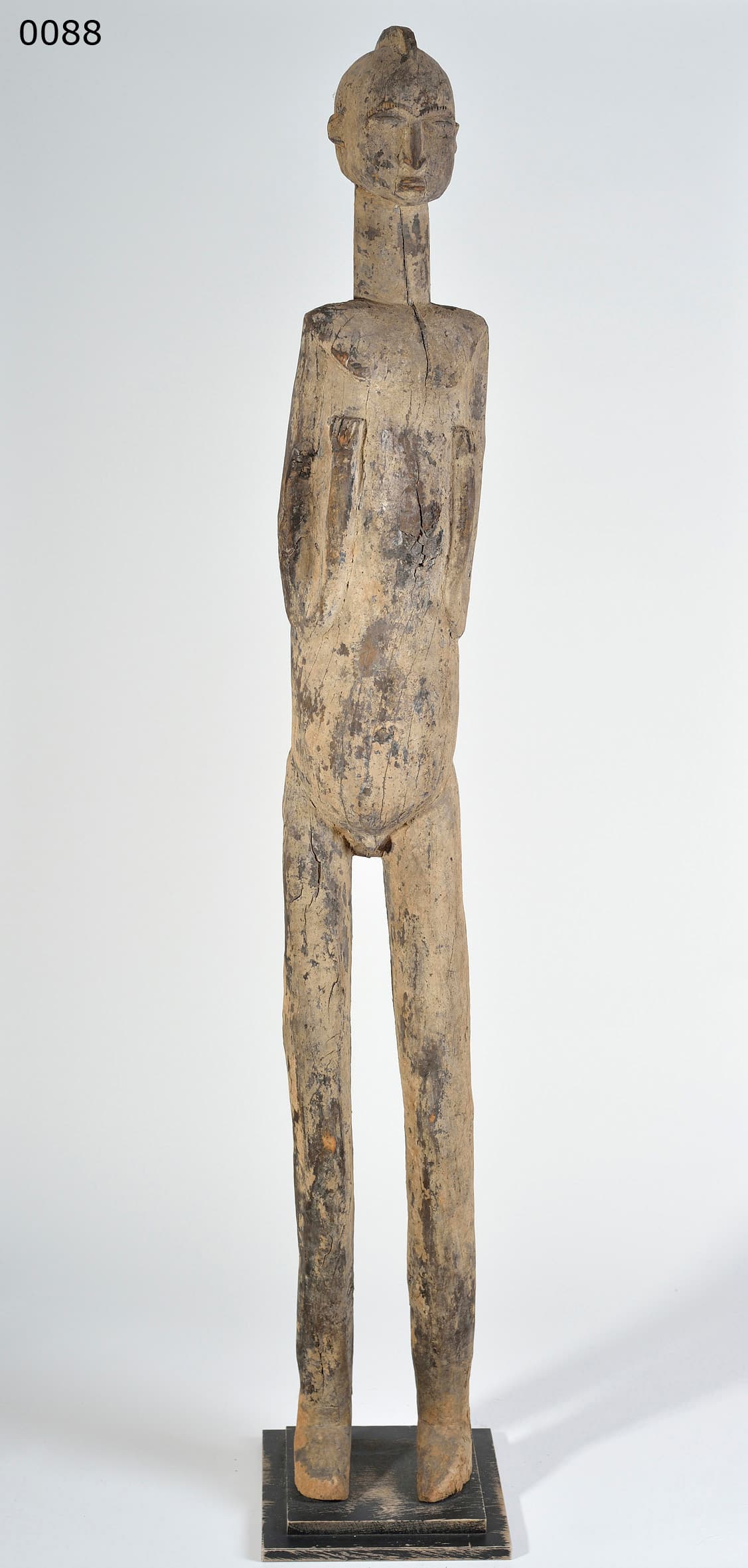
shrine figure representing a BATEBA spirit (unusually tall, rare)