A massive elongated Fang Ngil mask (attributed to the 19th C., 72 cm) from Gabon — a striking heart-shaped concave face coated in white kaolin, divided by an exceptionally long narrow nose leading to a small jutting mouth, the wood showing wear consistent with age, with localized desiccation, structural fissures, and remnants of organic binding at the crown.
1. A classic expression of Fang cubism
The Ngil masks of the Fang are among the most iconic and highly sought-after forms in African art history — famously influencing early-20th-century European modernists like Modigliani and Picasso.
- Sweeping Volumetric Tension: The continuous arched brow line flows seamlessly into the sharp vertical ridge of the nose, creating breathtaking volumetric tension.
- Architectural Contrast: The stark white kaolin-painted facial plane contrasted against darkened recessed edges maximizes visual impact — turning the human face into a profound architectural landscape.
2. The Ngil secret society and judicial terror
The Ngil was a powerful fearsome secret society responsible for maintaining social order, sniffing out sorcerers, and executing justice within Fang communities.
- Nocturnal Torch-Lit Ceremonies: Worn during nocturnal torch-lit ceremonies, the extreme elongation and severe impassive expression were intentionally designed to project supernatural intimidation.
- Avatar of Judicial Authority: The wearer became an anonymous towering avatar of ultimate judicial authority — striking terror into the hearts of evildoers and maintaining strict societal discipline.
3. Attributed 19th-century age and kaolin weathering
Surviving 19th-century Ngil masks are exceptionally rare due to the French colonial administration banning the society in the 1920s — leading to the destruction of most implements.
- Deeply Oxidized Kaolin: The white kaolin pigment has deeply oxidized and flaked over decades, fusing with the underlying wood grain.
- Pre-Colonial Attributes: Severe stabilized desiccation cracks running through the forehead and chin, combined with the darkened heavily handled patina on the interior rim, are consistent with pre-colonial ceremonial use.
Summary
As a rare survivor of the outlawed Ngil society attributed to the 19th century, this mask represents a highly significant form of Gabonese art. Its sweeping monumental geometry and aged kaolin surface are consistent with examples of museum quality.
Written with AI assistance from the collection appraisal, object photography and our own research; editorially reviewed. Mistakes are possible — corrections are welcome. How we work →

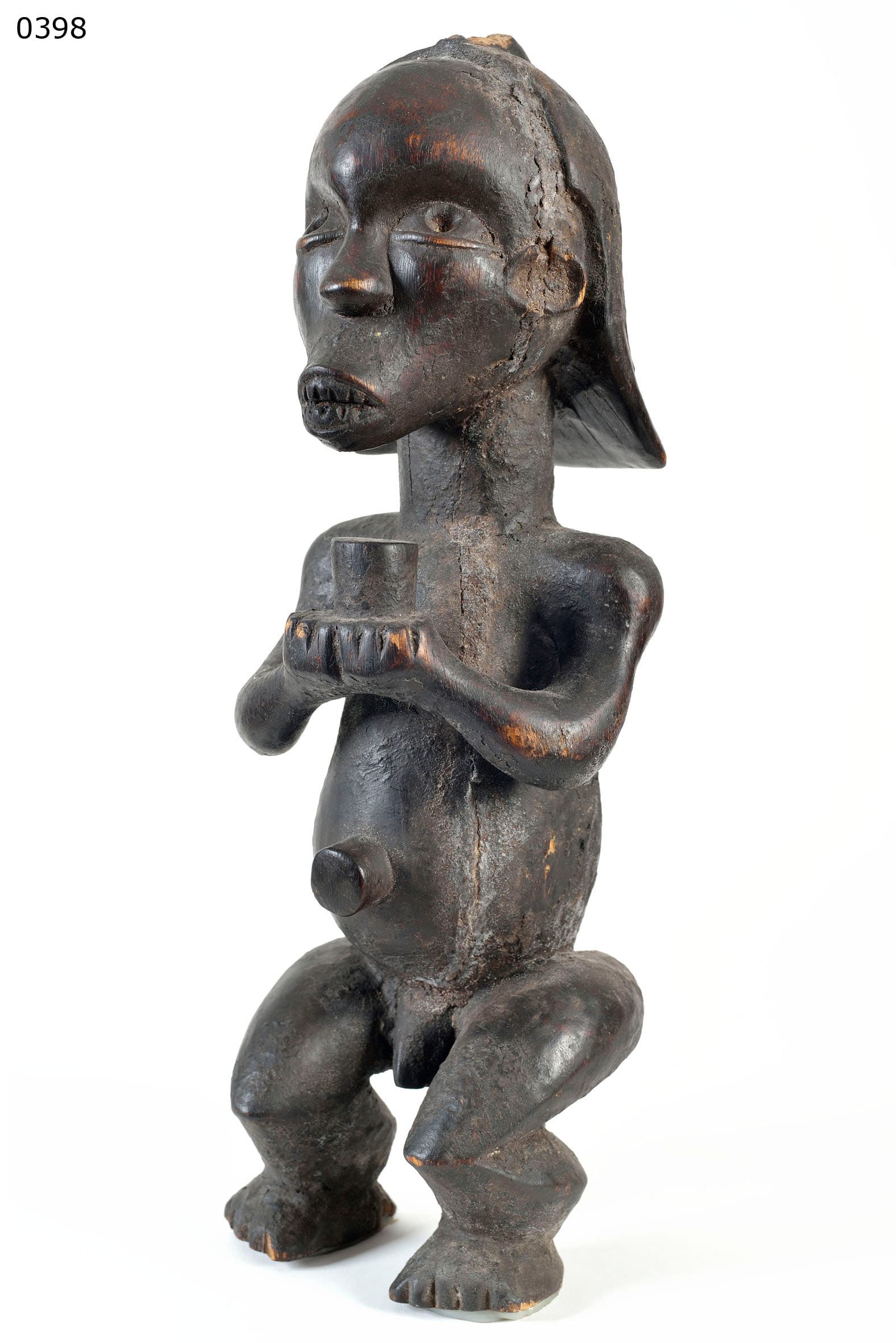
reliquary figure on container for relics
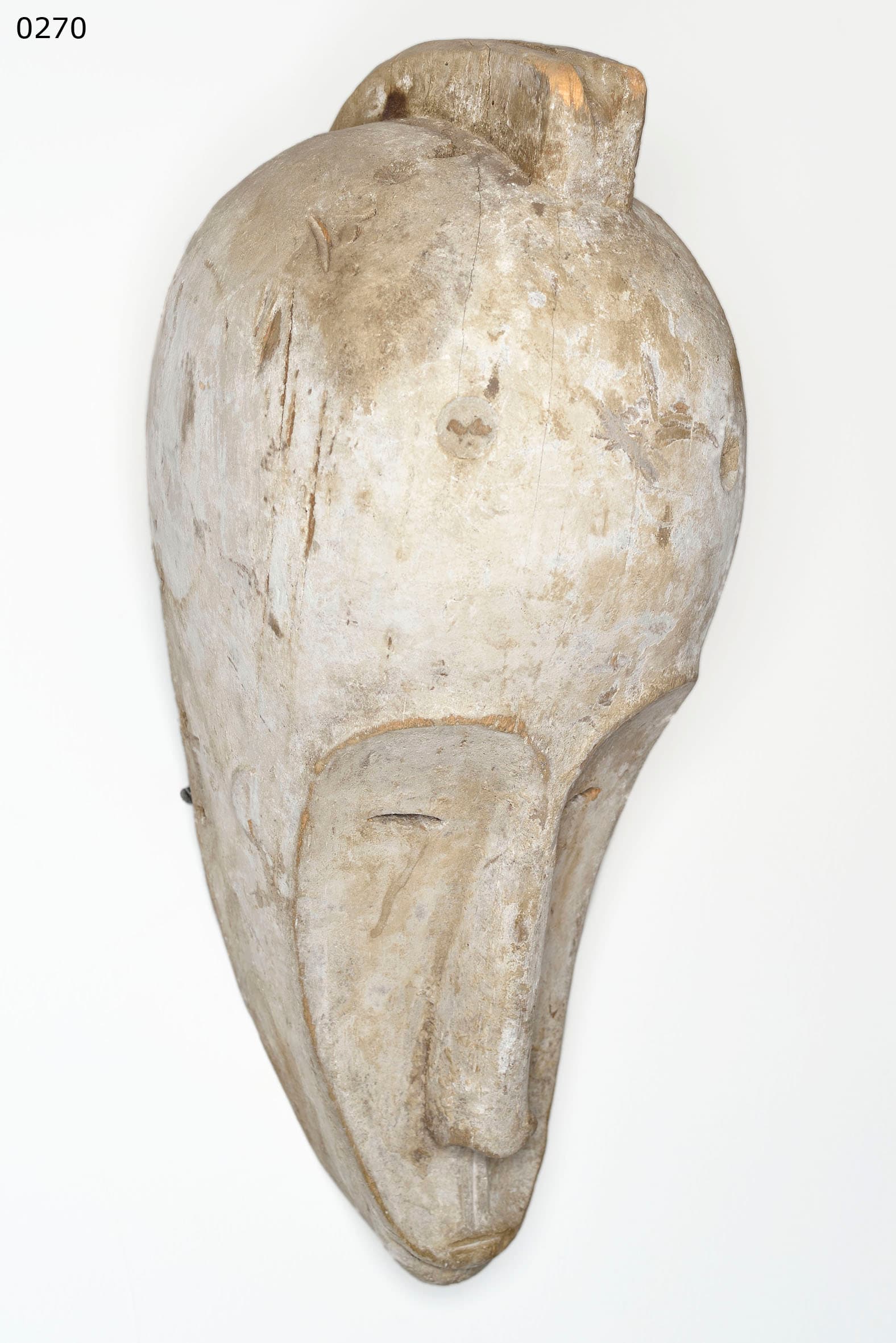
power mask (used for policing and sentencing)
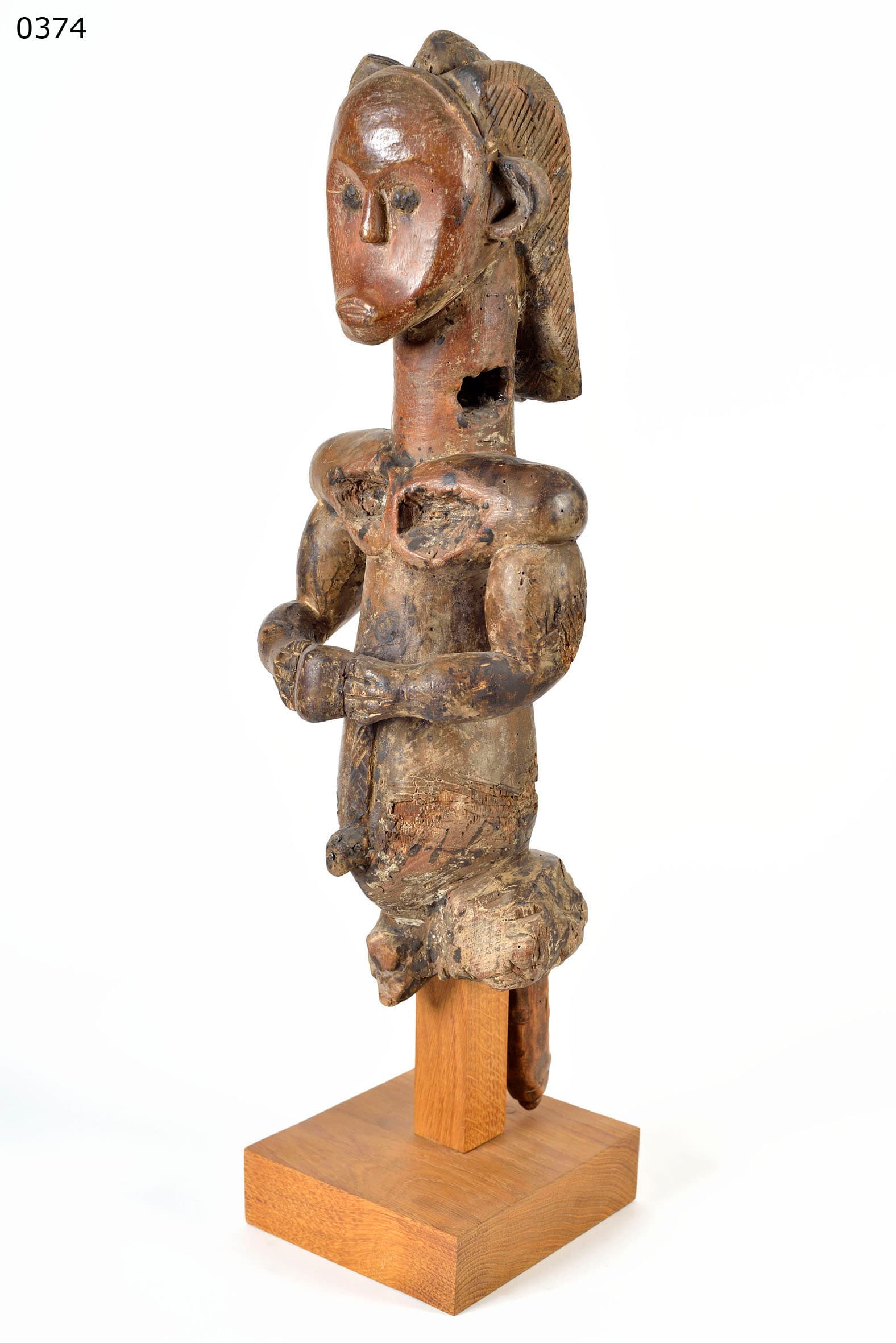
male reliquary guardian figure