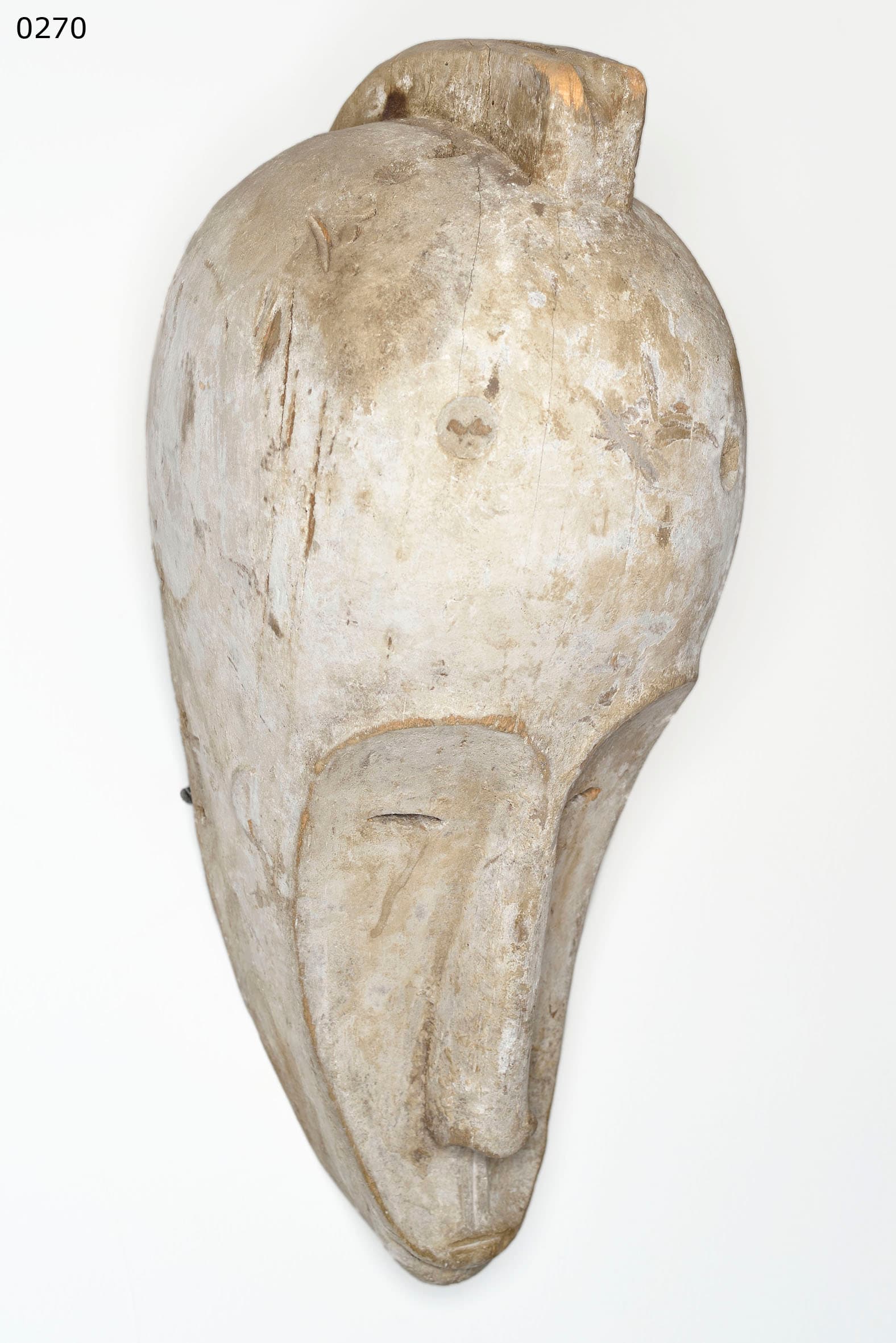
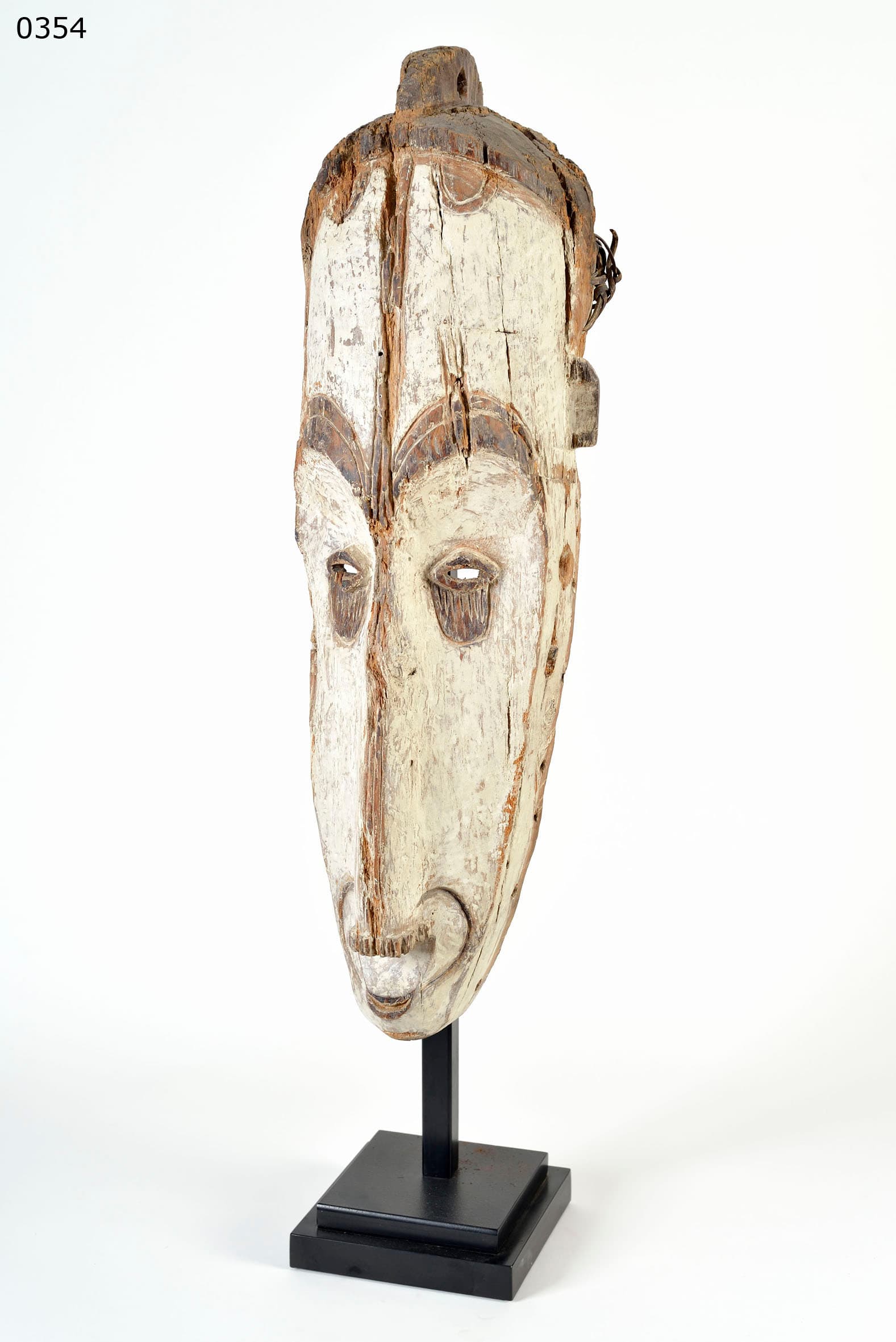
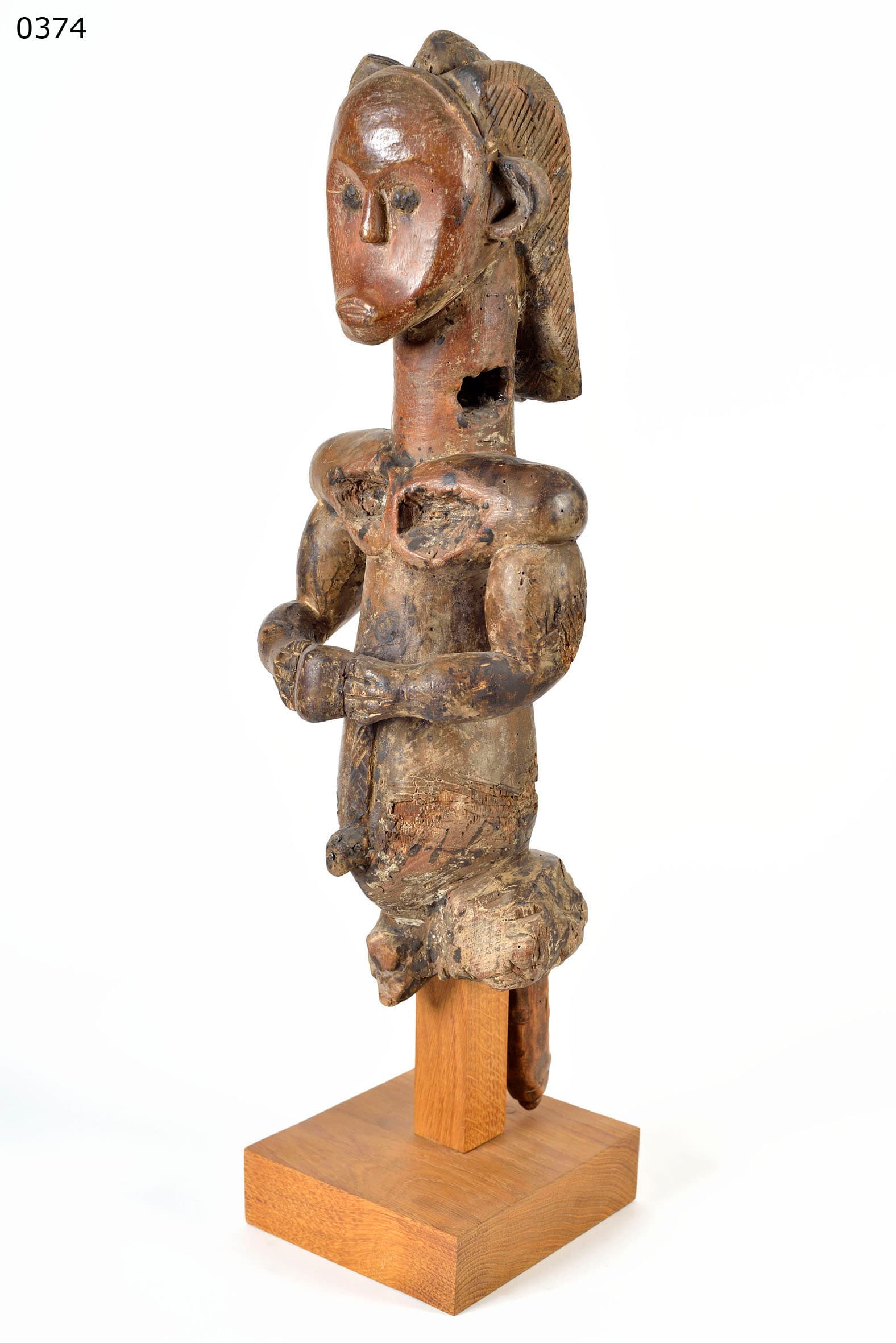
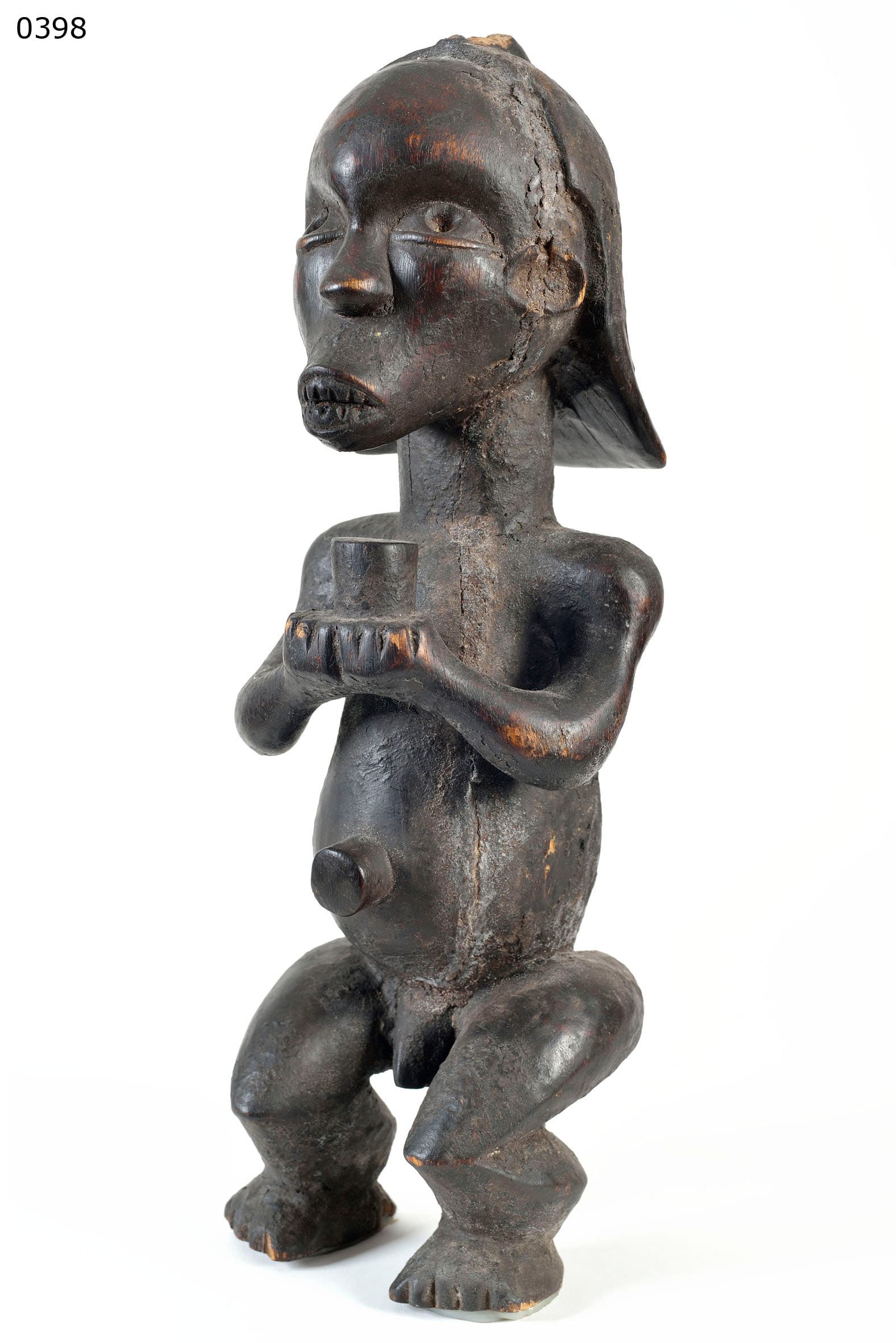
A highly significant reliquary guardian figure (1st half 20th C., 48 cm), known as an Eyema Bieri, created by the Fang of Gabon. Sits atop its traditional cylindrical bark box container.
1. The cult of ancestors: The Bieri
The Fang practiced a profound form of ancestor worship. Rather than burying the dead permanently, they preserved the skulls and long bones of important elders in portable bark containers (nsek-bieri).
- The Guardian Spirit: This wooden figure is not a portrait of the deceased, nor is it a deity. It is a guardian spirit tasked with protecting the sacred relics inside the box from malevolent forces and the gaze of uninitiated women and children.
2. Aesthetic principles: Balance and vitality
Fang sculpture is globally celebrated for capturing the continuous cycle of life by balancing "infancy" and "adulthood."
- Proportions: The figure features a disproportionately large, rounded head and shortened limbs (infantile traits) combined with a muscular, upright posture and a stern expression (elder traits).
- Visual Tension: This deliberate tension between youth and age makes the figure a vessel for the totality of the life cycle — not a fixed moment in time.
3. Patina and ritual activation
- The "Sweating" Surface: The dark, glistening patina is the result of repeated ritual libations. The Fang "fed" the figure by rubbing it with a mixture of palm oil and powdered padauk wood (camwood), creating an organic, sweating patina that confirms extensive ritual use.
- Feathers as Marker: The feathers bound to the top of the head signify that this specific object was spiritually "activated" — used to channel ancestral energy during initiation rites, when elders would detach the figure from the box and manipulate it like a puppet to "resurrect" the ancestor for young initiates.
Summary
This Eyema Bieri is a masterful example of Fang formalist carving. It served as a spiritual lock for a family's most sacred history, ensuring that the vital force of the ancestors remained an active, protective presence in the daily life of the lineage.
Written with AI assistance from the collection appraisal, object photography and our own research; editorially reviewed. Mistakes are possible — corrections are welcome. How we work →