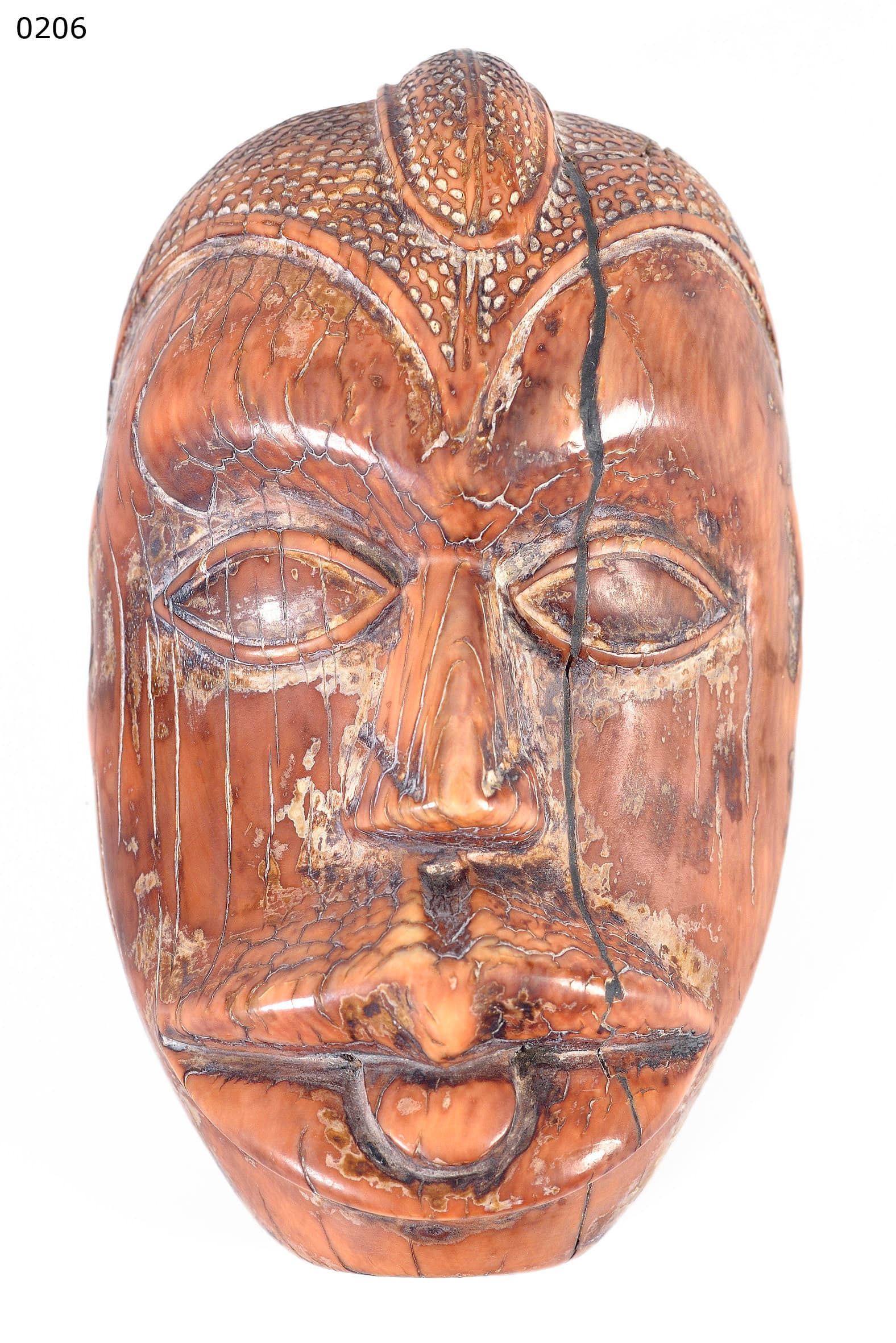
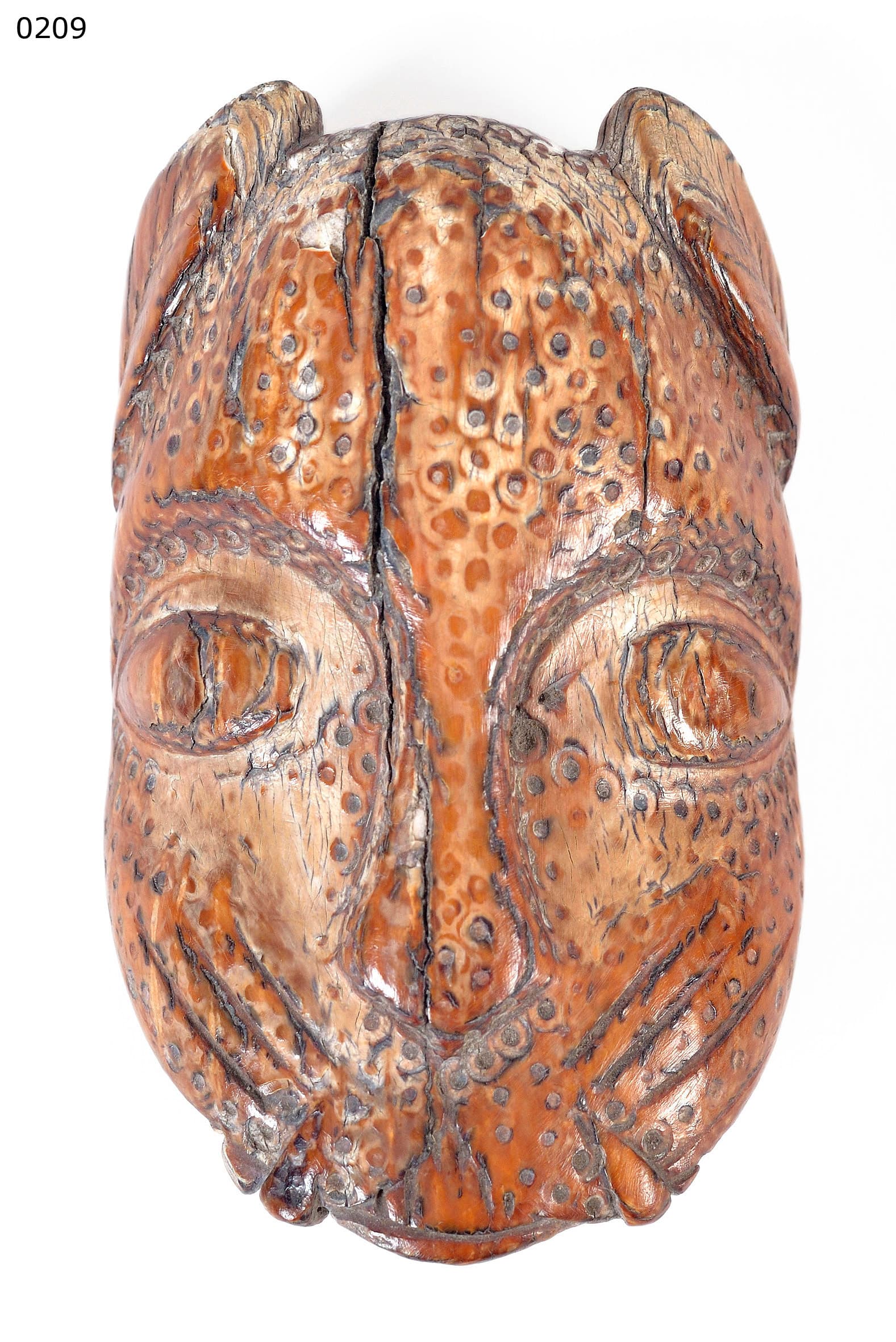
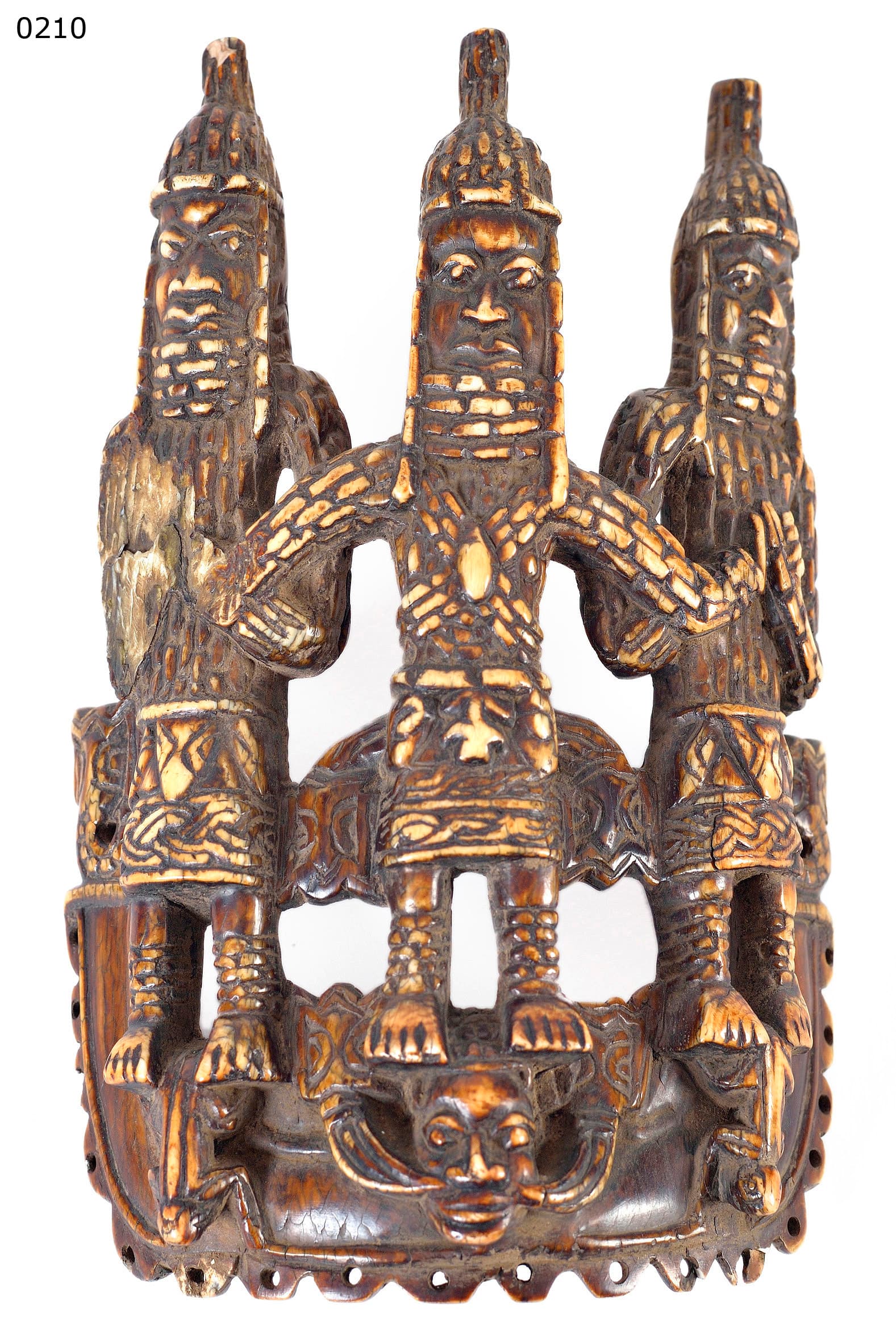
A heavy cast bronze Benin memorial altar head (Late Benin, 1934, 37 cm) from Nigeria — featuring a high coral bead collar reaching the lower lip, a beaded crown with projecting lateral clusters, and wide stylized facial features, the bronze bearing a dark patinated surface with subtle green and brown oxidation revealing intricate lost-wax casting details. Commemorates Oba Eweka II; Künzi factsheet available.
1. Late period Benin bronze casting
The art of the Kingdom of Benin is globally renowned for its extraordinary lost-wax (cire perdue) bronze and brass casting.
- Late Period Hallmarks: This head belongs to the Late Period style — characterized by extremely thick heavy casting, the exaggerated high coral-bead collar (odigba) covering the chin, and highly stylized bulging eyes.
- Institutional Symbol, Not Portrait: These heads were not naturalistic portraits but institutional symbols of divine kingship — designed structurally to support the massive heavily carved ivory tusks that recorded the history of the empire.
2. The oba's ancestral altar
In the Benin kingdom, the head is the physical and spiritual locus of a person's character, knowledge, and destiny (ehi).
- Royal Successor Duty: When a new Oba was crowned, his first duty was to establish an elaborate semi-circular earthen altar dedicated to his predecessor.
- Honoring Eweka II: This bronze, specifically commissioned to honor Oba Eweka II (who reigned until 1933, making a 1934 dating perfectly consistent for his memorialization), would have been placed on the royal altar as a vessel to communicate with the deceased king and ensure the ongoing prosperity of the Edo people.
3. Provenance and chronological patination
The 1934 dating and association with Oba Eweka II place this piece in the critical period of Benin's cultural restoration following the British Punitive Expedition of 1897.
- Early-to-Mid 20th-Century Patina: Dark natural tarnishing with selective handling polish — not the heavily encrusted centuries-old weathering seen on pre-contact bronzes.
- Künzi Factsheet Documentation: The existence of a Künzi factsheet further cements highly prestigious academically documented collection history.
Summary
A monumental artifact of Nigerian royal history, this altar head honors Oba Eweka II and embodies the heavy majestic aesthetic of Late Benin bronzes. Its association with the royal court and documented provenance support its significance as a notable example of this tradition.
Written with AI assistance from the collection appraisal, object photography and our own research; editorially reviewed. Mistakes are possible — corrections are welcome. How we work →