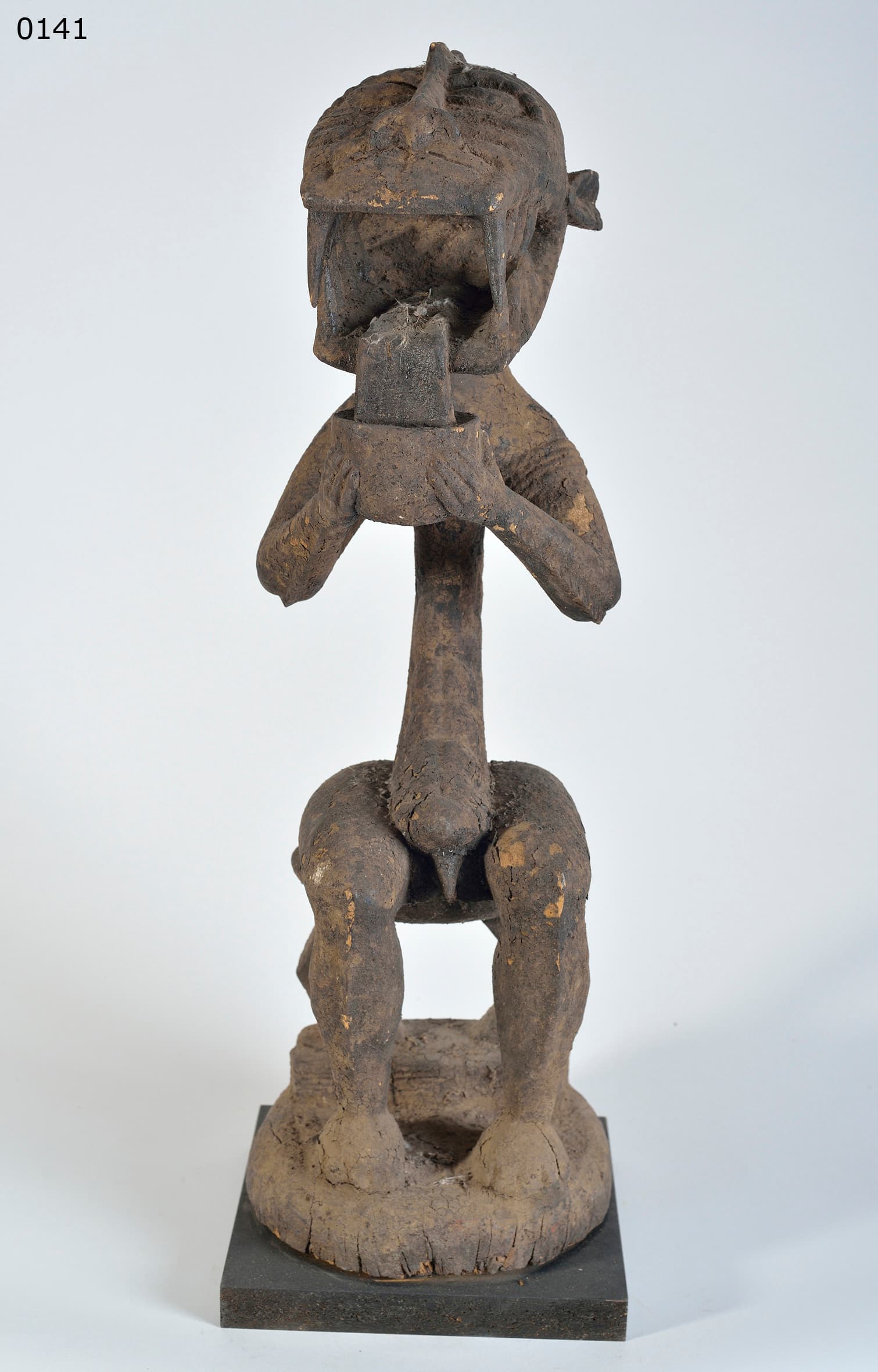
An aggressive standing Baule Gbekre (attributed to the 19th century, 75 cm) from the Ivory Coast — a cynocephalus (baboon-headed) figure holding a sacrificial cup to its chest, with an open jaw inset with real animal teeth, the massive 75 cm carving completely encased in an extraordinarily thick blackened crust of coagulated organic matter.
1. The ferocity of amwin
While the Baule are universally famous for their delicate highly polished idealized portrait masks, they also maintain a completely opposite aesthetic for their bush deities.
- Untamed Wilderness Force: This Gbekre (or Mbotumbo) monkey figure represents an amwin — a terrifying untamed force of the wilderness.
- Designed to Intimidate: Hunched posture, massive aggressive baboon snout, and the insertion of actual jagged animal teeth are designed to project violence, intimidation, and raw supernatural energy.
2. Men's secret cults and blood sacrifice
These massive power figures were strictly hidden from women and the uninitiated — kept in secluded forest sanctuaries or special huts.
- Extreme Spiritual Actions: Invoked by male cults to execute extreme spiritual actions: destroying witches, punishing severe crimes, or ensuring success in warfare.
- Sacrificial Cup: The cup held tightly to the chest is functional — a receptacle designed to receive direct offerings of raw eggs and sacrificial animal blood. By feeding the Mbotumbo, the cult sought to temporarily pacify and harness its violent energy for the village's protection.
3. 19th-century additive crust
The patina on this large-scale figure, traditionally attributed to the 19th century, is extensive and characteristic of objects of this type.
- Tar-Like Fossilized Carapace: The massive 75 cm wooden armature is almost entirely obscured beneath a thick tar-like heavily cracked carapace — the hardened accumulation consistent with generations of ritual offerings, such as millet porridge and chewed kola nuts.
- Teeth Fossilized into Jaw: The way this material has dried and bonded the real animal teeth into the wooden jaw is consistent with intense and prolonged ritual use.
Summary
An expressive manifestation of Baule ritual practice, this Mbotumbo figure is a notable example of additive sculpture. Its monumental size, stylistic attribution to the 19th century, and thick encrusted patina make it an object of significant ethnographic interest.
Written with AI assistance from the collection appraisal, object photography and our own research; editorially reviewed. Mistakes are possible — corrections are welcome. How we work →

mask (collected in Abidjan)

mask (called GOLI)
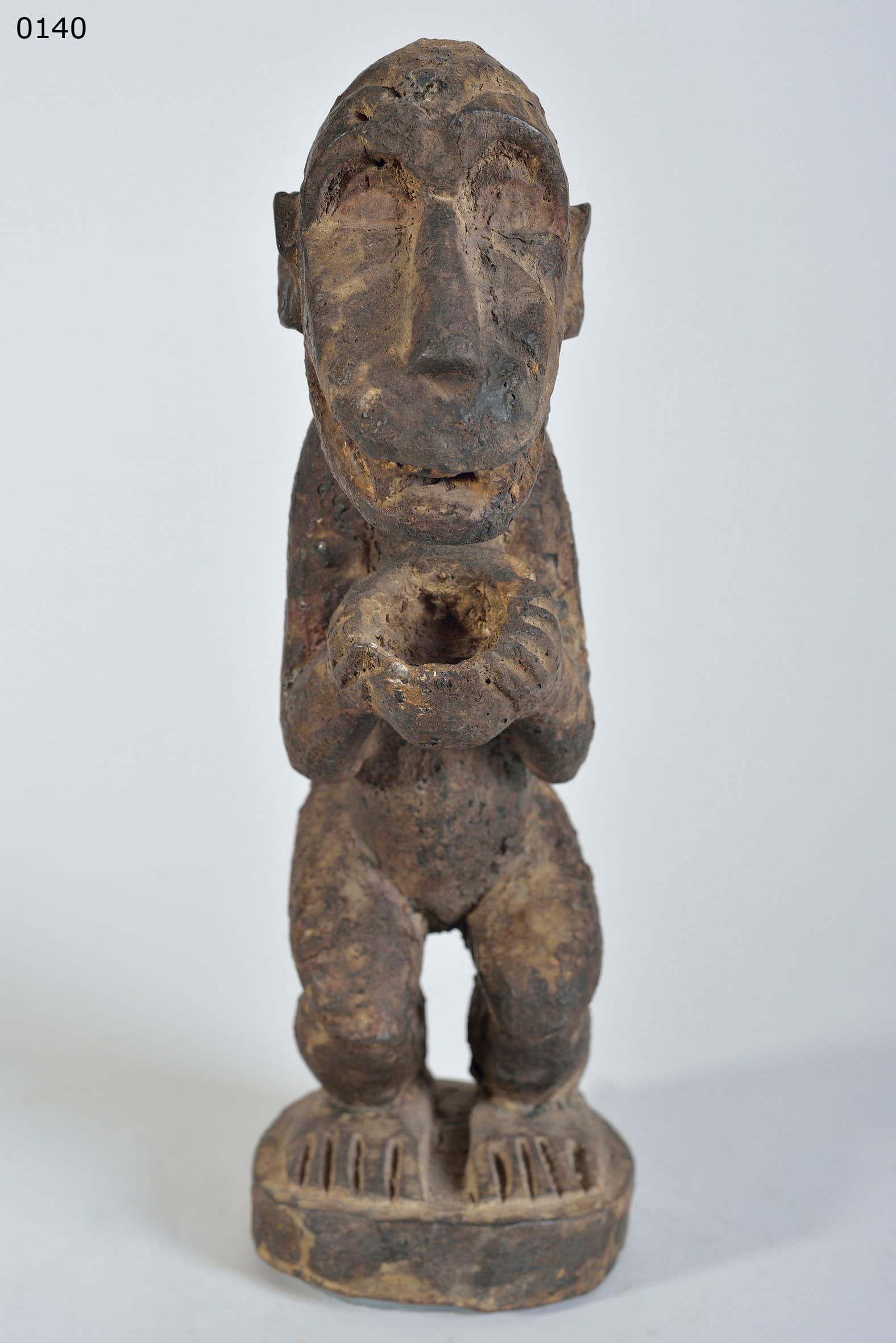
simian statue (called MBOTUMBO or GBEKRE)