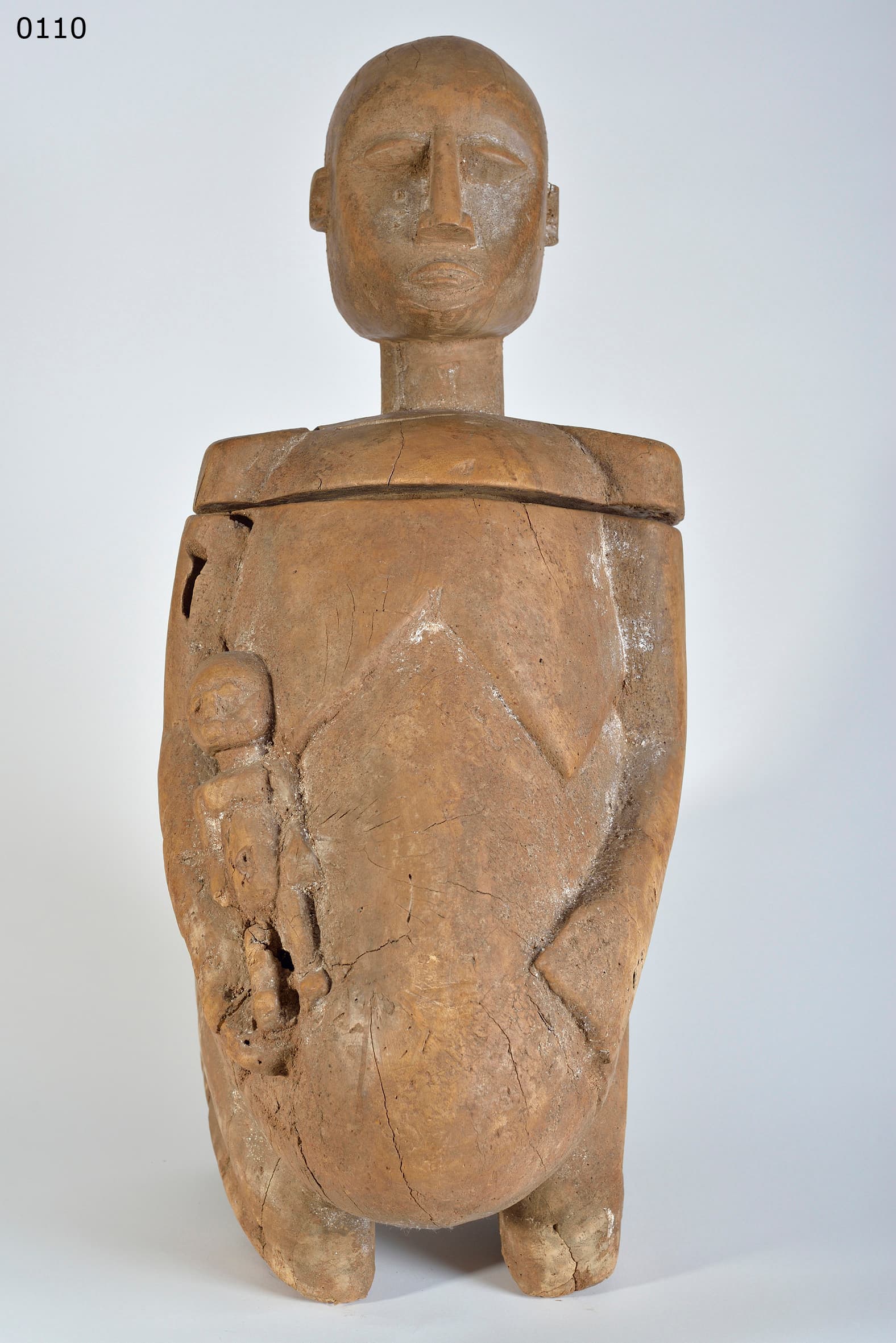
An extraordinarily rare Lobi three-headed Bateba female spirit figure (1st half 20th C., 88 cm) from Burkina Faso — a seated pregnant female with a single swollen torso from which three distinct identical heads emerge on separate necks. The wood is severely aged, displaying a highly desiccated deeply fissured pale-brown oxidized patina typical of prolonged Sahelian exposure.
1. Polycephalic anomaly and voltaic rigidity
Lobi woodcarving is famous for rigid unyielding single-figure Bateba statuary, making a polycephalic figure of this scale a highly unusual variation.
- Strict Voltaic Geometry: Despite the surreal three heads, the artist maintains classic Lobi geometry — each identical face features the severe projecting jawline and half-closed heavy-lidded eyes.
- Grounded Volumetric Mass: The rigid seated posture and the swollen volumetric belly of the pregnant torso create a powerful sense of grounded immovable mass, anchoring the surreal three-headed upper structure.
2. Bateba ti bala and omniscient fertility
In Lobi cosmology, a standard bateba acts as a physical body for an invisible thil (spirit). A multi-headed figure, known as bateba ti bala (exceptional or extraordinary bateba), represents a spirit of supreme omnidirectional power.
- Three Heads = Total Omniscience: The three heads signify total omniscience — the ability to see malevolent witchcraft approaching from all directions simultaneously.
- Dual Function — Protection + Fertility: The explicit depiction of pregnancy transforms the object into a massive fertility altar — commissioned by a diviner to simultaneously protect the family compound from evil while guaranteeing the explosive continuous birth of healthy children within the lineage.
3. Severe sahelian desiccation
The physical condition is consistent with significant age and ritual use.
- Bleached Pale-Brown Oxidation: Kept in an earthen dithil (shrine) in Burkina Faso, the raw un-oiled wood shows wear consistent with Sahelian extremes — the timber exhibits a powdery bleached pale-brown oxidation associated with exposure to the elements.
- Deep Desiccation Fissures: The deep heavy desiccation cracks splitting the torso and necks are characteristic of natural aging, suggesting a long active life as a spiritual sentinel.
Summary
A rare variation in West African art, this three-headed Lobi Bateba is a surreal and monumental fusion of omniscient defense and fertility magic. Its towering scale and profound arid-weathered desiccation make it a notable ethnographic example.
Written with AI assistance from the collection appraisal, object photography and our own research; editorially reviewed. Mistakes are possible — corrections are welcome. How we work →
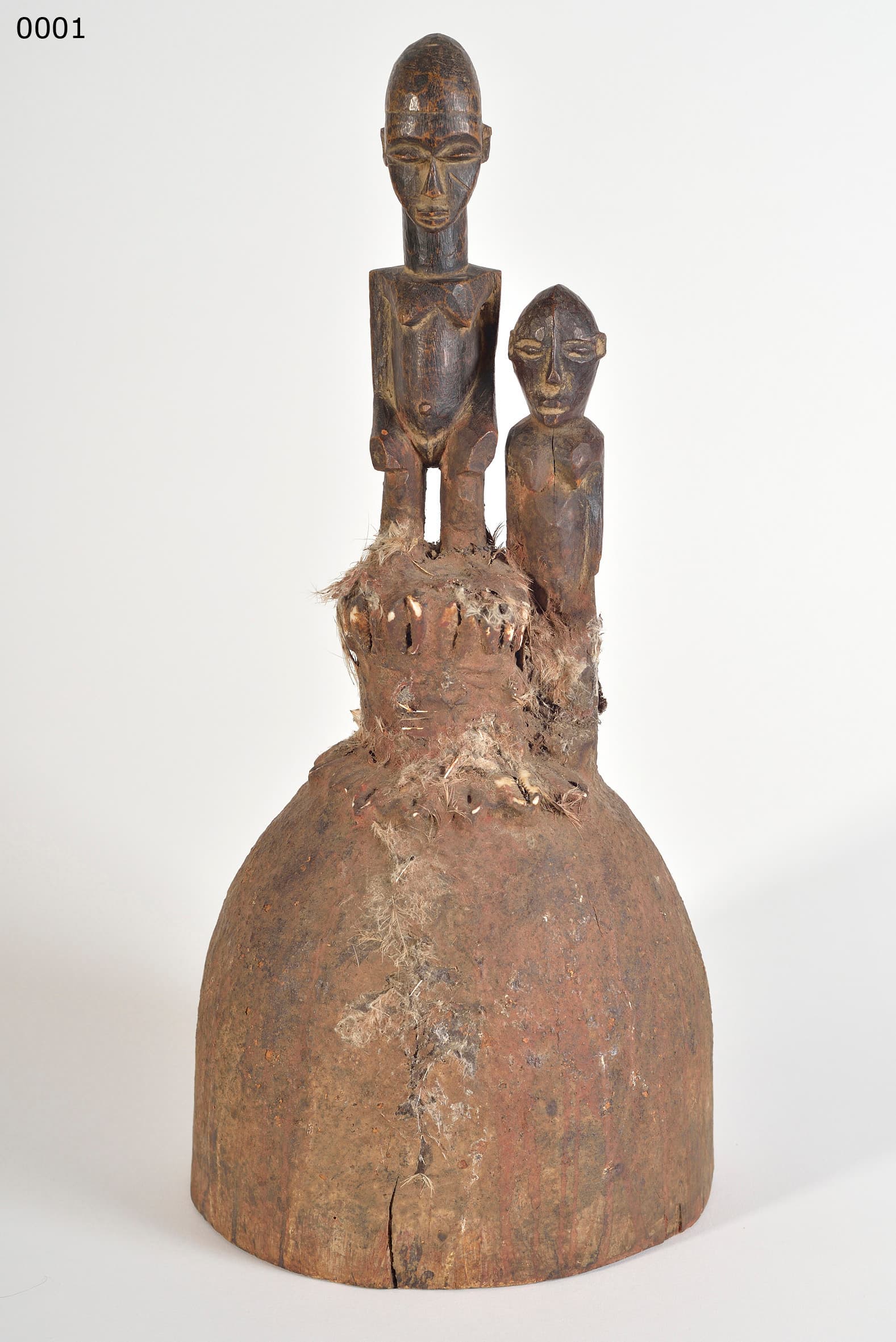
shrine altar with BATEKE couple
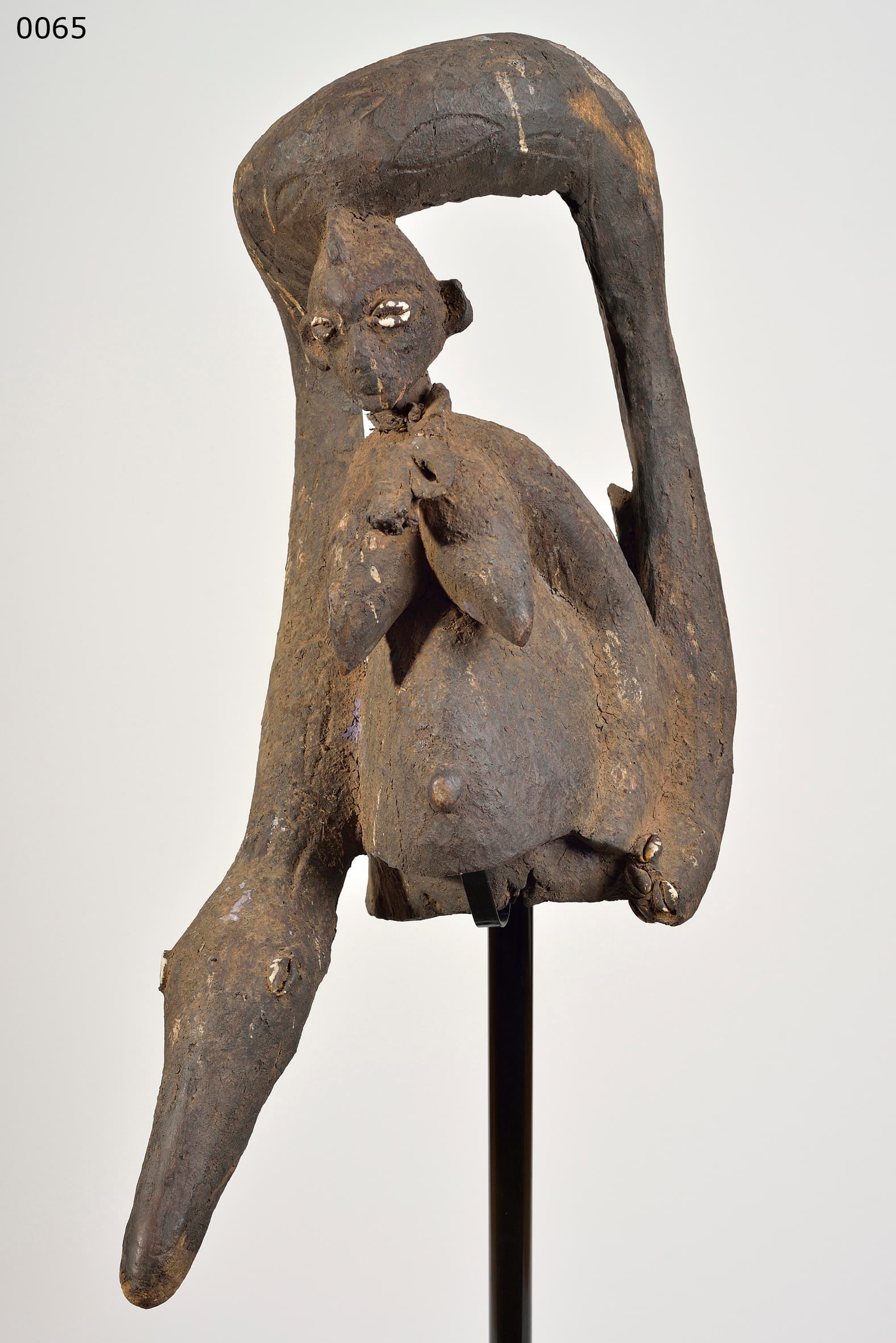
rare head crest mask
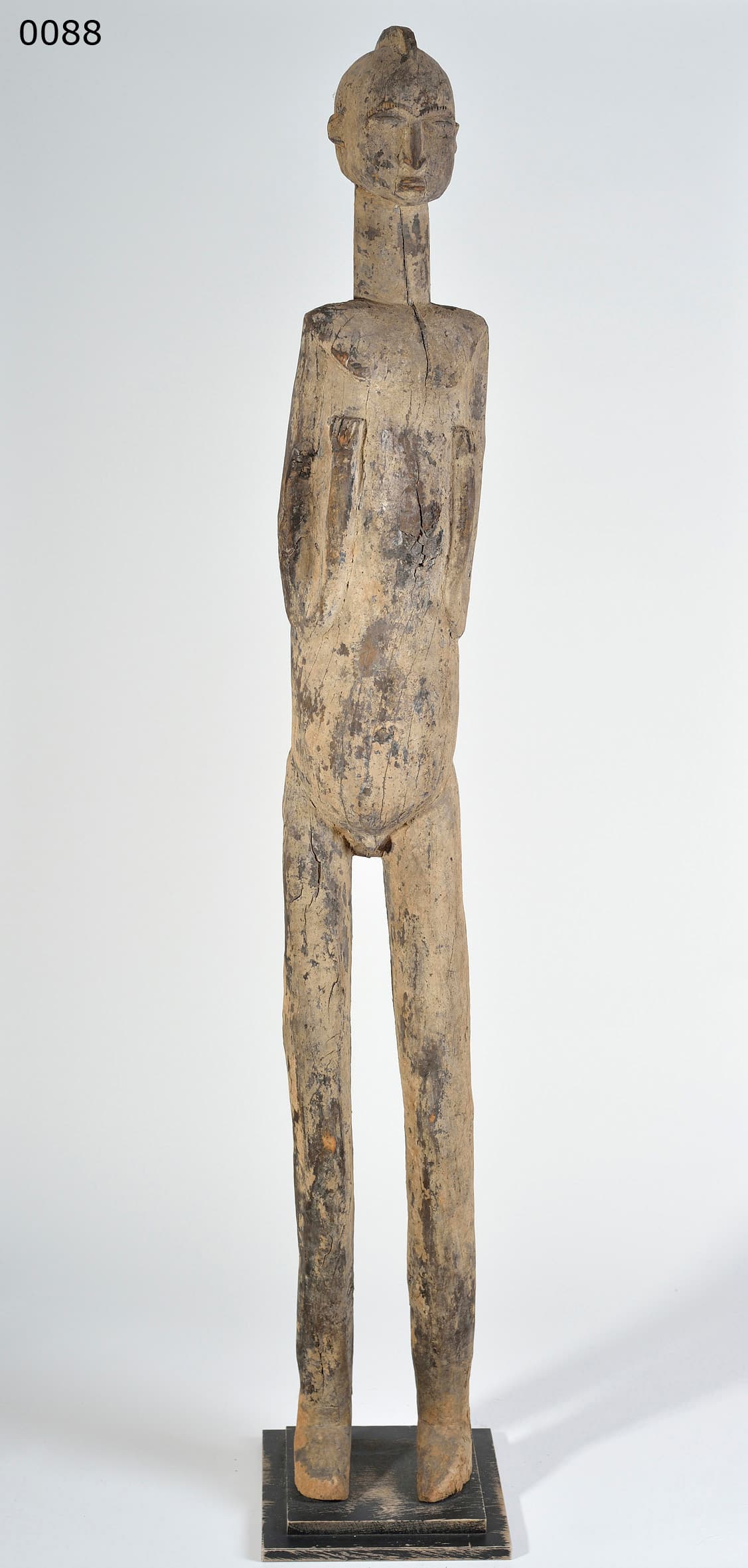
shrine figure representing a BATEBA spirit (unusually tall, rare)