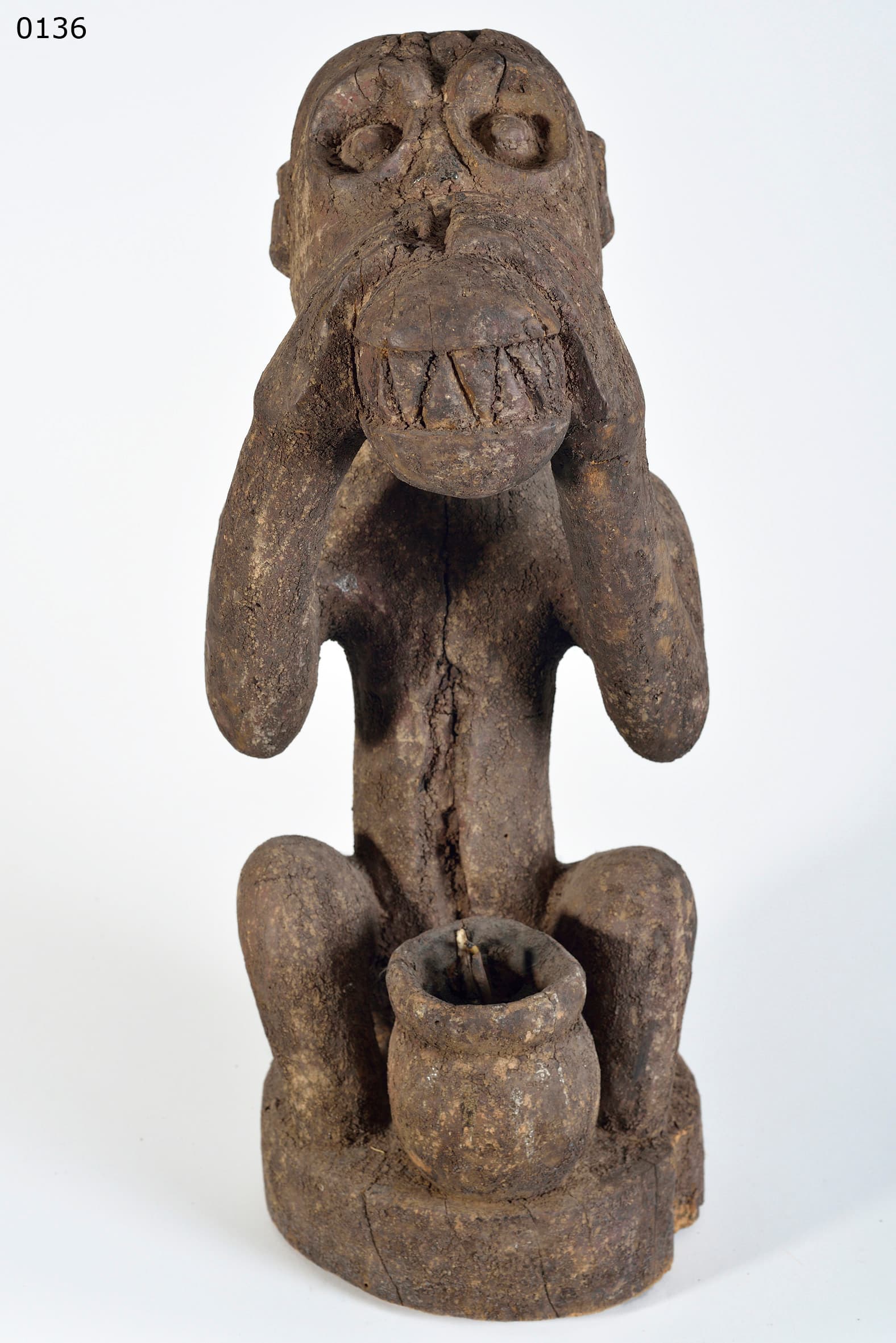
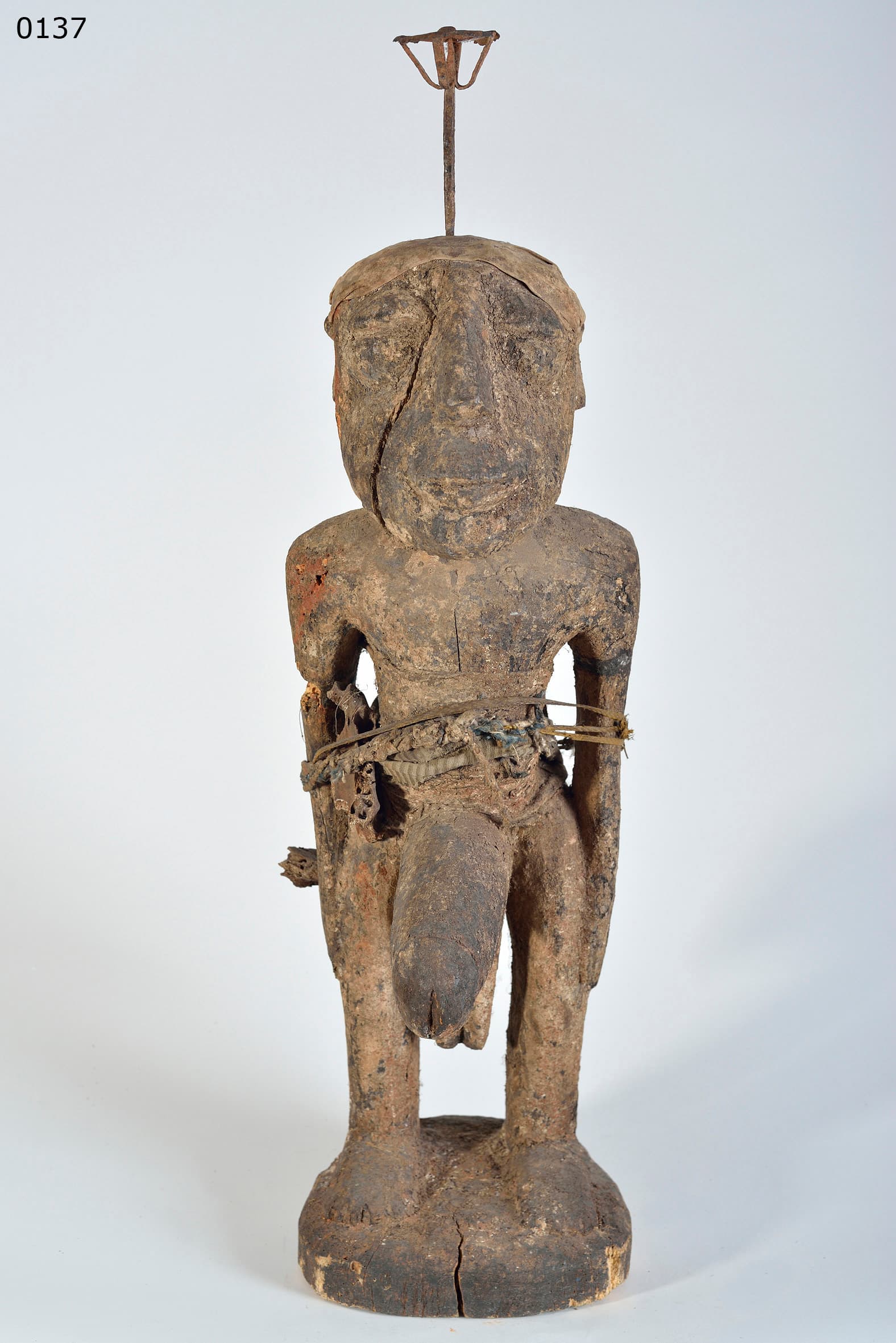
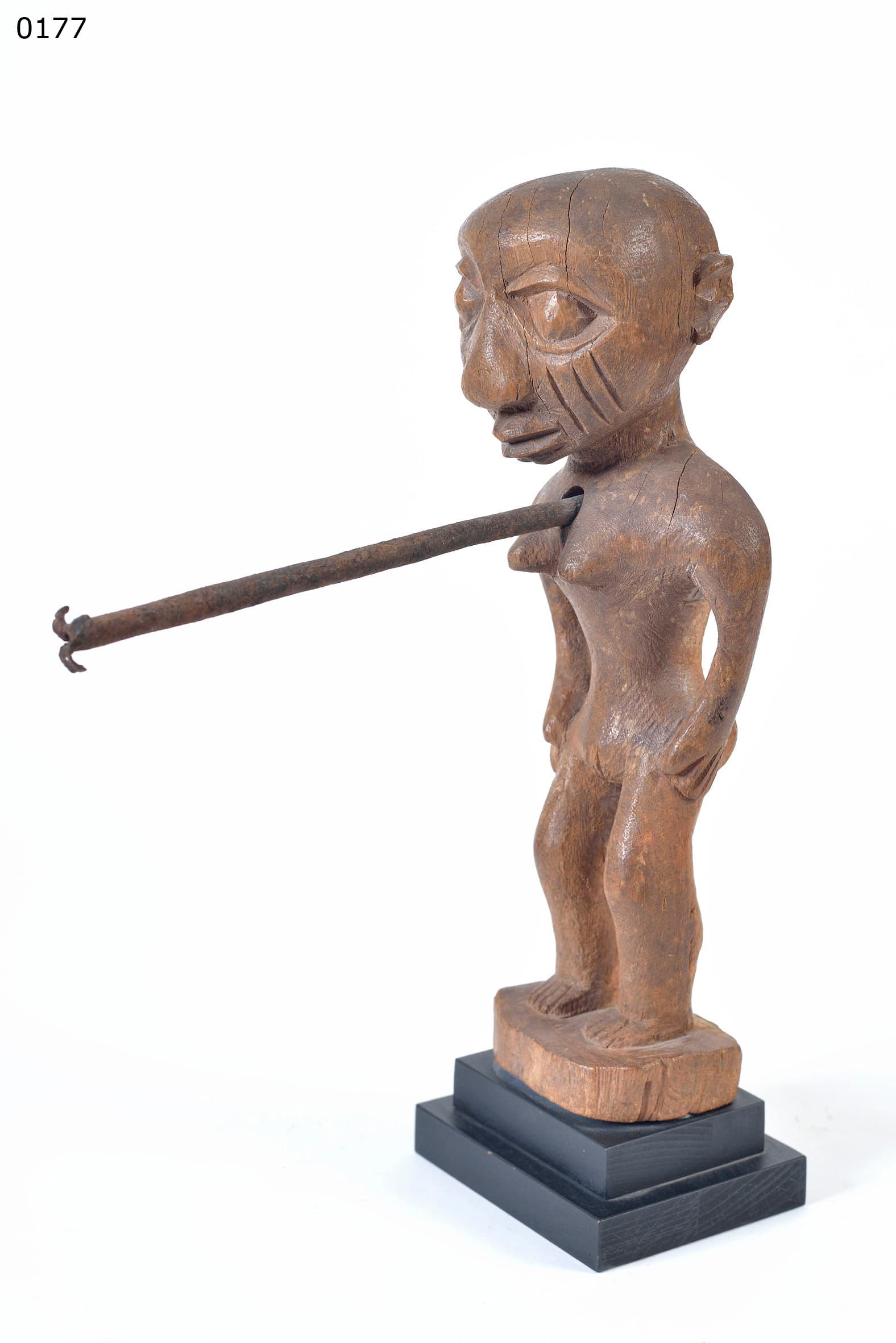
A rare, heavily activated Vodun power figure (1st half 20th C., 73 cm) from the Fon and Ewe of the Republic of Benin. Exhibited at the French Embassy in Vienna.
1. The mechanics of Vodun
In Fon and Ewe culture, a bocio (literally "empowered body") is a psychological and spiritual accumulator. Unlike theatrical masks, this is a private, deeply occult object used in Vodun ceremonies — a surrogate body designed to absorb malevolence, protect the owner, or cast influence over a specific situation.
2. Activation and materiality
The true power of a bocio lies not in the underlying wooden carving, but in its activation materials.
- Binding: The figure is heavily wrapped in a thick skirt of raffia and bound with cords. Binding is a universal African magical practice used to "tie down" a spirit, restrict an enemy, or trap a disease.
- Adornment: Cowrie shells (currency) and the heavy, earthen patina indicate repeated ritual "feeding." The pronounced phallus is a symbol of raw, generative life force and aggressive spiritual energy.
3. Exhibition provenance
Historically, bocio figures were misunderstood by early European collectors as crude "fetishes." This piece's inclusion in a diplomatic exhibition at the French Embassy in Vienna is consistent with the modern recognition of the form as a complex, psychological expression of African art.
Summary
This Bocio represents a dense accumulation of materials designed to alter the psychological and physical environment of its owner, reflecting the practices of traditional Beninese Vodun.
Written with AI assistance from the collection appraisal, object photography and our own research; editorially reviewed. Mistakes are possible — corrections are welcome. How we work →