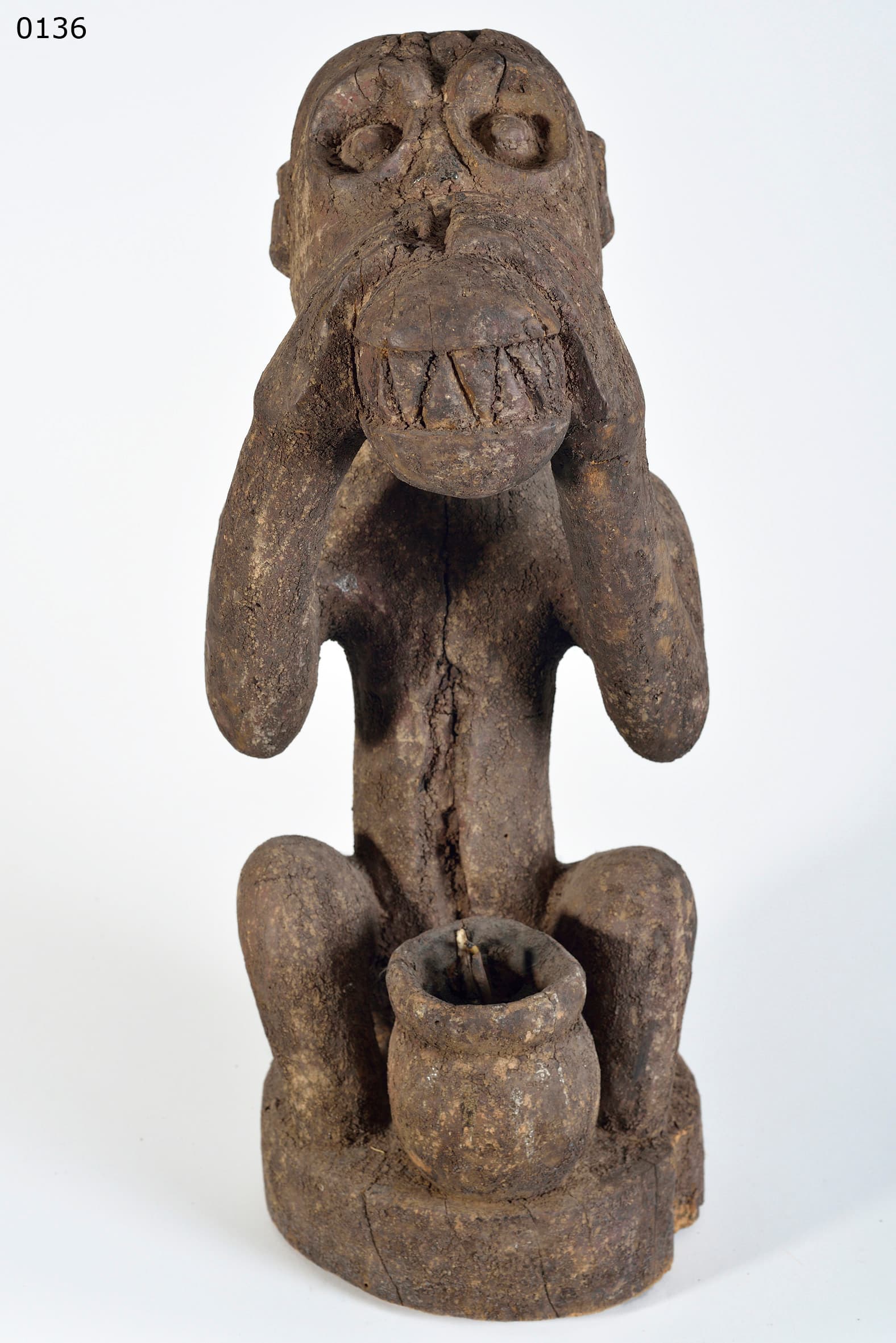
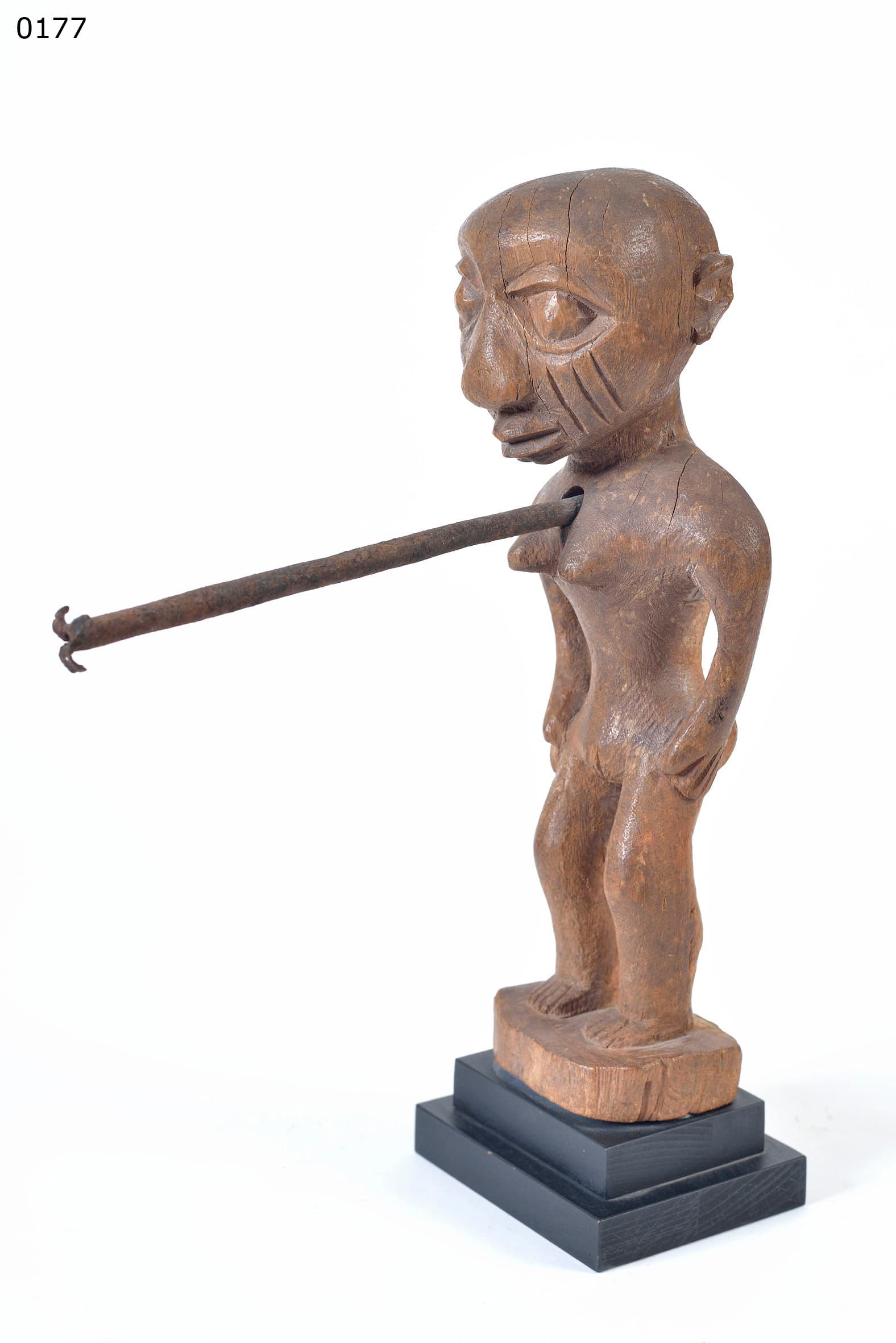
A stark, unsettling wooden Vodun figure (1st half 20th C., 78 cm) from the Fon of the Republic of Benin — a massive phallus, cords and bone fragments bound tightly around the waist, and a large iron spike driven directly into the top of the head.
1. The mechanics of the Bocio
This is a classic, highly aggressive Bocio ("empowered body") from the Fon Vodun tradition.
- Psychological Weapon: Bocio are commissioned from a diviner to actively combat specific severe threats.
- Direct Uses: Deflecting a lethal curse, attacking an enemy, or securing dominance in a personal dispute — these figures perform ritual work, not decoration.
2. The iron spike and gu
The iron driven into the crown of the head is the figure's activating device.
- Domain of Gu: In Vodun, iron belongs to Gu — the god of war, metal, and transformative power.
- Violent Activation: Driving the spike into the wood pins the invited spirit in place and infuses the wooden surrogate with Gu's lethal, cutting energy.
3. Binding and generative power
The waist treatment weaponizes the figure in two directions.
- Oversized Phallus: Represents raw generative life force and aggressive masculine energy — the Bocio's attack mode.
- Bone and Cord Wrappings: Trap the magical medicines against the wood and metaphorically "tie up" the problems or enemies the owner is facing, with the intent of rendering them powerless.
Summary
This Bocio is a compelling example of psychological warfare. Activated by an iron spike and bound with bone, it is a fearsome, physical manifestation of Vodun defensive magic, designed to absorb and deflect lethal spiritual energy.
Written with AI assistance from the collection appraisal, object photography and our own research; editorially reviewed. Mistakes are possible — corrections are welcome. How we work →