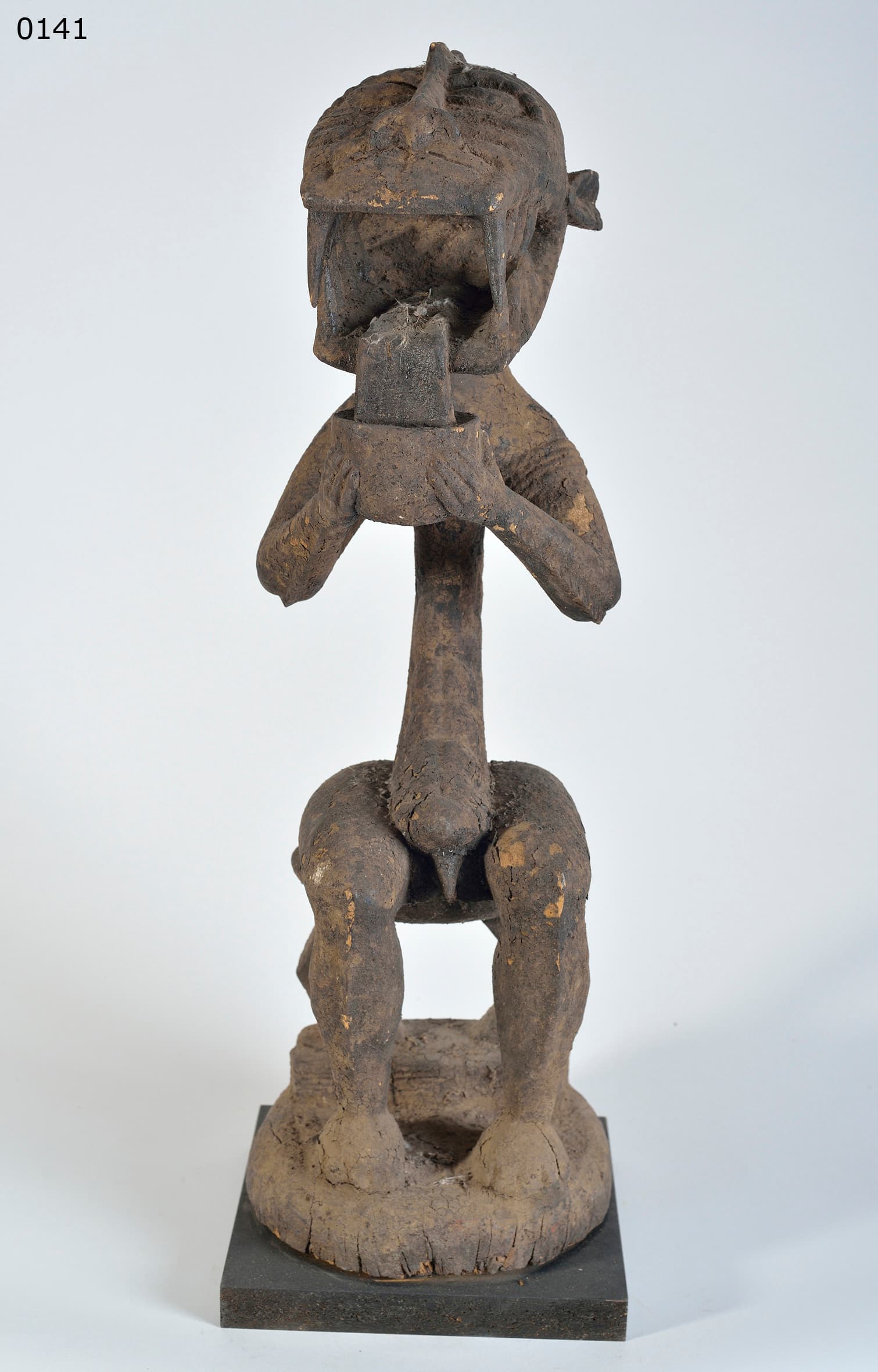
This fierce wooden figure fuses a human female torso — featuring prominent breasts and holding a sacrificial bowl — with the aggressive, stylized head of a baboon showing bared teeth. The entire carving is encased in a phenomenally thick, crusty, and blackened sacrificial patina.
1. Aesthetic style and regional traits
While the Baule people are internationally celebrated for their serene, highly polished, and naturalistic portrait masks, their Mbotumbo (or Gbekre) figures represent the exact aesthetic opposite. This sculpture is designed to evoke the raw, untamed, and dangerous energy of the deep bush. By combining the human female form (representing societal continuation) with the aggressive, bared-teeth visage of a baboon (a creature of the wilderness), the carver visually constructs a bridge between the civilized village and the chaotic, powerful forces of nature.
2. Ritual function and secret society context
Unlike refined Baule ancestral portraits kept inside the home, Mbotumbo figures are terrifying power objects (amoin) kept in specialized, hidden shrines outside the village or on the outskirts of the compound. They are utilized by trance diviners (komien) to protect the community from malevolent sorcery, plagues, and evil bush spirits. The bowl clutched to the figure's chest serves as a receptacle for intense ritual offerings. The spirit within the statue is considered highly volatile and must be constantly appeased and "fed" to direct its aggressive energy toward protecting the lineage rather than harming it.
3. Physical patina and age indicators
The surface of this figure is one of its most significant features. It is smothered in a dense, highly friable, and uneven crust of blackened organic matter. This sacrificial patina is consistent with build-up over decades of active ritual use, composed of poured chicken blood, crushed eggs, millet porridge, and palm oil. This thick nyama (spiritual energy) encrustation has completely filled the underlying carving marks, supporting the attribution of an active ritual life in a traditional Baule shrine, likely dating to the early 20th century.
Summary
This Baule Mbotumbo figure is a striking example of West African protective art. Its expressive human-animal hybridity and thick sacrificial crust make it a significant representation of traditional ritual practice.
Written with AI assistance from the collection appraisal, object photography and our own research; editorially reviewed. Mistakes are possible — corrections are welcome. How we work →

mask (collected in Abidjan)

mask (called GOLI)
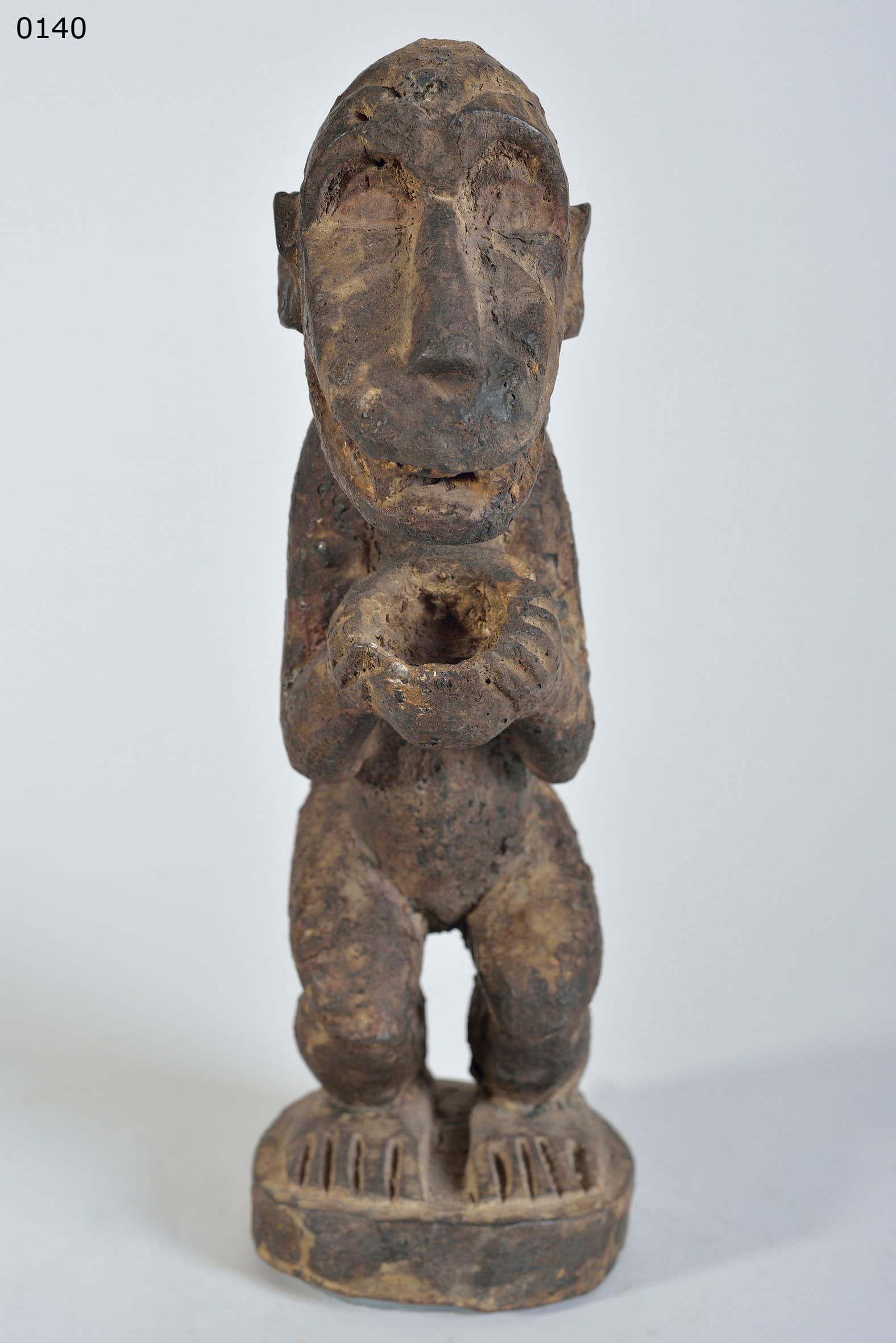
simian statue (called MBOTUMBO or GBEKRE)