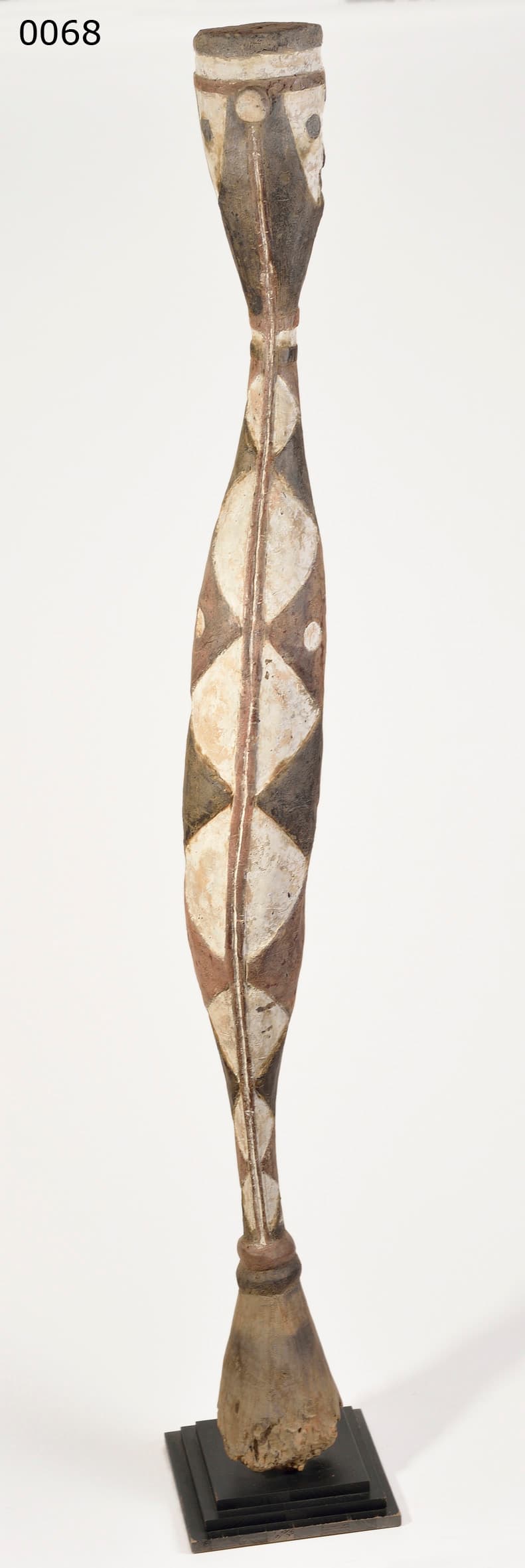
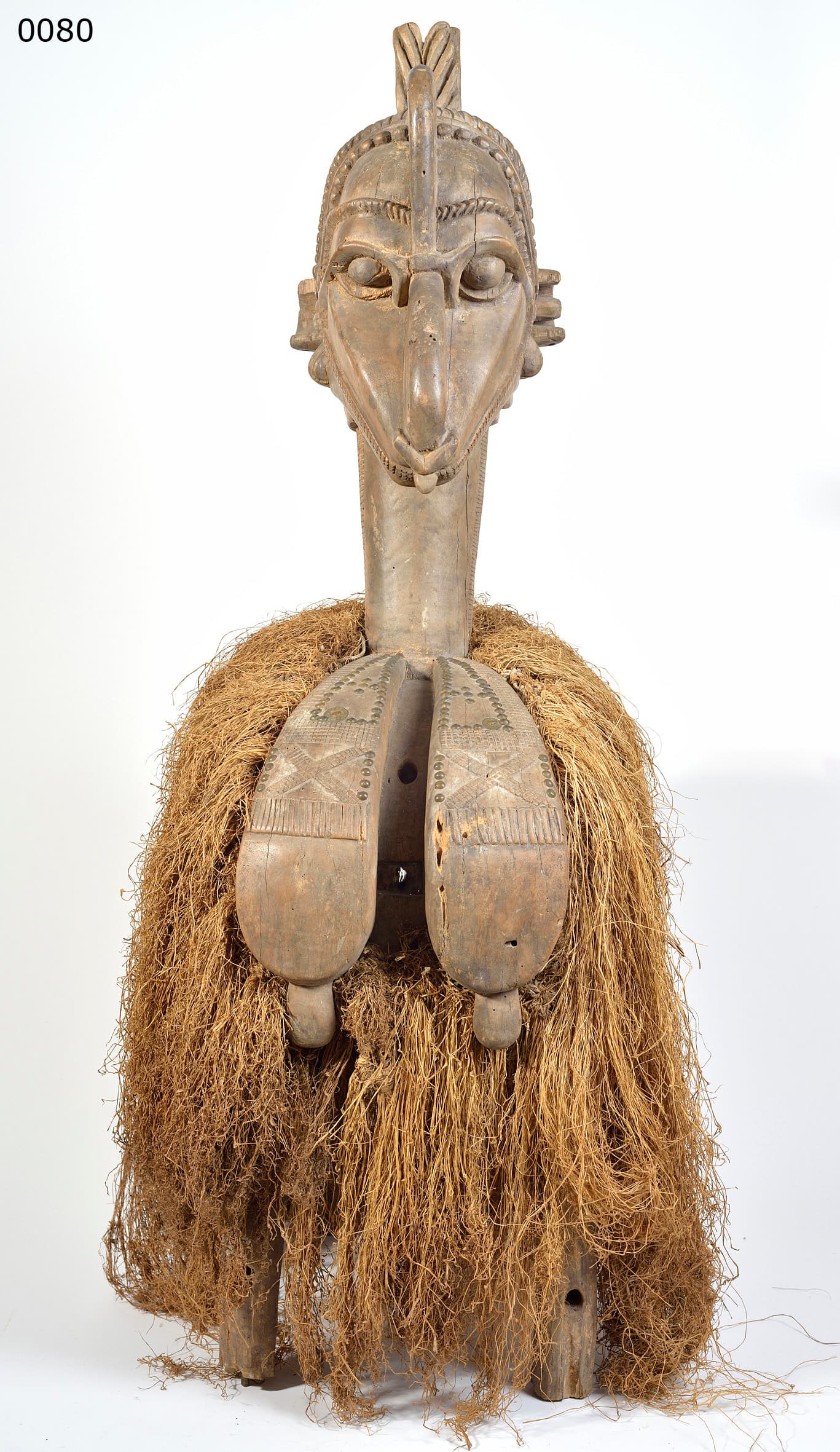
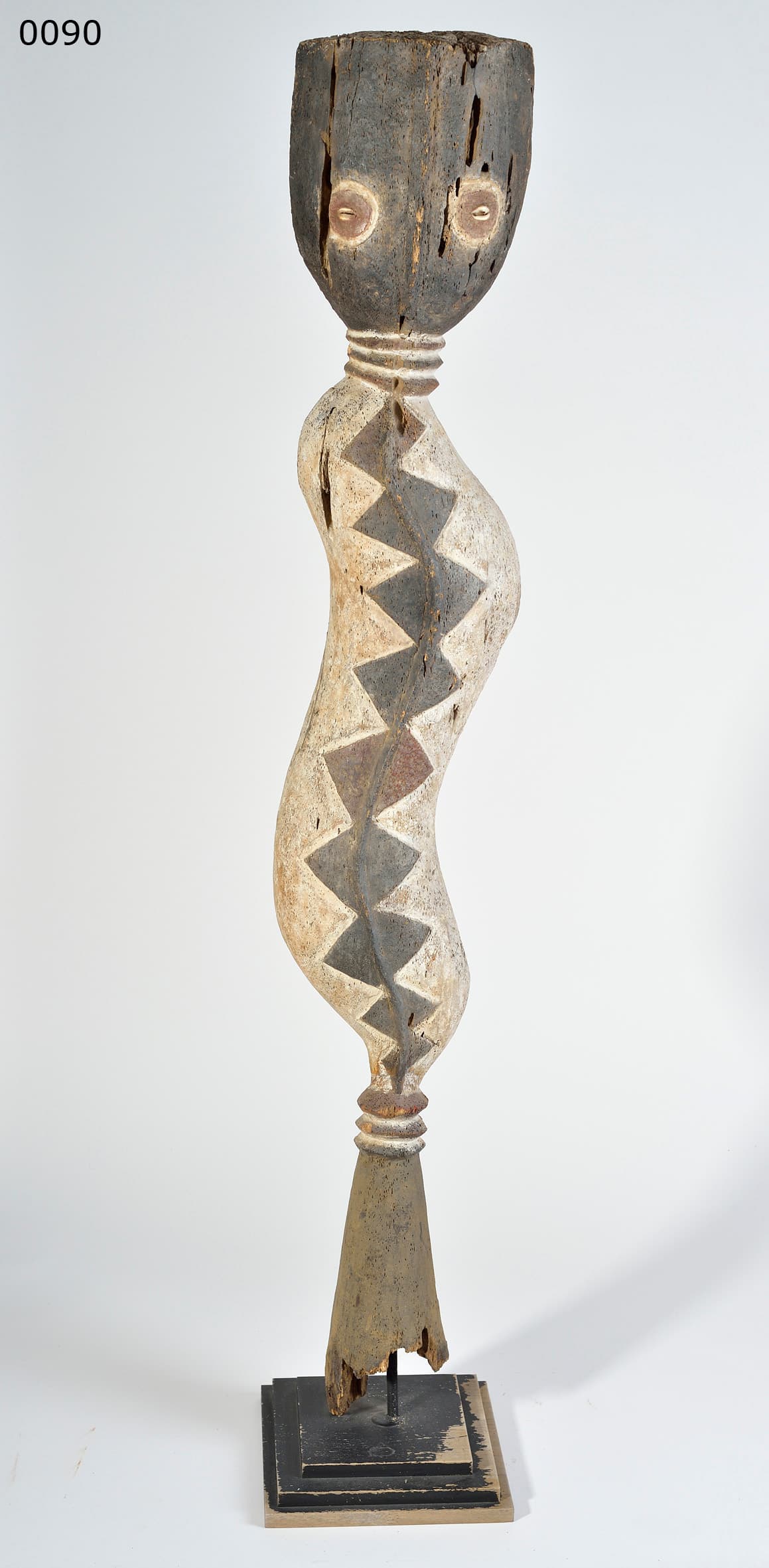
A tall polychrome wooden figure (late 20th C., 132 cm) from the Baga of Guinea — a highly stylized long-beaked bird (likely a pelican) painted in vivid geometric patterns. A small human face carved into the back of the neck reflects the syncretic iconography typical of A-Tshol or Elek shrine guardians.
1. The mythic bird (a-bamp / kumbaduba)
The Baga, living in the marshy coastal regions of Guinea, make heavy use of aquatic bird imagery in their secret societies.
- The Pelican's Sacrifice: This figure represents the pelican, revered in local myth for its protective and nurturing qualities. Legend holds that the pelican will pierce its own breast to feed its young with its blood during a drought, making it the ultimate symbol of maternal sacrifice and community survival.
2. Polychrome vitality
Unlike the dark, soot-stained patinas of deep-forest tribes or the heavily weathered "survivor pieces" that escaped Sékou Touré's rigorous anti-fetishism campaign (1956–1984), this Baga figure is brightly painted. The vibrant polychromy of modern synthetic industrial paints (red, blue, yellow, green) applied in distinct chevron and block patterns, along with the absence of a deep ritual libation patina, is consistent with a late 20th-century origin. It was likely created during the Baga cultural revival movement of the 1990s—used in joyous, public celebrations of agricultural bounty and initiation graduations—or carved specifically for the art market.
Summary
This Baga bird figure is a tall, vibrant representation of life and nurture. At over 130 cm, its bright polychrome surface and mythic iconography are traditionally associated with blessing the harvest and celebrating the continuation of the community.
Written with AI assistance from the collection appraisal, object photography and our own research; editorially reviewed. Mistakes are possible — corrections are welcome. How we work →