A long, tapered wooden implement with a heavy, rounded base for grinding, terminating in a beautifully carved, serene anthropomorphic head at the top handle. The wood boasts a rich, polished, honey-brown patina.
1. Aesthetic style and regional traits
The Lobi seamlessly integrate high sculptural art into daily, utilitarian life. Elevating a mundane agricultural tool into a sculptural object by adding a carefully carved human head demonstrates the deep spiritualization of agriculture, sustenance, and daily labor in Lobi culture. This integration is characteristically Lobi: where neighboring traditions reserve sculpted figures for shrines, the Lobi distribute small protective sculpted forms across the entire material apparatus of household life.
2. Ritual function and thil protection
Beyond its practical use for grinding millet or sorghum, this decorated tool carried protective properties. The carved head represents a thil (a local protective spirit). It was intended to bless the grain, ensure successful future harvests, and protect the family's food supply from malevolent magic or poisoning. The thil-headed pestle inserted protective intent directly into the daily grinding labor that fed the household — making spiritual protection a continuous, embodied practice rather than a discrete ritual event.
3. Physical patina and indications of age
The patina on this object is consistent with a history of active use. The working end is deeply smoothed, blunted, and rounded from years of rhythmic pounding against a mortar. Conversely, the upper shaft and the carved head exhibit a rich, warm, hand-polished patina derived from the sweat and oils of generations of users. The contrast between the abraded base and the silken handle is characteristic of a long-used utilitarian tool — a pattern that is difficult to replicate artificially because of the distinct types of wear on different surfaces.
Summary
This Lobi grain pestle illustrates the aesthetic elevation of utilitarian objects in West Africa. Its physical use-wear and hand-rubbed patina are consistent with an authentic, historically used artifact.
Written with AI assistance from the collection appraisal, object photography and our own research; editorially reviewed. Mistakes are possible — corrections are welcome. How we work →
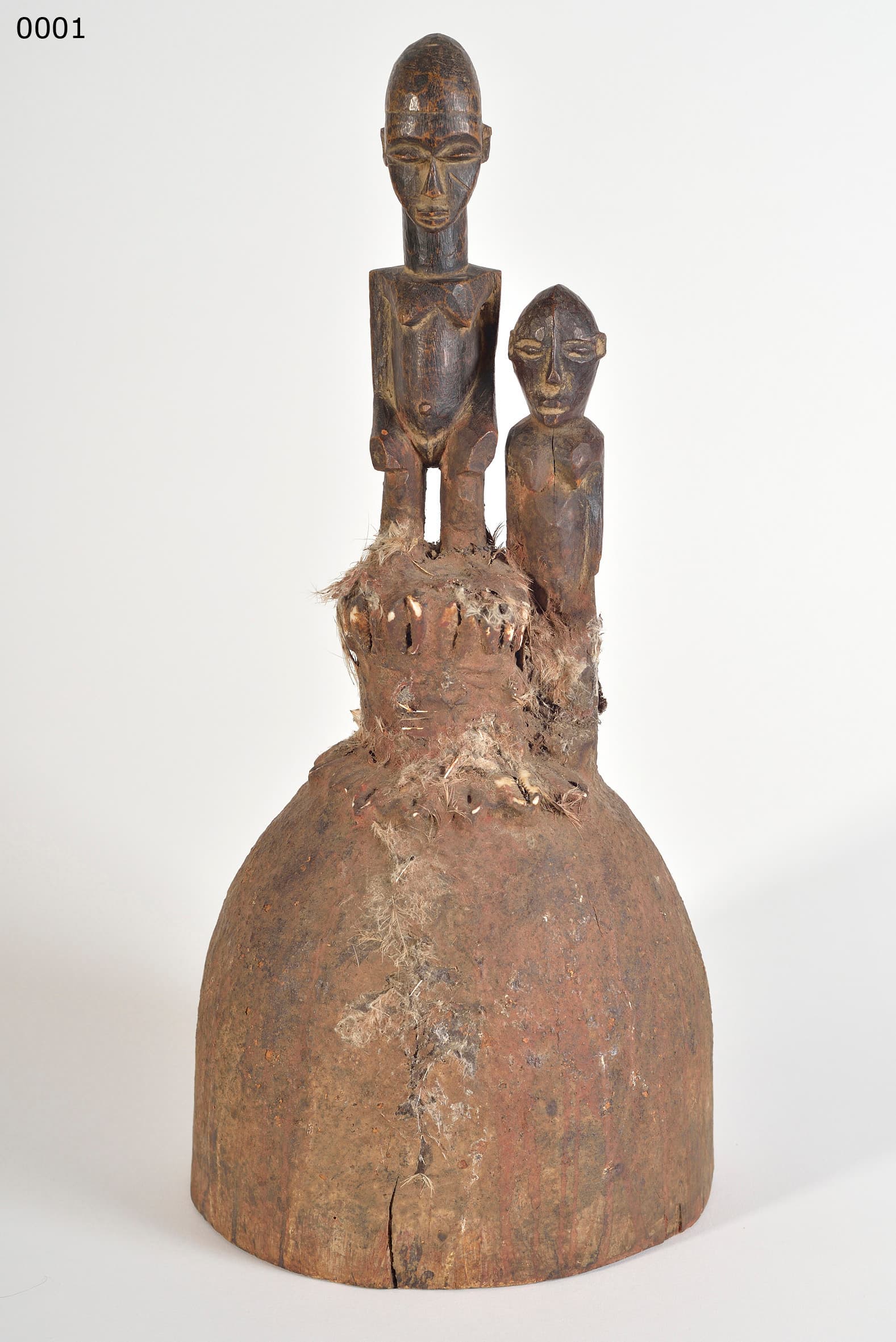
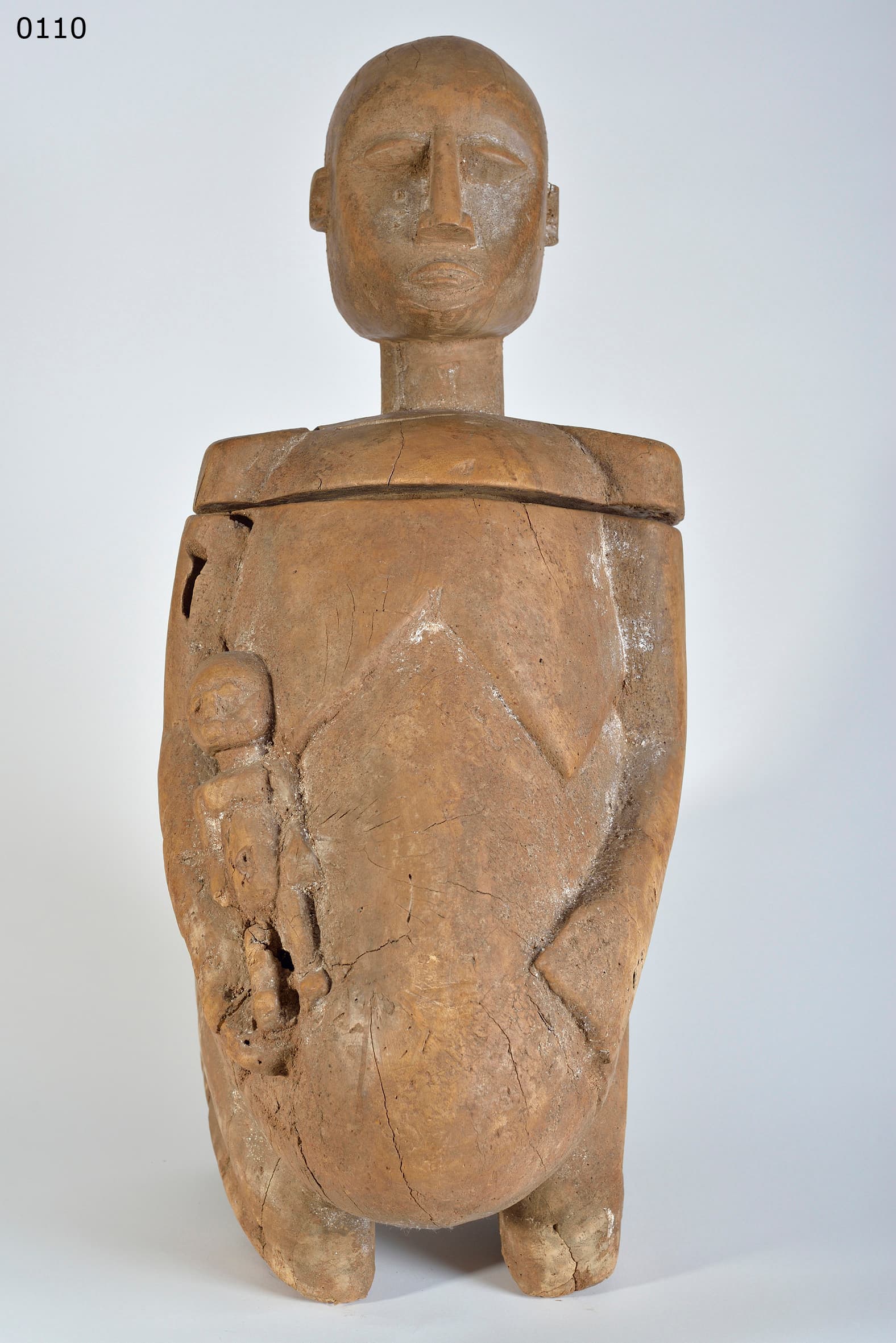
shrine altar with BATEKE couple
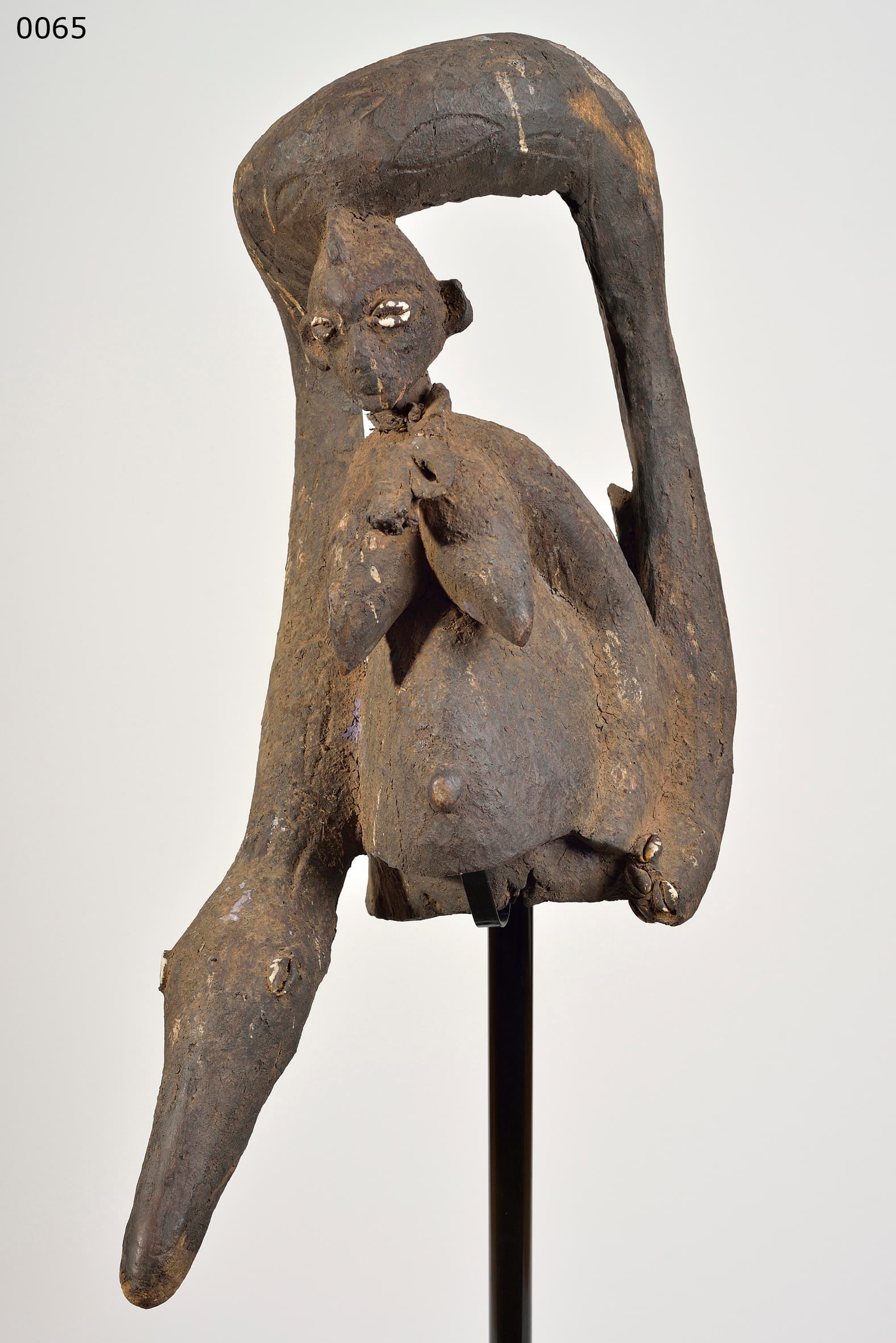
rare head crest mask
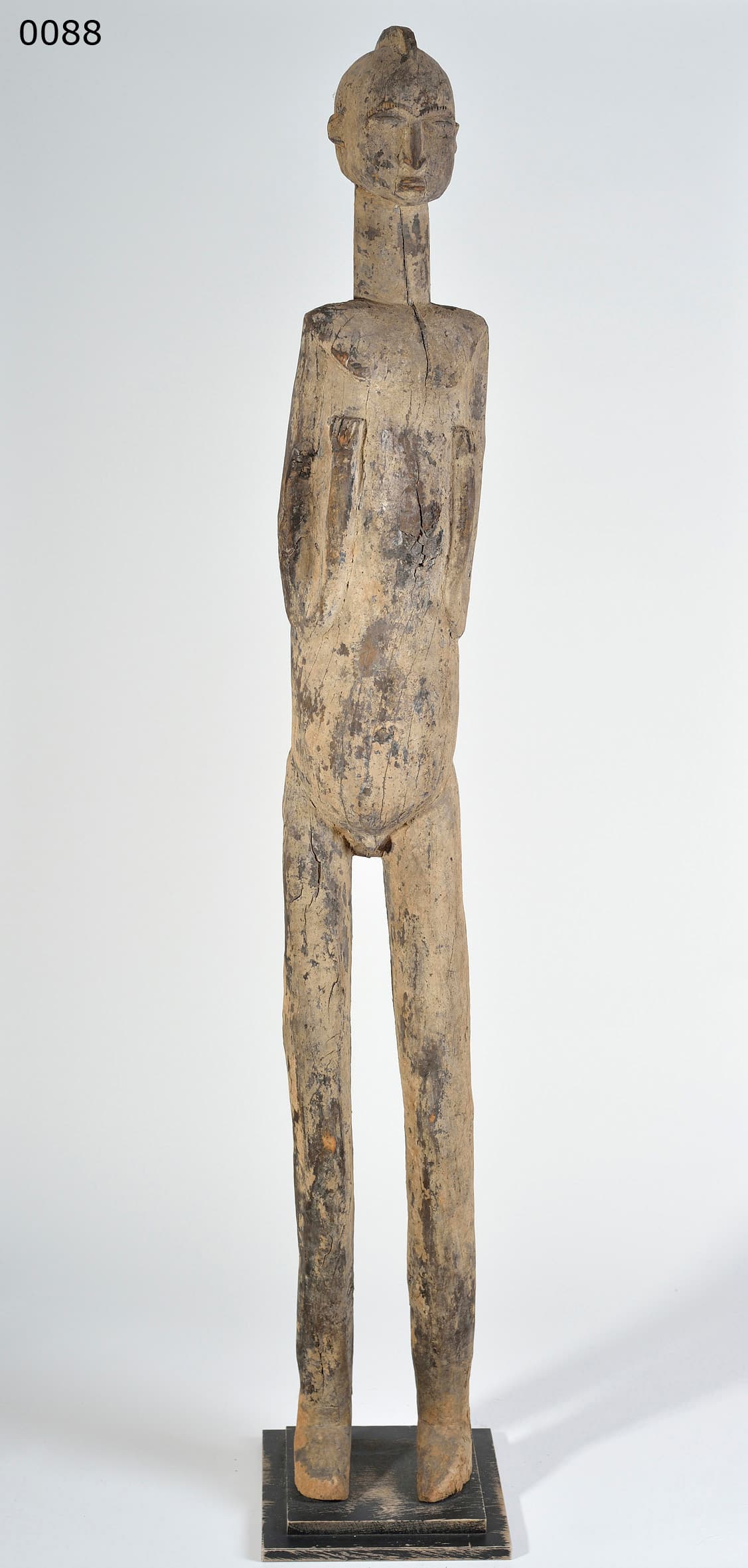
shrine figure representing a BATEBA spirit (unusually tall, rare)