A delicately carved wooden heddle pulley featuring an inverted U-shaped frame, surmounted by a refined anthropomorphic head with elegantly sweeping, ram-like horns. The wood exhibits a smooth, warm brown patina consistent with extensive functional handling.
1. Aesthetic style and regional traits
In traditional West Africa, the loom is considered a sacred space, and weaving is a spiritually charged activity. The Baule are renowned for elevating utilitarian objects into art. By crowning a simple heddle pulley with a refined miniature carving, the weaver seeks to appease the spirits of the wood, inspire their own creativity, and bring prestige to their craft. The Baule heddle-pulley corpus represents one of the most consistently celebrated utilitarian art traditions in the West African region.
2. Ritual function and hybrid iconography
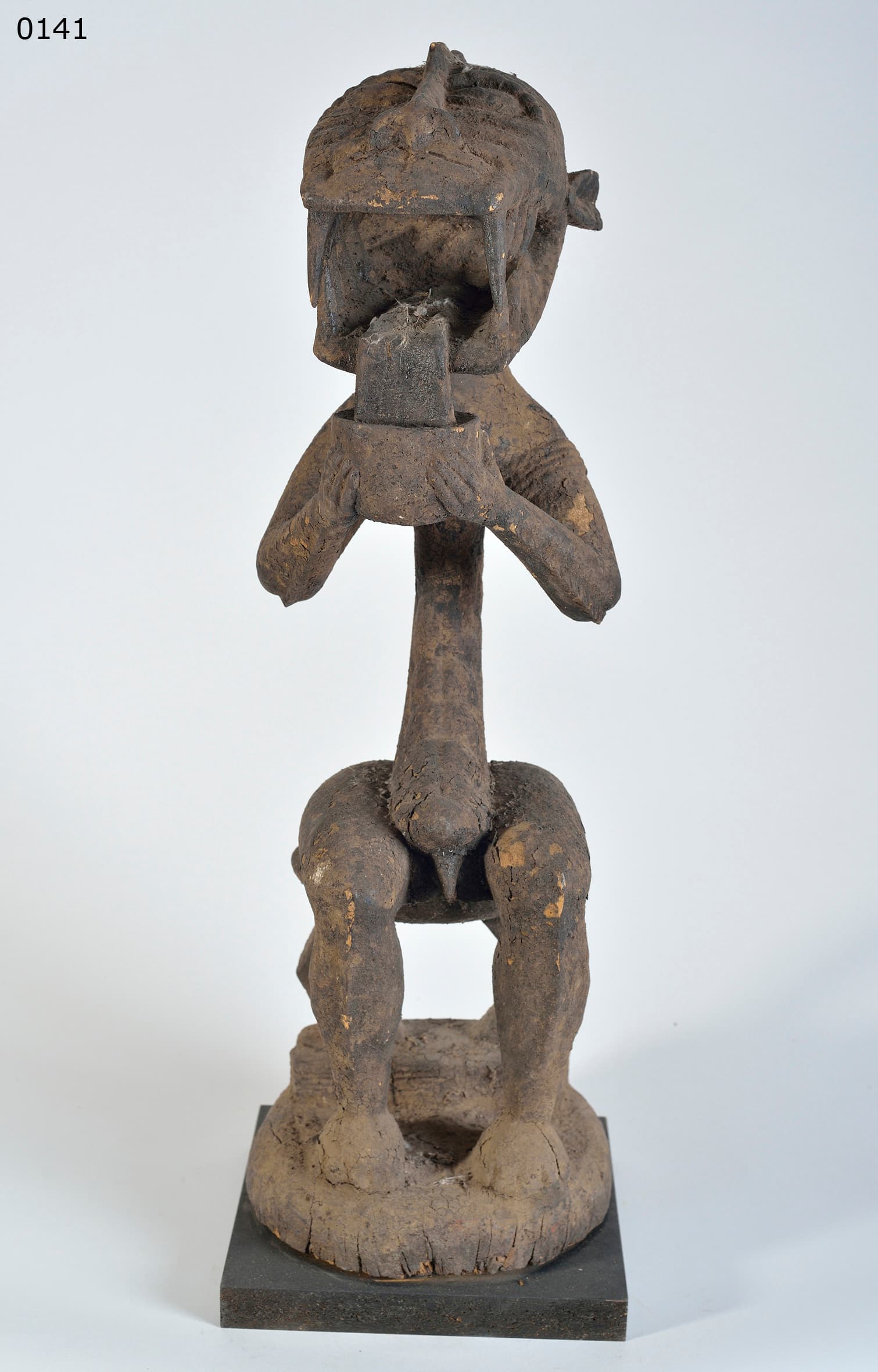
The finial of this pulley represents a skillful blending of human and animal traits. The serene, well-proportioned human face is framed by the heavy, curving horns of a ram. This likely references Goli or other bush spirits, combining the intelligence and beauty of humanity with the untamed power and endurance of the animal kingdom. The horned-human hybrid signals a specific protective spirit category and was understood to preside over the weaver's work — making the pulley both implement and shrine in miniature.
3. Physical patina and wear
The authenticity of a pulley is supported by its physical wear. The interior of the U-shaped frame shows deep, smooth grooves where the spinning wooden wheel and cotton threads rubbed against it. Furthermore, the entire object exhibits a rich, glossy, honey-brown patina, consistent with the weaver's hands manipulating the tool over time. The combination of grooved interior wear and externally polished surfaces is characteristic of a traditionally used pulley — neither feature alone is conclusive, but the combination strongly supports this attribution.
Summary
This Baule heddle pulley is an excellent example of the intersection of utility and art in the Ivory Coast. Its classical carving and friction-worn handling patina make it an exquisite and highly collectible miniature work of art.
Written with AI assistance from the collection appraisal, object photography and our own research; editorially reviewed. Mistakes are possible — corrections are welcome. How we work →

mask (collected in Abidjan)

mask (called GOLI)
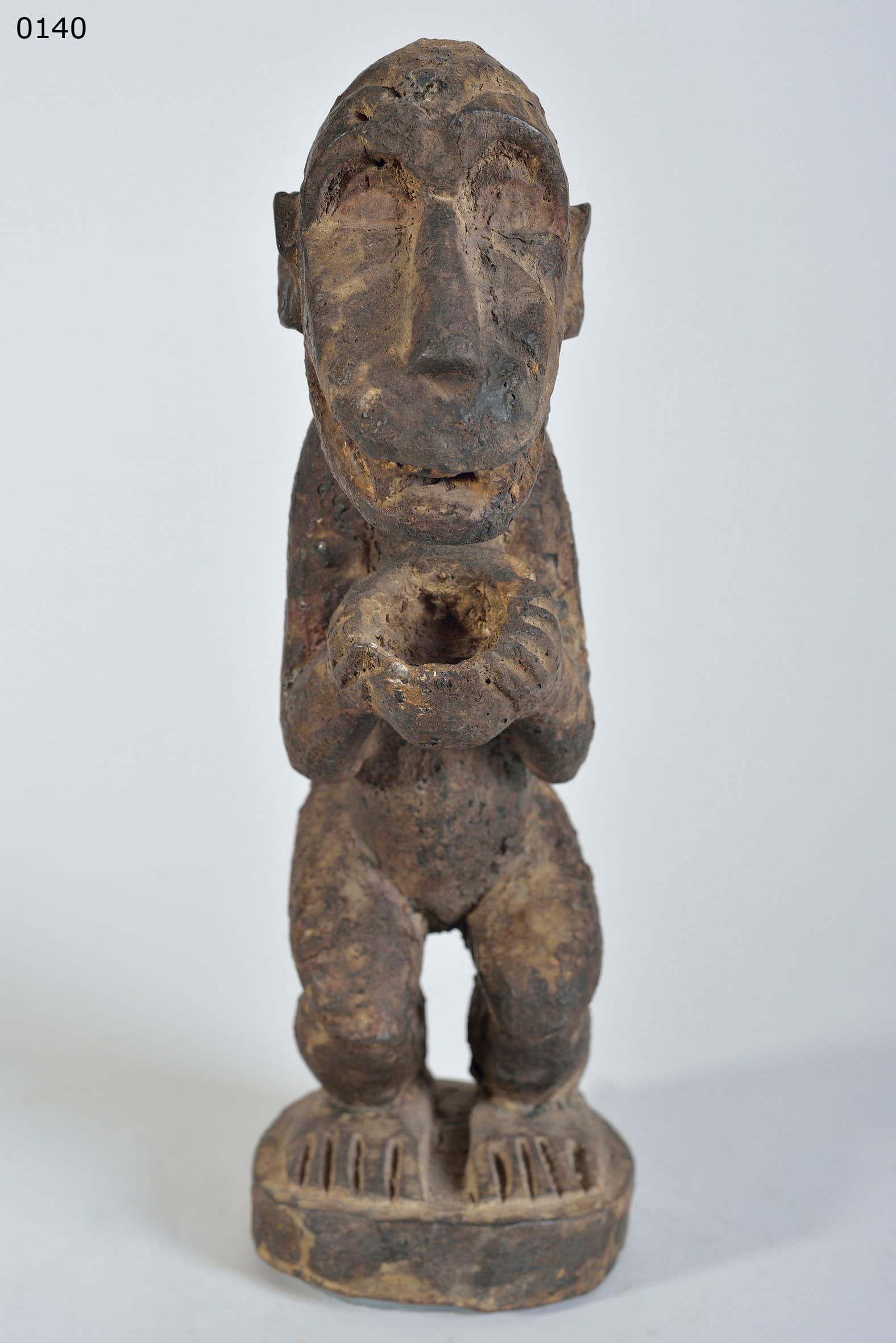
simian statue (called MBOTUMBO or GBEKRE)