A pair of roughly carved, minimalist wooden figures (one male, one female) featuring pointed, dome-like heads and short, blocky limbs. Both figures are entirely enveloped in a thick, blackened, and tar-like sacrificial patina.
1. Aesthetic style and regional traits
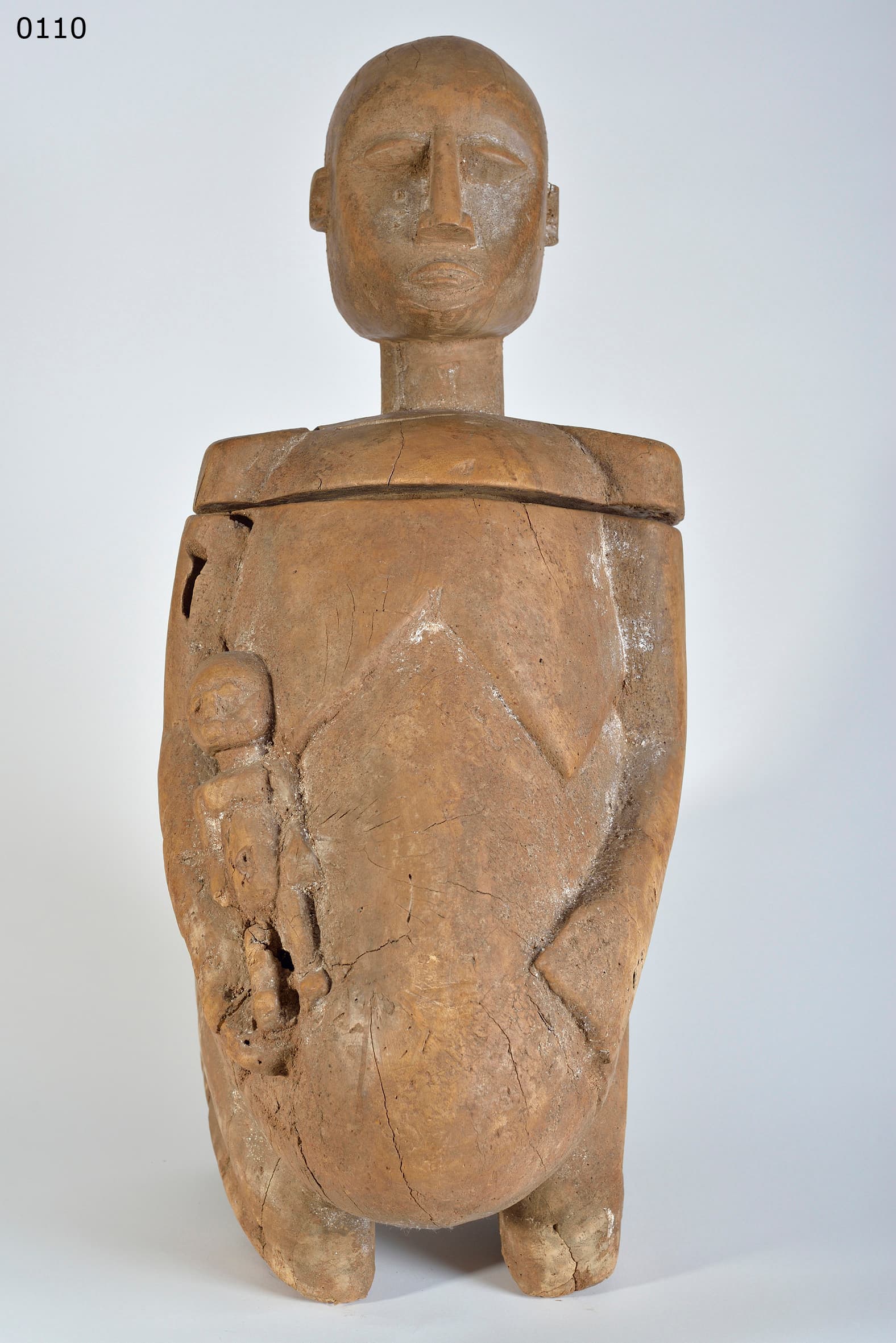
These figures are carved in the standard phuwe (ordinary) style, characterized by stiff, frontal, and unyielding postures. The Lobi carver intentionally leaves the forms rough and blocky; the aesthetic beauty of the object is entirely secondary to its functional capacity to house a spirit. They are vessels of power, not objects of art for public display. The deliberate roughness is itself the operational signal — an excessively refined bateba would suggest decorative rather than functional commission.
2. Ritual function and symmetrical balance
In Lobi cosmology, the spiritual forces of nature (thila) often demand to be represented as pairs. A male and female bateba placed together on a shrine represent cosmic balance, ensuring that the aggressive, protective qualities of the male are harmonized by the nurturing, fertile qualities of the female. This duality is essential for maintaining the overall spiritual equilibrium of the household. The thil's specific request for a paired commission is traditionally understood to be communicated through the diviner, representing a ritual prescription rather than a purely stylistic choice.
3. Physical patina and signs of age
The dominant feature of this pair is their intense, obscuring patina. Stored in the dark recesses of a mud-brick thildu (shrine room), they were the recipients of offerings of blood, millet, and palm oil. This coagulated, blackened crust is consistent with repeated "feeding," suggesting their use as active spiritual agents during the twentieth century. The matched depth of crust across both figures is compatible with parallel devotional treatment of the pair over an extended period.
Summary
This Lobi altar couple illustrates the stark, uncompromising nature of traditional shrine objects in Burkina Faso. Their rough, blocky carving and intense, tar-like sacrificial encrustations are consistent with their use as active spiritual vessels.
Written with AI assistance from the collection appraisal, object photography and our own research; editorially reviewed. Mistakes are possible — corrections are welcome. How we work →
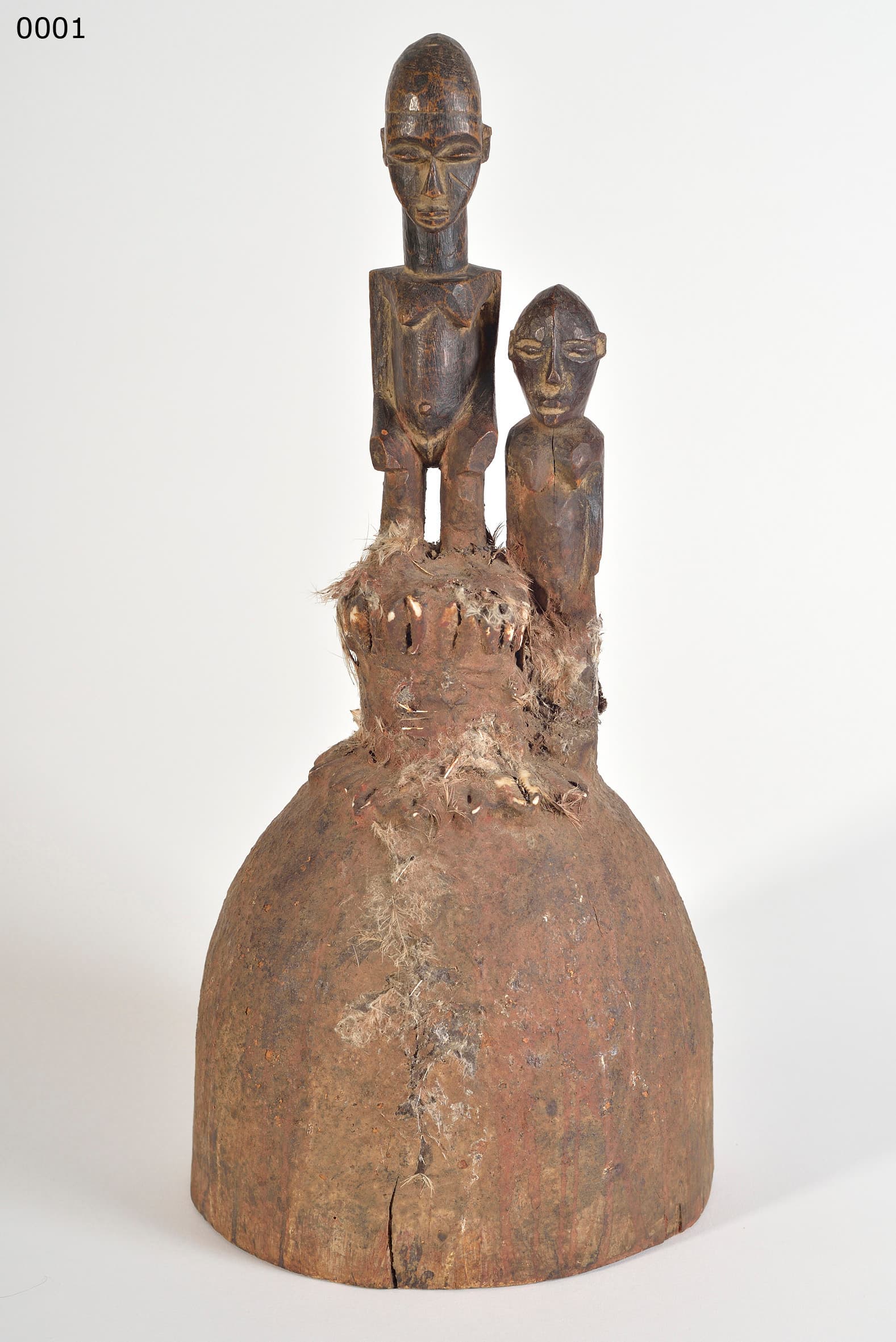
shrine altar with BATEKE couple
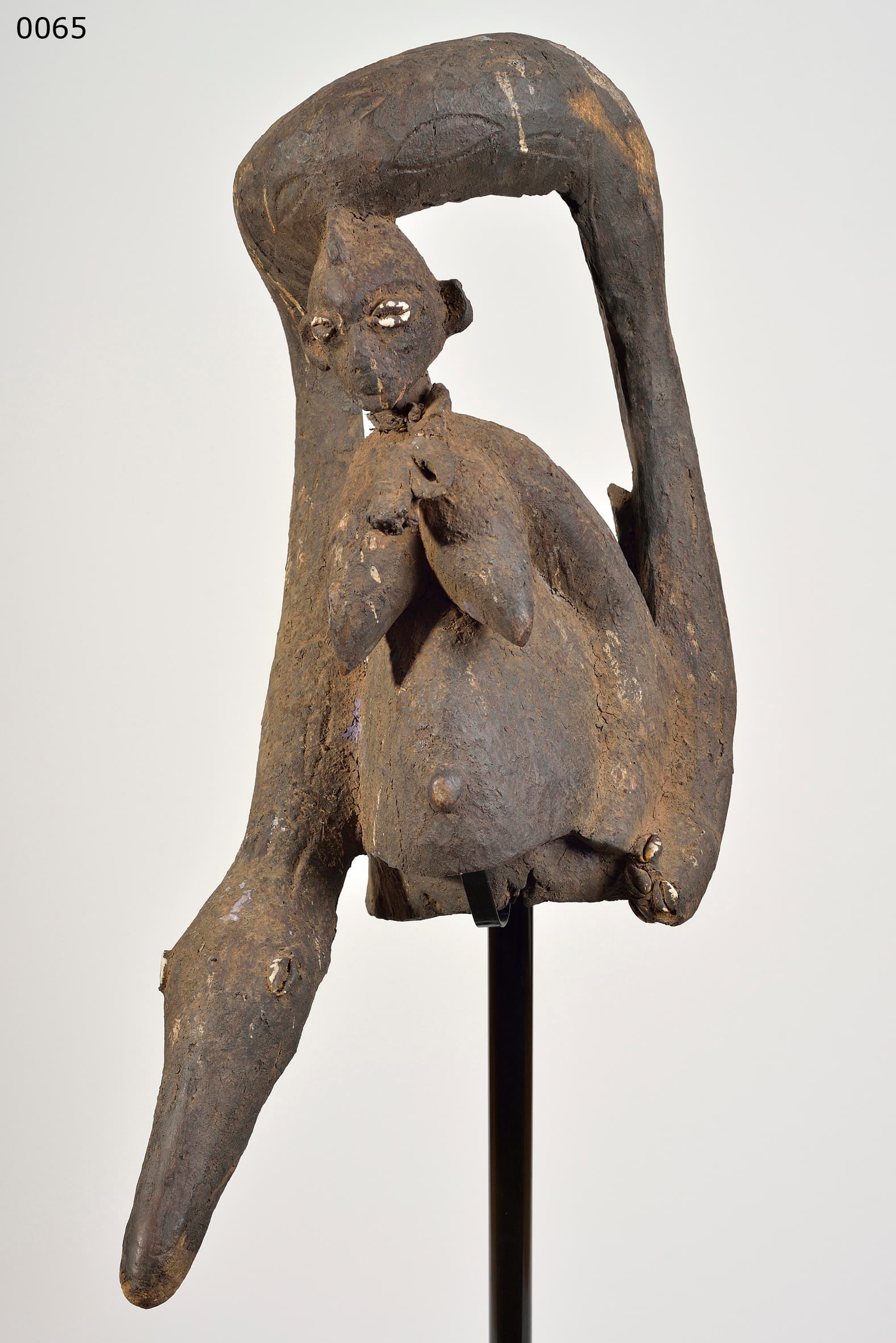
rare head crest mask
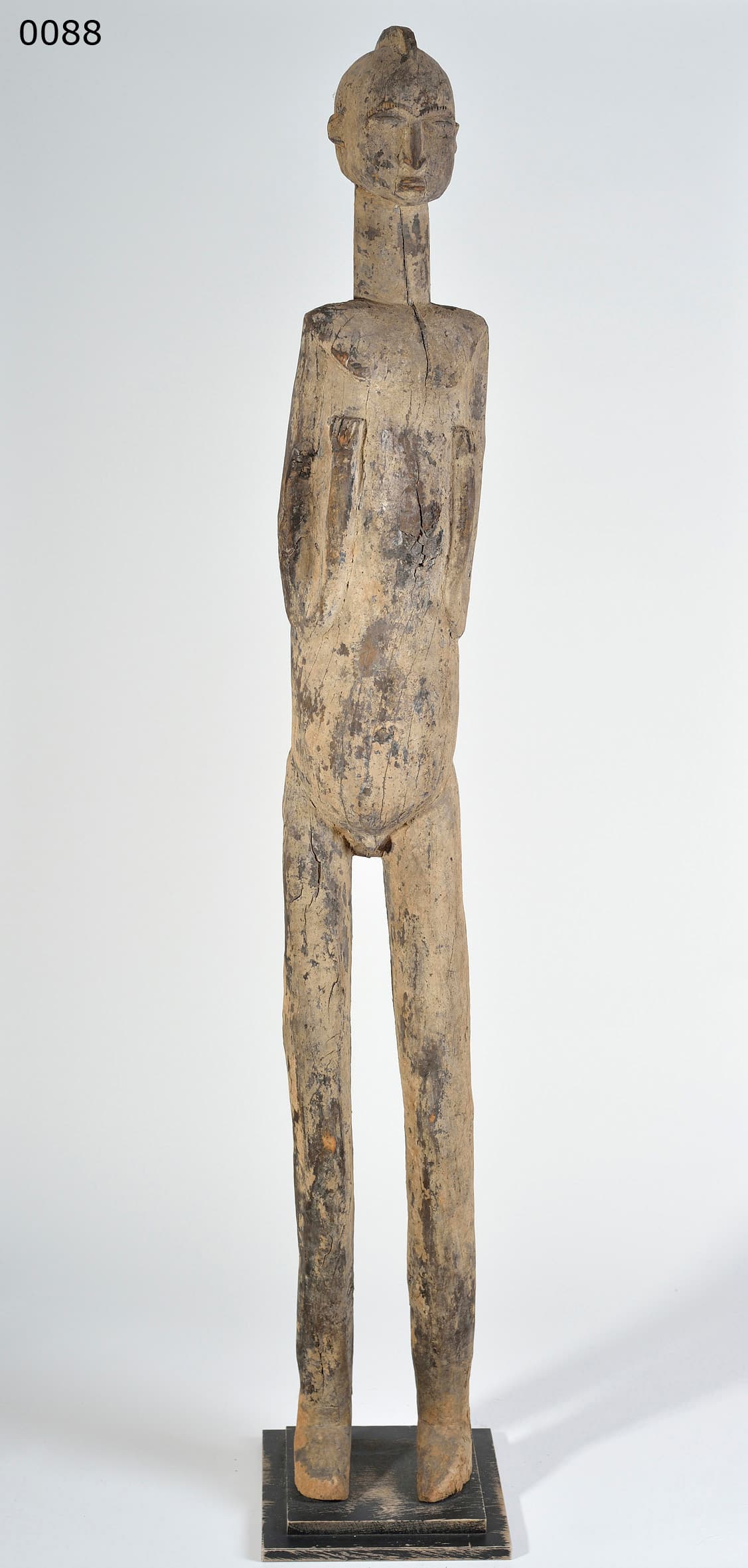
shrine figure representing a BATEBA spirit (unusually tall, rare)