A robustly cast bronze figure of a standing male with a distinctly prognathic face, arched eyebrows, and prominent, stylized ears. The figure features subtle scarification marks and exhibits a very dark, smoothly oxidized, and hand-rubbed patina.
1. Aesthetic style and regional traits
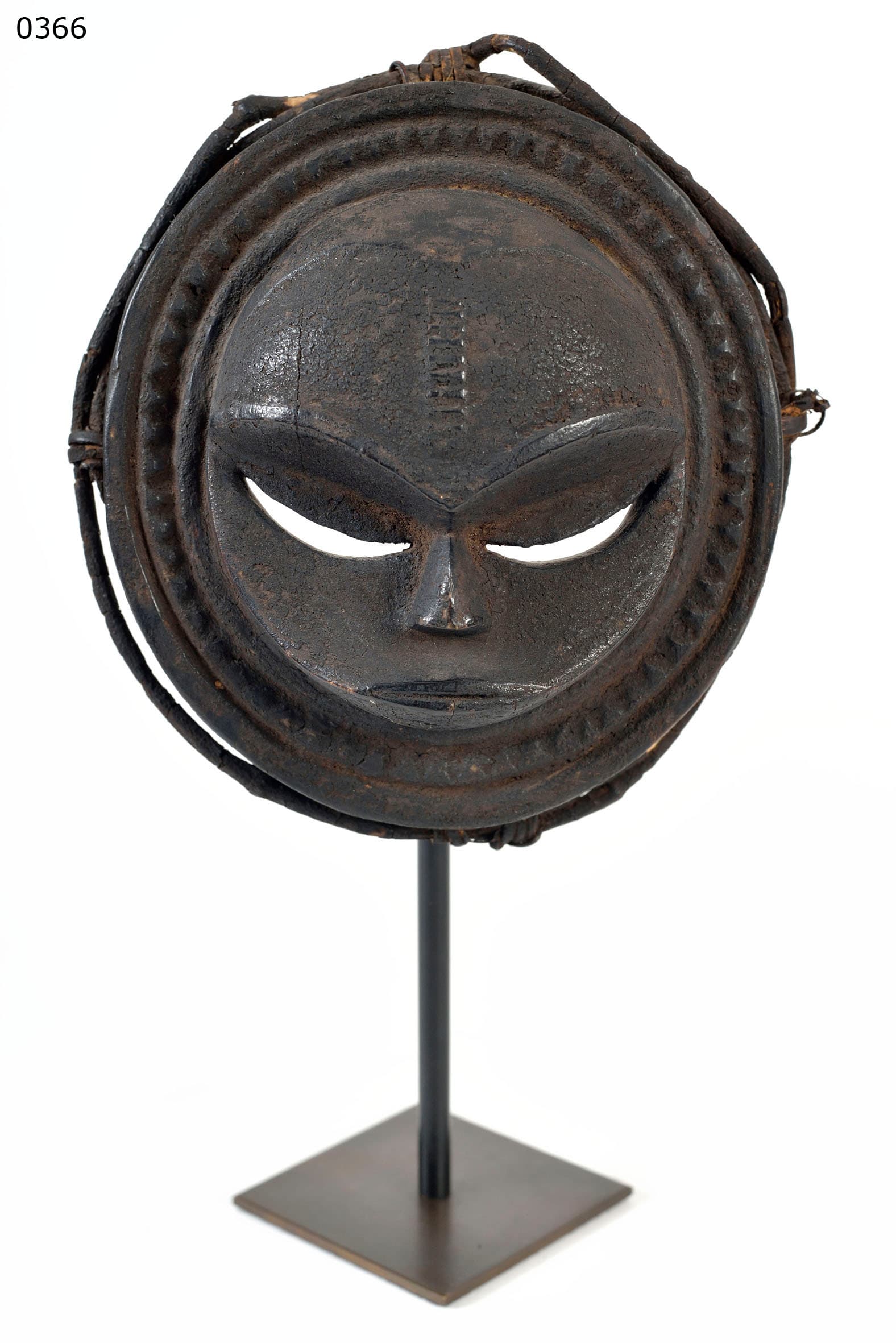
While the Dan people are internationally famous for their highly refined wooden masks, their bronze work is less common but equally powerful. This figure shares the classic facial architecture of Dan masking — the high, domed forehead, the arched, semi-circular eyebrows, and the strong, projecting jawline. However, the addition of the body creates a complete, idealized representation of male vitality and physical strength. The carry-over of mask aesthetics into the bronze register demonstrates the cultural depth of the Dan formal vocabulary.
2. Ritual function and prestige display
In Dan society, bronze casting was a specialized skill, and owning such an object was a clear marker of wealth and prestige. This figure likely belonged to a high-ranking member of a secret society or a successful warrior. It may have functioned as a prestige display object during important festivals, or as a localized altar figure intended to honor a powerful ancestor or a specific bush spirit associated with martial success. Bronze in the Dan context is traditionally associated with institutional rather than household-scale commissions.
3. Physical patina and age indicators
The deep, almost black oxidation of the bronze is highlighted by smooth, slightly lighter areas on the prominent features (the nose, the chest, the knees). This suggests that the figure was handled frequently, rubbed, and polished over generations. The high quality of the lost-wax casting, combined with this handling wear, is consistent with a 19th-century origin.
Summary
A notable example of Dan bronze casting that translates the culture's famous masking aesthetics into a full, three-dimensional figure. Its robust form and deep, hand-rubbed patina make it a significant, early ethnographic prestige object.
Written with AI assistance from the collection appraisal, object photography and our own research; editorially reviewed. Mistakes are possible — corrections are welcome. How we work →