Two small, meticulously cast brass figures depicting male musicians. One figure holds a flute or horn to his mouth, while the other carries a large drum. Both feature detailed facial features and a smooth, golden-brown oxidized patina.
1. Aesthetic style and regional traits
These two figures are notable examples of Akan (Asante) lost-wax brass casting, a tradition primarily associated with goldweights (mrammuo). However, figures of this complexity and size (10 cm) often transcended mere economic utility, serving as prestige items, proverbial illustrations, or royal display pieces. The intricate detailing of the musical instruments and the distinct postures highlight the technical skill of the Asante casting guilds. The progression from goldweight to display object marks an important evolution within the Akan brass corpus.
2. Ritual function and court music
In the highly structured Asante court, musicians were vital for announcing the presence of the king (Asantehene), transmitting messages, and honoring the ancestors. These figures likely represent specific court musicians. Furthermore, in the Akan proverbial tradition, a figure blowing a horn might symbolize the proverb "The horn blower does not blow for himself alone," emphasizing community responsibility and the amplification of the king's voice. The proverbial meaning sits parallel to the depicted activity, making the object simultaneously decorative and didactic.
3. Physical patina and age indicators
The surface of these figures shows wear consistent with age and active use. The high points of the faces, the instruments, and the limbs have been rubbed smooth to a warm, golden-brown hue from decades of handling, likely as they were moved during storytelling or financial transactions. The deeper recesses retain a darker oxidation and subtle verdigris, compatible with a 19th-century origin.
Summary
A highly detailed pair of Asante brass musicians that illustrate the culture's skill in miniature casting and proverbial storytelling. Their smooth, handled patinas are consistent with 19th-century prestige objects.
Written with AI assistance from the collection appraisal, object photography and our own research; editorially reviewed. Mistakes are possible — corrections are welcome. How we work →

ceremonial staff of an official speaker
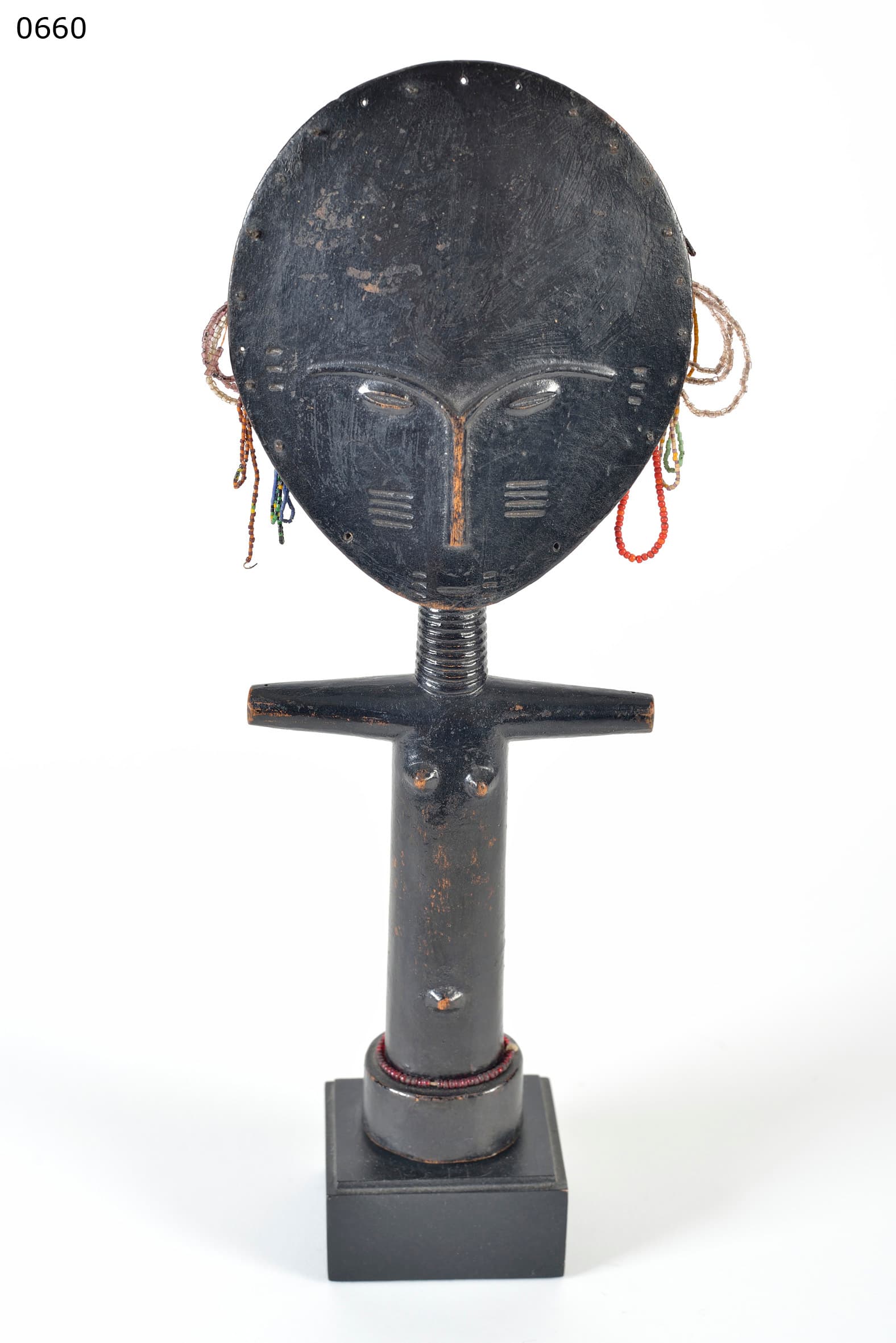
Akua-ba fertility doll (Asante disc-head variant)

fertility doll (AKUABA)