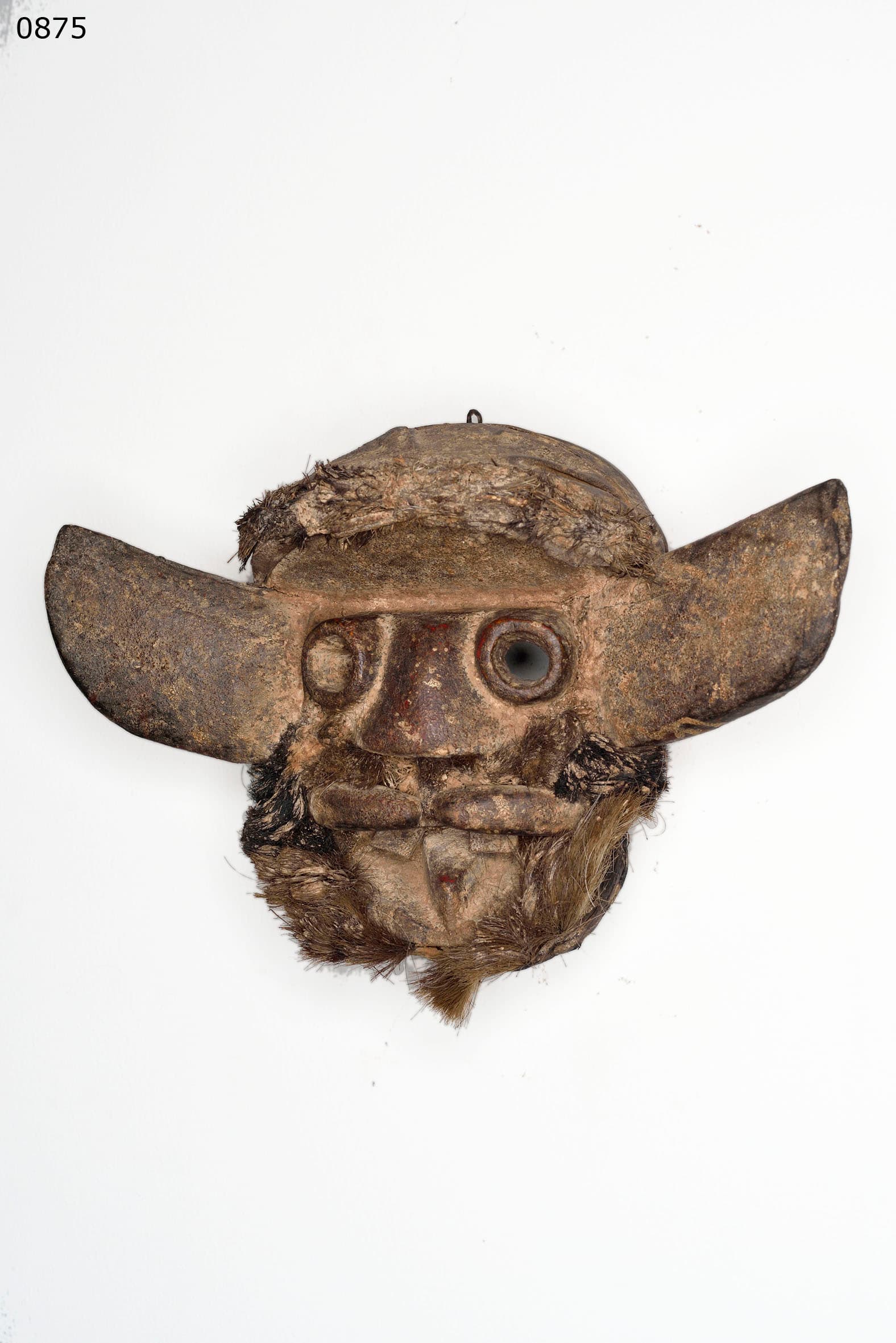
A dark, fearsome wooden mask with a projecting forehead, tubular eyes, real animal horns attached to the top, an open mouth with large square teeth, and a thick beard of natural fibers and animal hair.
1. Aesthetic style and regional traits
The We (Guere) people emphasize an accumulative, terrifying aesthetic designed to shock and overwhelm the viewer. The core wooden carving — already aggressive with its bulging eyes and projecting forehead — is aggressively augmented with real animal horns and dense animal hair. This multi-media approach physically transfers the dangerous, untamed power of the forest beasts directly onto the wearer. The accumulative method is itself a regional signature — We masks rely on assembled materials rather than carved volume to project supernatural force.
2. Ritual function and social authority
This mask embodies the Gla, a powerful entity invoked during times of social crisis. It was worn by highly initiated men to enforce laws, resolve severe inter-family conflicts, and prepare warriors. The mask does not represent a human; it represents a chaotic, supernatural force that temporarily enters the village to restore order through fear and recognized authority. Verdicts delivered through the Gla are traditionally understood to carry the weight of the spirit world, bypassing ordinary judicial appeal.
3. Physical patina and age indicators
The documented provenance of this mask — purchased in Paris in 1957 — provides a terminus ante quem. The mask itself exhibits a deep, smoky patina consistent with storage in the rafters of a traditional dwelling. The dried, brittle state of the natural fibers and the oxidation on the wood suggest it saw ceremonial use before it reached the Parisian market. The 1957 acquisition date establishes a chronological anchor for the piece.
Summary
A striking and historically significant We forest mask, accompanied by a documented mid-century acquisition history. Its intense, accumulative materials and smoke patina make it a significant example of Ivory Coast masking.
Written with AI assistance from the collection appraisal, object photography and our own research; editorially reviewed. Mistakes are possible — corrections are welcome. How we work →