A finely carved oval wooden mask featuring classical Baule serene features: downcast slit eyes, an elegant, slender nose, a small mouth, and an intricate, finely incised, multi-lobed coiffure extending over the forehead. The surface has a dry, matte, earth-rubbed patina.
1. Aesthetic style and regional traits
This mask is a quintessential example of the Baule Mblo portrait tradition, which represents the highest form of idealized, aesthetic beauty in Ivory Coast carving. The artist has meticulously balanced the rounded, sweeping curves of the face with the highly structured, almost architectural detailing of the finely incised coiffure. The downcast eyes and small mouth do not signify sadness, but rather the supreme virtues of respect, intelligence, and internal composure. The Mblo register sits opposite the aggressive Gbekre register within Baule masking — both registers are necessary and define each other through their opposition.
2. Ritual function and public honor
Mblo masks are unique in that they are often carved as idealized tributes to a specific, living individual within the community — often an exceptional dancer or a woman of high status. Known as an Ndoma (namesake), the mask is worn by a skilled male dancer who performs in the presence of the honored individual during celebratory festivals, creating a profound, public connection between the living community and the idealized spiritual realm. The honoree's actual presence at the performance is iconographically essential — the mask is a portrait of their ideal self rather than a generic emblem.
3. Physical patina and age characteristics
Unlike highly polished commercial carvings, this piece exhibits a dry, matte surface. The high points of the face (the forehead, nose, and chin) show subtle smoothing and lighter coloration consistent with being handled, stored, and danced. The fine incisions in the hair remain sharp but are filled with accumulated dust and indigenous cosmetic powders, suggesting an early 20th-century origin.
Summary
A refined execution of Baule Mblo portraiture, capturing the culture's pursuit of idealized, serene human beauty. Its detailed coiffure and dry handling patina make it an elegant ceremonial artifact.
Written with AI assistance from the collection appraisal, object photography and our own research; editorially reviewed. Mistakes are possible — corrections are welcome. How we work →

mask (collected in Abidjan)

mask (called GOLI)
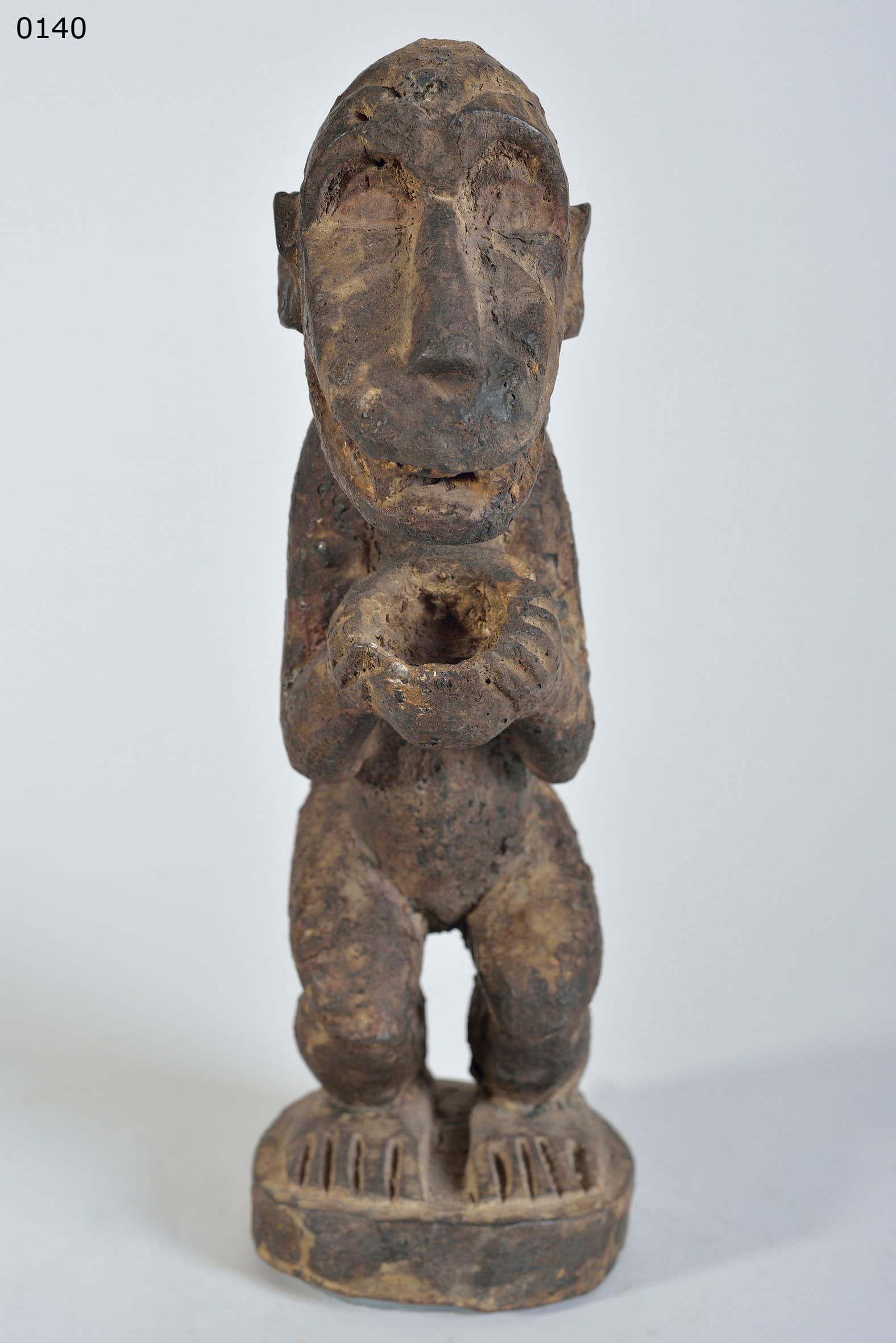
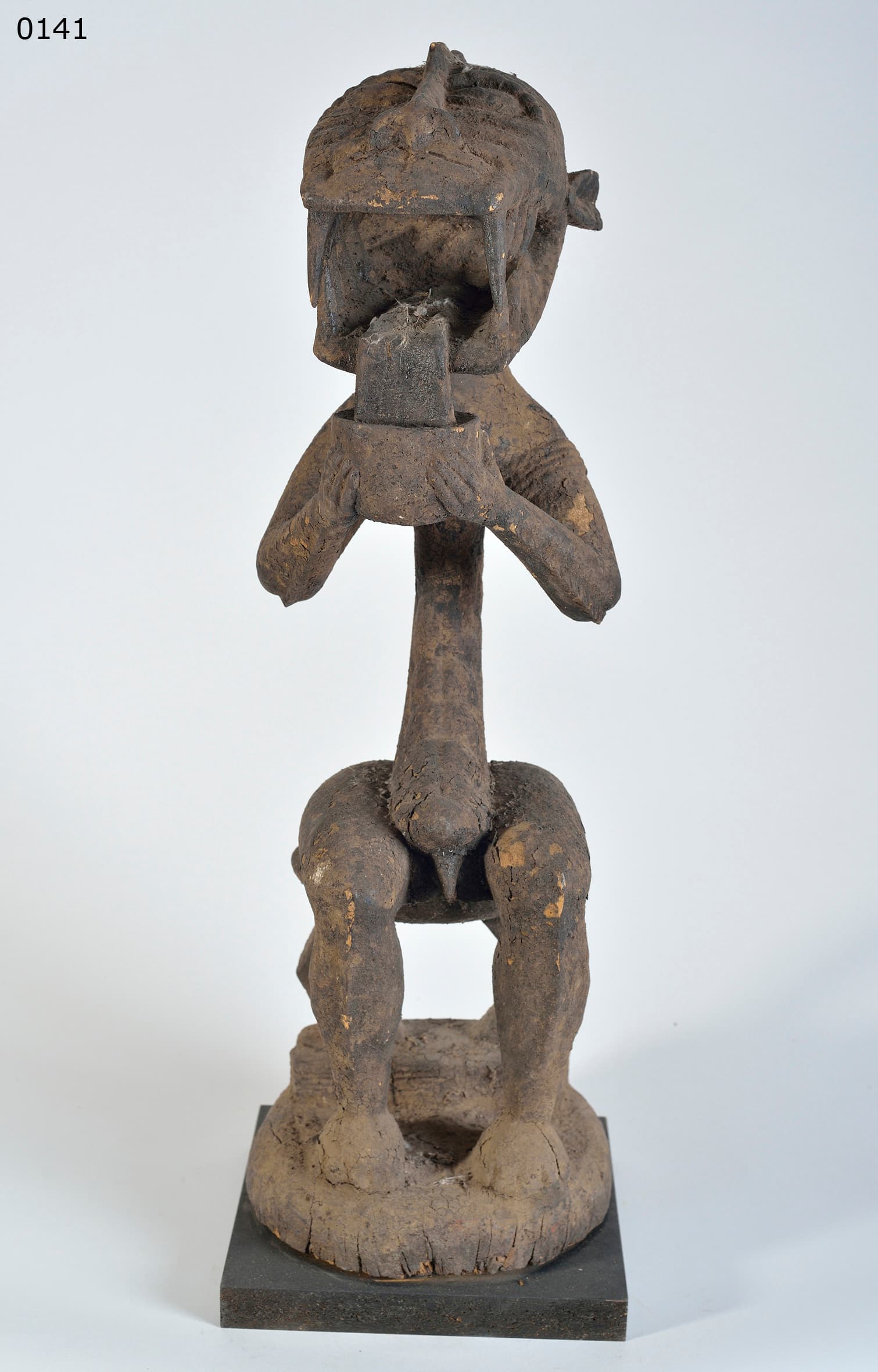
simian statue (called MBOTUMBO or GBEKRE)