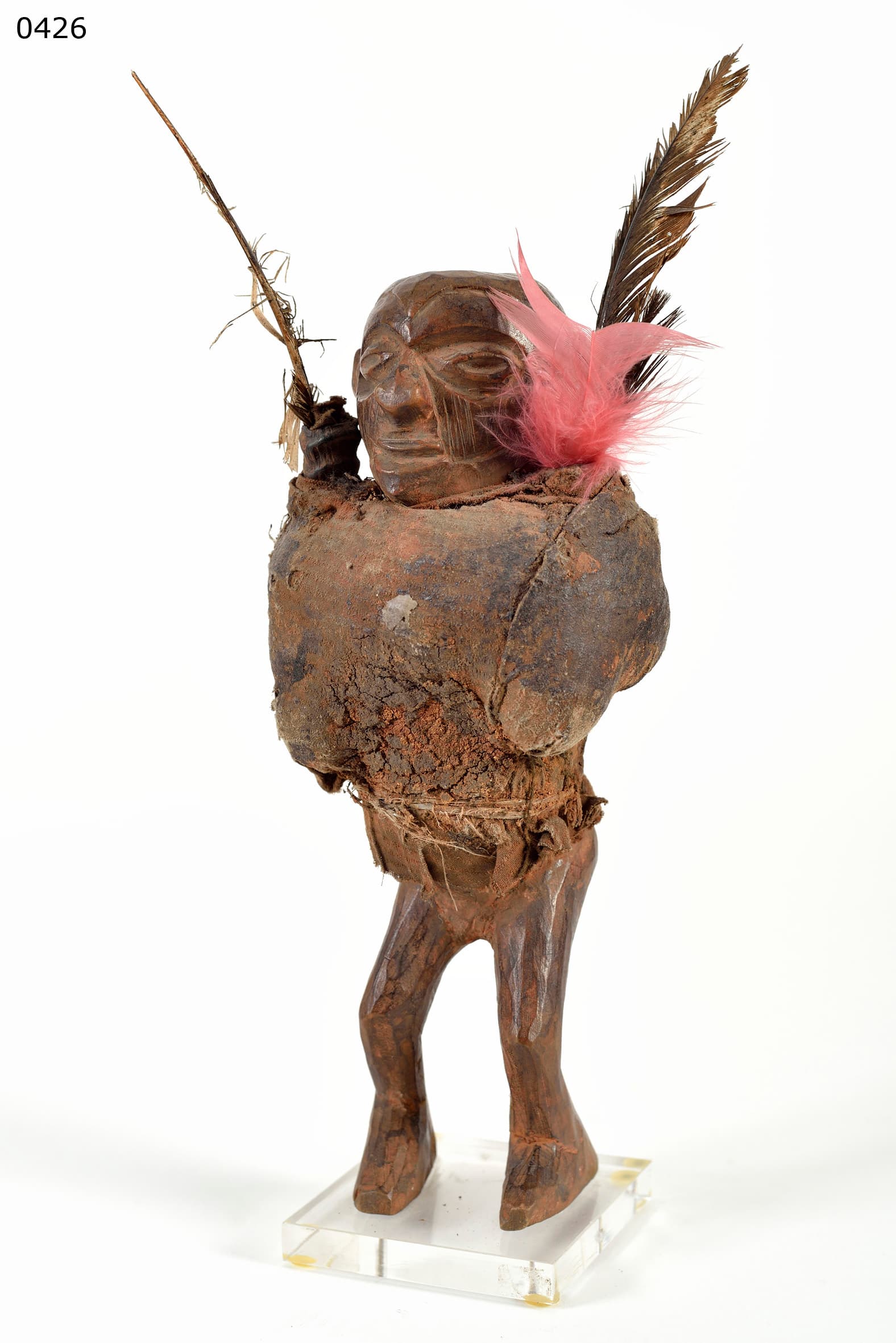
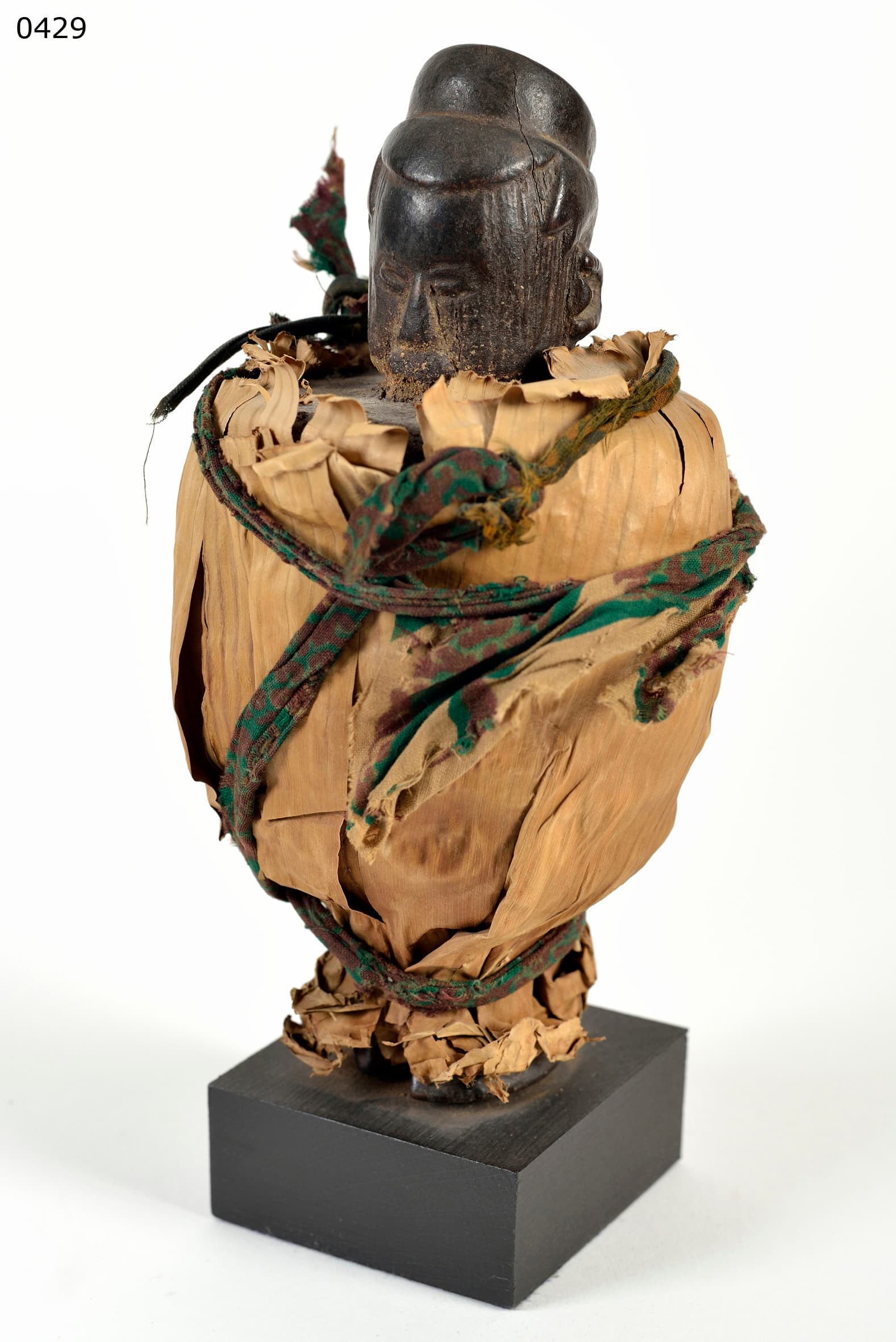
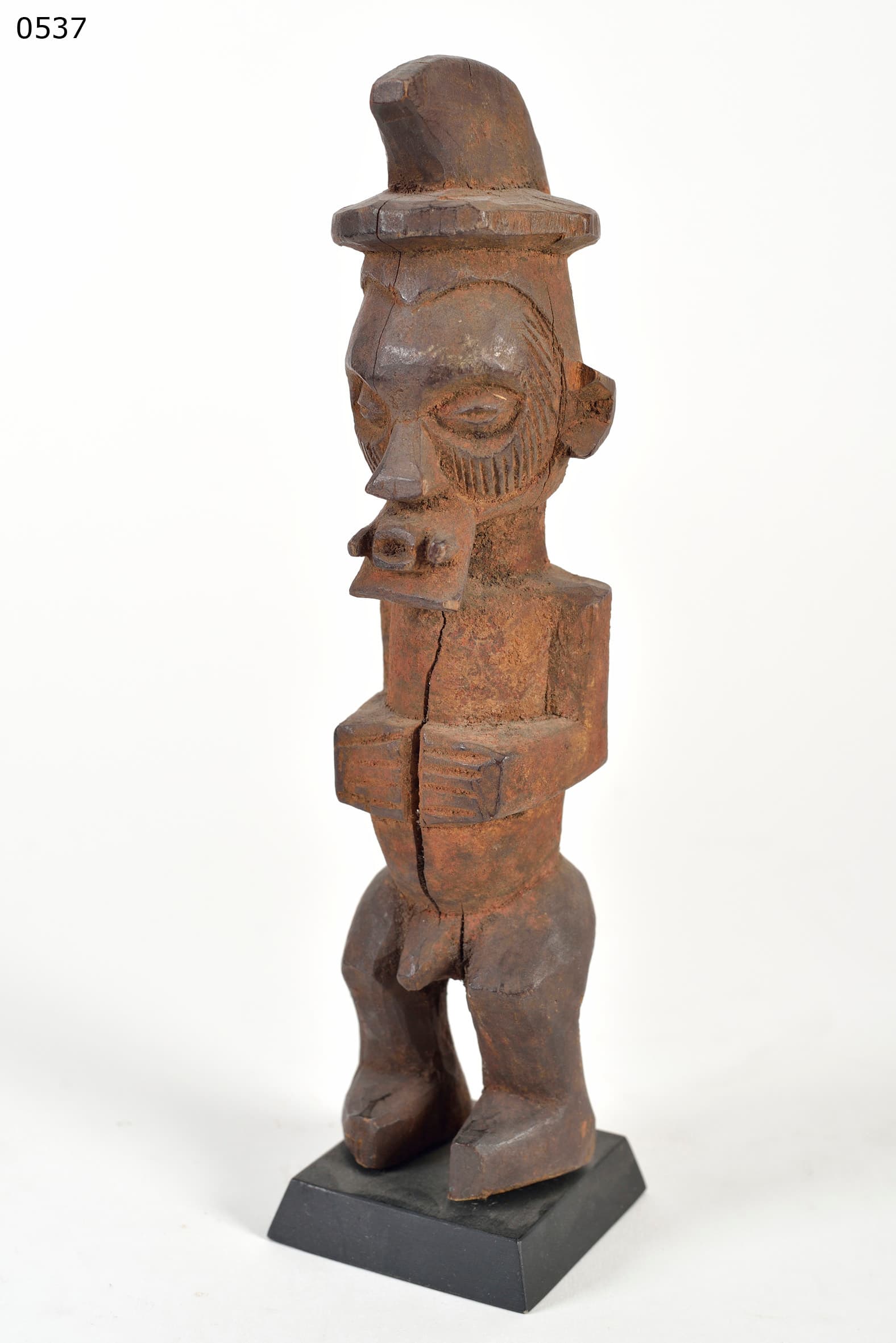
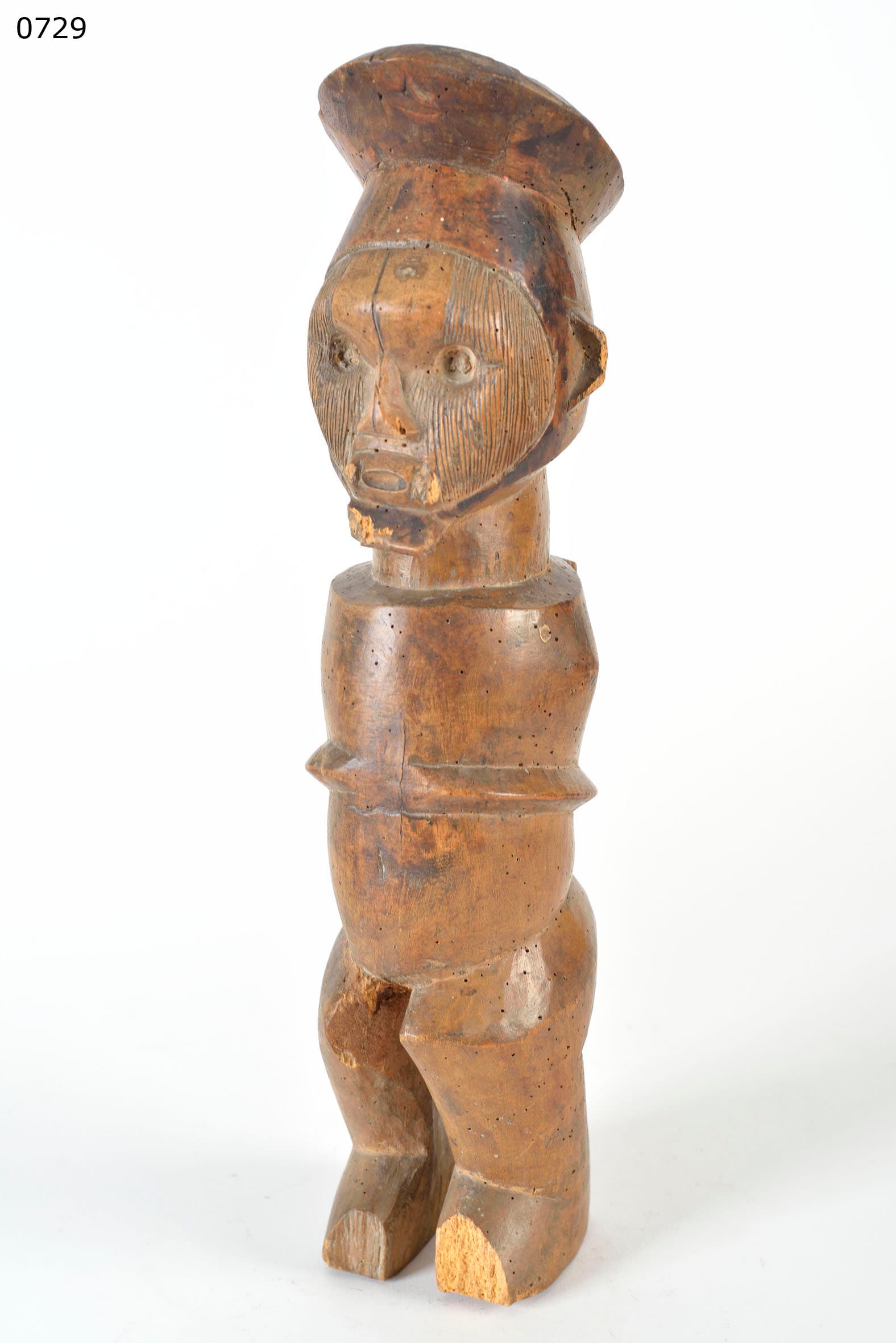
This object features a finely woven, semi-circular basketry body attached to a long, curved wooden handle. The dark, glossy patina of the wood and the tight, rigid oxidation of the woven fibers indicate extensive handling and significant age.
1. Aesthetic style and regional traits
The Teke peoples of the Republic of Congo are exceptional weavers, and this rhythm rattle demonstrates their ability to fuse structural integrity with acoustic function. The rigid, arched handle perfectly tensions the woven chamber, which contains seeds or hard pebbles. The tight, mathematically precise plaiting of the rattan/fiber not only creates a durable resonance chamber but also presents a sophisticated geometric aesthetic that is visually harmonious and functional. Teke basketry operates within a regional tradition of mathematically precise weaving that distinguishes their utilitarian objects from neighboring Kongo or Kuba weaving registers.
2. Ritual function and sonic architecture
In Teke culture, rhythm rattles are indispensable tools for religious specialists, diviners (nganga), and musicians during trance and healing ceremonies. The sharp, percussive sound is believed to part the veil between the physical and spiritual worlds, calling forth ancestral spirits (nkira) and driving away malevolent forces. The sweeping motion required to play it dictates its ergonomic, elongated design, making it an extension of the priest's own body during ecstatic rituals.
3. Physical patina and age indicators
The physical indicators of age in this piece lie in the deep, lustrous patina on the wooden handle, consistent with years of friction from the player's hands transferring natural oils. Furthermore, the woven fiber has achieved a stiff, darkened state of oxidation that typically occurs over many decades of curing in smoky environments. The absence of modern synthetic bindings and the seamless integration of the organic materials support an attribution to the early 20th century.
Summary
An elegant intersection of acoustic engineering and craftsmanship, this Teke rhythm rattle embodies the sonic heartbeat of Congolese spiritual life. Its deep handling patina and aged basketry make it a notable ethnomusicological artifact.
Written with AI assistance from the collection appraisal, object photography and our own research; editorially reviewed. Mistakes are possible — corrections are welcome. How we work →