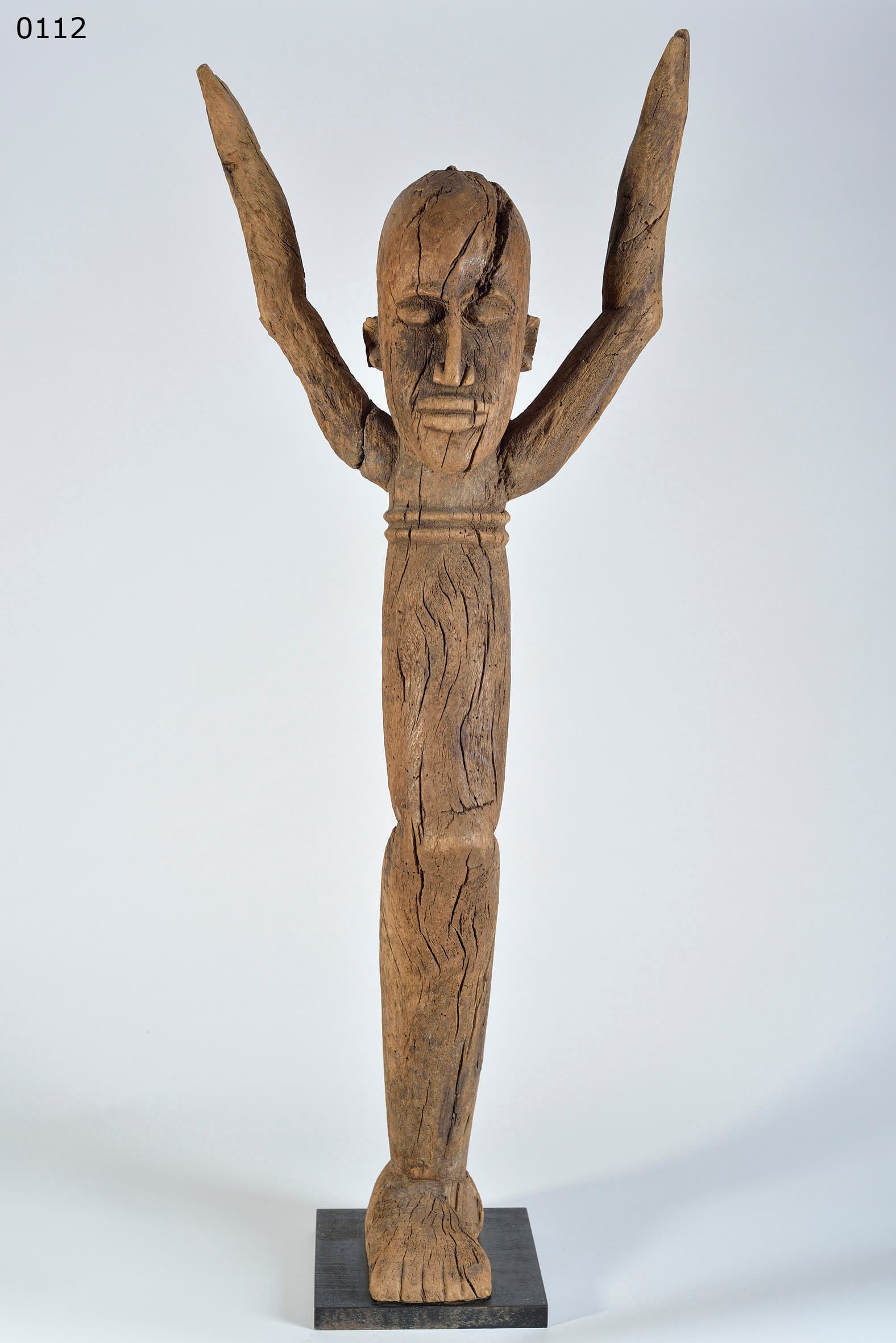
Dieses Objekt entspricht dem Typus eines Lobi-Schreinaltars aus Burkina Faso. Ihre Informationen sind weitgehend korrekt, obwohl es eine wichtige Unterscheidung in Bezug auf die Terminologie und die Art der Figuren zu machen gilt.
1. Korrektur der Terminologie: Bateba vs. Bateke
Der Begriff "Bateke" bezieht sich wahrscheinlich auf das Volk der Teke im Kongobecken, das für seine eigenen, ausgeprägten Kraftfiguren bekannt ist. Diese speziellen Figuren sind jedoch im Lobi-Stil gehalten. In der Sprache der Lobi werden diese geschnitzten Holzfiguren Bateba genannt.
- Bateba: Bedeutet "holzgeschnitzte Figur" und bezieht sich auf das physische Gefäß, das einen Geist beherbergt.
- Thil (pl. Thila): Die unsichtbaren Geister, die diese Figuren bewohnen, um den Haushalt zu schützen.
2. Analyse der Figuren
Der Schnitzstil ist charakteristisch für Lobi Bateba Phuwe (gewöhnliche oder normale Figuren):
- Das Paar: Lobi-Schreine zeigen fast immer Paare, um das Gleichgewicht zu wahren. Die Figur auf der linken Seite ist männlich, die auf der rechten Seite ist weiblich. Sie fungieren als Vermittler zwischen den Lebenden und der Geisterwelt.
- Physikalische Merkmale: Man beachte die kantigen Schultern, die blockartigen Füße und die hervorstehenden Nabel. Die Köpfe sind überproportional groß, was die Weisheit und die Macht des darin wohnenden Geistes betonen soll.
- Haltung: Ihre starre, aufrechte Haltung bedeutet einen Zustand der "Wachsamkeit", da ihre Hauptaufgabe darin besteht, die Familie vor Hexerei, Krankheit und Unglück zu schützen.
3. Der Altarsockel und das Opfermaterial
Das auffälligste Merkmal dieses Objekts ist die große, kuppelartige Basis und die starke Verkrustung aus organischem Material.
- Schreinaltar: In einem Lobi-Haus würden diese Figuren in einer dunklen, heiligen Ecke oder einem kleinen Raum, der thilda genannt wird, aufgestellt werden.
- Opferpatina: Das "pelzige" oder krustige Material, das man am Übergang zwischen den Füßen und der Basis sieht, besteht aus Opferresten. Dazu gehören typischerweise getrocknetes Tierblut, Hirsebrei und Federn.
- Rituelle Verwendung: Wenn eine Familie vor einem Problem steht, weist ein Wahrsager (bour) sie an, dem Thil Opfergaben zu bringen. Durch die Anhäufung dieses Materials über Jahre (oder Generationen) entsteht eine dicke "Opferpatina", die von Sammlern geschätzt wird, da sie für eine Verwendung des Objekts in der traditionellen religiösen Praxis spricht.
Zusammenfassung
Bei diesem Objekt handelt es sich um ein Lobi Bateba-Paar auf einem geweihten Schrein-Sockel. Es diente als spiritueller Blitzableiter für einen Haushalt in Burkina Faso, der negative Energie absorbieren und die Familie schützen sollte. Das Vorhandensein der ursprünglichen Opferfasern deutet darauf hin, dass es über einen längeren Zeitraum ein aktiver Teil des spirituellen Lebens einer Familie war.
KI-unterstützt erstellt aus Sammlungsgutachten, Objektfotografie und eigener Recherche, redaktionell geprüft. Fehler sind möglich — Hinweise darauf sind uns willkommen. Zum Verfahren →
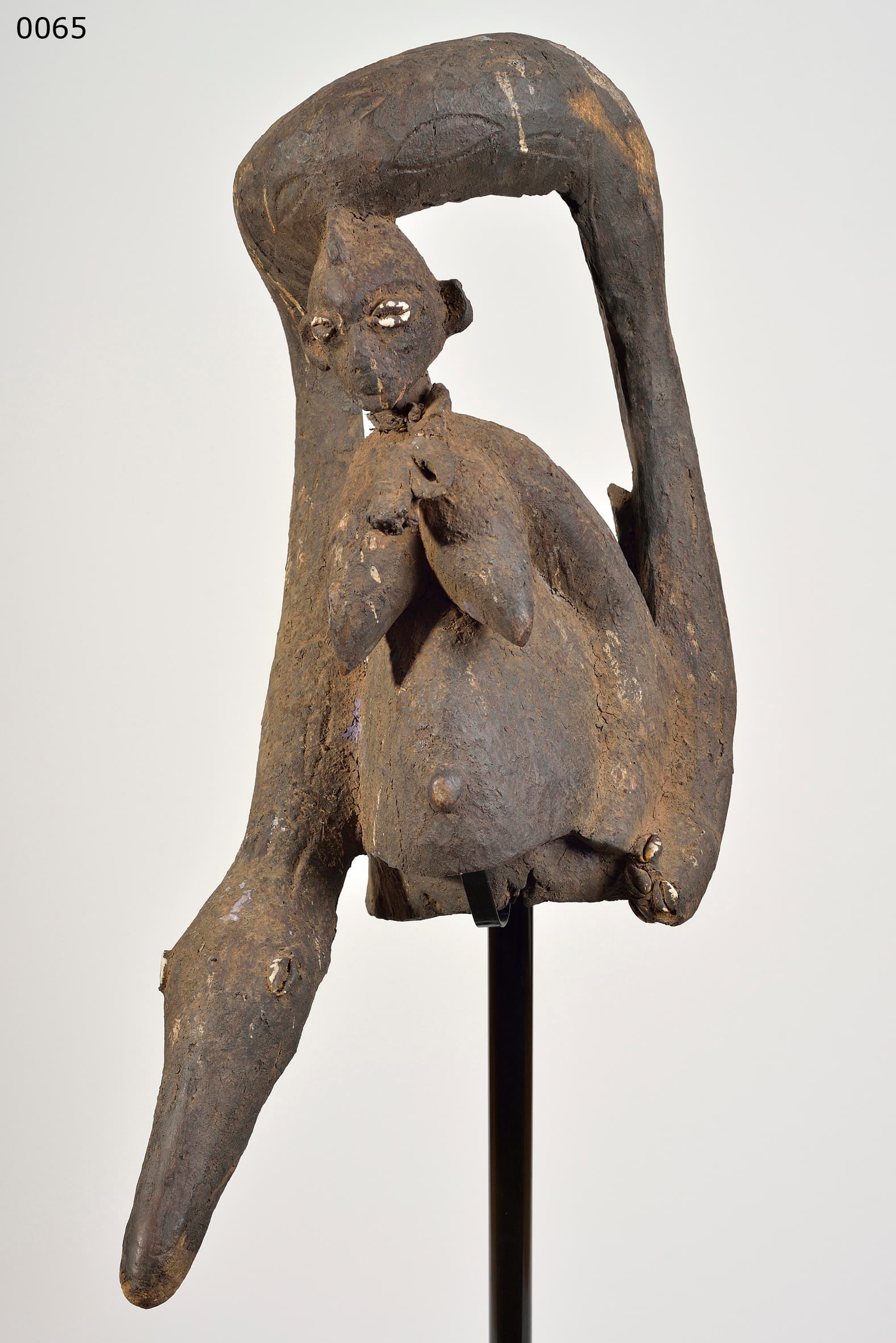
Seltene Kopfhaubenmaske
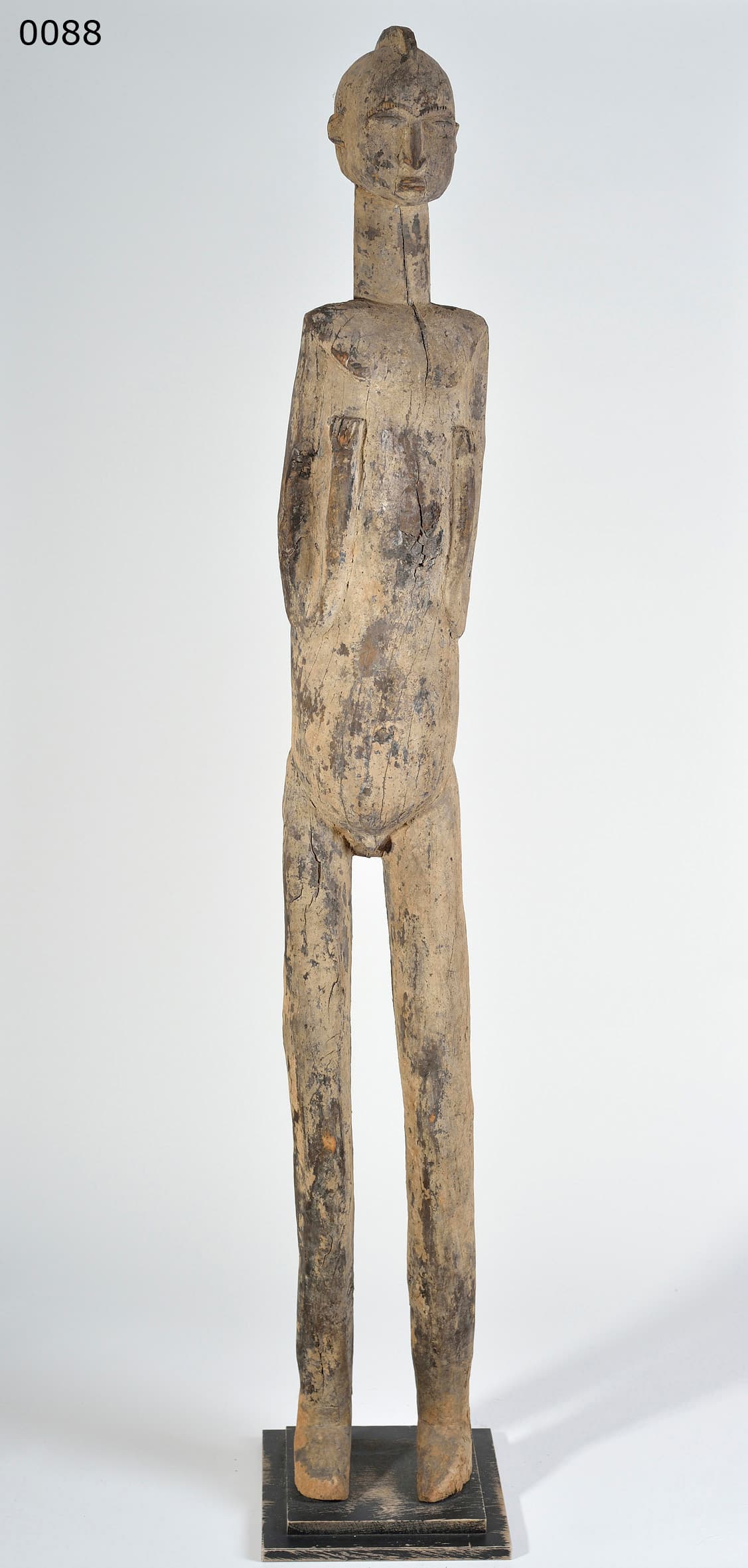
Schreinfigur, die einen BATEBA-Geist darstellt (ungewöhnlich groß, selten)
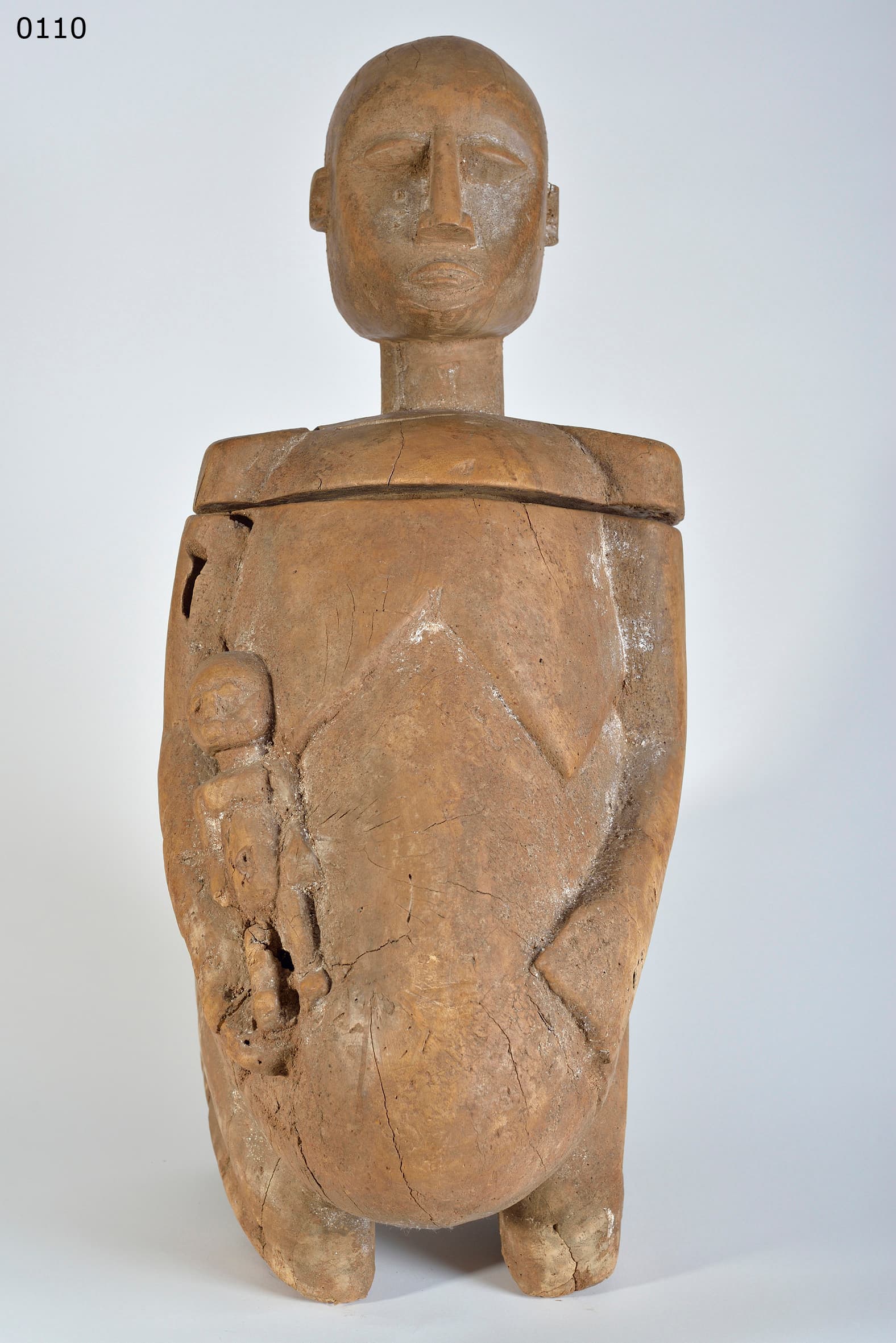
Mutterschaftsschreinfigur (Behälter für magische Zutaten und Instrumente - sehr selten)