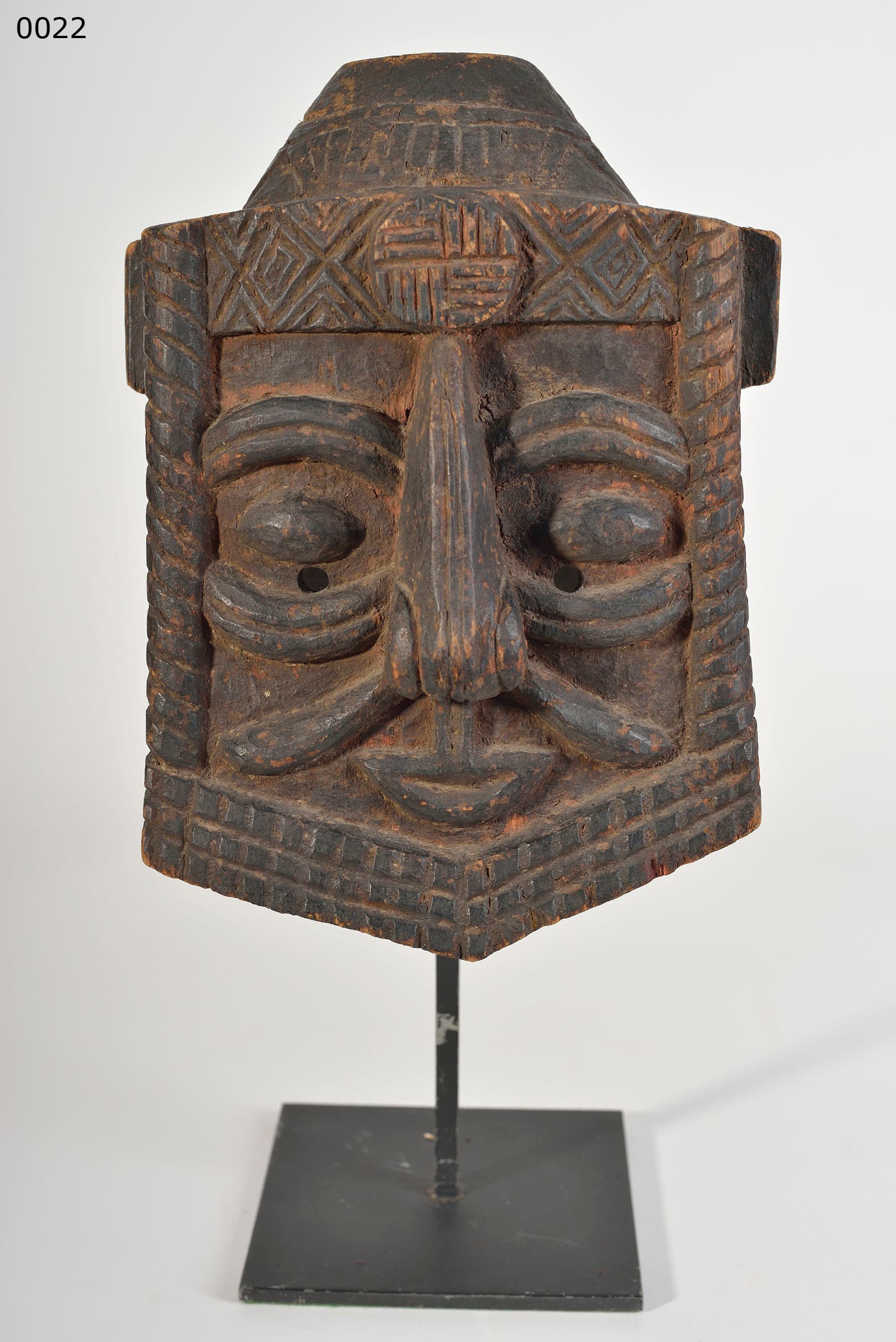
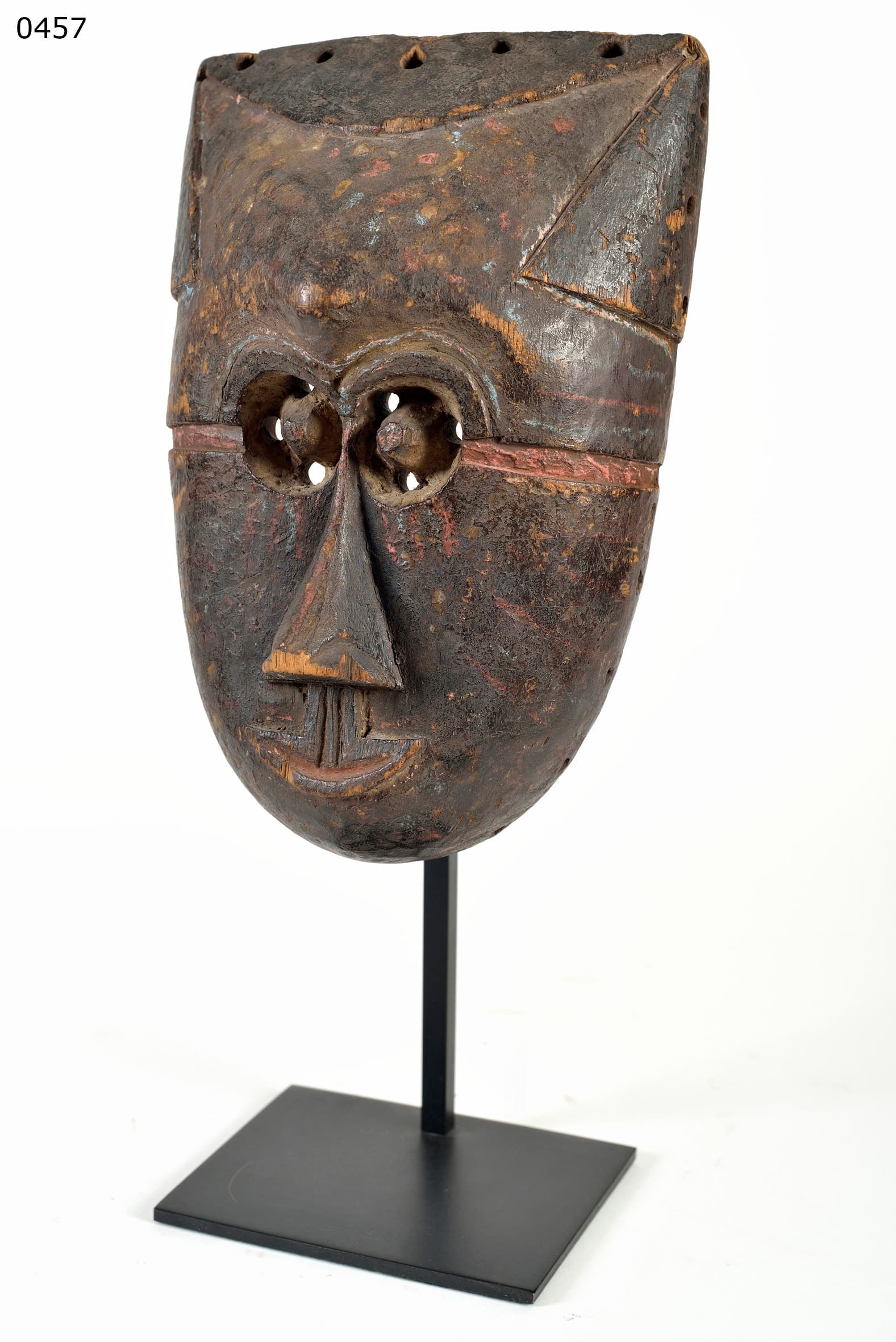
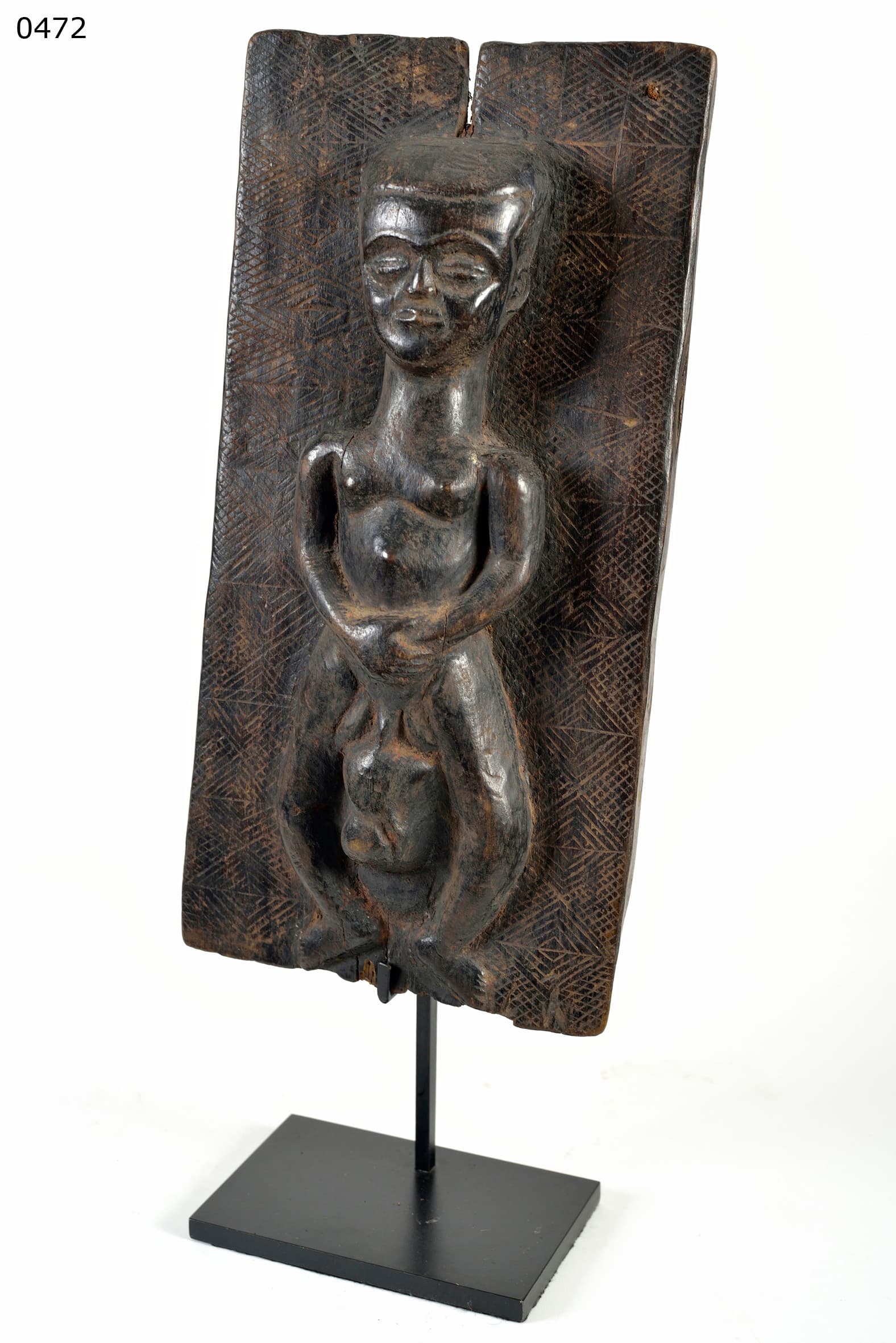
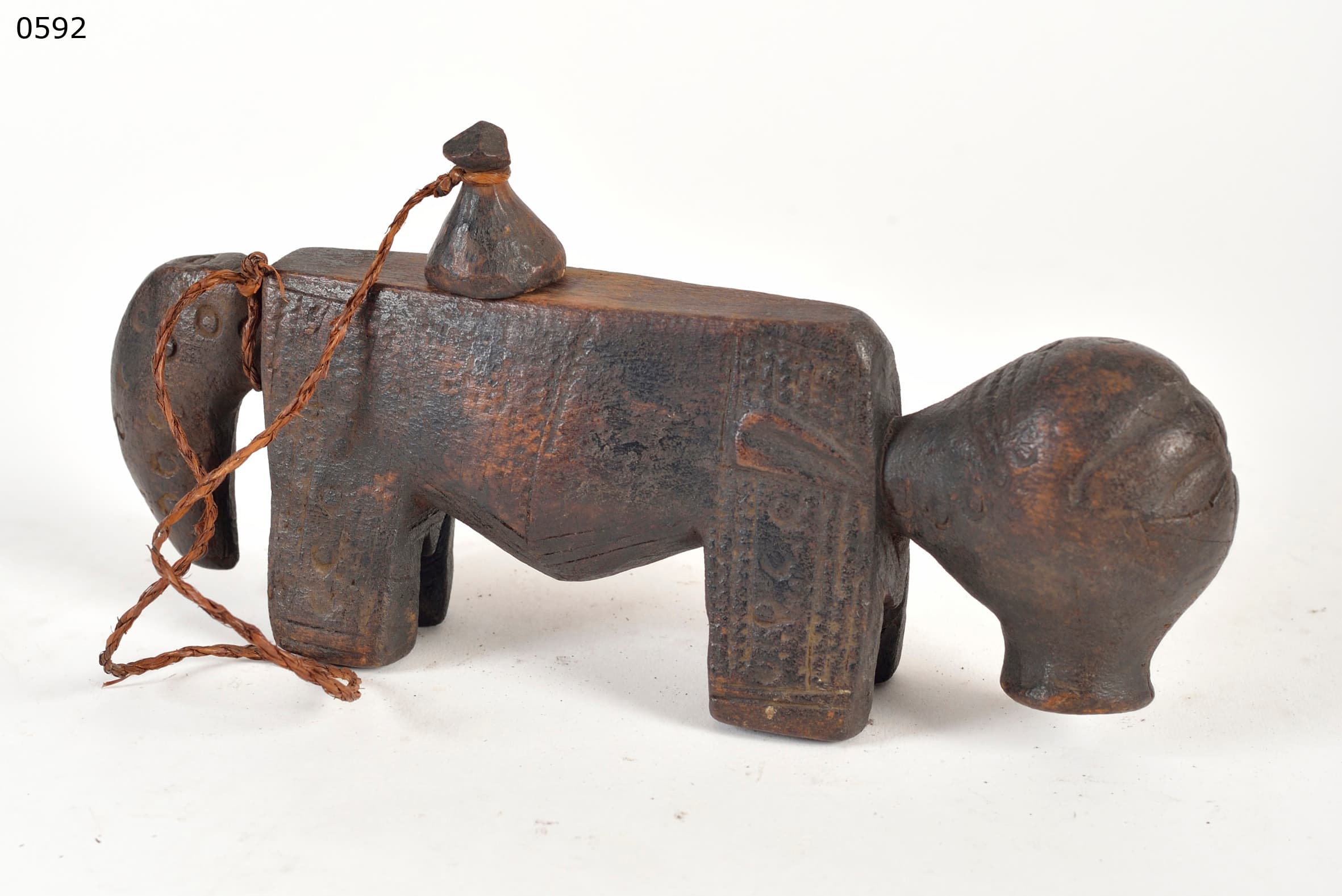
Eine markante keilförmige Holzhelm-Maske (wohl 1. Hälfte 20. Jh., 44 cm) - eine Pwoom Itok aus dem Kuba-Königreich in der DR Kongo. Ausgestellt in der französischen Botschaft in Wien.
1. Die Figur: Der weise Bürger
Das Maskenwesen der Kuba ist ein komplexes königliches Theater. Während einige Masken den König oder göttliche Stifter darstellen, übernimmt der Pwoom Itok eine charakteristische Rolle.
- Die Stimme des Volkes: Er wird oft als weiser, alternder Bürger oder als ausländischer Reisender interpretiert. Während der Tänze interagiert er direkt mit dem Publikum und fungiert als Gegenpol zu den hochmütigen königlichen Geistern, indem er durch Pantomime moralische Belehrungen erteilt.
- Die Geometrie des Alters: Das nach unten gerichtete keilförmige Kinn und die schwere Stirn verleihen der Maske einen müden Ausdruck.
2. Symbolik und Oberflächendetails
Die Schnitzerei entspricht den traditionellen ästhetischen Regeln der Kuba.
- Die "Tränen"-Ritzungen: Ein charakteristisches Merkmal sind die vertikalen Reihen von eingeritzten Punkten unter den Augen. Diese werden allgemein als Tränen (masyoji) interpretiert, die die angesammelten Sorgen, Erfahrungen und die Weisheit des Alters symbolisieren.
- Die Hörner: Die kleinen abstehenden Hörner oder Ohren an den oberen Ecken signalisieren seine Verbindung zu den wilden Kräften der Natur und erinnern die Gemeinschaft daran, dass auch zivilisierte Ältere die Gefahren des Waldes kennen.
3. Ausstellung und Status
- Traditionelle Formgebung: Die Aufnahme in die Ausstellung der Französischen Botschaft in Wien spricht für die Qualität des Stücks, dessen Gestaltung sich in die für die höfische Schnitzerei dokumentierte Stilgruppe einordnet.
- Funktionale Augen: Die rechteckigen durchbohrten Augen sollten es dem Tänzer ermöglichen, zu sehen und gleichzeitig einen stoischen, rituellen Blick während der choreographierten Hofaufführungen aufrechtzuerhalten.
Zusammenfassung
Der Pwoom Itok wird in der Literatur mit der "Stimme des Volkes" in der Geisterwelt der Kuba verbunden. Durch geometrische Reduktion und spezifische symbolische Markierungen (die Tränen) vermittelt die Maske den Eindruck des universellen Archetyp des weisen, alternden Bürgers.
KI-unterstützt erstellt aus Sammlungsgutachten, Objektfotografie und eigener Recherche, redaktionell geprüft. Fehler sind möglich — Hinweise darauf sind uns willkommen. Zum Verfahren →