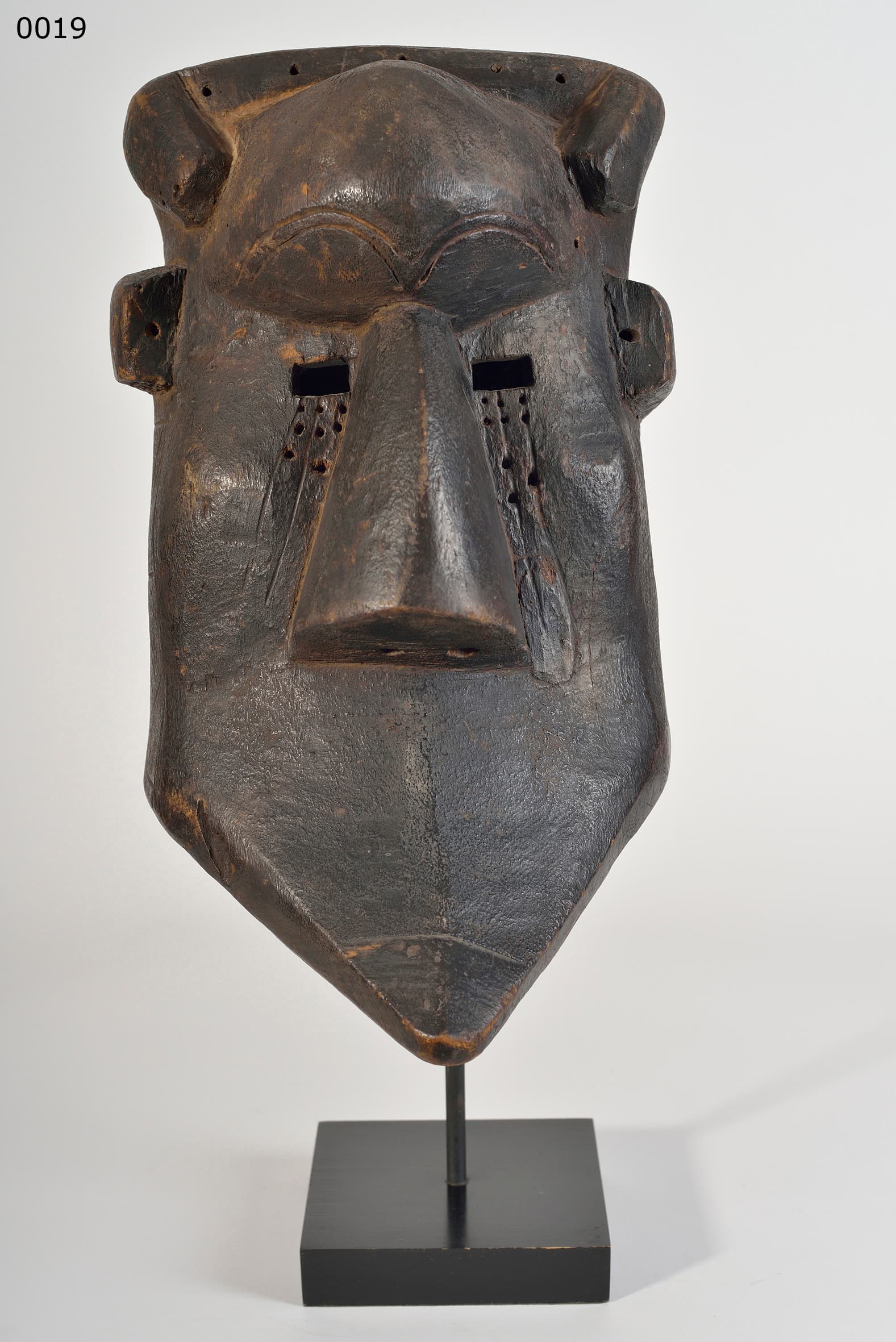
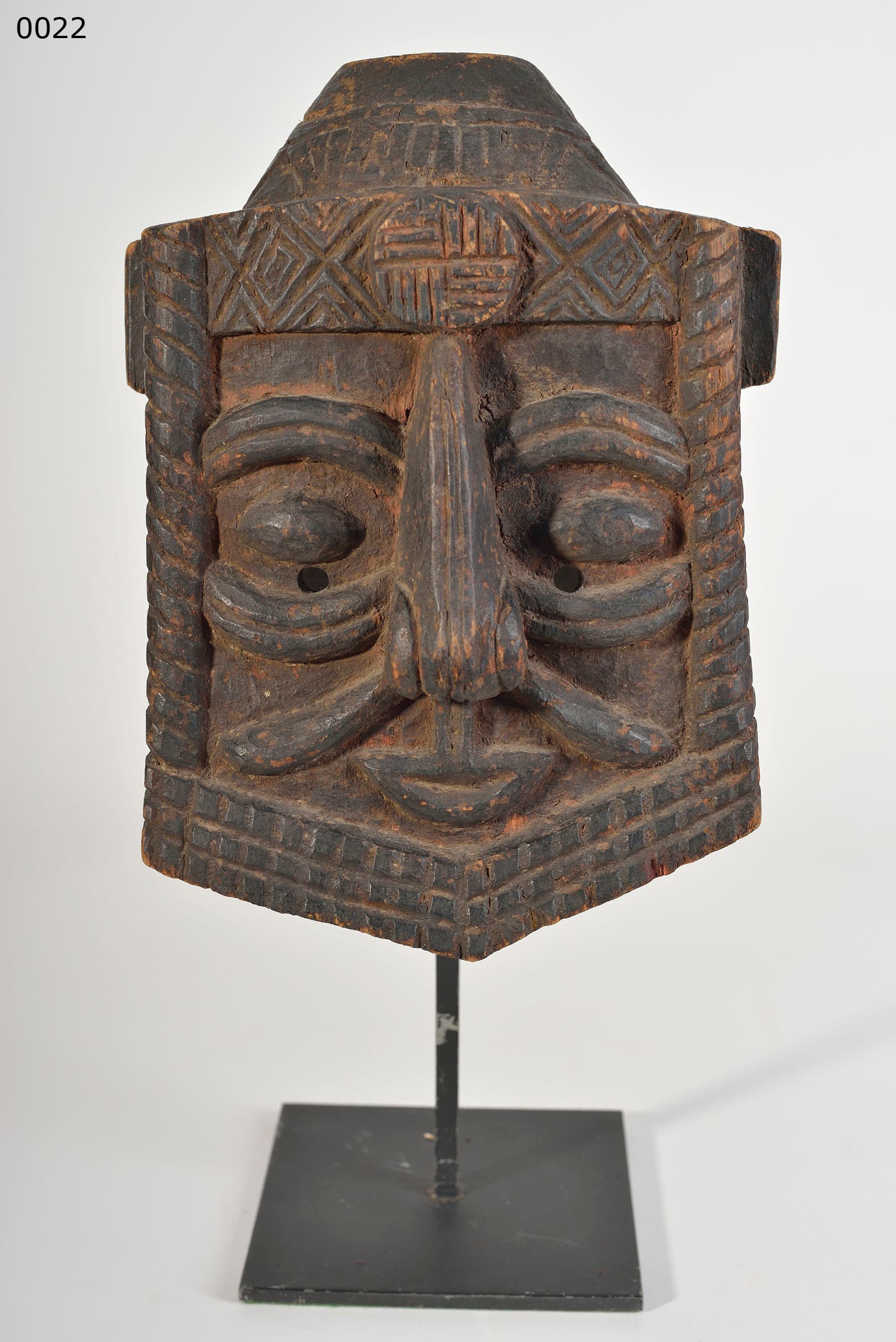
Eine dramatische, schwere Kuba Bwoom-Maske (1. Hälfte 20. Jh., 30 cm) aus der DR Kongo - eine massiv gewölbte, übergroße Wasserkopf-Stirn, eine breite, flache Nase und ein vorspringender Kiefer. Die Gesichtshälften sind mit tiefen geometrischen Einschnitten umrissen. Das dichte Holz weist eine reiche dunkle Patina auf, die von stark verblassten oxidierten Spuren roter und weißer polychromer Pigmente überlagert ist.
1. Die Bwoom-Typologie und die königliche Hydrozephalie
Das Kuba-Königreich verwendet eine hochgradig formalisierte königliche Maskeraden-Triade - diese Maske repräsentiert die ikonische Bwoom-Figur.
- Bulging Cranial Volume: Universell erkennbar an der aggressiv gewölbten, übergroßen Stirn und der stark vorspringenden Kieferlinie - der Künstler hat das Schädelvolumen absichtlich verzerrt, um ein intensives, überwältigendes, potenziell gefährliches intellektuelles oder übernatürliches Gewicht zu projizieren.
- Obsessive Oberflächengeometrie: Die tiefe, akribische geometrische Spur, die in die Wangen und die Nase geschnitzt ist, demonstriert die Besessenheit der Kuba von komplexen Oberflächenmustern und strukturellem Design.
2. Die königliche Triade und der unterirdische Geist
Bei königlichen Darbietungen der Kuba tanzt der Bwoom zusammen mit Mwaash aMbooy (dem König) und Ngady aMwaash (der königlichen Schwester/Gattin).
- Antagonist der königlichen Autorität: Bwoom repräsentiert die einfachen Leute, die ursprünglichen Pygmäen/Twa-Bewohner des Landes, oder einen mächtigen, ungezähmten unterirdischen Naturgeist.
- Theatralische politische Spannungen: Bei spektakulären königlichen Festen tritt der Bwoom-Tänzer aggressiv und stolz auf und fordert die Königsmaske heraus - eine hochgradig kodifizierte theatralische Nachstellung der Kuba-Mythologie, die die königliche Autorität mit der Anerkennung des wilden, unabhängigen Geistes des einfachen Volkes in Einklang bringt.
3. Performance Reibung und Pigment Oxidation
Der physische Zustand deutet auf einen aktiven zeremoniellen Gebrauch hin.
- Pigmentspuren in den Einschnitten: Die ursprünglichen leuchtenden Farben sind tief verblasst und haben nur oxidierte Spuren von Rot und Weiß tief in den geometrischen Einschnitten hinterlassen.
- Glanzpolitur und Schweiß im Inneren: Die hohe wulstige Stirn und die markante Nase weisen eine ausgeprägte Glanzpolitur auf, die durch jahrzehntelange physische Reibung und das Auftragen von Palmöl während der Lagerung entstanden sein kann; die starke schweißfleckige Oxidation auf der Innenseite stützt die Annahme einer Verwendung als getanztes königliches Artefakt.
Zusammenfassung
Diese Bwoom-Maske ist ein kühnes, ausdrucksstarkes Werk der königlichen Kuba-Maskerade, das das intellektuelle Gewicht und die Spannung des kongolesischen Hofes eindringlich vermittelt. Die verblasste Polychromie und die intensive Politur machen sie zu einem bemerkenswerten ethnografischen Objekt.
KI-unterstützt erstellt aus Sammlungsgutachten, Objektfotografie und eigener Recherche, redaktionell geprüft. Fehler sind möglich — Hinweise darauf sind uns willkommen. Zum Verfahren →