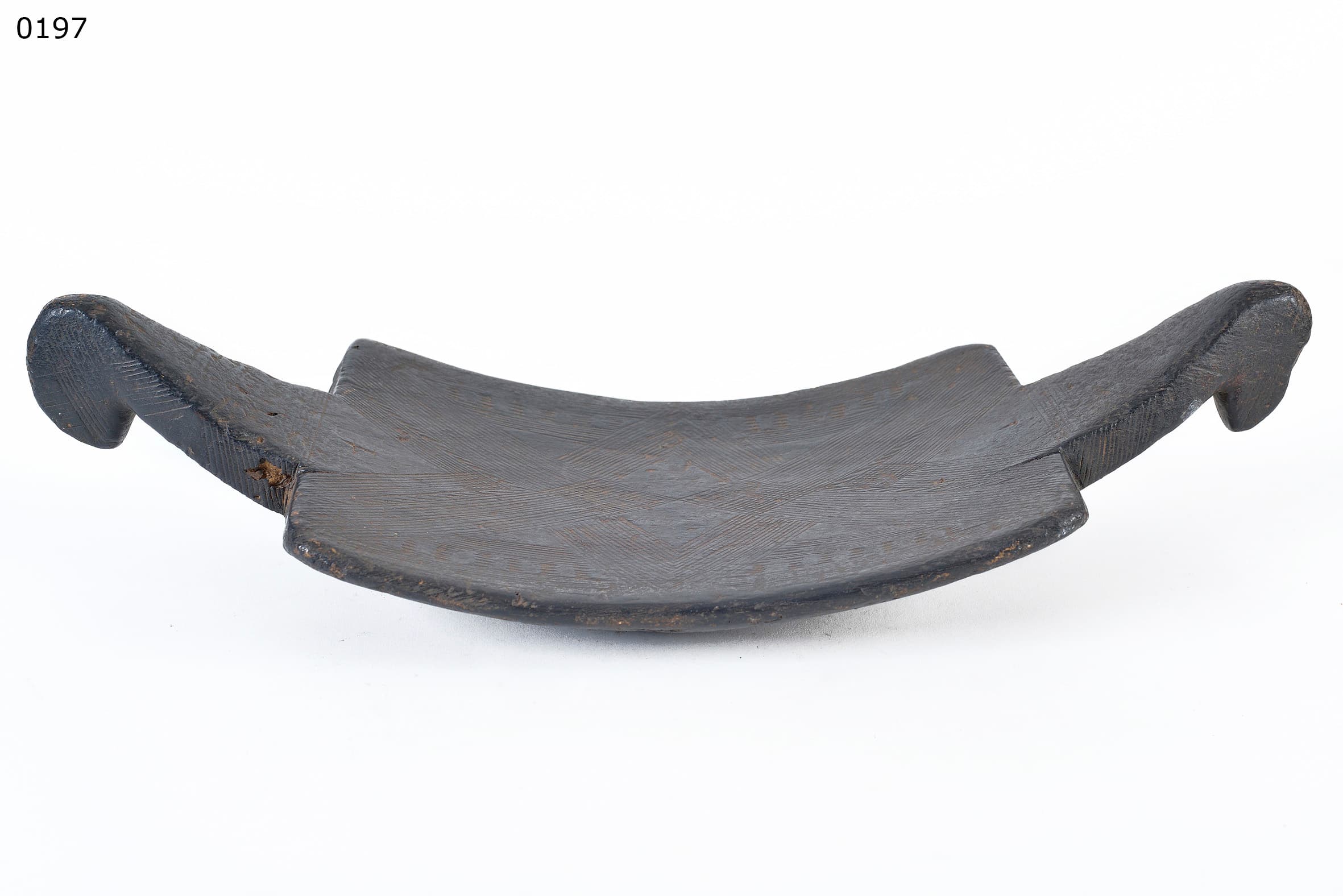
Ein gebogenes, rechteckiges hölzernes Kopftablett (1. Hälfte 20. Jh., 44 cm) von den Jarawa aus Nigeria - entworfen, um sicher auf dem Kopf zu ruhen, mit eingeschnittenen geometrischen Mustern und prominenten stilisierten Griffen, die wie abstrakte Vogel- oder Tierköpfe geformt sind. Das Holz zeigt eine trockene, matte, stark oxidierte Oberfläche, die von der intensiven Nutzung herrührt.
1. Funktionelle Ergonomie und Dekoration
Jarawa-Kopftabletts sind brillante Beispiele für ergonomisches Design in Verbindung mit reicher ästhetischer Verzierung.
- Krümmung für den Schädel: Der gewölbte Boden nimmt den menschlichen Kopf perfekt auf und verteilt das Gewicht schwerer Lasten wie Getreide oder Wassergefäße.
- Arbeit als Leinwand: Die Künstlerin hat einen reinen Gebrauchsgegenstand in eine Fläche für komplizierte geometrische Schnitte verwandelt und damit die tägliche Arbeit der Frauen zu einem Akt des kulturellen und künstlerischen Ausdrucks erhoben.
2. Zoomorphe Griffe und das Prestige der Frauen
Die stilisierten geschwungenen Griffe dienen einem doppelten Zweck.
- Griff und Totem: Die Griffe bieten ausgleichenden Halt und fungieren gleichzeitig als zoomorphe Totems, die wie abstrakte Schnäbel oder Hörner geformt sind.
- Persönliches Prestige: Solch schön geschnitzte Tabletts waren Objekte des persönlichen Stolzes der Jarawa-Frauen und spiegeln ihre wichtige wirtschaftliche Rolle beim Transport von Waren und bei der Versorgung des Haushalts wider.
3. Nützliche Abnutzung und trockene Oxidation
Die Patinierung spricht ganz und gar für eine funktionale Geschichte.
- Zentrale Glättung: Die zentrale Schale weist starke geglättete Abnutzung durch die ständige Reibung der getragenen Gefäße auf.
- Sonnenoxidiertes Äußeres: Die Außenflächen weisen eine trockene, staubige Oxidation auf, die von der nigerianischen Sonne herrührt, während die aufgeweichten Kanten der zoomorphen Griffe von jahrzehntelangem Greifen in der ersten Hälfte des 20.
Zusammenfassung
Dieses Jarawa-Kopftablett erhebt die tägliche Arbeit der Frauen in den Bereich des komplizierten skulpturalen Designs. Seine ergonomischen zoomorphen Griffe und die authentische, schwere Gebrauchsabnutzung machen es zu einem außergewöhnlichen Beispiel nigerianischer Funktionskunst.
KI-unterstützt erstellt aus Sammlungsgutachten, Objektfotografie und eigener Recherche, redaktionell geprüft. Fehler sind möglich — Hinweise darauf sind uns willkommen. Zum Verfahren →