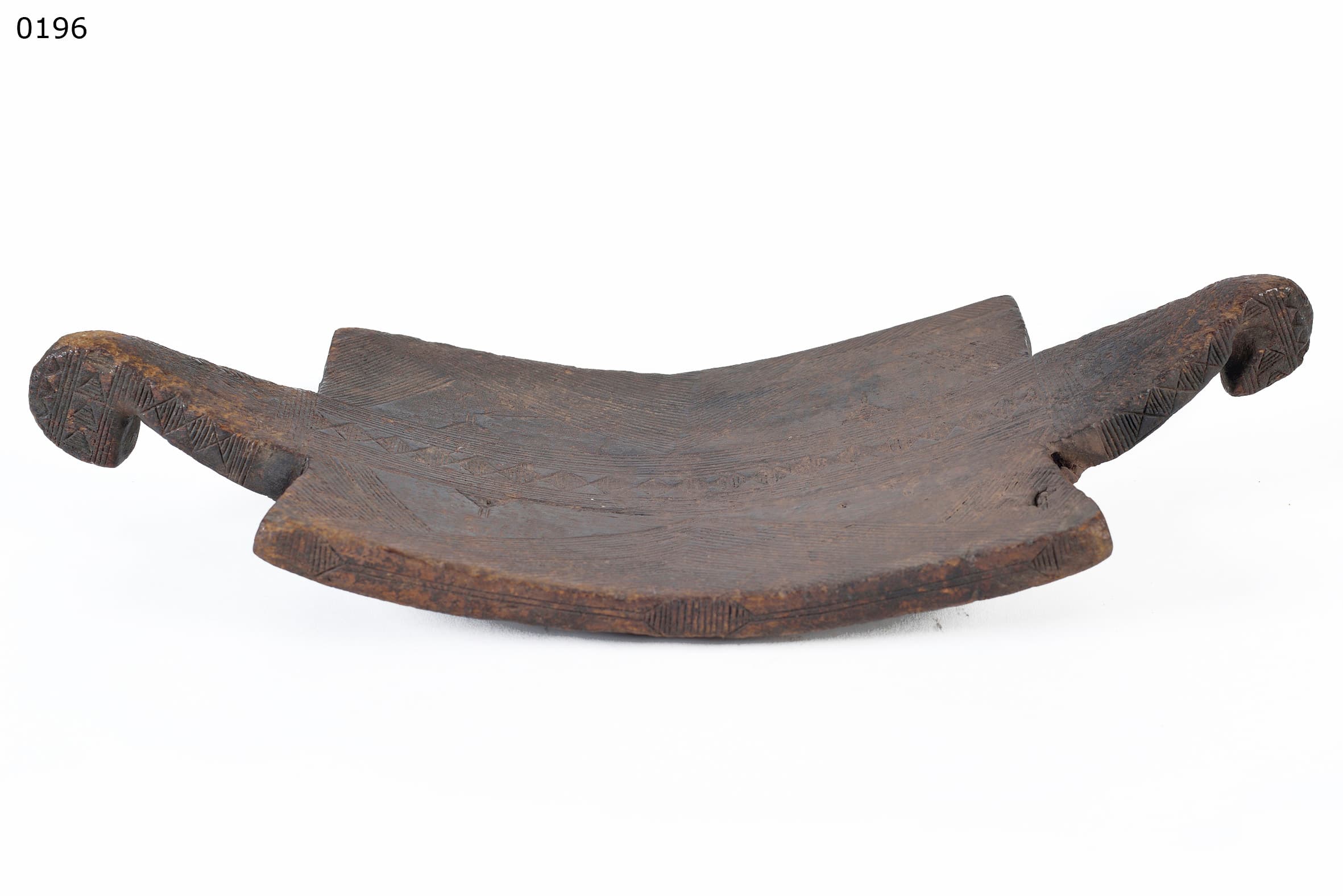
Ein geschwungenes, rechteckiges Holztablett (1. Hälfte 20. Jh., 48 cm) von den Jarawa aus Nigeria - das größere des Paares in dieser Sammlung, mit eingeschnittenen geometrischen Mustern und markanten zoomorphen Griffen. Das Holz trägt eine trockene, matte, oxidierte Oberfläche, die von jahrzehntelangem, intensivem Gebrauch zeugt.
1. Maßstab als Status
Mit 48 cm ist dieses Tablett der größere Bruder seines 44 cm langen Gegenstücks.
- Schwere Lasten: Die zusätzliche Länge bietet Platz für größere Wassertöpfe, größere Getreidegefäße oder zeremonielle Geschenkverpackungen.
- Besitzeridentität: In Jarawa-Haushalten spiegelte die Größe des Tabletts oft die Größe des Grundstücks oder die besonderen Aufgaben des Trägers innerhalb der Großfamilie wider.
2. Die Geometrie der Frauenarbeit
Die eingeritzten geometrischen Muster auf den Flanken machen das Tablett zu einem persönlichen Dokument.
- Signaturmuster: Variationen in den eingeritzten Rändern und zentralen Motiven weisen auf bestimmte Schnitzerinnen oder bestimmte Haushalte hin.
- Öffentliche Sichtbarkeit: Das Tablett, das in der Öffentlichkeit auf dem Kopf balanciert wird, zeigt gleichzeitig die körperlichen Fähigkeiten der Frau und die künstlerische Identität ihrer Abstammung - eine mobile Werbetafel für Handwerk und Zugehörigkeit.
3. Tragemuster als Biografie
Die Patina zeichnet das Arbeitsleben des Tabletts im Detail nach.
- Zentraler Abrieb: Die geglättete zentrale Schale zeigt, wo der Boden der getragenen Gefäße wiederholt gegen das Holz gedreht wurde.
- Griffpolitur: Beide zoomorphen Griffe tragen an den Griffstellen eine dunklere, glänzende Politur - die biografische Signatur der Karriere des Tabletts in einer bestimmten Hand.
Zusammenfassung
Das größere der beiden Jarawa-Kopf-Tabletts erweitert das Thema der gehobenen Frauenarbeit in einen größeren Maßstab. Seine ergonomische Größe und die authentischen Gebrauchsspuren machen es zu einem Paradebeispiel für nigerianische Funktionsschnitzerei in ihrer selbstbewusstesten Form.
KI-unterstützt erstellt aus Sammlungsgutachten, Objektfotografie und eigener Recherche, redaktionell geprüft. Fehler sind möglich — Hinweise darauf sind uns willkommen. Zum Verfahren →