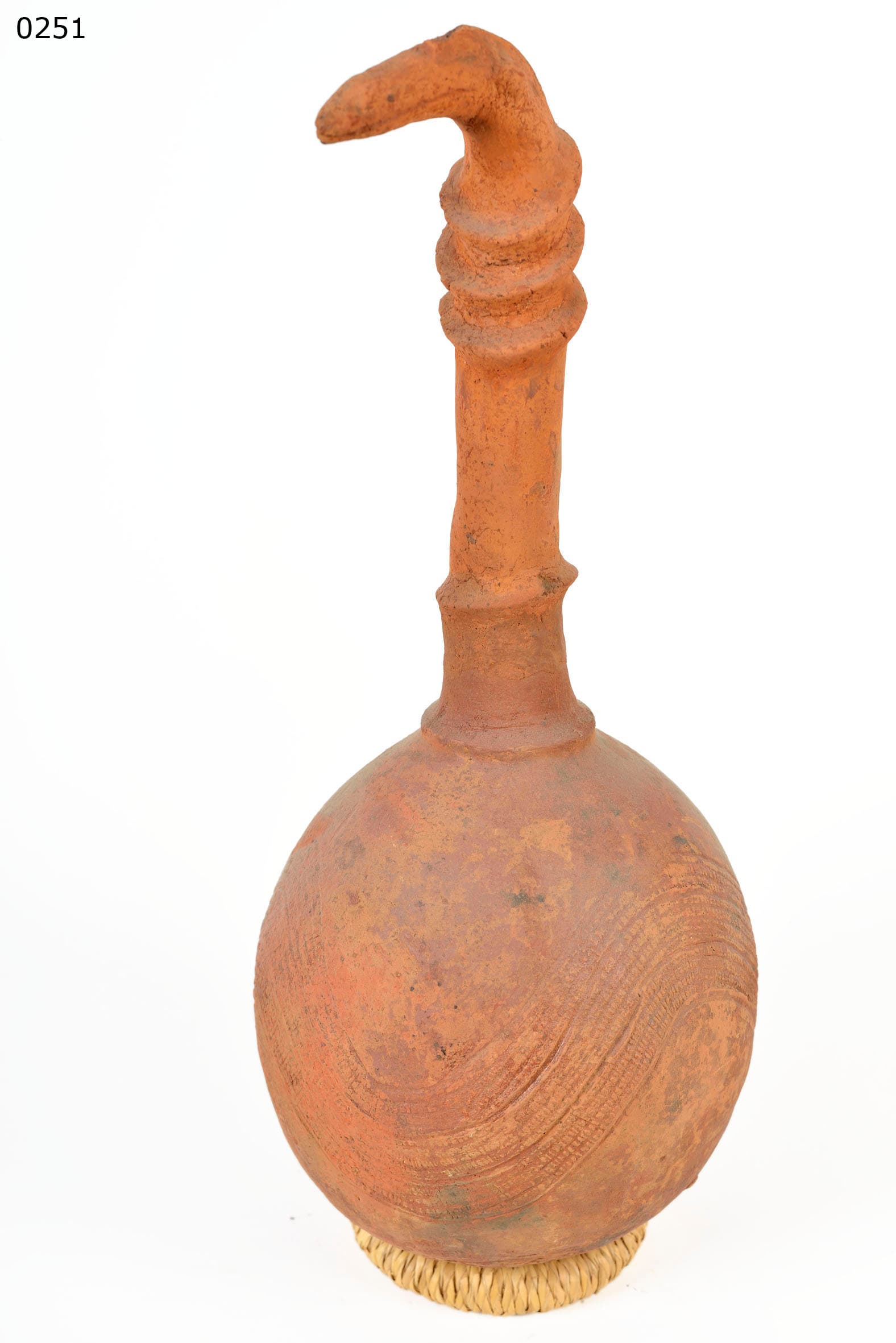
Eine höchst ungewöhnliche Terrakottafigur (12.-16. Jh., 43 cm) aus dem Bankoni von Mali - eine große, kugelförmige, bauchige Basis, die sich dramatisch in einen bemerkenswert langen Hals verjüngt und in einem stilisierten, schnabelähnlichen, zoomorphen Kopf endet. Der erdig-orangefarbene Ton weist tiefe, antike Brennspuren und örtliche Erdverkrustungen auf.
1. Die fremdartige Verlängerung von Bankoni
Der Bankoni-Stil, der seinen Ursprung in der Nähe von Bamako hat und etwa zeitgleich mit dem Reich von Djenne (12. bis 16. Jahrhundert) entstand, ist berühmt für seine schwungvolle, fast surreale Streckung.
- Spannung ohne Ornament: Im Gegensatz zu den stark strukturierten Djenne-Figuren setzt Bankoni ausschließlich auf die dramatische Spannung zwischen der massiven, schweren Basis und dem unmöglich langen, aufsteigenden Hals.
- Vogelmetamorphose: Der schnabelartige Kopf suggeriert einen Übergang vom Menschen zum Vogel - und verbindet den Ahnen mit den spirituellen Qualitäten eines Vogels, der Erde und Himmel durchquert.
2. Wiedergeburt und der Tumulus-Grabkult
Bankoni-Figuren werden vorwiegend in antiken Grabhügeln (Tumuli) gefunden.
- Gebärmutter, Samen, Ei: Die kugelförmige Basis erinnert stark an eine Gebärmutter oder Samenform - während der nach oben gerichtete Hals Wachstum, Aufstieg oder Schlüpfen andeutet.
- Metapher der Reinkarnation: Neben den Toten platziert, fungierten diese Objekte als tiefgründige Metaphern für die Reinkarnation - sie signalisierten den erfolgreichen Übergang der Seele aus dem irdischen Grab hinauf in das himmlische Ahnenreich.
3. Brandrisse und unterirdische Alterung
Die Oberfläche ist ein Zeugnis alter Technologie und jahrhundertelanger Bestattung.
- Antike Brandrisse: Die tiefen dunklen Linien quer über den Hals sind Spannungen aus dem ursprünglichen Grubenbrand unter freiem Himmel - charakteristische Defekte der Keramikproduktion vor dem Schmelzofen.
- In die Risse eingeschmolzene Erde: Die matte, kalkhaltige Oberfläche und die blasse malische Erde, die fest in diese Risse eingeschlossen ist, sprechen für eine Bestattung im 12. bis 16. Jahrhundert.
Zusammenfassung
Mit ihrer ausgeprägten surrealen Dehnung und klaren Geometrie ist diese Bankoni-Grabfigur ein bemerkenswertes Beispiel der antiken malischen Keramik. Ihre vogelähnliche Abstraktion und die charakteristischen Spuren unterirdischer Alterung machen sie zu einem bedeutenden archäologischen Dokument dieser Epoche.
KI-unterstützt erstellt aus Sammlungsgutachten, Objektfotografie und eigener Recherche, redaktionell geprüft. Fehler sind möglich — Hinweise darauf sind uns willkommen. Zum Verfahren →