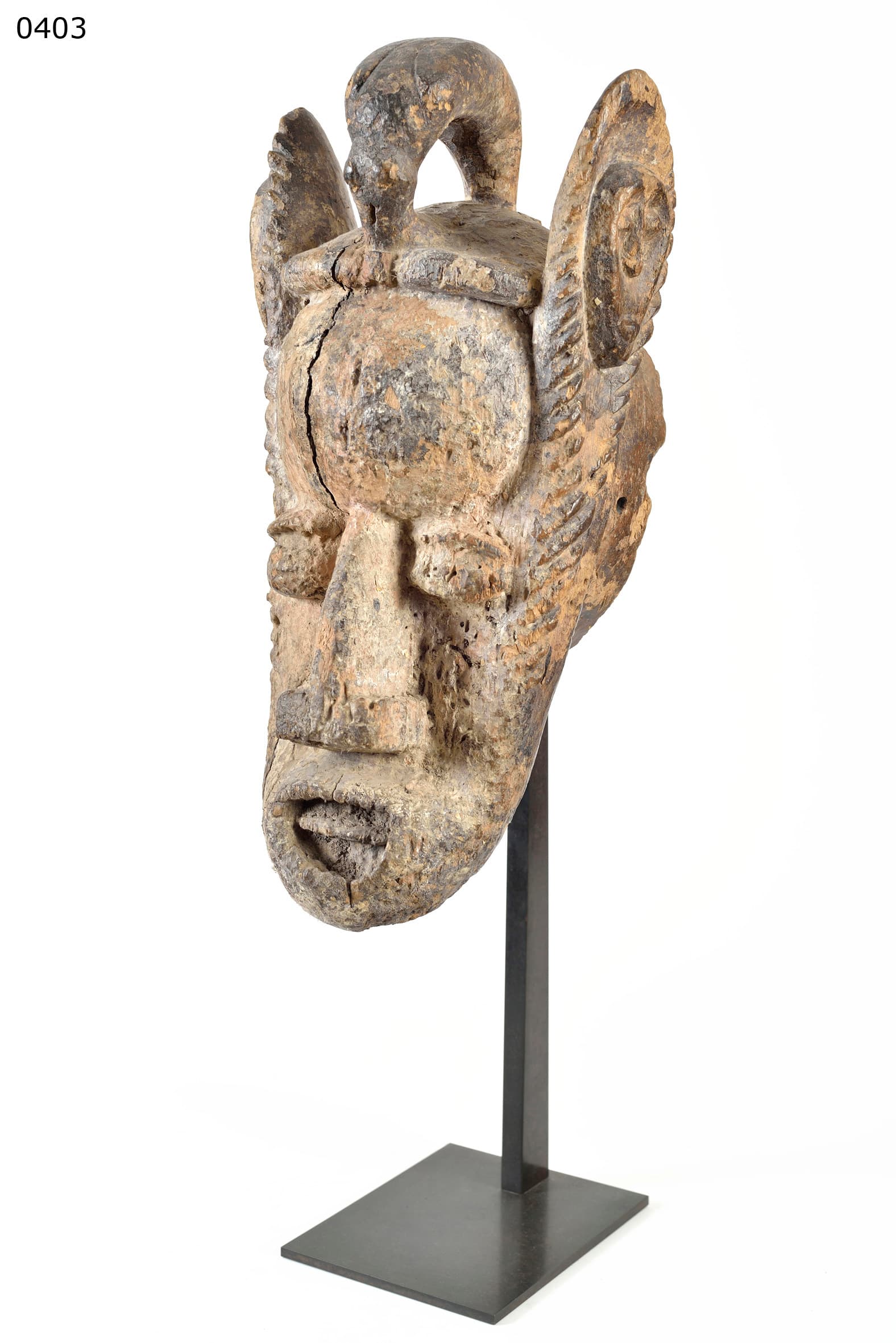
Eine stark abstrahierte, horizontal ausgerichtete Ijo-Kopfmaske (wohl 1. Hälfte 20. Jh., 60 cm) aus Nigeria - tiefe zylindrische Röhrenaugen, eine spitze Schnauze und flache geometrische Flächen, das Holz stark verwittert und mit einer dicken, krustig abblätternden Patina mit Resten von blauen und weißen Pigmenten überzogen.
1. Kubismus des Nigerdeltas
Das Volk der Ijo (oder Ijaw) aus dem Nigerdelta ist bekannt für stark abstrahierte, geometrische Maskenformen.
- Dekonstruierte Form: Diese Wappenmaske (Owuamapu) zerlegt die Tierform - wohl ein Raubfisch, ein Krokodil oder ein Nilpferd - in sich überschneidende geometrische Flächen.
- Röhrenförmige Augen: Ein markantes Merkmal sind die deutlich hervorstehenden röhrenförmigen Augen, die in der Literatur oft mit der Darstellung von Wasserbewohnern assoziiert werden.
2. Owuamapu-Wassergeister
Dieses Wappen, das traditionell waagerecht auf dem Kopf des Tänzers getragen wird (wobei das Gesicht meist durch ein Tuch verdeckt wird), verkörpert der Überlieferung nach die Wassergeister (Owuamapu), die in den Bächen und Flüssen des Deltas verortet werden.
- Einladen von Geistern an Land: Während der jährlichen Maskeraden lädt die Gemeinschaft diese Geister symbolisch an Land ein.
- Wohlstand im Delta: Durch die Ehrung der Wassergeister erhoffen sich die Ijo traditionell eine sichere Flussschifffahrt, reiche Fischereiernten und Schutz vor Gefahren im Wasser.
3. Verkrustete Pigmente und Taphonomie der Flüsse
Die ausgeprägte Patina spricht für eine rituelle Nutzung im 20. Jahrhundert.
- Oberflächenbeschaffenheit: Die dicke, krustige Oberfläche, die Spuren von Schlamm und mutmaßlichen Opfergaben aufweist, blättert stellenweise ab und gibt den Blick auf das darunter liegende dunkle, gealterte Holz frei.
- Farbreste: Reste von blauen (Waschblau) und weißen (Kreide) Pigmenten verweisen auf traditionelle Farbstoffe, die auf eine wiederholte Verwendung im rituellen Kontext hindeuten.
Zusammenfassung
Diese geometrisch strukturierte Ijo-Wassergeist-Wappenmaske veranschaulicht die für das Nigerdelta typische Abstraktion. Ihre dicke, abblätternde Patina und die auffälligen röhrenförmigen Augen sprechen für ein hohes Alter und machen sie zu einem repräsentativen ethnografischen Beleg.
KI-unterstützt erstellt aus Sammlungsgutachten, Objektfotografie und eigener Recherche, redaktionell geprüft. Fehler sind möglich — Hinweise darauf sind uns willkommen. Zum Verfahren →