Eine seltene erzählende Lobi-Altarfigur aus geschmiedetem Eisen (wohl 1. Hälfte 20. Jh., 81 cm) aus Burkina Faso - ein massives stilisiertes Krokodil oder eine Waranechse mit einer anthropomorphen Figur (ein Fischer), die auf dem Rücken des Reptils steht, umhüllt von einer dicken, stark strukturierten, gealterten Rostschale. Die erzählerische Variante in einem vierteiligen Set (0349, 0350, 0351, 0352).
1. Schmiedekunst und serpentinenartige Geometrie
Die Lobi verlassen sich auf eine spezialisierte Schmiedekaste, die massive spirituelle Schutzgegenstände schmiedet.
- Erzählerische Schmiedekunst: Unter den vier Eisenreptilien veranschaulicht dieses 81 cm lange Stück eine ausgeprägte erzählerische Schmiedekunst.
- Fischer auf Reptil: Der Schmied balanciert die vertikale, stabförmige Figur eines Fischers, der ein Werkzeug hält, auf der horizontalen Masse des Tieres aus - und zeigt damit die Fähigkeit der Lobi-Schmiede, mythologische Handlungen in starrem Eisen darzustellen.
2. Thil-Schreine und Schutzverheißung
In der Theologie der Lobi sind die Thila unsichtbare Schutzgeister, die die Regeln der Gemeinschaft diktieren.
- Mythos-Szenen-Anker: Eine geschmiedete Erzählszene wie diese verankert nicht nur ein thil, sondern eine ganze mythische Episode - die Beherrschung des Wassers, erfolgreiches Fischen oder die Beherrschung von Schwellenwesen.
- Wasserfruchtbarkeit: Das Krokodil und der Waran sind Geschöpfe zweier Welten - die Hinzufügung des Fischers verstärkt die Wasser-/Regenmachersymbolik und beschwört die aquatische Fruchtbarkeit und den Schutz vor Dürre.
3. Oxidation von Eisen und Verwitterung in der Subsahara
Die ausgeprägte Patinierung spricht für eine traditionelle Verwendung des Schreins in der rauen Umgebung von Burkina Faso.
- Elemental Cycling: Keine chemische Behandlung oder Polieren - Beibehaltung einer dichten flockigen tief-orange und braun Rost Kruste.
- Charakteristische Kruste: Die schwere Krustenbildung wird oft auf die zyklische Sahara-Hitze und sintflutartige Regenfälle zurückgeführt, denen ein im Freien aufgestellter Lobi-Schrein ausgesetzt ist.
Zusammenfassung
Als seltene erzählerische Variante des vierteiligen Lobi-Eisenreptilien-Sets fängt diese Fischer-Atop-Reptilienfigur einen mythologischen Moment in geschmiedetem Eisen ein. Die starke elementare Oxidation und die ungewöhnliche Ikonographie machen sie zu einem bemerkenswerten ethnografischen Zeugnis dieser Tradition.
KI-unterstützt erstellt aus Sammlungsgutachten, Objektfotografie und eigener Recherche, redaktionell geprüft. Fehler sind möglich — Hinweise darauf sind uns willkommen. Zum Verfahren →
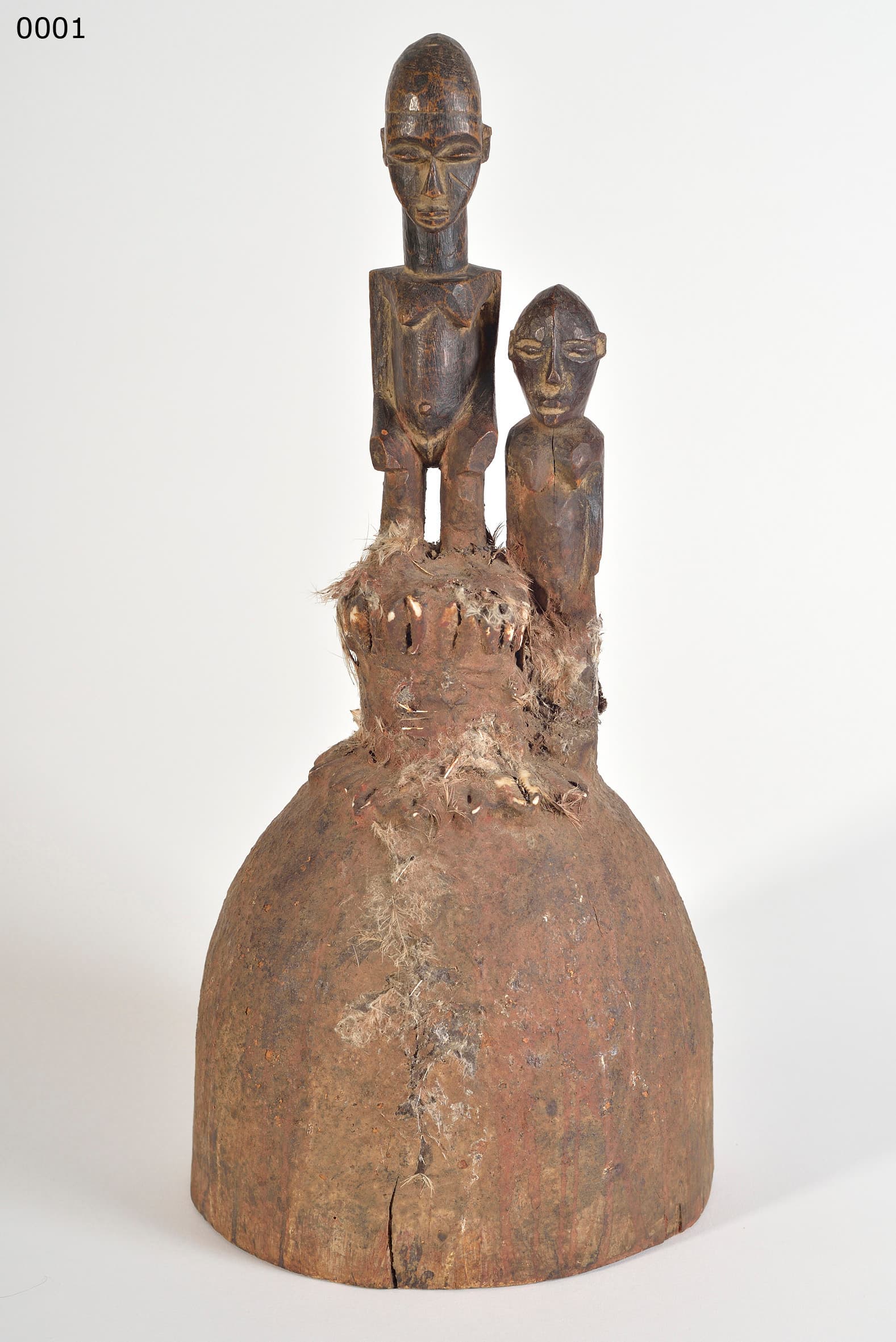
Schreinaltar mit Ehepaar BATEKE
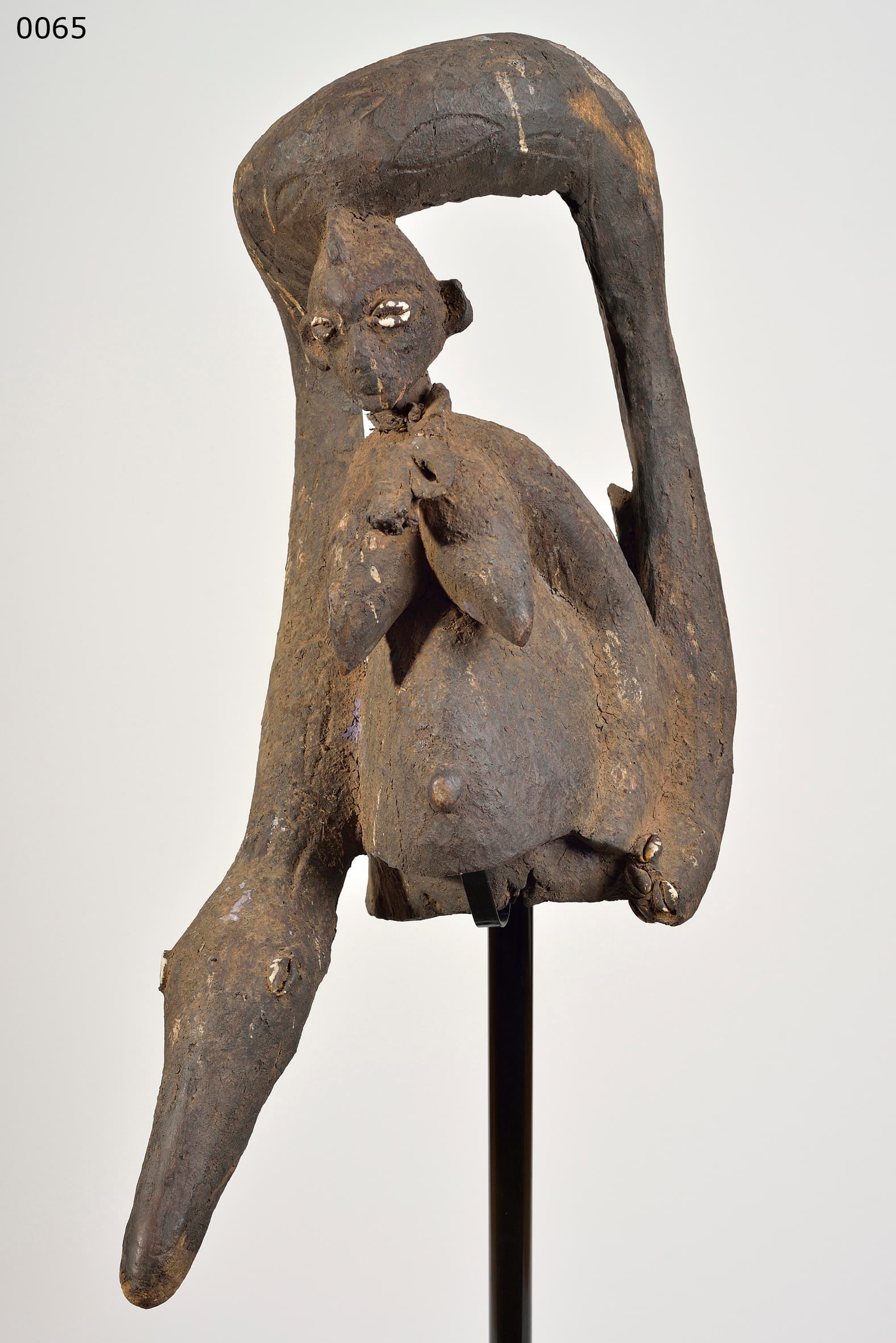
Seltene Kopfhaubenmaske
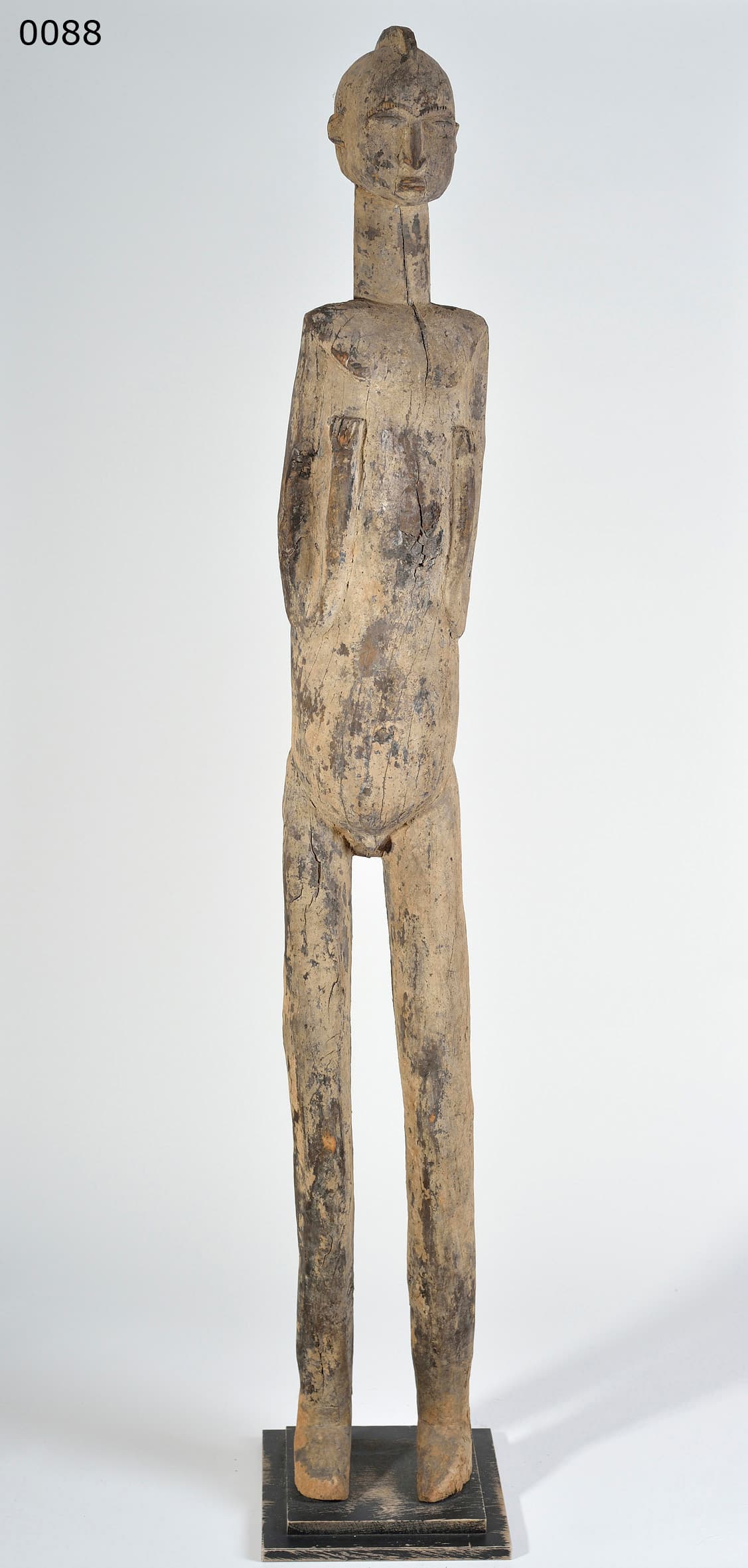
Schreinfigur, die einen BATEBA-Geist darstellt (ungewöhnlich groß, selten)