Eine minimalistische Lobi-Altarfigur aus geschmiedetem Eisen (Mitte 20. Jh., 45 cm) aus Burkina Faso - ein gerader vertikaler Schaft, der sich in zwei Beine verzweigt, mit einem stark vereinfachten abgeflachten Kopf und Eisenringen, die um die "Taille" und die "Knie" gebunden sind. Die metallische Oberfläche ist stark strukturiert mit einer dicken körnigen Schicht aus orangefarbenem und braunem Eisenoxid.
1. Die Extreme der eisenhaltigen Abstraktion
Diese Eisenfigur der Lobi zeigt eine ausgeprägte Abstraktion in der Schmiedekunst und veranschaulicht eine starke Reduktion der menschlichen Form.
- Lineare geometrische Reduktion: Der Lobi-Künstler lehnt jede naturalistische Anatomie zugunsten einer strengen linearen Geometrie ab - der menschliche Körper ist auf eine aufrechte Linie (Wirbelsäule/Rumpf) und ein umgekehrtes "V" (die Beine) reduziert.
- Gebundener Scheibenkopf: Der abgeflachte scheibenförmige Kopf und die absichtliche Bindung von dickem Eisendraht, um Gelenke oder Kleidung anzudeuten, schaffen eine rohe strukturelle Präsenz, die sich ganz auf die Silhouette und das inhärente Gewicht des Metalls stützt.
2. Thil-Schreine und irdene Verankerungen
In der Theologie der Lobi sind eiserne Gegenstände mächtige magische Batterien, die geschmiedet werden, um unsichtbare Geister, die als thila bekannt sind, zu besänftigen.
- Dithil-Integration: Diese zweibeinige Figur wurde nicht zur Zurschaustellung, sondern zur tiefen Integration in einen Dithil (Familienaltar) entworfen.
- Gepflanzter Wächter: Die spitzen, sich verjüngenden Beine deuten darauf hin, dass sie dazu bestimmt war, direkt in die harte Erde eines Schreins gepflanzt zu werden - als physischer und spiritueller Anker, der den Haushalt vor Hexerei, Krankheit und Unglück bewahrt, das vom örtlichen thil befohlen wird.
3. Sub-Sahara Oxidation und Elementarexposition
Die stark abblätternde Rostkruste ist charakteristisch für Objekte aus Lobi-Schreinen, die der Mitte des 20.
- jahrhunderts. Sahelian Cycling: Im Freien oder in halb-exponierten Schreinen in Burkina Faso aufgestellt, war die Figur den brutalen Extremen des sahelianischen Klimas ausgesetzt - brütende Hitze gefolgt von sintflutartigen Regenzeiten.
- Ungeschützter Eisenabbau: Ständiger Umweltstress in Verbindung mit dem Fehlen von schützenden Ölen hat zu einem tiefen, ausgeprägten Eisenabbau geführt.
Zusammenfassung
Als ausdrucksstarkes Zeugnis des spirituellen Minimalismus der Lobi zeigt diese eiserne Altarfigur eine hoch entwickelte reduktive Schmiedekunst. Ihre starke unpolierte Rostpatina spricht für eine langjährige Nutzung als schützende Wächterin, die vermutlich in die burkinische Erde gepflanzt wurde.
KI-unterstützt erstellt aus Sammlungsgutachten, Objektfotografie und eigener Recherche, redaktionell geprüft. Fehler sind möglich — Hinweise darauf sind uns willkommen. Zum Verfahren →
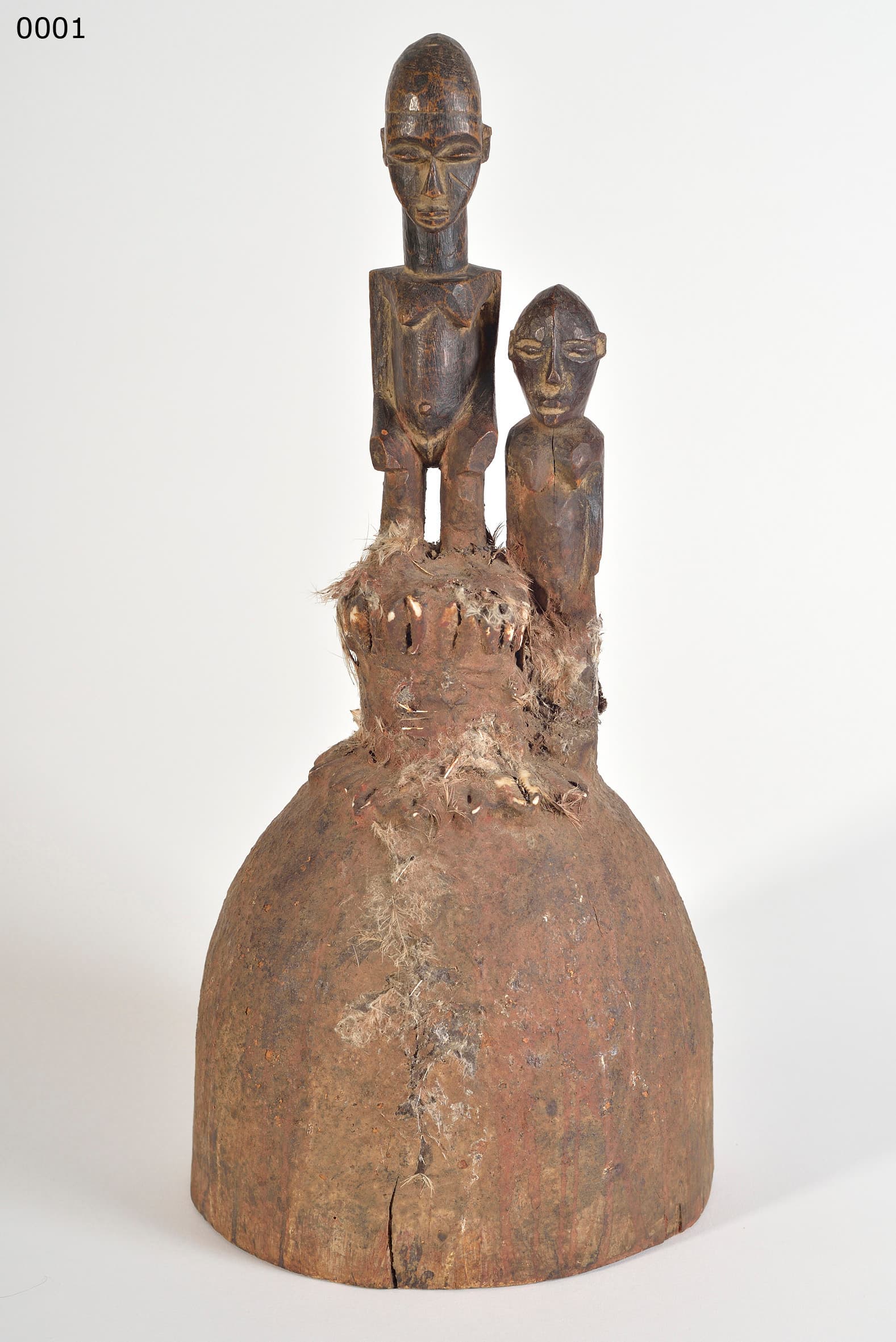
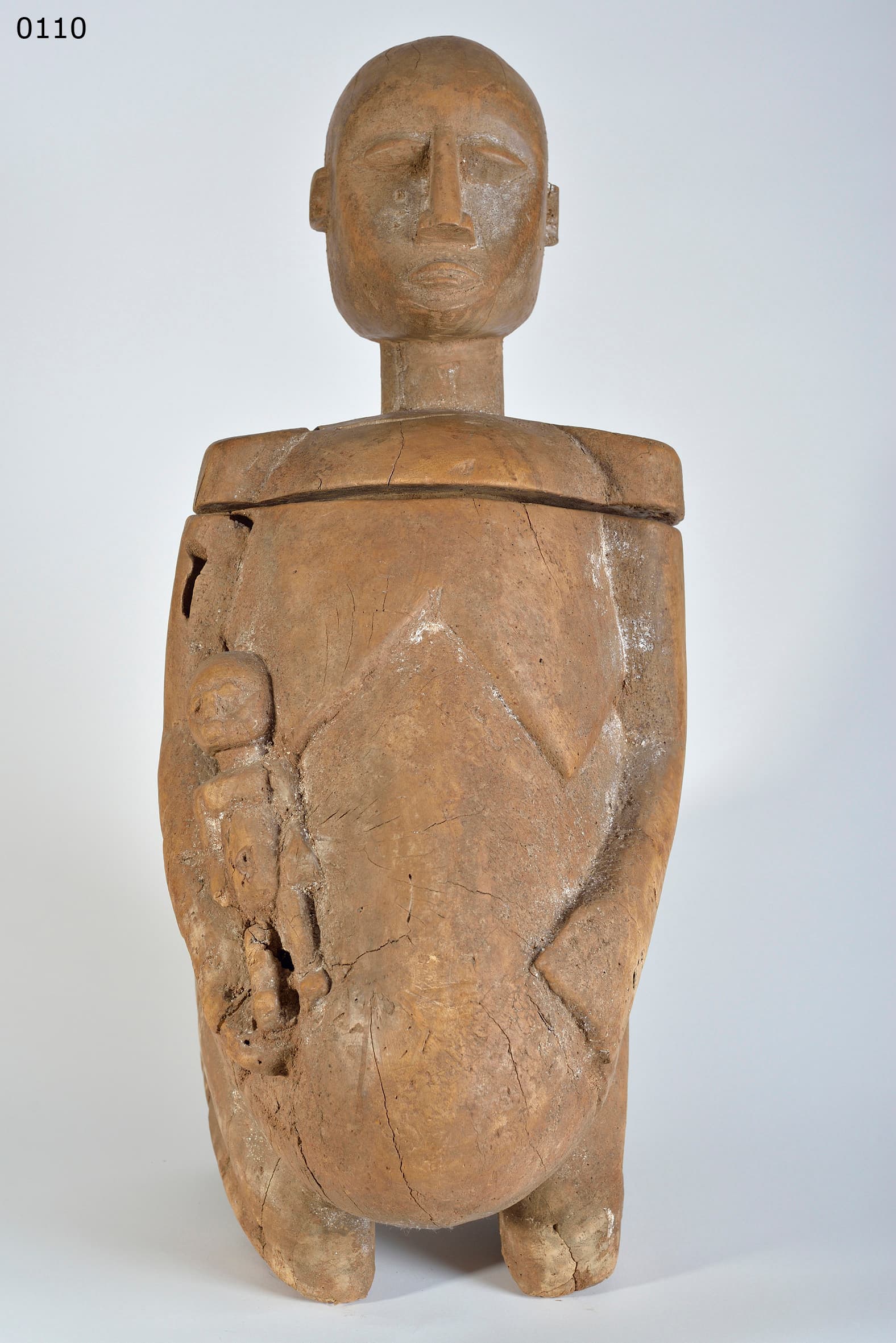
Schreinaltar mit Ehepaar BATEKE
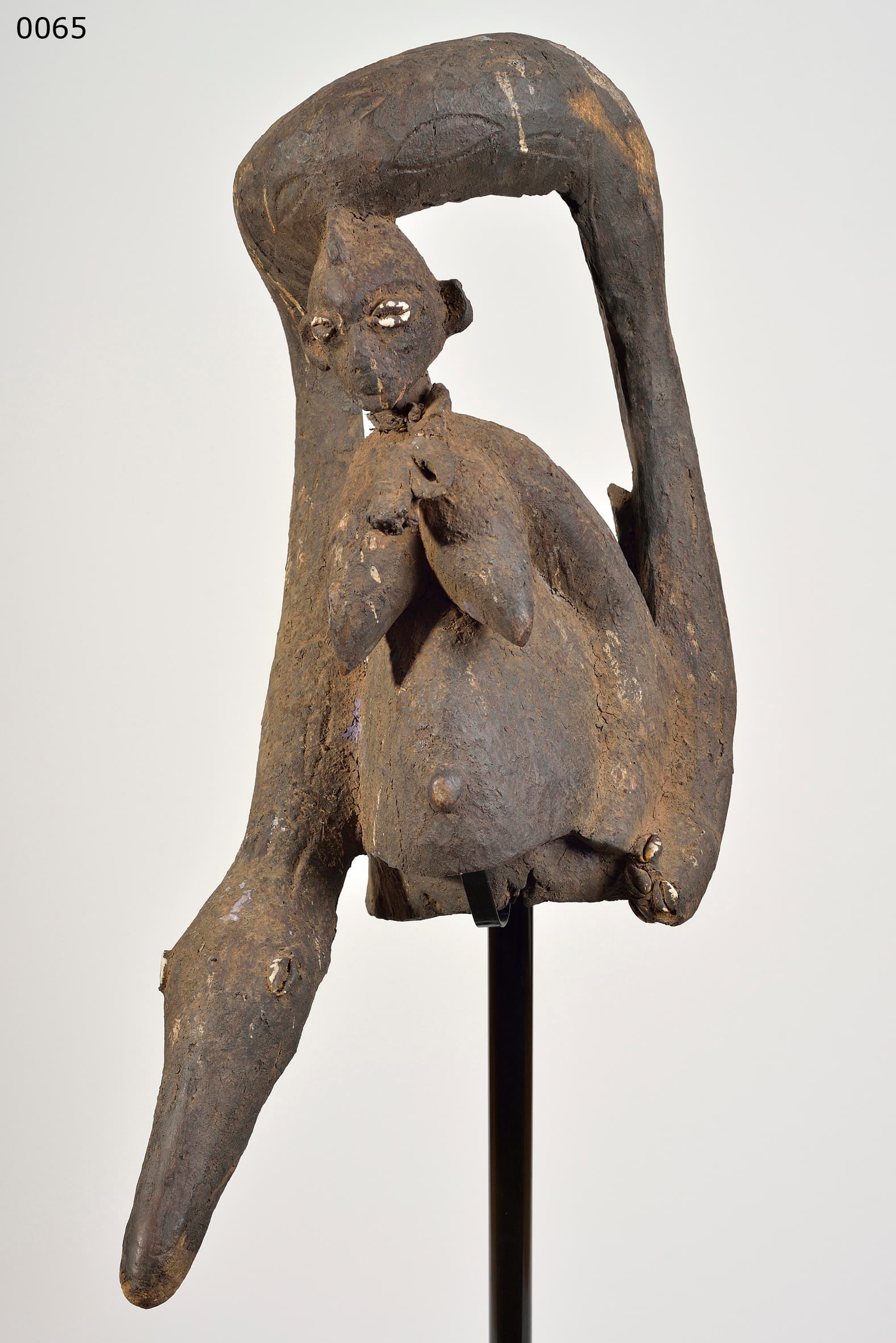
Seltene Kopfhaubenmaske
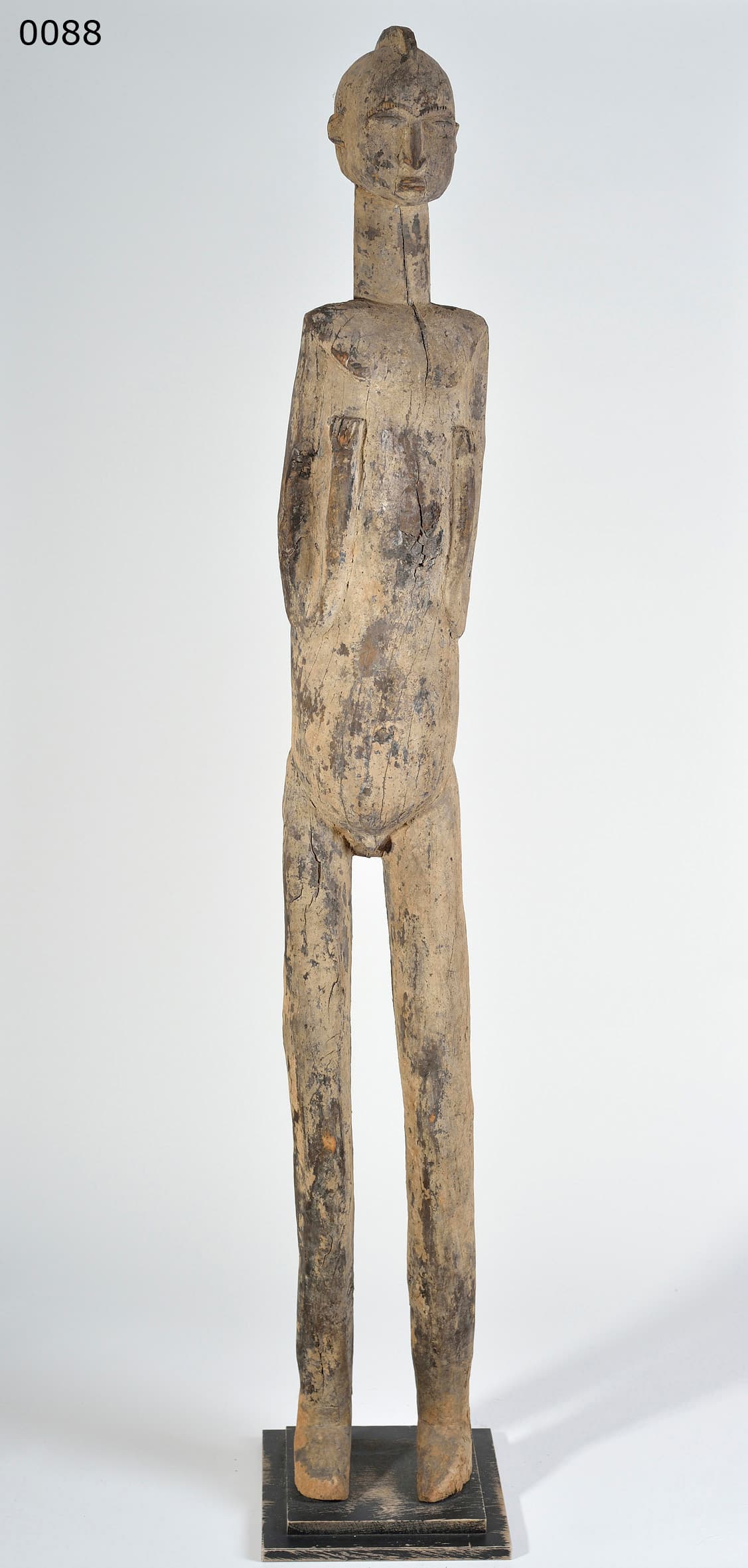
Schreinfigur, die einen BATEBA-Geist darstellt (ungewöhnlich groß, selten)