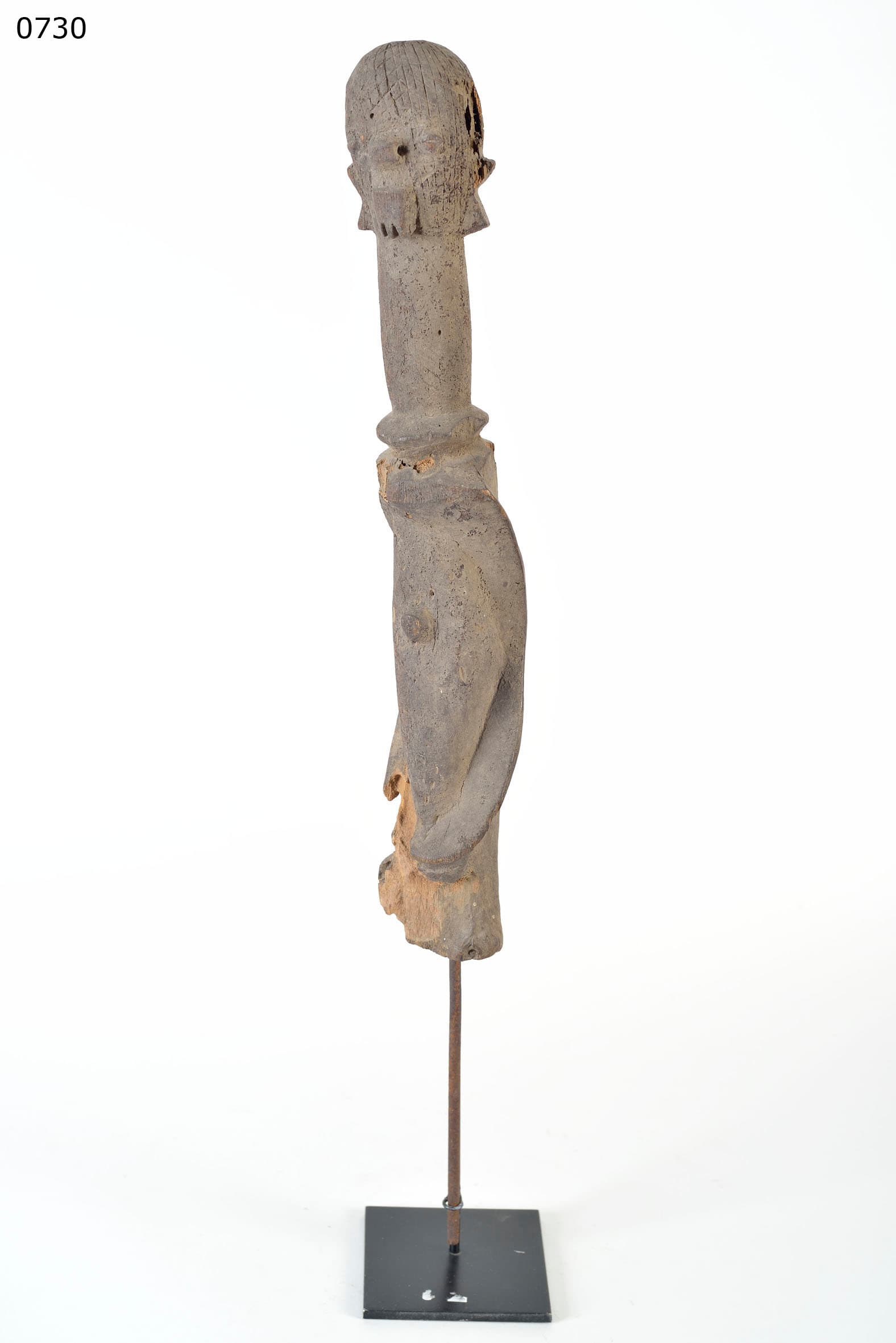
Ein seltenes Paar Wurkum-ähnlicher Holzfiguren (1. Hälfte 20. Jh., 43 cm) aus Nigeria - stark abstrahierte, säulenartige Körper, die von stilisierten Köpfen gekrönt werden, die ausgeprägte sagittale Kämme und vereinfachte, vorspringende Gesichtszüge aufweisen. Beide Figuren tragen eine trockene, dick verkrustete, stark oxidierte braune Patina, die auf eine ausgedehnte Schreinlagerung hinweist.
1. Pfahlschnitzerei aus dem Benue-Tal
Die Wurkum (und die mit ihnen eng verwandten Wurbo) aus dem abgelegenen oberen Benue-Tal in Nigeria verwenden eine sehr spezifische extreme Form der Pfahlschnitzerei.
- Radikale Reduktion: Der Künstler unternimmt keinen Versuch, Beine, Arme oder naturalistische Torsi darzustellen - die menschliche Gestalt ist radikal auf einen vertikalen Pflock oder eine Säule reduziert.
- Fokus auf den Kopf: Der Fokus liegt ganz auf dem Kopf - geschnitzt mit scharfen, vorspringenden geometrischen Flächen und einem markanten zentralen Kamm, der eine traditionelle Elitefrisur darstellt und eine Aura von unverrückbarer, alter Beständigkeit schafft.
2. Kundul Heilung und landwirtschaftliche Magie
Diese Pflockfiguren - lokal als kundul bezeichnet - fungierten eher als hochaktive spirituelle Werkzeuge denn als statische Porträts.
- Eingepflanzt in die Erde: Ihre spitzen oder stumpfen Basen waren dazu bestimmt, physisch in die Erde getrieben zu werden - Wünschelrutengänger und Heiler pflanzten diese Paare (die das männliche und weibliche Gleichgewicht der Ahnen repräsentierten) direkt in die Erde eines Familiengeländes.
- Schutz für die Landwirtschaft: Sie wurden gepflanzt, um Krankheiten zu vertreiben, oder in der Mitte von landwirtschaftlichen Feldern platziert, um die Ernte vor Hexerei zu schützen und durch das Eingreifen der Ahnen eine reiche Ernte zu gewährleisten.
3. Austrocknung und rituelle Kruste
Der Zustand der Oberfläche spiegelt ihre Funktion als aktive, erdgebundene spirituelle Anker perfekt wider.
- Trocken gealtertes Holz: Aus dem frühen 20. Jahrhundert stammend, ist das Holz unglaublich trocken - es zeigt erhebliche Oxidation und tiefe Altersrisse entlang der Maserung.
- Opferkruste: Die oberen Hälften sind mit einer dicken, ungleichmäßigen, bröckeligen Kruste überzogen - dem gehärteten Überbleibsel unzähliger Opfergaben von Hirsebier, Kräutermedizin und Blut, das der Heiler über Jahrzehnte über die Köpfe der Ahnen gegossen hat, um ihre Schutzkraft zu aktivieren.
Zusammenfassung
Dieses Wurkum-Paar ist ein kraftvolles Beispiel für nigerianische Abstraktion im Stangenstil und reduziert die menschliche Form auf ihre absolute spirituelle Essenz. Ihre tief verkrustete Trockenpatina bestätigt die wahre Geschichte als aktive landwirtschaftliche und heilende Anker.
KI-unterstützt erstellt aus Sammlungsgutachten, Objektfotografie und eigener Recherche, redaktionell geprüft. Fehler sind möglich — Hinweise darauf sind uns willkommen. Zum Verfahren →