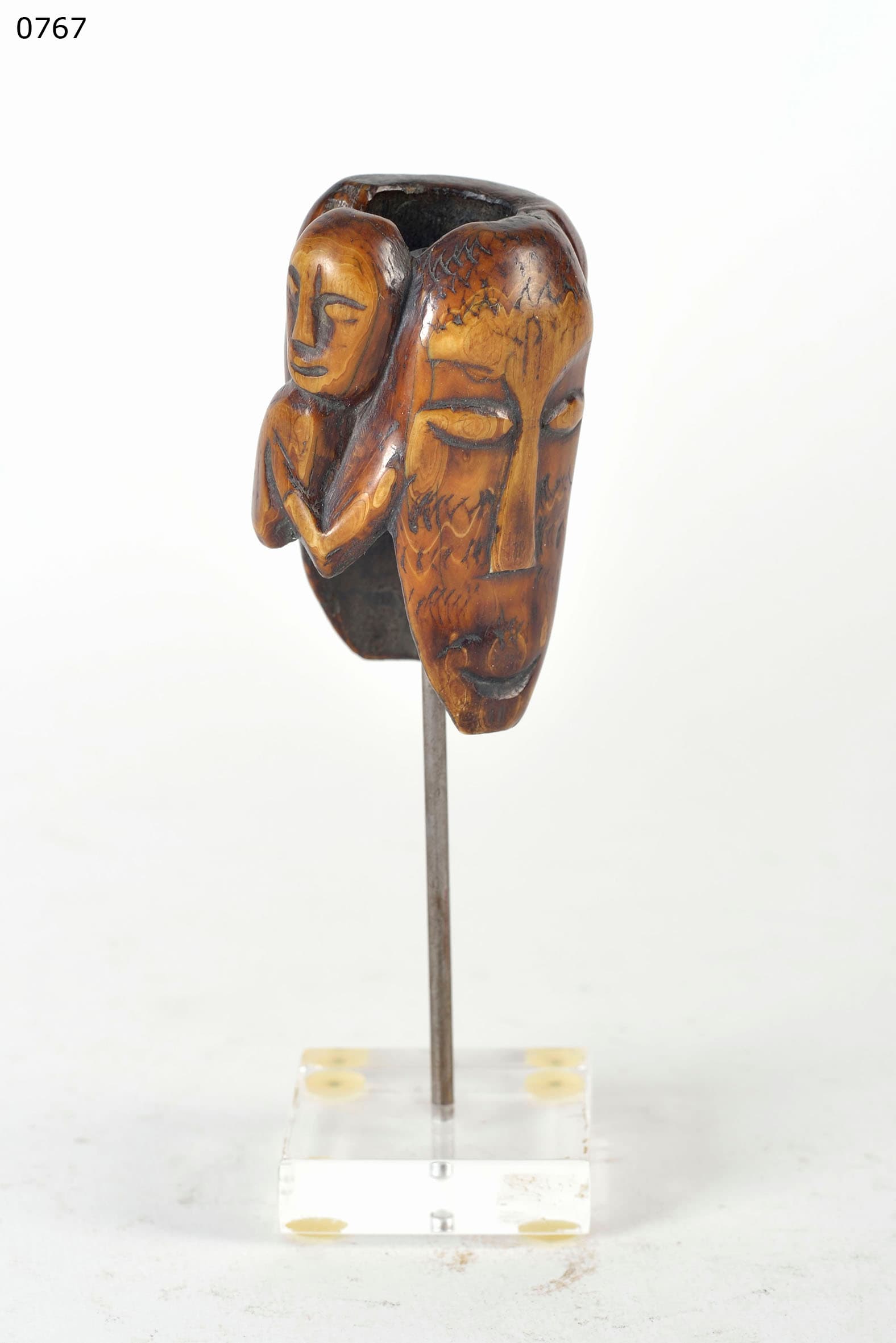
Eine herzförmige Lega Lukwakongo-Gesichtsmaske (1. Hälfte 20. Jh., 27 cm) aus der DR Kongo - eine konkave Gesichtsfläche mit schmalen Kaffeebohnen-Schlitzaugen und einem kleinen offenen Mund, akzentuiert mit Resten von weißem Kaolin-Ton und marginalen Rattan-Bindungen, das Holz besitzt eine trockene honigbraune Bearbeitungspatina mit leichten Randabbrüchen.
1. Der herzförmige Minimalismus der Lega
Die Kunst der Lega aus der Demokratischen Republik Kongo wird für ihren tiefgreifenden, stilisierten Minimalismus gefeiert.
- Konkave Herzform: Diese Lukwakongo-Maske abstrahiert das menschliche Gesicht zu einer tief konkaven, perfekt symmetrischen Herzform.
- Ruhige Kontemplation: Der Schnitzer entfernt alle unnötigen naturalistischen Details - er verwendet markante, geschwungene Brauenlinien und schmale, hervorstehende Schlitzaugen, um einen Ausdruck von intensiver, ruhiger Kontemplation und uralter Weisheit zu schaffen.
2. Die Bwami-Gesellschaft und didaktische Insignien
Im Gegensatz zu vielen anderen afrikanischen Masken werden Lega Lukwakongo-Masken bei Tänzen selten über dem Gesicht getragen.
- Yananio-Grad-Emblem: Ausschließliches Eigentum der Bwami-Gesellschaft (insbesondere des zweithöchsten Yananio-Grades) - ein komplizierter, mehrstufiger Verband, der das soziale, moralische und politische Leben der Lega regelt.
- Sprichwort-Pädagogik: Bei geheimen Einweihungen werden sie in der Hand gehalten, an die Knie gebunden oder an Zäunen aufgehängt, während Sprichwörter gesungen werden - sie lehren die Eingeweihten komplexe moralische Philosophien über Mäßigung, Weisheit und soziale Harmonie.
3. Pemba Kaolin und taktile Abnutzung
Die Oberfläche spiegelt perfekt die Verwendung der Maske wider.
- Ahnenweiß: Das weiße Pigment (Kaolin oder Pemba), mit dem die konkave Fläche eingerieben wird, ist eine heilige Substanz, die für die Ahnen, spirituelle Reinheit und Erleuchtung steht.
- Honigfarbene Bearbeitungspatina: Bereiche ohne weißen Ton - die Ränder, die Nase und die Rückseite - weisen eine reichhaltige, glänzende, honigfarbene Bearbeitungspatina auf, die darauf zurückzuführen ist, dass sie von Eingeweihten der Bwami in der ersten Hälfte des 20.
Zusammenfassung
Diese Lukwakongo-Maske ist eine meisterhafte Destillation des philosophischen Minimalismus und der skulpturalen Eleganz der Lega. Ihre authentische Kaolin-Applikation und die schöne, fühlbare Patina machen sie zu einem klassischen, sehr begehrten Artefakt der Bwami-Gesellschaft.
KI-unterstützt erstellt aus Sammlungsgutachten, Objektfotografie und eigener Recherche, redaktionell geprüft. Fehler sind möglich — Hinweise darauf sind uns willkommen. Zum Verfahren →