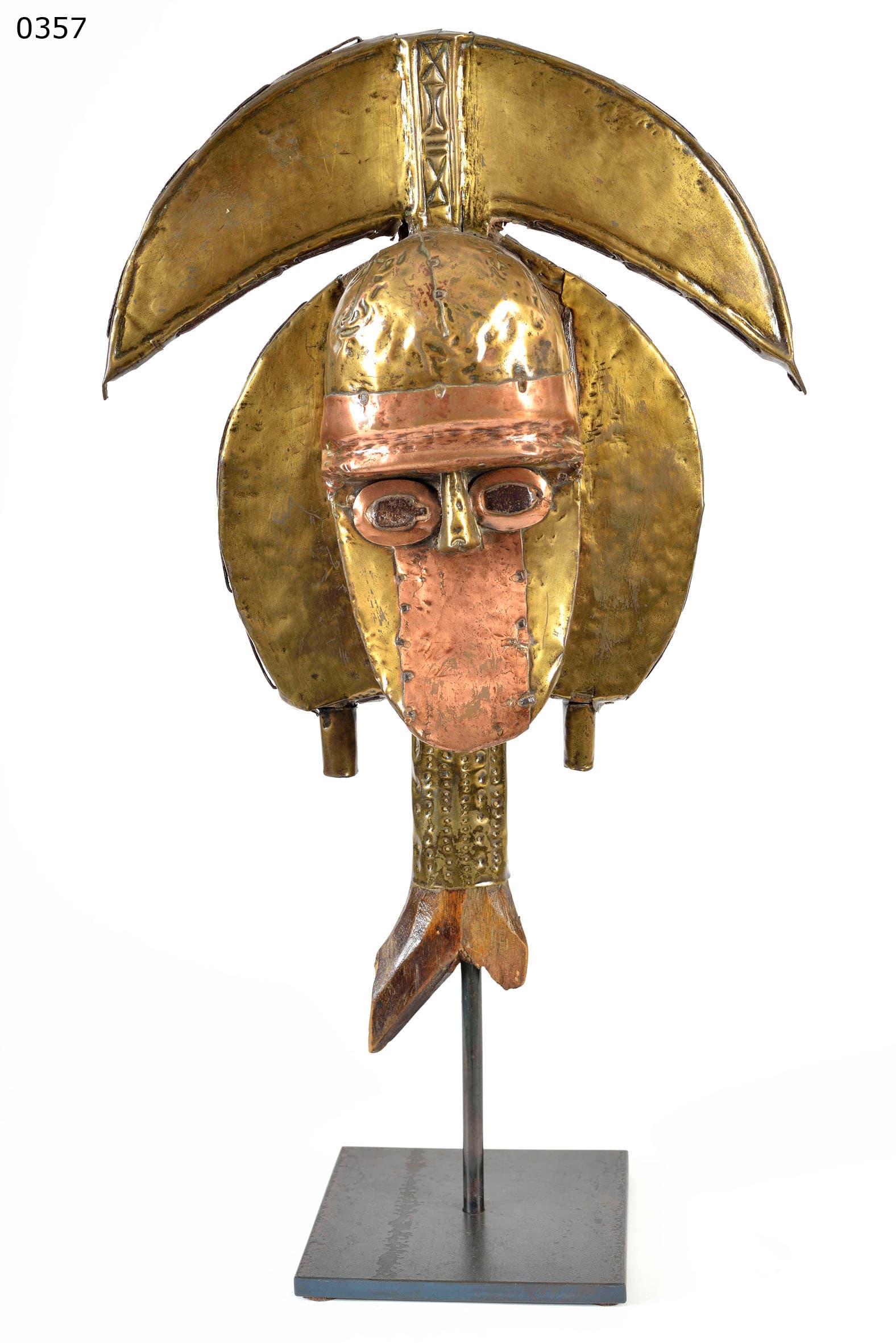
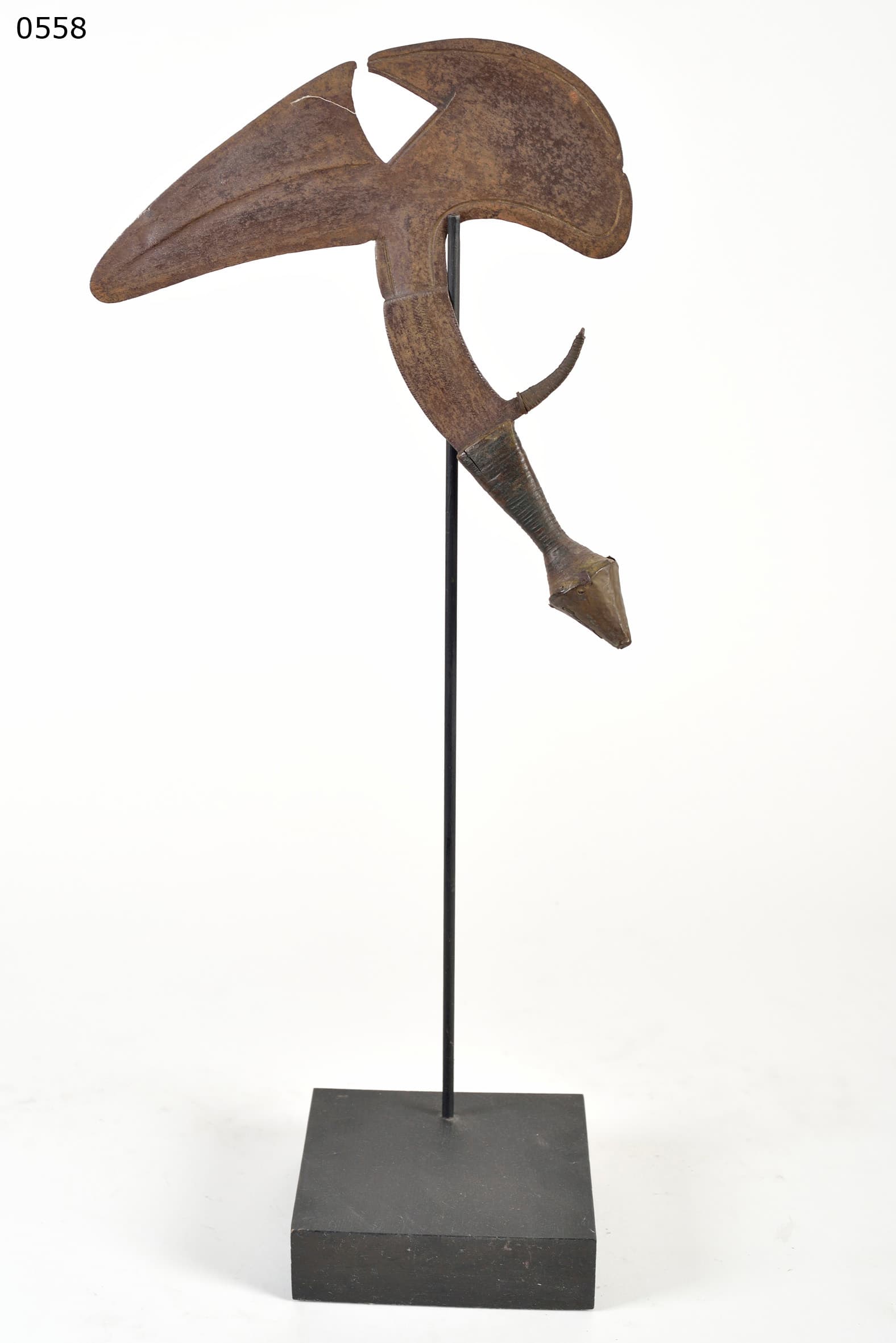
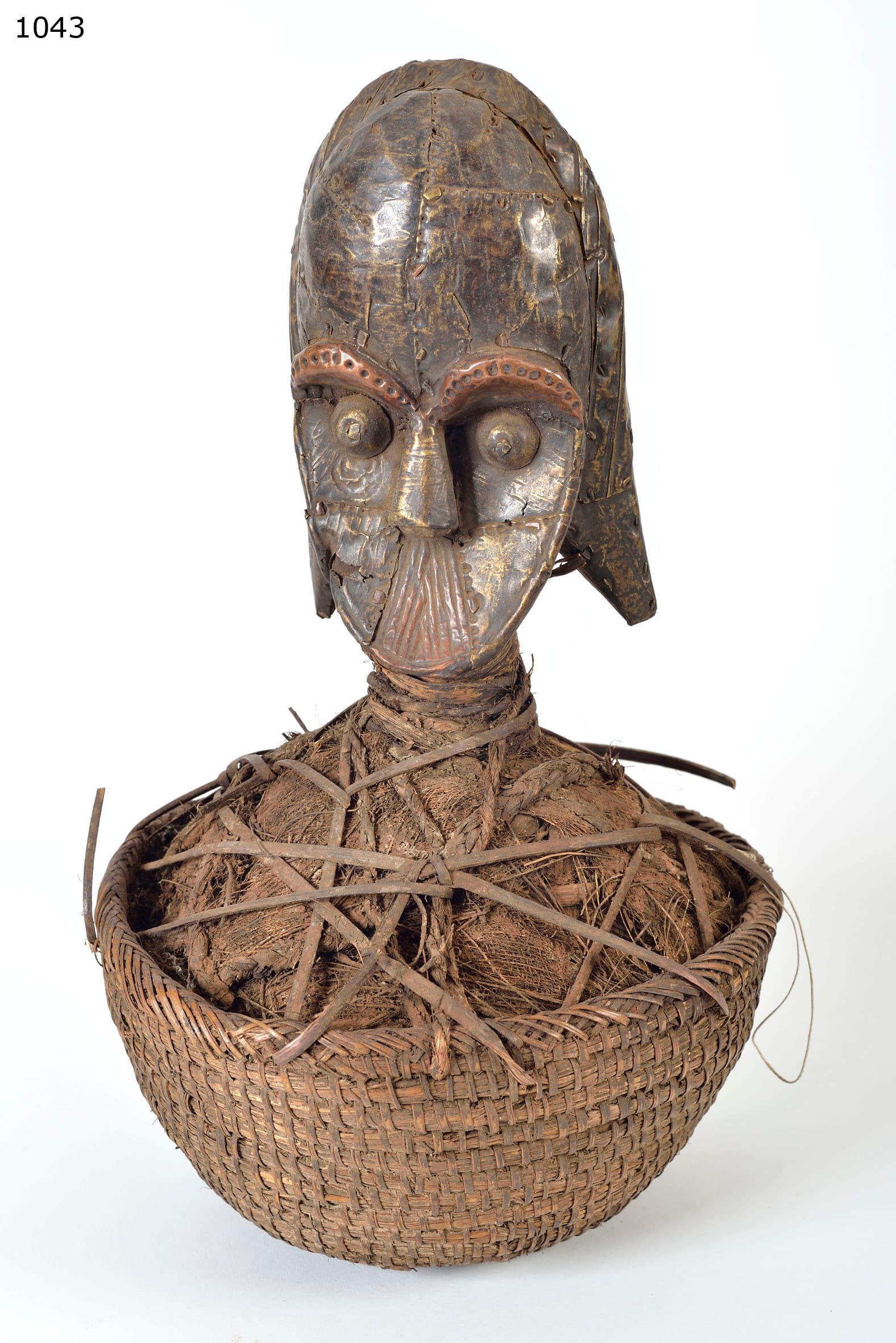
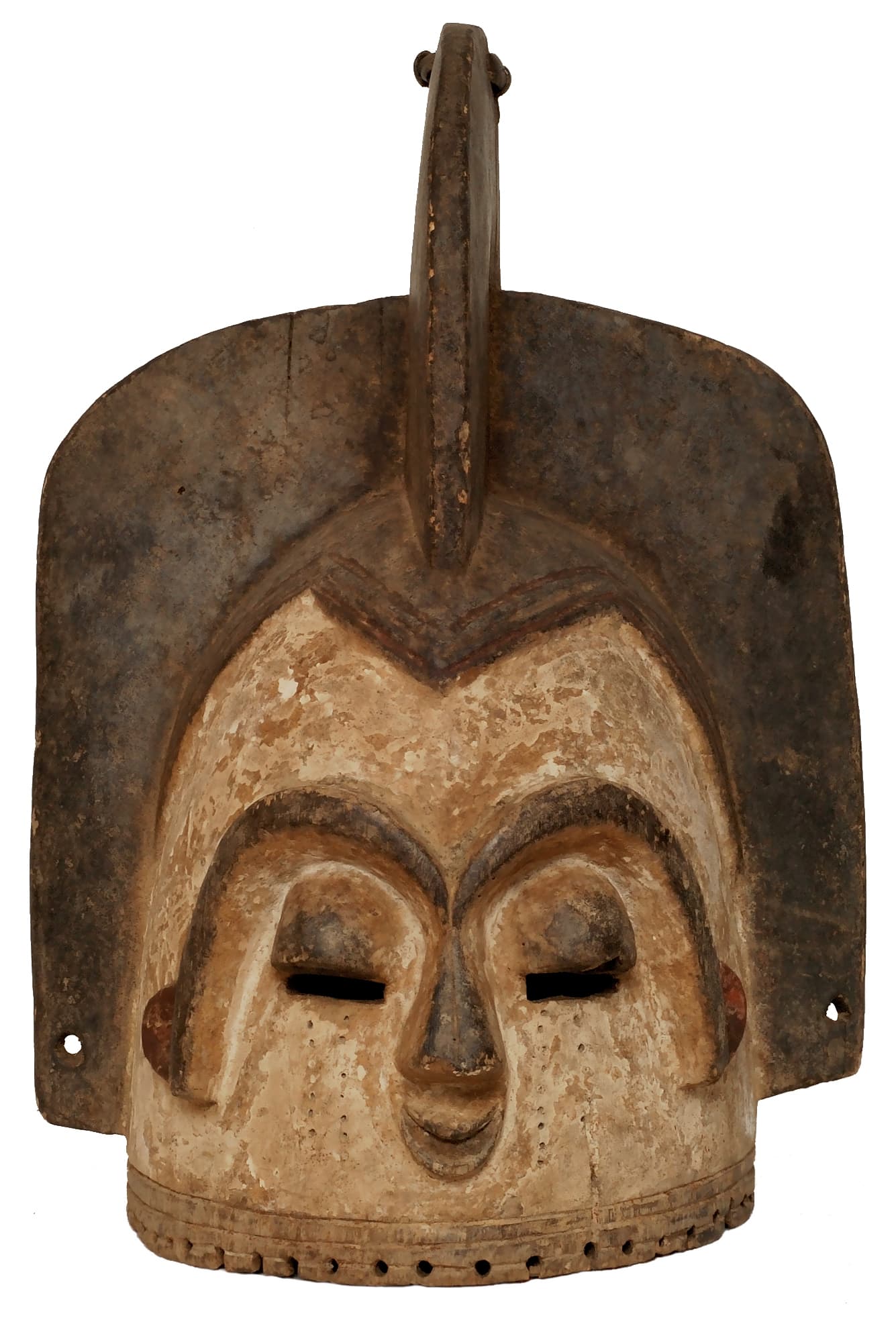
Eine stehende, imposante Kota-Figur (1. Hälfte 20. Jh., 75 cm) aus Gabun - außergewöhnlich selten, da sie vollständig dreidimensional und volumetrisch ist, mit einem hölzernen Körper (sitzend oder kauernd) und einem abgerundeten Kopf, der vollständig von sorgfältig aufgetragenen Blechen aus geprägtem Messing umhüllt ist, wobei das Metall eine reiche, komplexe Oxidation aus grünem Grünspan und dunkelbraunem Anlaufen aufweist.
1. Die dreidimensionale Kota-Anomalie
Die Kota sind weltweit bekannt für ihre stark abstrahierten zweidimensionalen mbulu ngulu Reliquienfiguren - diese massive, 75 cm hohe, vollständig dreidimensionale Statue ist daher eine bemerkenswerte Seltenheit.
- Bricht die 2D-Konvention der Kota: Präsentiert einen volumetrischen Torso, ausgeprägte Gliedmaßen und einen abgerundeten, helmartigen Kopf - anstelle der flachen Blattform der Standard-Reliquien.
- Handwerkliche Ausführung: Zeigt die ausgeprägte Fertigkeit der Kota-Metallurgie - die gesamte hölzerne Armatur ist mit präzise geschnittenen, sich überlappenden Platten aus dekoriertem Repoussé-Messing überzogen. Dies legt nahe, dass die Kota-Künstler über profunde volumetrische Fähigkeiten verfügten, die über ihre Standard-Reliquienproduktion hinausgingen.
2. Der Bwiti / Bwete Culthouse Guardian
Während ein normaler flacher mbulu ngulu direkt an einen kleinen Korb mit Knochen gebunden war, funktionierte eine Statue dieser immensen, vollmundigen Präsenz in einem viel größeren Maßstab.
- Zentrale Clan-Gottheit: Wahrscheinlich als zentrale, freistehende Gottheit oder oberster Wächter im Bwete- oder Bwiti-Initiationskulthaus eines Eliteclans untergebracht.
- Feuerbeleuchteter, reflektierender Schrecken: Im dunklen, feuerbeleuchteten Inneren des Heiligtums reflektierte der glänzende, vollständig mit Messing verkleidete Körper das Licht in alle Richtungen - er strahlte eine überwältigende, furchterregende Aura der Macht der Ahnen und der Allwissenheit aus, um die tiefsten Geheimnisse des Clans vor uneingeweihten Eindringlingen zu schützen.
3. Authentische Verdigris- und Repoussé-Kleidung
Die Patina auf der Metallummantelung spricht für ein Alter aus dem frühen 20. Jahrhundert.
- Authentische Repoussé-Abflachung: Komplizierte geometrische Muster, die in das Messing gestanzt wurden, zeigen Abflachungen an den höchsten Punkten - was auf ein wiederholtes rituelles Polieren mit Sand und Zitrussaft hinweist, um den spirituellen Glanz zu erhalten.
- Langsame Grünspanbildung: Tiefe Vertiefungen und überlappende Nähte weisen eine dicke Ansammlung von dunkelbrauner Oxidation und Kupferkarbonaten (grüner Grünspan) auf - ein chemischer Alterungsprozess, der über Jahrzehnte hinweg im feuchten gabunischen Klima entstehen kann.
Zusammenfassung
Als ungewöhnliche Form der gabunischen Kunst ist diese vollständig dreidimensionale, mit Messing verkleidete Kota-Statue eine bemerkenswerte Seltenheit. Ihre beachtliche Größe, ihre volumetrische Gestaltung und die charakteristische oxidative Metallalterung machen sie zu einem bedeutenden Zeugnis afrikanischer Ethnografie.
KI-unterstützt erstellt aus Sammlungsgutachten, Objektfotografie und eigener Recherche, redaktionell geprüft. Fehler sind möglich — Hinweise darauf sind uns willkommen. Zum Verfahren →