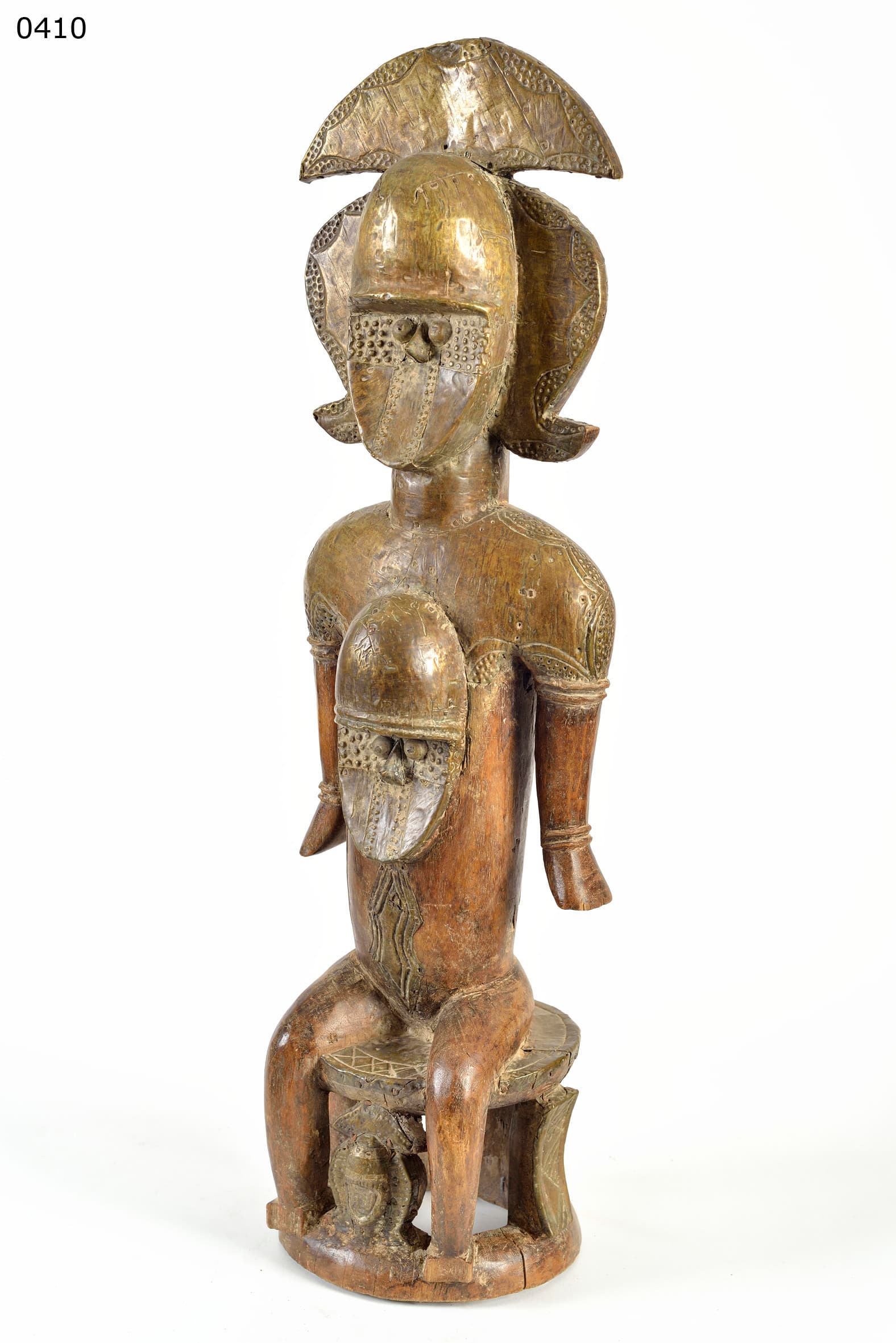
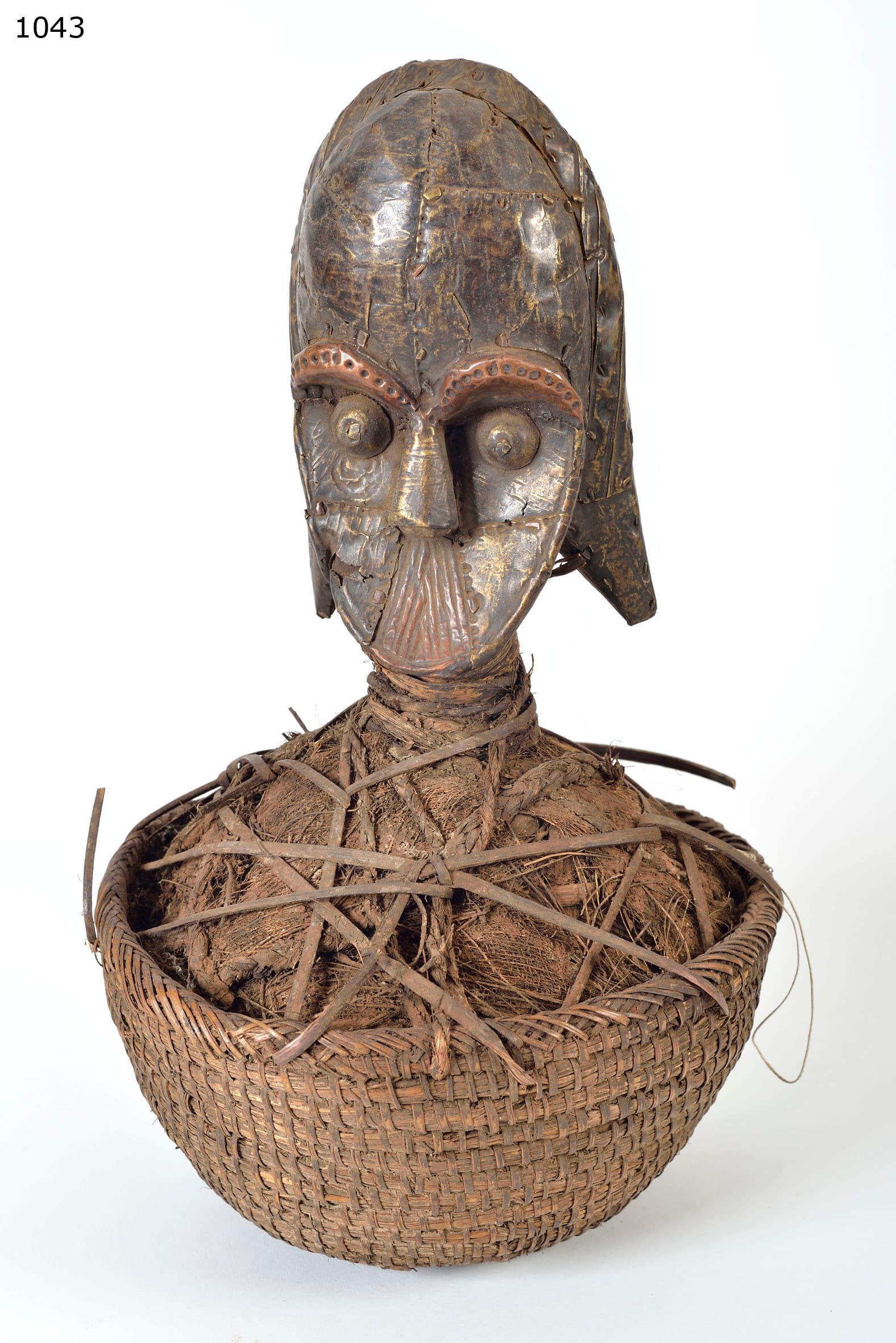
Eine klassische Kota mbulu ngulu (1. Hälfte 20. Jh., 48 cm) aus Gabun - ein geschnitzter Holzkern, der vollständig von sorgfältig aufgetragenen Messing- und Kupferblechen umhüllt ist und ein ovales Gesicht mit erhabenen, sich kreuzenden Linien bildet, flankiert von seitlichen geometrischen Flanschen und einem großen, sichelförmigen Aufsatz, wobei das Metall eine warme, oxidierte, vielfältige Patina aufweist.
1. Meisterhafte metallurgische Geometrie
Die Kota-Reliquienwächter aus Gabun sind bekannt für ihre zweidimensionale Abstraktion und ihre differenzierte Verwendung kontrastierender Metalle.
- Zusammenspiel von Kupfer und Messing: Dieses Stück veranschaulicht auf wunderbare Weise die Form des mbulu ngulu - warmes, rötliches Kupfer (das sich überschneidende Gesichtskreuz und die Augen) gegen hellgelbes Messingblech.
- Reflektierende Architektur: Die Künstler haben das menschliche Gesicht bewusst zu einer strahlenden, reflektierenden Fläche abgeflacht - umrahmt von den geschwungenen architektonischen Kurven der seitlichen Wangen und dem großen mondähnlichen oberen Kamm.
2. Bwete und die Wächter des Knochenkorbs
Diese prächtigen Objekte waren keine eigenständigen Skulpturen - der rautenförmige Holzsockel wurde ursprünglich in einen geflochtenen Korb oder eine Rindenkiste eingesetzt, die den Schädel und die Knochen eines verehrten Ahnen (der Bwete) enthielt.
- Funktionaler spiritueller Blitz: Die stark reflektierende Metalloberfläche hatte eine spirituelle Funktion - sie sollte die Blicke uneingeweihter Betrachter ablenken und böswillige Kräfte abwehren.
- Anti-Diebstahl-Warnung: Das blinkende, aggressive Metall diente als Warnung für jeden, der versuchte, die im Korb aufbewahrten heiligen Überreste der Ahnen zu stehlen oder zu schänden.
3. Oxidierte Patinierung und Handhabung Verschleiß
Die Datierung in die erste Hälfte des 20. Jahrhunderts ist mit den spezifischen Abnutzungsmustern auf dem Metall vereinbar.
- Sand- und Zitruspolitur: Traditionell wurden Kota-Figuren während der Zeremonien wiederholt mit Sand und Zitrussaft poliert, um den spirituellen Glanz zu erhalten - dieses Stück zeigt die daraus resultierenden Mikroabriebe neben einer reichen natürlichen Oxidation, die sich in den vertieften Klammern und Repoussé-Punkten festgesetzt hat.
- Ölige Basis Verschleiß: Die exponierte hölzerne Basis an der Unterseite zeigt dunkle ölige Handhabung Verschleiß von Jahrzehnten in und aus dem Reliquienkorb eingesetzt werden.
Zusammenfassung
Dieses mbulu ngulu ist ein klassischer Ausdruck der gabunischen Reliquienkunst - charakterisiert durch seine ausgewogenen geometrischen Proportionen und die differenzierte Verwendung von kontrastierenden Metallen. Seine Oxidation und die Gebrauchsspuren stützen eine Zuschreibung als historisches Sammlungsstück.
KI-unterstützt erstellt aus Sammlungsgutachten, Objektfotografie und eigener Recherche, redaktionell geprüft. Fehler sind möglich — Hinweise darauf sind uns willkommen. Zum Verfahren →