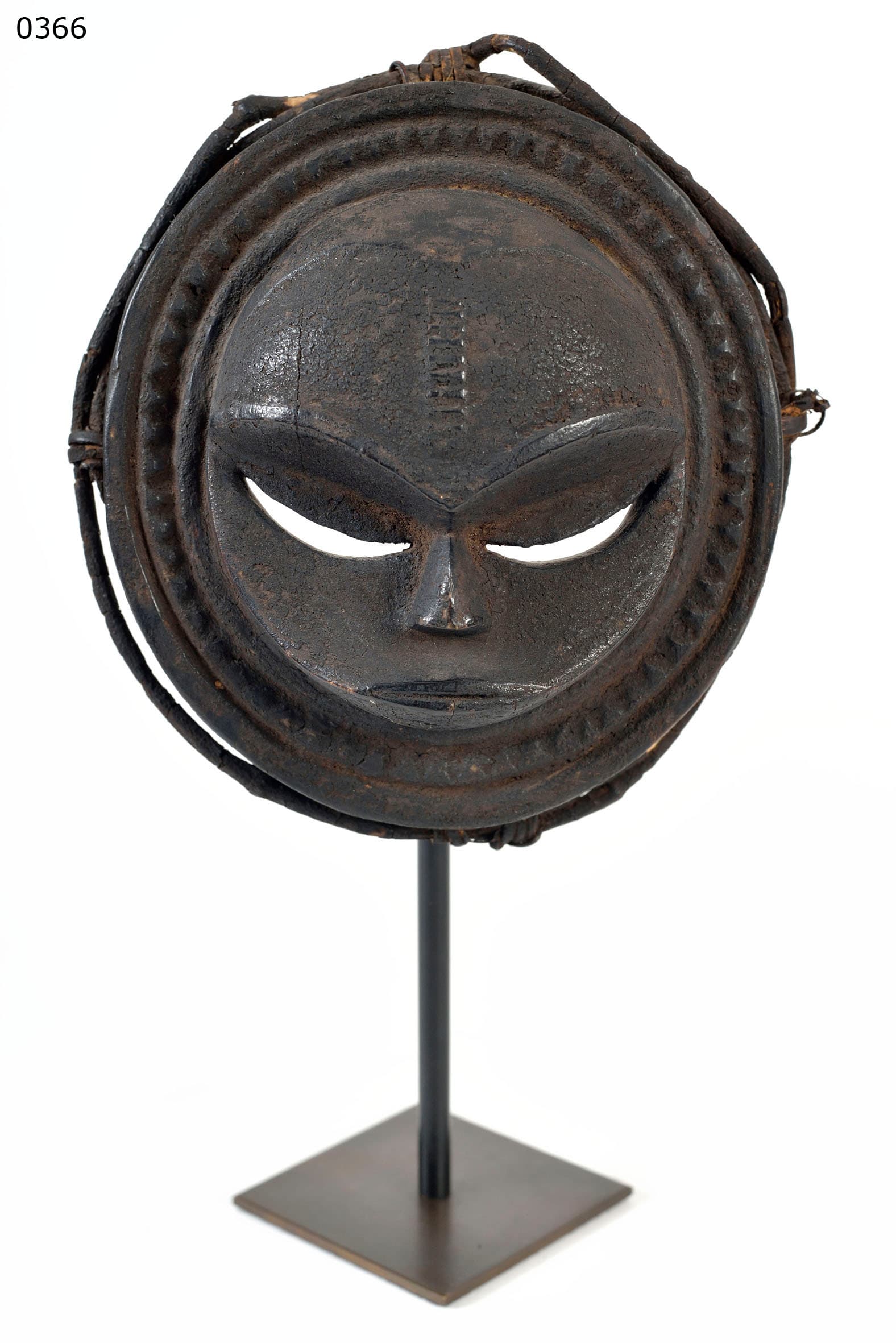
Eine auffällige hölzerne Dan-Gesichtsmaske (1. Hälfte 20. Jh., 24 cm) von der Elfenbeinküste - abweichend von der ruhigen Dan-Ästhetik mit einer hohen gewölbten Stirn, massiven, kreisförmig geöffneten Augen, einer scharfen, vorspringenden Nase und einem hervorstehenden, offenen Mund. Das schwere, dichte Holz ist vollständig mit einer dicken, stark strukturierten, dunkelbraunen Patina überzogen und mit peripheren Löchern zur Befestigung von Kostümen versehen.
1. Die Gunye Ge und die aggressive Geometrie
Die Dan schnitzen Masken, die als physische Körper für gle - formlose spirituelle Kräfte aus dem Wald - dienen.
- Gunye Ge oder Zakpai Ge Typologie: Gekennzeichnet durch massive, weit geöffnete, kreisförmige Augen - eine klassische Gunye Ge (Rennmaske) oder Zakpai Ge (Feuerverhinderungsmaske). Um diese Funktionen ausführen zu können, muss der Geist wachsam sein und der Tänzer muss eine ungehinderte Sicht haben.
- Kinetische Wachsamkeit: Der Künstler ersetzt die anmutigen schmalen Schlitze der friedlichen Deangle-Masken durch aggressive, weit geöffnete kreisförmige Hohlräume und einen vorspringenden, kräftigen Mund - und schafft so ein Antlitz von hochenergetischer kinetischer Wachsamkeit.
2. Athletische Maskerade und Dorfschutz
Wenn sie als Gunye Ge verwendet wird, wurde diese Maske von einem Spitzensportler getragen.
- Natürliche Schnelligkeit: Jede Woche während der Trockenzeit wurde der maskierte Läufer von Jugendlichen aus dem Dorf herausgefordert - der Geist der Maske verlieh ihm übernatürliche Schnelligkeit und Beweglichkeit, um seine Herausforderer zu fangen und Ansehen für seinen Klan zu gewinnen.
- Zakpai Brandverhütung: Wenn er als Zakpai Ge fungierte, war der grimmige, weitäugige Geist dafür verantwortlich, durch das Dorf zu rasen, um sicherzustellen, dass die Frauen ihre Kochfeuer gelöscht hatten - er setzte Einschüchterung ein, um zu verhindern, dass katastrophale Brände die hochentzündlichen Strohdächer zerstörten.
3. Opfertransformation und Schreinpatinierung
Die heutige Oberfläche offenbart eine komplexe, mehrstufige Geschichte.
- Zurückgezogen in den Schrein: Während Rennmasken oft poliert und glatt sind, ist dieses Stück mit einer dicken geronnenen, rissigen Kruste überzogen - ein Hinweis darauf, dass es später im Leben (vielleicht nachdem der Tänzer sich zurückgezogen oder die Maske zu viel spirituelle Hitze angesammelt hatte) in ein stationäres, schützendes Schreinobjekt verwandelt wurde.
- Tiefe esoterische Verehrung: Die dichte Verkrustung aus Blut, zerkauter Kolanuss und Palmöl spricht für eine tiefe esoterische Verehrung im frühen 20.
Zusammenfassung
Diese auf übernatürliche Geschwindigkeit und maximale Sichtbarkeit ausgelegte Maske mit den großen Augen des Dan ist die kraftvolle kinetische Verkörperung eines Waldgeistes. Ihre dicke blutverkrustete Patina dokumentiert ihren faszinierenden Wandel von einem sportlichen Gerät zu einem schwer verehrten Schreinaltar.
KI-unterstützt erstellt aus Sammlungsgutachten, Objektfotografie und eigener Recherche, redaktionell geprüft. Fehler sind möglich — Hinweise darauf sind uns willkommen. Zum Verfahren →