Ein hoch aufragender, monumentaler Lobi Bateba (1. Hälfte 20. Jh., 119 cm) aus Burkina Faso - ein langgestreckter, starrer Körper, der einen V-förmigen Hals trägt, der sich in zwei identische Köpfe mit klassischer, strenger Lobi-Gesichtsgeometrie aufspaltet. Das Holz ist extrem trocken, blass und tief rissig, was auf intensive Umwelteinflüsse hinweist.
1. Bicephale Ikonographie und Voltaische Geometrie
Die Lobi schnitzen selten mehrköpfige Figuren, was diese 119 cm große Statue zu einer außergewöhnlichen Rarität macht.
- Verstärkte Autorität: Indem der Künstler zwei identische Köpfe schnitzt, die in leicht unterschiedliche Richtungen weisen, verstärkt er die visuelle und psychologische Autorität der Figur.
- Harter geometrischer Minimalismus: Scharf hervortretende Kiefer, halb geschlossene Augen und strenge Gesichtsausdrücke projizieren eine Aura absoluter, unnachgiebiger Wachsamkeit - unter Verwendung des strengen geometrischen Minimalismus, der das Markenzeichen der voltaischen Ästhetik ist.
2. Allwissenheit und das Thil-Heiligtum
In der Kosmologie der Lobi sind Bateba physische Gefäße für Thila - unsichtbare Schutzgeister, die die Gemeinschaft beschützen.
- Bateba Ti Bala: Eine zweiköpfige Figur (bateba ti bala) repräsentiert einen Geist mit erhöhter Hellsichtigkeit und allseitigem Sehvermögen.
- Gemeinschaftsradar: Mit einer Höhe von fast 1,2 Metern spricht vieles dafür, dass dies kein persönliches Amulett, sondern ein bedeutender Schreinanker auf Gemeinschaftsebene war. Solche Figuren wurden traditionell von einem Wahrsager in Auftrag gegeben, um Gefahren zu erkennen, die sich aus mehreren Richtungen gleichzeitig nähern, und sollten dazu dienen, böswillige Einflüsse abzuwehren.
3. Sahelische Austrocknung und Schreinalterung
Der physische Zustand deutet auf eine langjährige Aussetzung der Elemente hin.
- Rohes, ungeschütztes Holz: Die Lobi-Figuren wurden roh belassen, ungeschützt durch das in den Küstenregionen verwendete Palmöl - sie wurden in Freiluft- oder halb-exponierten irdenen Schreinen (dithil) aufgestellt und waren den brutalen burkinischen Klimaextremen ausgesetzt.
- Gebleichte tiefe Risse: Bleiche gebleichte Oxidation und tiefe stabilisierte Austrocknungsrisse, die sich über die Länge des Rumpfes und der Beine erstrecken, sind das charakteristische Ergebnis jahrzehntelanger Hitze und trockener Harmattan-Winde.
Zusammenfassung
Mit einer Höhe von fast 1,2 Metern zeigt dieser zweiköpfige Lobi Bateba die charakteristischen Züge der schützenden voltaischen Geometrie. Seine seltene doppelköpfige Ikonographie und seine tiefgreifende, trocken verwitterte Patina machen ihn zu einem imposanten ethnografischen Objekt.
KI-unterstützt erstellt aus Sammlungsgutachten, Objektfotografie und eigener Recherche, redaktionell geprüft. Fehler sind möglich — Hinweise darauf sind uns willkommen. Zum Verfahren →
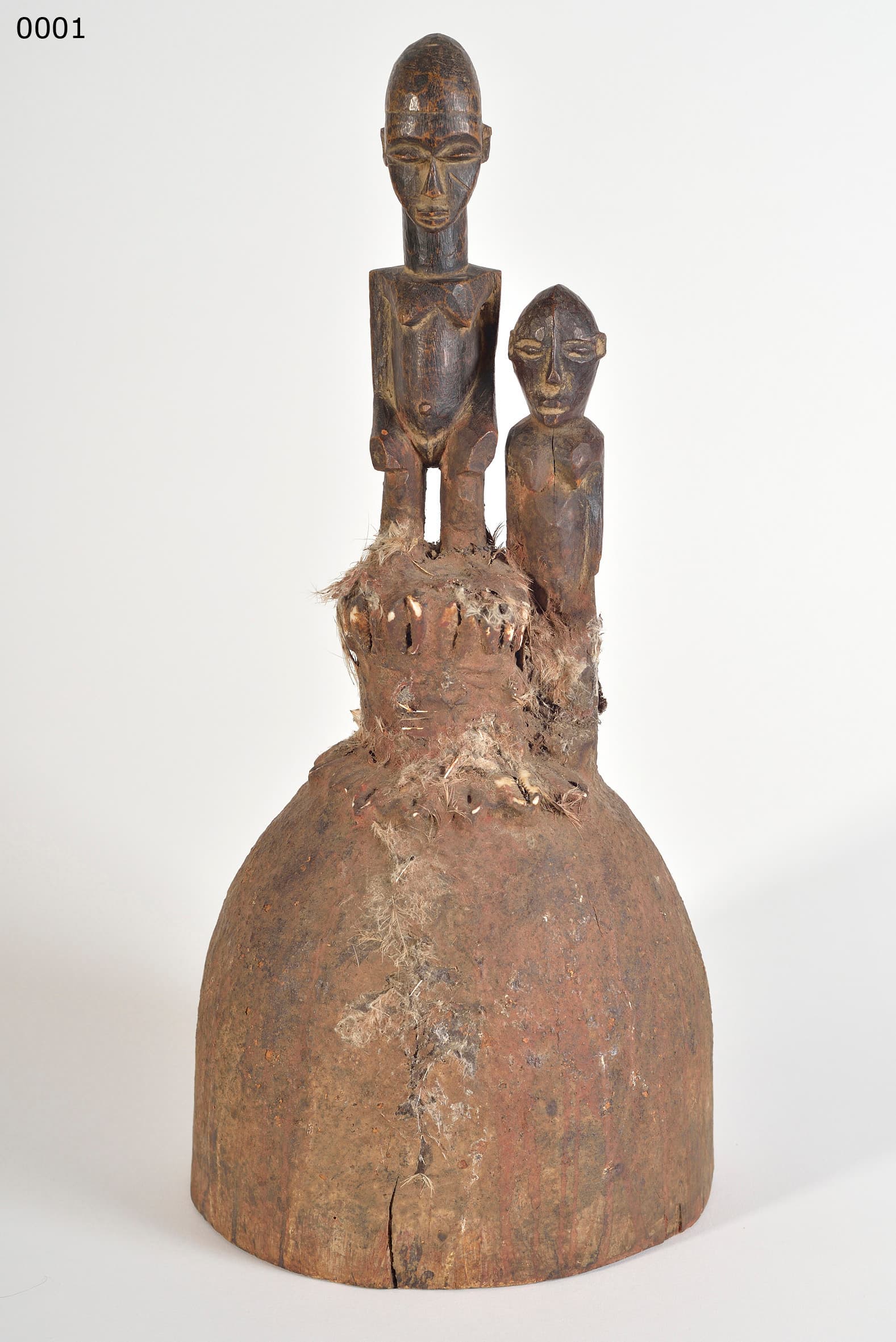
Schreinaltar mit Ehepaar BATEKE
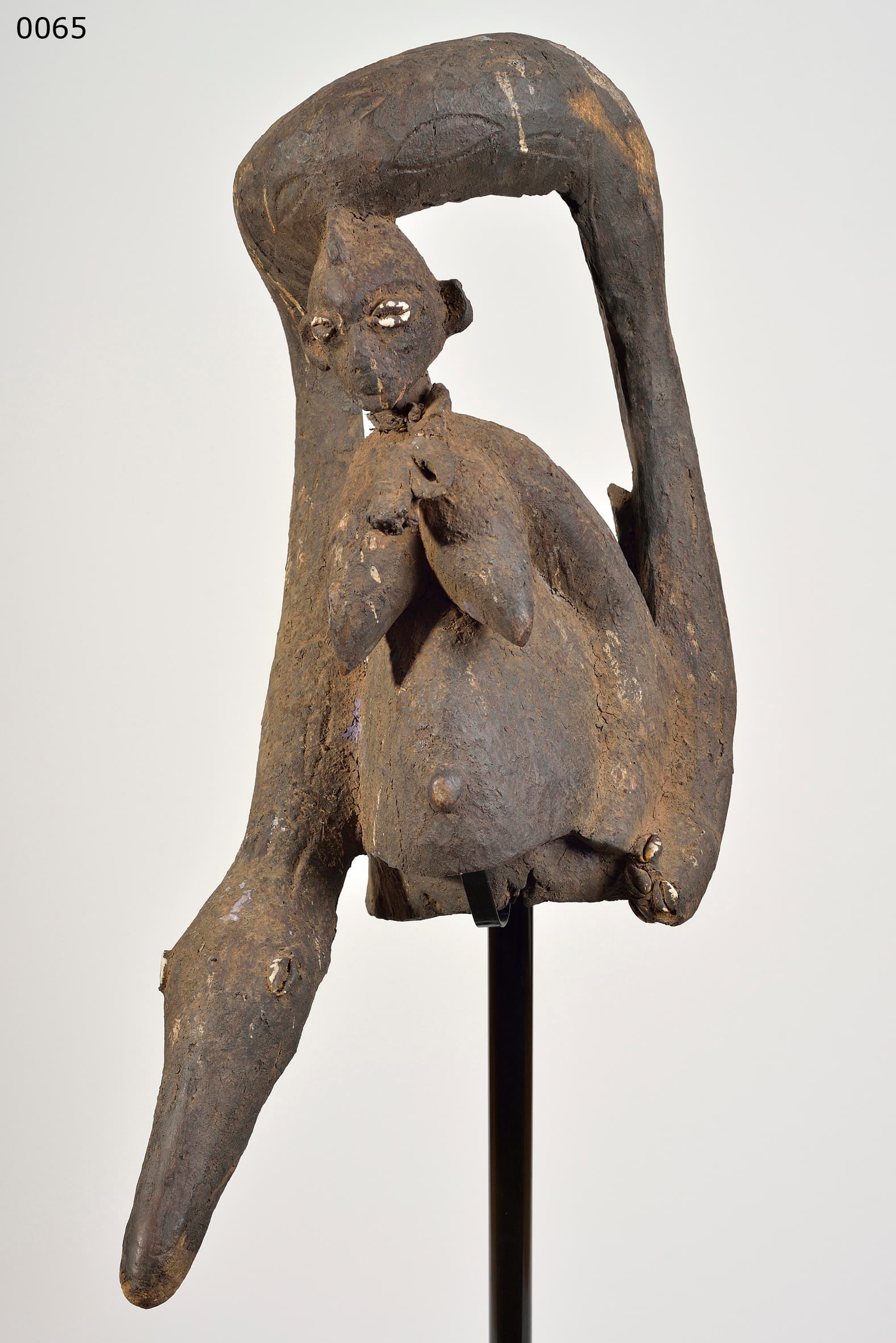
Seltene Kopfhaubenmaske
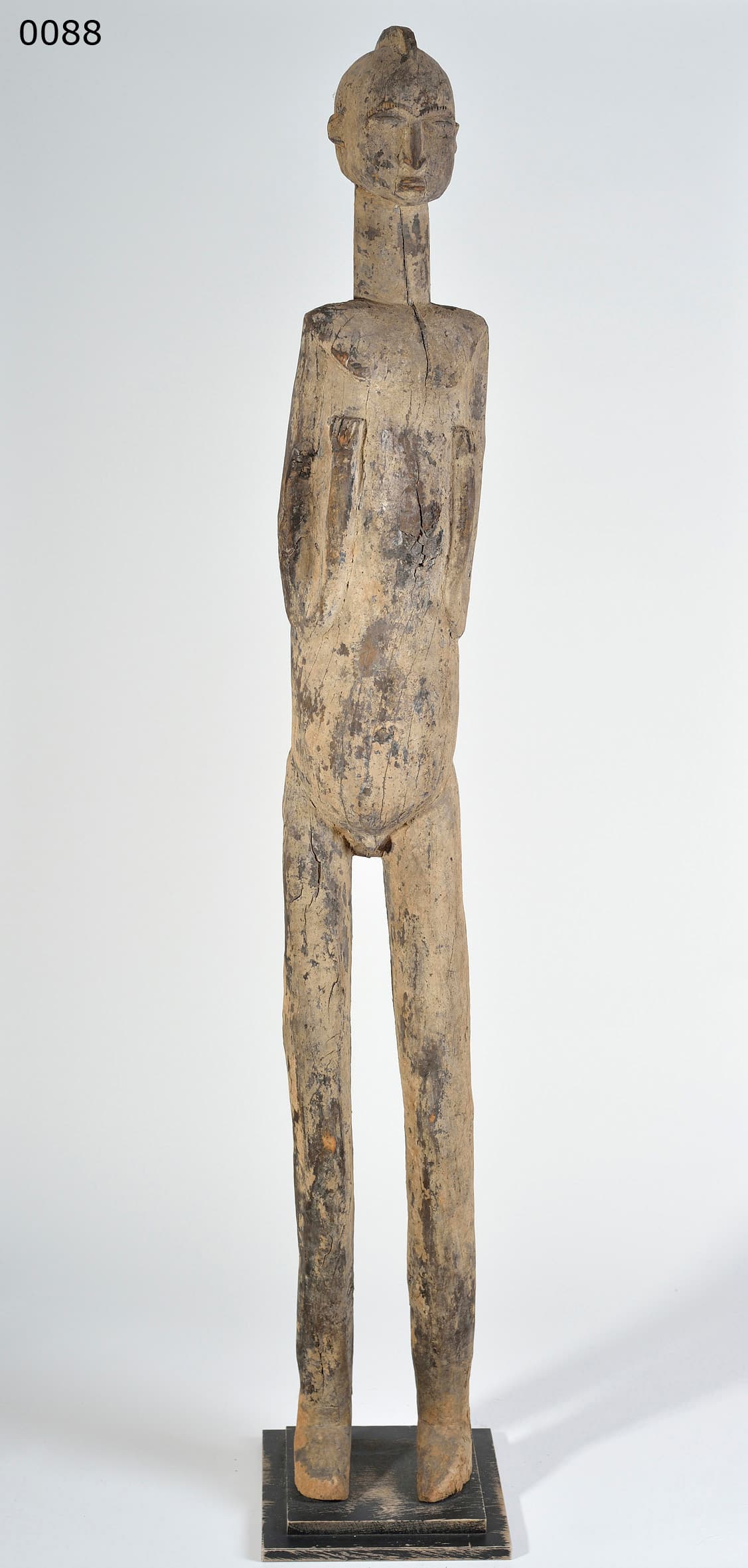
Schreinfigur, die einen BATEBA-Geist darstellt (ungewöhnlich groß, selten)