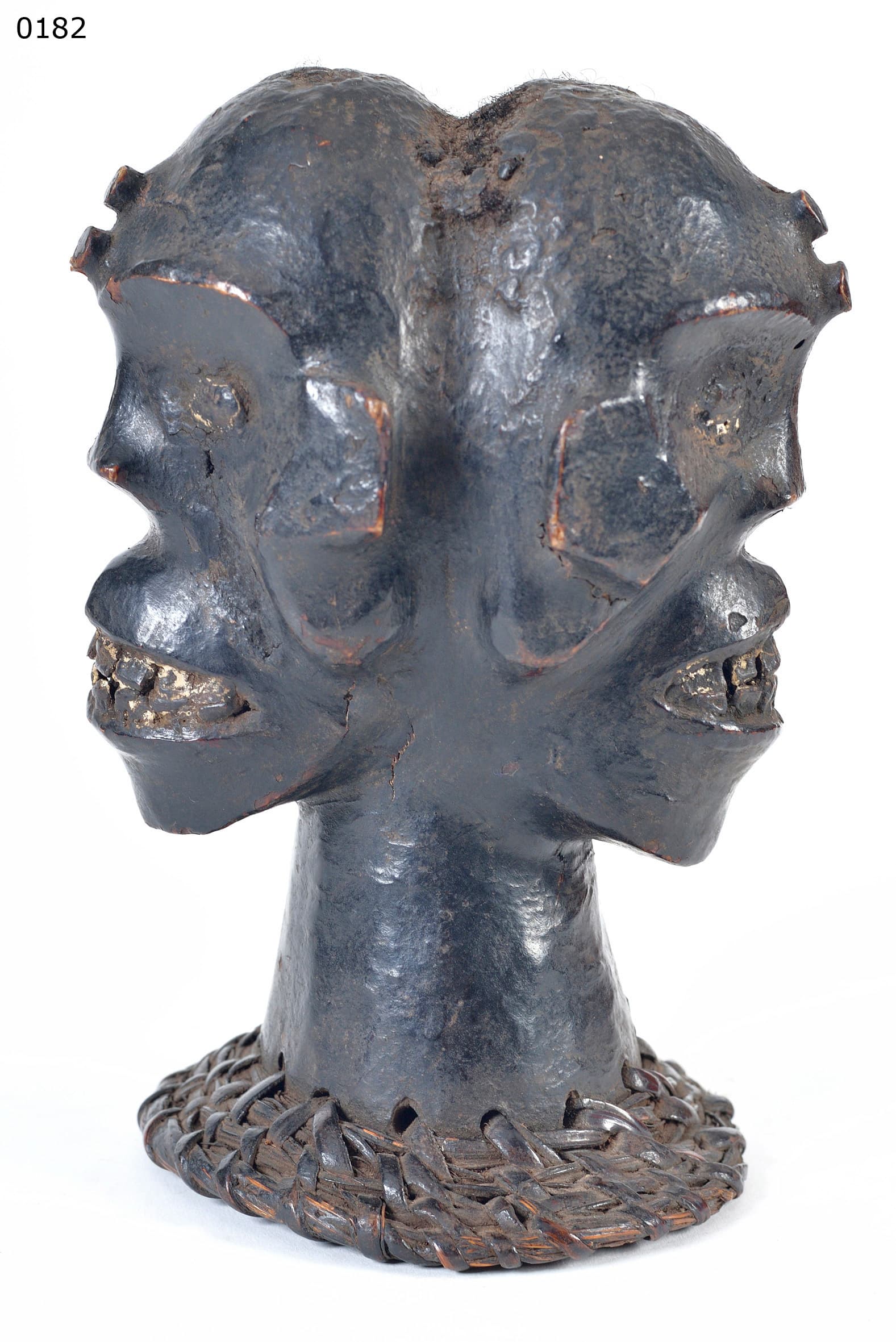
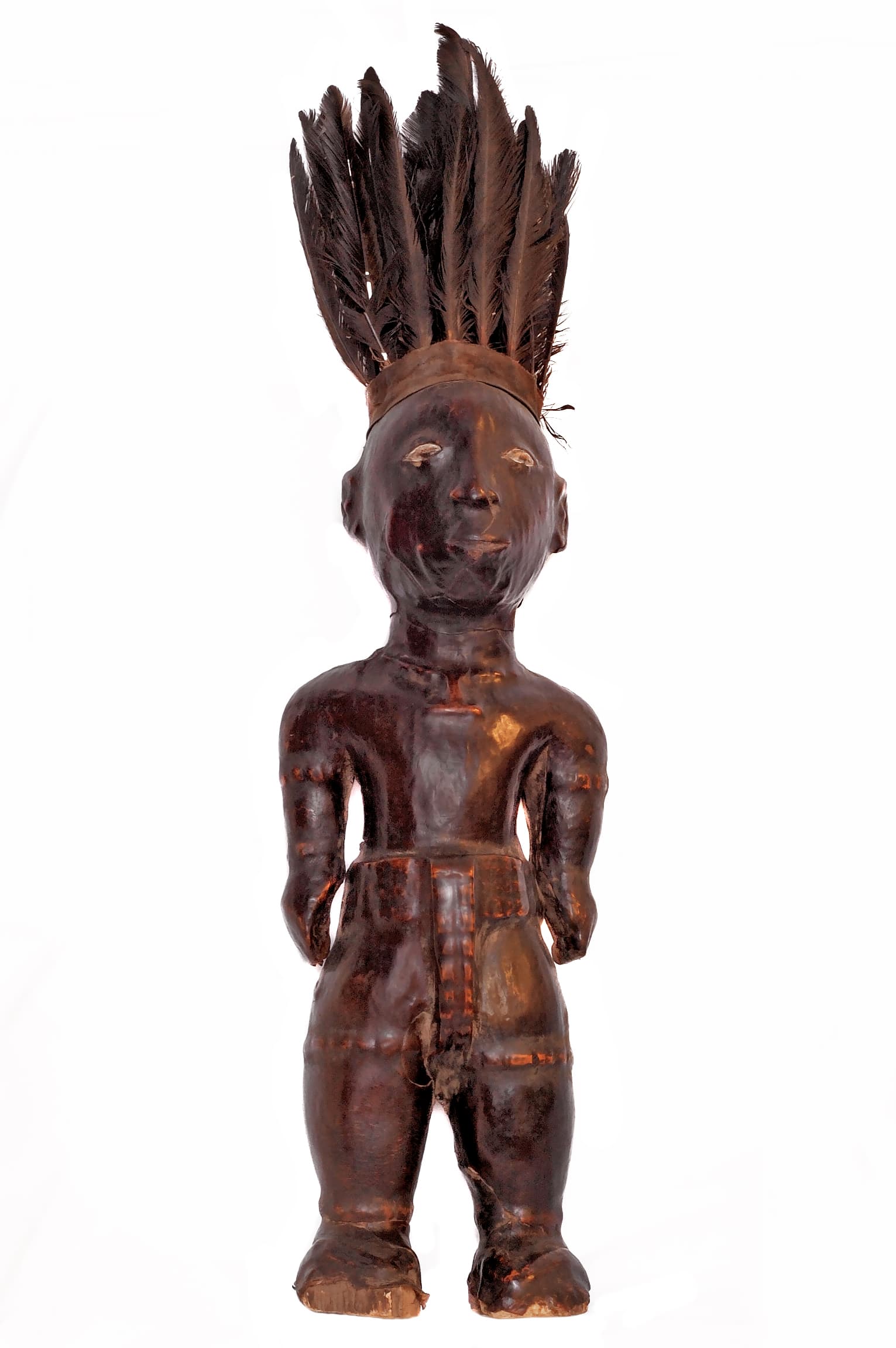
Eine hockende Teke-Holzfigur (1. Hälfte 20. Jh., ~20 cm) aus der Republik Kongo - ein blockiger, trapezförmiger Kiefer und paddelartige Hände, ohne Bauchpanzer, das dichte Holz trägt eine dunkle, ölige, rußige Patina. Gepaart mit 0429.
1. Das Spektrum der magischen Abstraktion der Teke
Dieses Stück zeigt die klassische architektonische Teke-Holzschnitzerei, die normalerweise als Armatur für ein befestigtes bilongo-Paket dient.
- Architektonische Merkmale der Teke: Eine blockartige, trapezförmige Kieferlinie, feine vertikale Gesichtsnarben und eine sehr kantige Haltung mit gebeugten Knien, die angespannte Bereitschaft ausstrahlen soll.
- Ungebündelte Form sichtbar: Im Gegensatz zu 0429 (wo das Holz vollständig verborgen ist), zeigt diese Figur die geschnitzte Armatur, die Teke-Schmiede normalerweise unter magischen Bündeln verstecken.
2. Passiver Wächter oder deaktivierter Biteke
Der Funktionsstatus dieser Figur unterscheidet sich von dem eines voll aufgeladenen Biteke.
- Fehlender Bauchpanzer: Da ihm derzeit der Bauchpanzer fehlt, könnte er als passiver Ahnenwächter gedient haben.
- Deaktivierung nach dem Tod des Besitzers: Alternativ kann der Bilongo auch absichtlich entfernt worden sein, um ihn nach dem Tod seines Besitzers zu deaktivieren - eine übliche Teke-Praxis, um den gebundenen Geist freizulassen, sobald er keinen Erben mehr hat, dem er dienen kann.
3. Organische Austrocknung und rituelle Sättigung
Der physische Zustand bestätigt die Herkunft aus der Republik Kongo im frühen 20. Jahrhundert.
- Rußige Patina: Mit einer dunklen, öligen, rußigen Patina gesättigt - was auf eine jahrzehntelange Lagerung in den Dachsparren einer verrauchten Behausung hinweist.
- Authentic Handling Glättung: Die hohen Punkte des Gesichts und der Knie zeigen Glättung im Einklang mit wiederholten Umgang während der Konsultation Rituale.
Zusammenfassung
Als Pendant zu 0429 veranschaulicht diese hockende Teke-Figur den klassischen architektonischen Holzschnitz-Zweig der magischen Teke-Kunst - das ungebündelte Gegenstück zu seinem bündelversteckten Geschwisterchen. Die authentische, rußgeschwärzte Patina macht sie zu einem außergewöhnlichen ethnografischen Dokument der kongolesischen Zauberei.
KI-unterstützt erstellt aus Sammlungsgutachten, Objektfotografie und eigener Recherche, redaktionell geprüft. Fehler sind möglich — Hinweise darauf sind uns willkommen. Zum Verfahren →