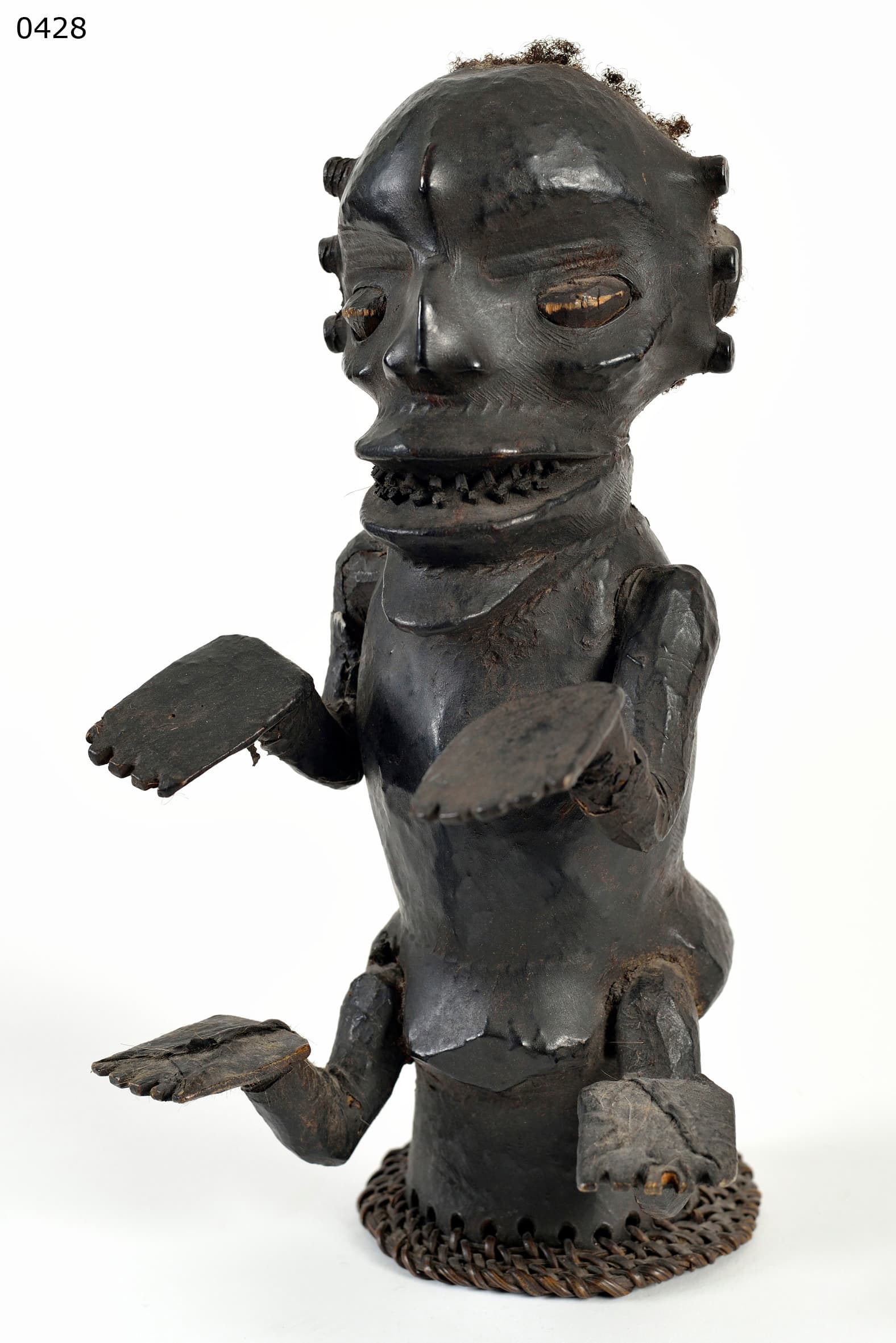
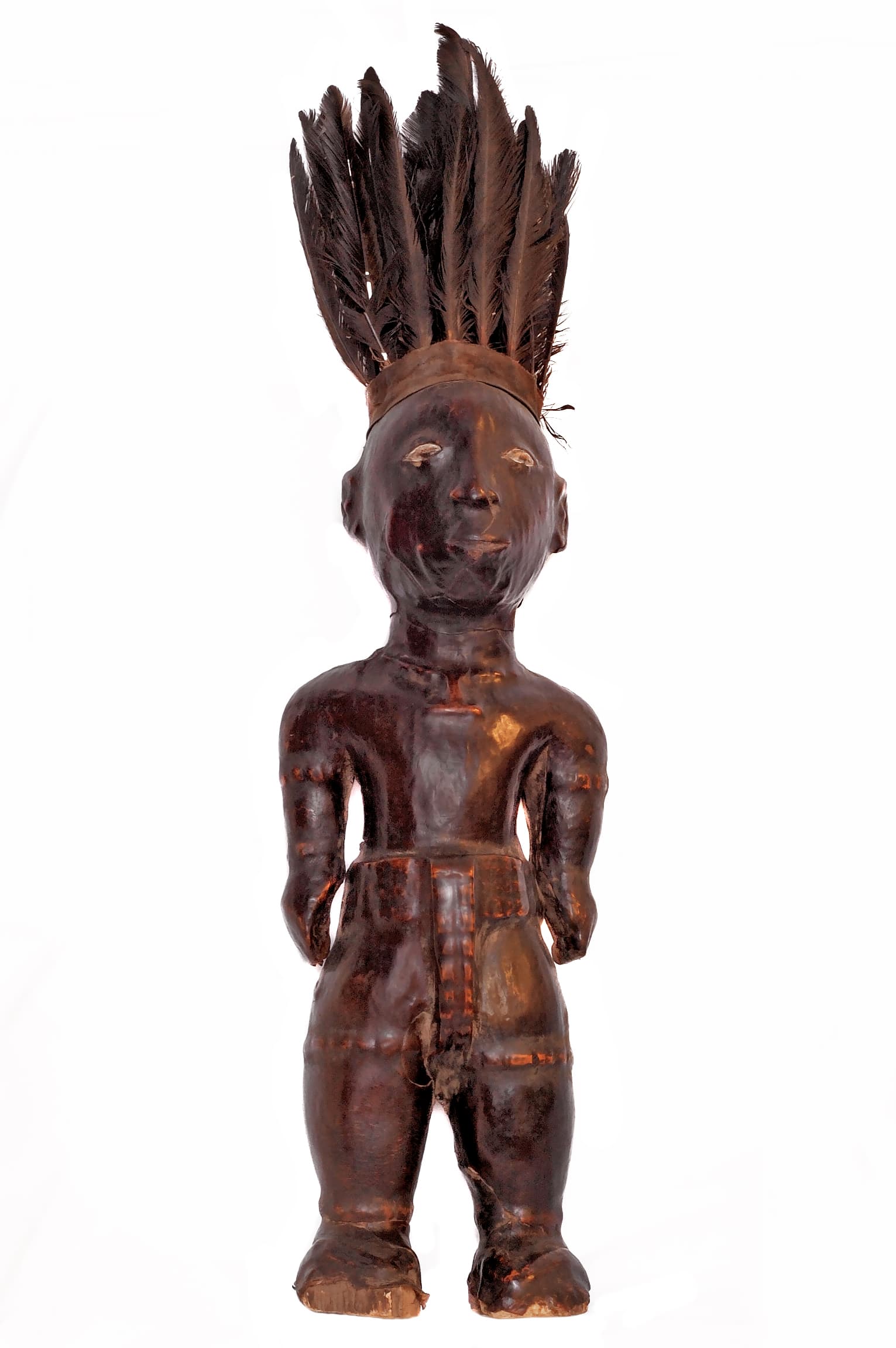
Eine auffällige, mit Fell überzogene Januskopfmaske (spätes 19. bis frühes 20. Jh., 21 cm) der Ekoi aus Nigeria - montiert auf einem geflochtenen Korbsockel, einem geschnitzten Holzkern, der fest mit gegerbtem Tierfell umwickelt ist, mit ausdrucksstarken offenen Mündern, die eingesetzte Zähne halten, vorstehenden Holzpflöcken für die Haare und einer dunklen, stark gealterten, starren Lederoberfläche.
1. Hyper-Realismus in der Cross River Region
Die Ekoi (Ejagham) aus der Cross-River-Region sind in Afrika einzigartig, weil sie Holzskulpturen mit Tierhaut überziehen.
- Antilopenhauttechnik: Die Haut (oft Antilopenhaut) wird über den geschnitzten Holzkern gespannt, während sie noch nass ist, und dann fest geschrumpft.
- Janus Allwissenheit: Kombiniert mit eingefügten Knochen- oder Holzzähnen und der doppelgesichtigen Janusform ergibt sich ein verblüffender viszeraler Hyperrealismus - die Ahnen blicken gleichzeitig in die physische und die spirituelle Welt.
2. Die Ngbe- und Ekpe-Leoparden-Gesellschaften
Diese mit Haut überzogenen Wappen sind das exklusive Vorrecht mächtiger, abgestufter männlicher Geheimbünde.
- Ngbe und Ekpe: Die Leopardengesellschaften waren historisch gesehen die wichtigste juristische und politische Kraft in der Cross River Region.
- Übertragung von Tier-Nyama: Es wird angenommen, dass die Hautbedeckung die Lebensenergie des Ausgangstieres einfängt und dessen ursprüngliche Kraft auf den älteren Eingeweihten überträgt, der bei Beerdigungen und Initiationsriten unter ihr tanzt.
3. Gerben von Häuten und organische Konservierung
Die Echtheit und das hohe Alter einer mit Haut überzogenen Maske werden anhand des Zustands der Haut und ihrer Verbindung mit dem Holz beurteilt.
- Gehärtet und nachgedunkelt: Das Leder weist eine profunde, tiefdunkle und teils speckig glänzende Patina auf, die durch jahrzehntelangen rituellen Gebrauch, wiederholtes Einreiben mit Palmöl und die Lagerung in rauchigen Hütten entstanden ist. Es passt sich perfekt an die kompromisslos ausgearbeiteten knöchernen Gesichtsstrukturen der darunter liegenden Schnitzerei an.
- Natürliche Schrumpfung: Feine Rissbildungen und Schrumpfungsprozesse an den Spannungszonen um die Augen und den Mund sowie spärliche Reste der ursprünglichen Behaarung auf dem Scheitel zeugen von langem Gebrauch. Zudem weist der geflochtene Rattan-Sockel eine tiefe Oxidation und dunkle Schweißpatina auf, was als natürliche Alterungssignatur einen rituellen Gebrauch im späten 19. oder frühen 20. Jahrhundert (ca. 1890–1920) nahelegt.
Zusammenfassung
Diese visuell beeindruckende, von archaischer skulpturaler Kraft geprägte und technisch komplexe Maske mit dem Ekoi-Janus-Wappen ist ein hervorragendes Beispiel für die mit Haut überzogene Kunst des Cross River. Ihre tiefgreifende organische Alterung und ihr allwissendes, doppelgesichtiges Design sprechen für eine Einordnung als bedeutendes und repräsentatives Sammlungsstück.
KI-unterstützt erstellt aus Sammlungsgutachten, Objektfotografie und eigener Recherche, redaktionell geprüft. Fehler sind möglich — Hinweise darauf sind uns willkommen. Zum Verfahren →