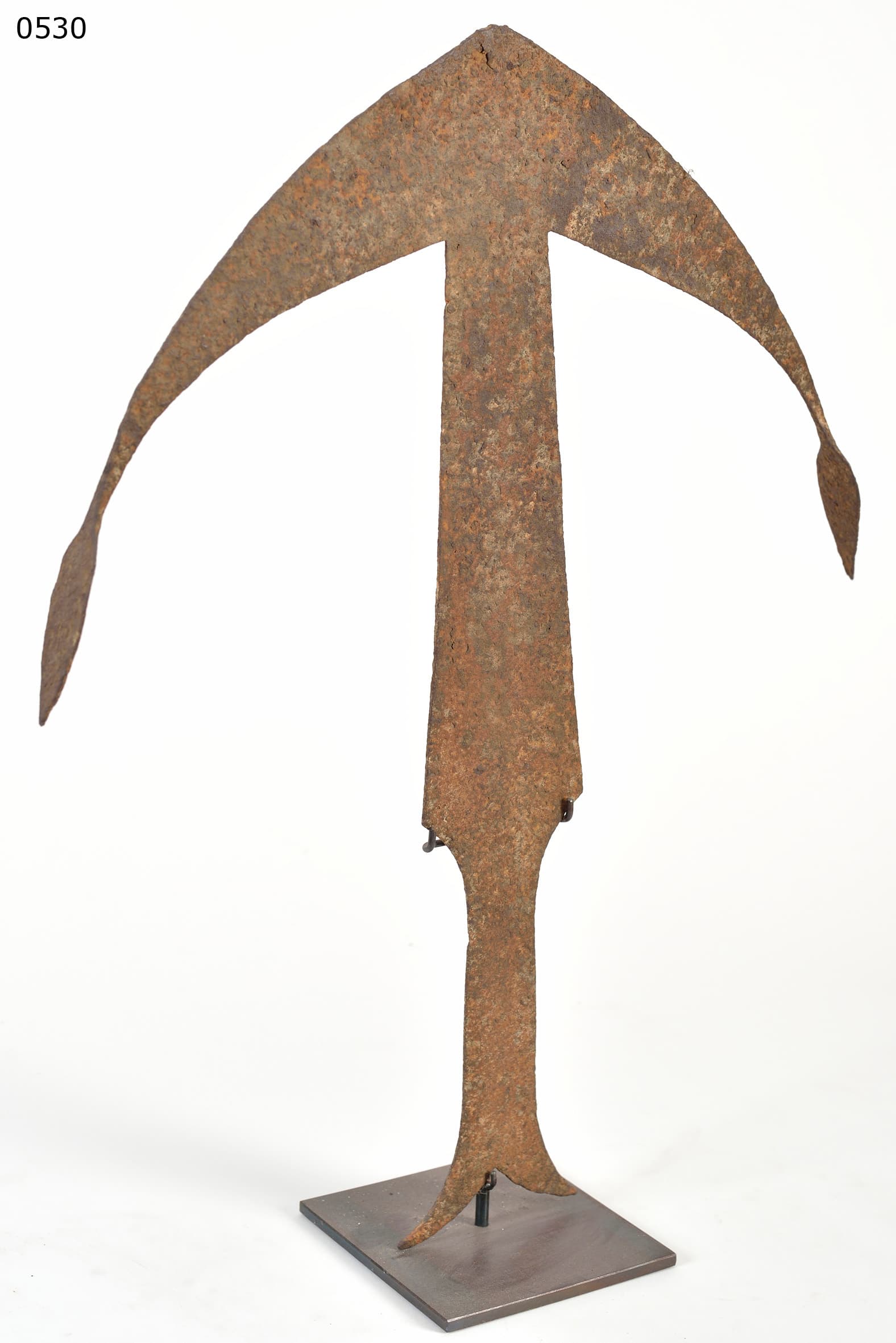
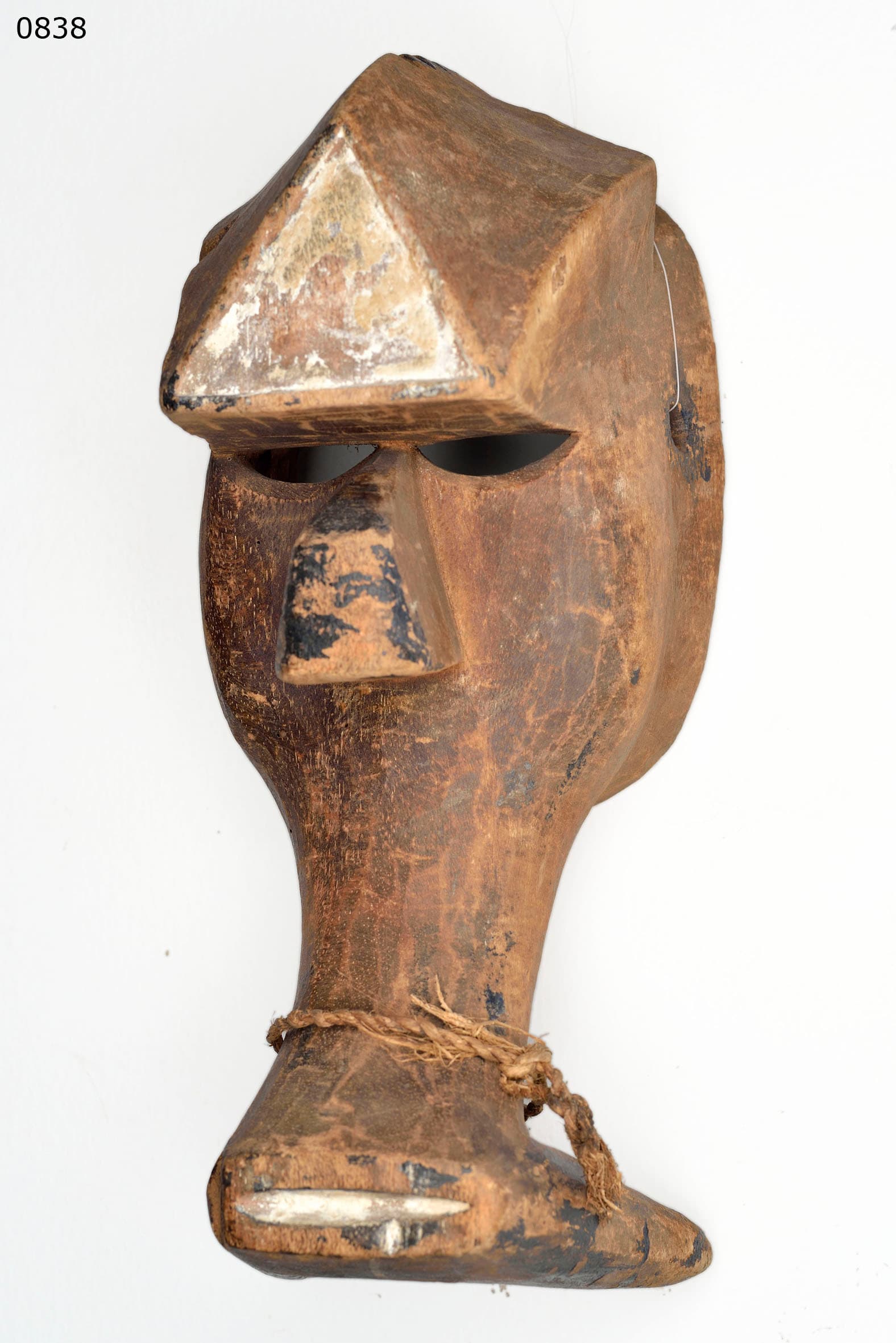
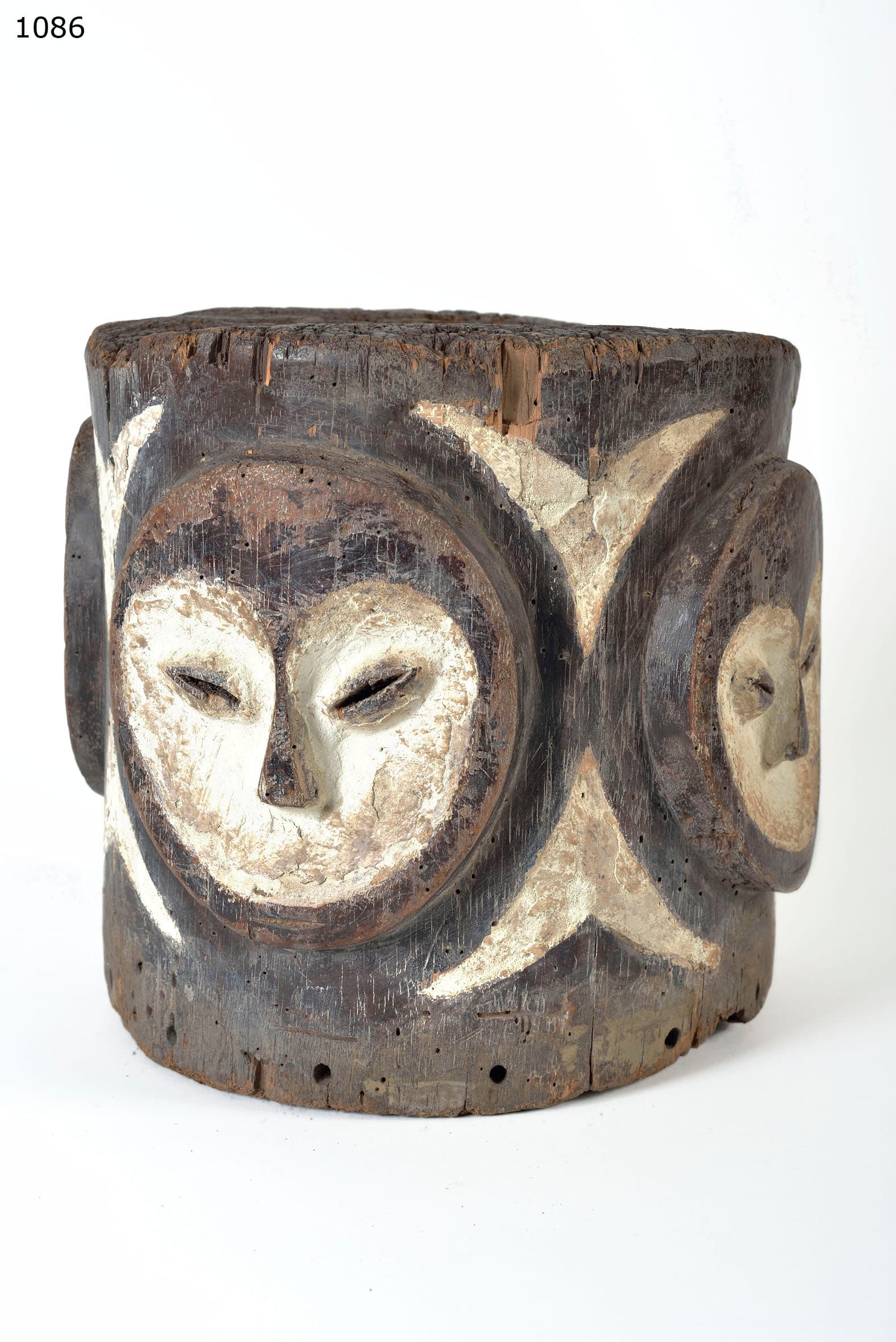
Ein schwerer, funktioneller Kwele-Ofenblasebalg (1. Hälfte 20. Jh., 63 cm) aus Gabun - zwei massive, ausgehöhlte, runde Kammern, die in eine einzige röhrenförmige Auslassdüse münden, die an der Spitze mit einem elegant geschnitzten herzförmigen Kwele-Gesicht verziert ist. Das dichte Holz ist stark oxidiert, mit starker Verkohlung, Rußverkrustung und struktureller Austrocknung am Düsenende.
1. Die Ekuk-Ästhetik als Gebrauchsgegenstand
Die Kwele sind berühmt für ihre Ekuk-Masken mit stark stilisierten, herzförmigen, konkaven Gesichtern.
- Elite-Ästhetik auf industriellem Werkzeug: Dieses Artefakt ist ein außergewöhnliches Beispiel für diese elitäre, delikate Ästhetik, die direkt auf ein schweres, industrielles Werkzeug angewandt wird - das ikonische Kwele-Gesicht mit seinen geschwungenen Brauen und den schmalen, geschlitzten Augen, die in die Oberseite des Balgs geschnitzt sind.
- Spiritualisierte Schmiedekunst: Verwandelt ein alltägliches Gerät in ein visuell beeindruckendes, spirituell aufgeladenes Objekt, das die Eleganz der gabunischen Porträtmalerei mit der rohen Kraft der Schmiedekunst verbindet.
2. Die Magie der Lunge des Schmieds
In der zentralafrikanischen Kosmologie ist der Schmied (nganga) eine verehrte und gefürchtete Figur - ein Schamane, der rohe tote Erde (Erz) in tödliches, lebenserhaltendes Metall verwandelt.
- Ahnenatem in die Flammen: Diese Blasebälge dienten als buchstäbliche "Lungen" der Schmiede - Tierhäute, die über die kreisförmigen Kammern gebunden waren, wurden gepumpt, um Luft durch die Düse ins Feuer zu drücken.
- Geschnitztes Gesicht als spirituelle Leitung: Das geschnitzte Ahnengesicht, das die Kammern überblickte, sorgte dafür, dass die Geister der Vorfahren ihre übernatürliche Kraft direkt in die Flammen hauchten, was einen erfolgreichen Schmelzvorgang garantierte.
3. Industrielle Abnutzung und Patinierung durch Holzkohle
Der physische Zustand ist ein schönes forensisches Zeugnis seines industriellen Lebens.
- Thermische Verkohlung an der Düse: Die hölzerne Düse und der untere Schaft wurden extremen thermischen Schocks und der direkten Nähe zu offenen Flammen ausgesetzt - was zu einer tiefen authentischen Verkohlung, Verkohlung und strukturellen Rissbildung führte.
- Rußige Gebrauchspatina oben: Der obere Teil um das geschnitzte Gesicht und die Ränder der Luftkammern ist mit einer dunklen, öligen Rußpatina gesättigt, die durch die verschwitzten Hände der Schmiedelehrlinge beim Pumpen der Häute über Jahrzehnte der Nutzung entstand.
Zusammenfassung
Dieser Blasebalg aus dem Kwele-Ofen ist eine brillante, seltene Synthese aus gabunischer Industrietechnik und elitärem Ahnenporträt. Seine starke Rußverkrustung und die starke thermische Abnutzung machen ihn zu einem dynamischen, authentischen Relikt der zentralafrikanischen Schmiedemagie.
KI-unterstützt erstellt aus Sammlungsgutachten, Objektfotografie und eigener Recherche, redaktionell geprüft. Fehler sind möglich — Hinweise darauf sind uns willkommen. Zum Verfahren →