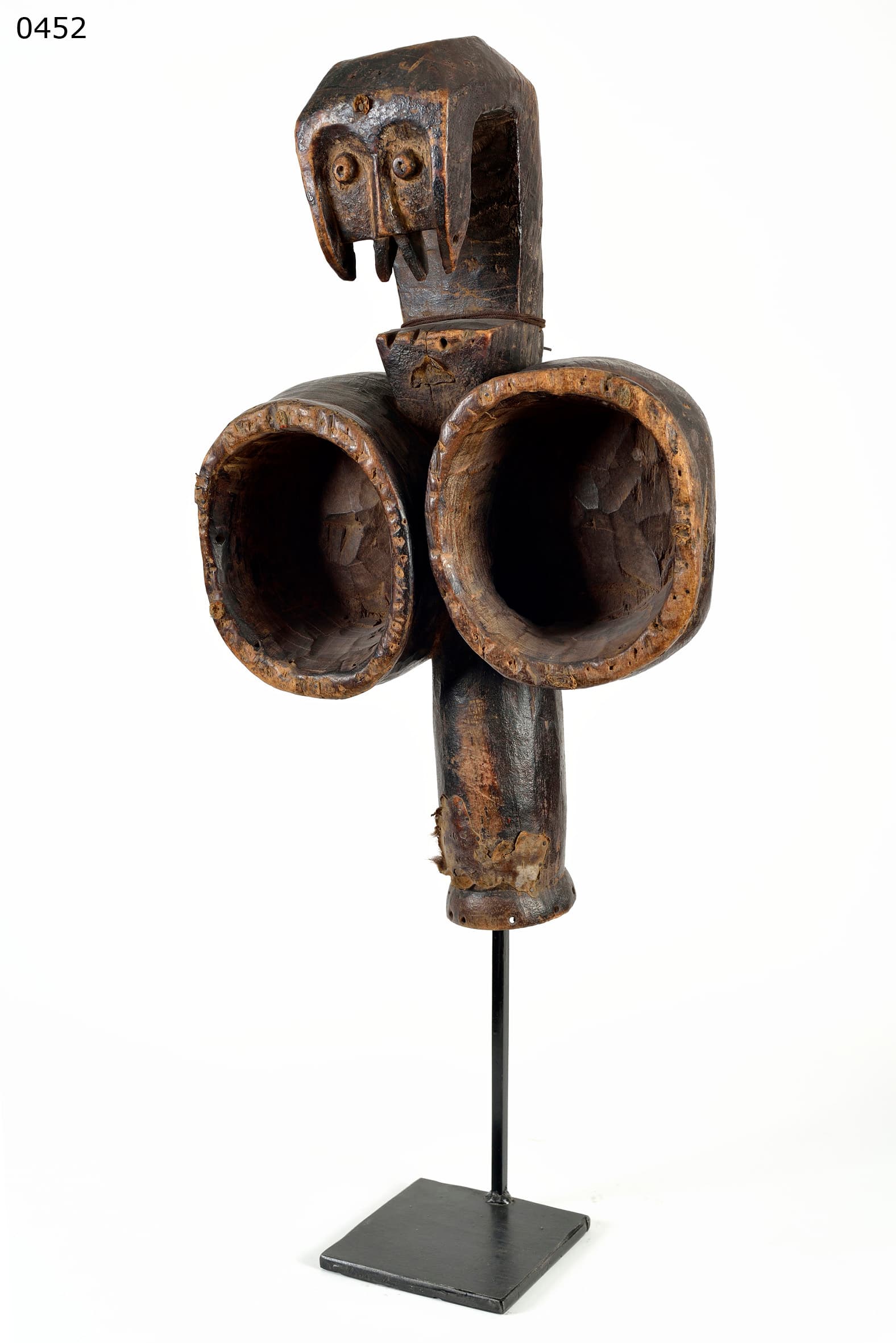
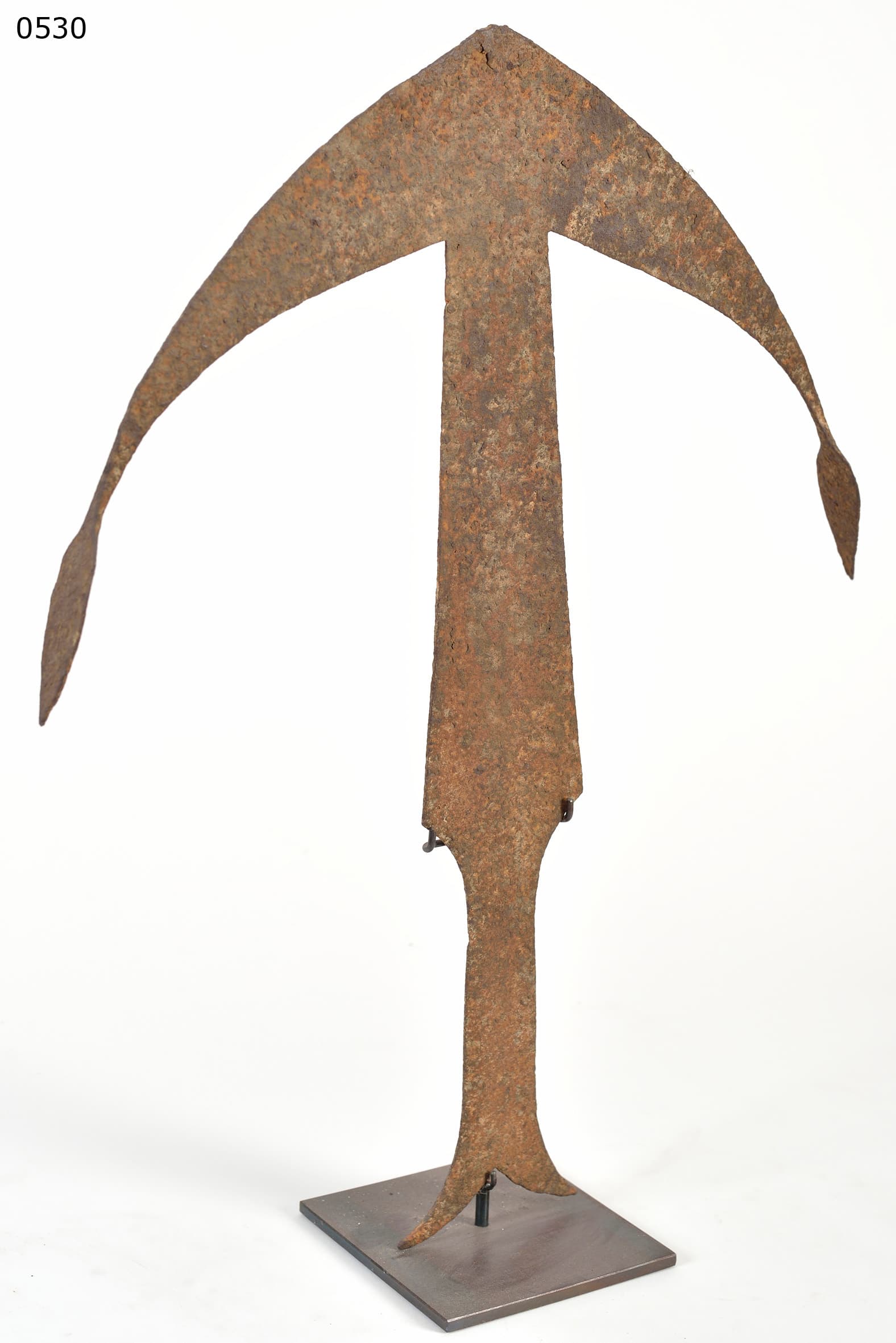
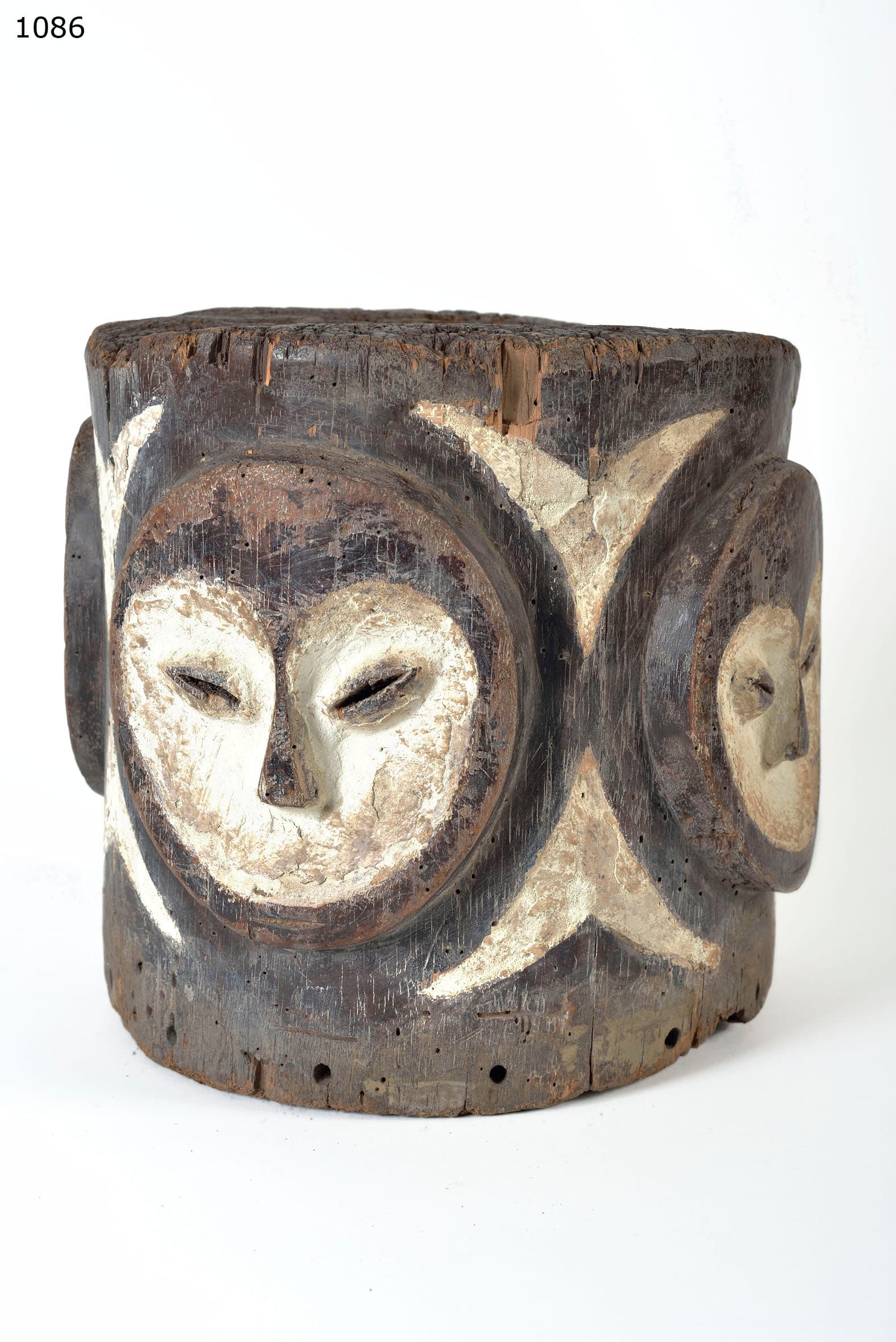
Eine kahle Holzmaske mit einem klassischen herzförmigen, leicht konkaven Gesicht, schmalen Schlitzaugen, einer flachen dreieckigen Nase und einem markanten, schweren dreieckigen Blockkamm, der über die Stirn hinausragt. Das Holz hat eine trockene, matte, erdfarbene Oberfläche mit Spuren von verblasstem weißen Pigment.
1. Ästhetischer Stil und regionale Merkmale
Das Volk der Kwele aus dem gabunischen Regenwald ist berühmt für seine absolute Beherrschung des herzförmigen Gesichts. Diese Maske, die als Ekuk (Waldgeist) bekannt ist, verzichtet auf jeglichen anatomischen Realismus zugunsten einer reinen, schwungvollen Geometrie. Der starke Kontrast zwischen der zarten, vertieften Gesichtsebene und dem schweren, brutalistischen dreieckigen Visier, das über die Stirn ragt, erzeugt eine visuell fesselnde Spannung, die ein Markenzeichen der besten Kwele-Abstraktion ist. Das herzförmige Format ist eines der erkennbarsten zentralafrikanischen Maskenvokabeln, wobei die Kwele-Meister es bis zum formalen Extrem ausreizen.
2. Rituelle Funktion und die Beete-Gesellschaft
Die Kwele-Masken sind untrennbar mit der Beete-Gesellschaft verbunden, einem Kult zur Aufrechterhaltung der sozialen Harmonie, zur Förderung der Fruchtbarkeit des Dorfes und zur Bekämpfung der bösartigen Auswirkungen der Hexerei. In Krisenzeiten wurden diese Masken aus dem Wald geholt und getanzt, um das Dorf "aufzuwärmen". Dabei wurde ihre ruhige, unirdische Geometrie genutzt, um positive, vereinigende Waldgeister zu kanalisieren und das spirituelle Gleichgewicht der Gemeinschaft wiederherzustellen. Die "wärmende" Redewendung ist ikonografisch aufgeladen - die Rolle der Maske besteht eher in der thermischen Aktivierung des spirituellen Klimas des Dorfes als in der Bekämpfung spezifischer Bedrohungen.
3. Physische Patina und Altersnachweis
Ursprünglich war die vertiefte, herzförmige Fläche dieser Maske mit weißem Kaolin-Ton bemalt, der das Licht und die Hellsichtigkeit der Geisterwelt symbolisiert. Heute weist die Oberfläche eine trockene, verblasste und stark oxidierte Patina auf, von der nur noch schwache, pulverförmige Spuren des weißen Pigments übrig sind. Diese tiefgreifende Alterung und der natürliche Verlust des Kaolins bestätigen seine authentische Verwendung in den Ritualen der gabunischen Dörfer zu Beginn des 20.
Zusammenfassung
Diese Kwele-Ekuk-Maske ist eine brillante Übung in geometrischer Spannung und verkörpert perfekt die herzförmige Gesichtsästhetik Zentralafrikas. Ihre strenge, abstrakte Form und die stark verblasste, trockene Patina sichern ihren Status als lebendiges, museumswürdiges Artefakt der Beete-Gesellschaft.
KI-unterstützt erstellt aus Sammlungsgutachten, Objektfotografie und eigener Recherche, redaktionell geprüft. Fehler sind möglich — Hinweise darauf sind uns willkommen. Zum Verfahren →