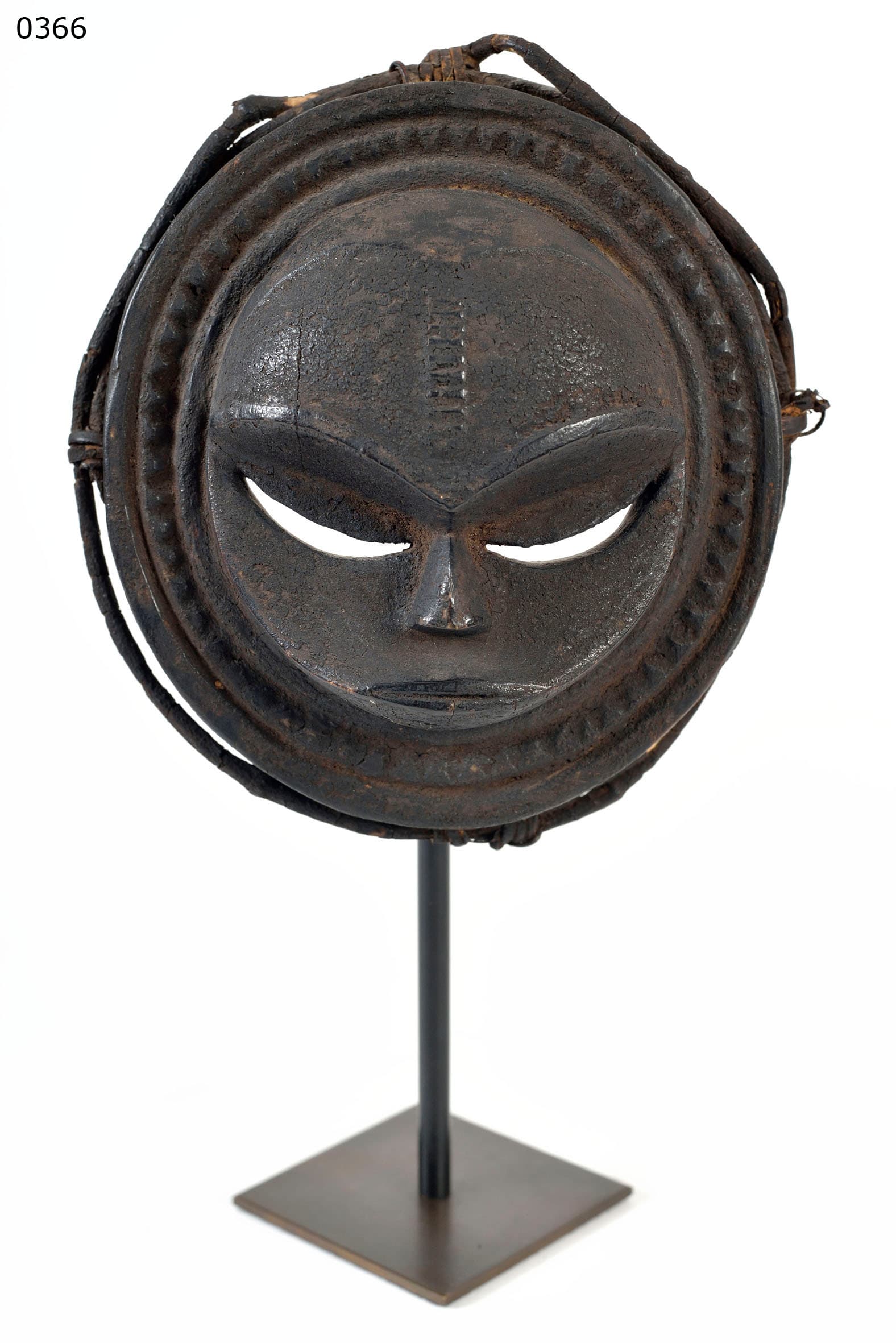
Eine schwere Dan Zakpai Ge oder Gunye Ge Maske (zugeschrieben der 1. Hälfte des 20. Jh., 35 cm) von der Elfenbeinküste - ein robustes ovales Gesicht mit markanten, kreisförmig geöffneten Augen, einer dicken, vorspringenden Nase und schweren, offenen Lippen. Das dichte Holz ist von einer ausgeprägten, rissigen, geschwärzten Opferkruste umgeben, die die darunter liegenden Schnitzdetails teilweise verdeckt.
1. Das Zakpai Ge und die Aggressive Wachsamkeit
Im Dan-Maskierungskomplex stehen Masken mit großen, kreisrunden, weit geöffneten Augen für aktive, energiereiche Waldgeister (gle).
- Wachsame, aggressive Architektur: Diese Maske entspricht den Typologien Zakpai Ge (Feuerverhütung) oder Gunye Ge (Rennen) - der Schnitzer verzichtete auf die heitere, schmaläugige Schönheit friedlicher Geister zugunsten einer wachen, aggressiven Gesichtsarchitektur.
- Funktionales Augendesign: Die großen Augen waren funktional - sie boten Sicht für den Tänzer, der athletische, schnelle Bewegungen durch das Dorf ausführen musste.
2. Soziale Polizeiarbeit und der Feuerwächter
Als Zakpai Ge trug der Tänzer diese Maske in Kombination mit einem massiven Kostüm aus rotem Stoff und Blättern.
- Seine Rolle war von entscheidender Bedeutung - er lief während der trockenen, windigen Jahreszeit schnell durch das Dorf, überwachte die Gemeinschaft und stellte mit Nachdruck sicher, dass die Frauen ihre Kochfeuer gelöscht hatten, um verheerende Feuersbrünste zu verhindern, die hochentzündliche Strohdachhäuser zerstören konnten.
- Chaotischer, aber schützender Geist: Der Geist wurde wegen seiner chaotischen, aber letztlich schützenden Energie gefürchtet und respektiert.
3. Opferbereite Verwandlung
Die Oberfläche kann als ein anschauliches ethnografisches Zeugnis einer funktionalen Transformation verstanden werden.
- Vom Rennwerkzeug zum Schreinobjekt: Während Renn-/Polizeimasken oft sauber und poliert gehalten werden, spricht bei dieser Maske vieles für eine spätere Nutzung als stationäres Schreinobjekt.
- Spuren ritueller Zuwendungen: Die dicke, geschwärzte und rissige Kruste legt nahe, dass die Maske im Laufe ihrer Nutzung mit rituellen Substanzen wie Kolanüssen oder Palmöl übergossen wurde, was das Objekt in einen Altar verwandelte.
Zusammenfassung
Diese auf Geschwindigkeit und Sichtbarkeit ausgelegte Maske mit den großen Augen von Dan verkörpert die Dynamik eines polizeilichen Waldgeistes. Ihre ausgeprägte krustige Patina verweist auf eine Entwicklung von einem athletischen Gerät zu einem Schreinaltar.
KI-unterstützt erstellt aus Sammlungsgutachten, Objektfotografie und eigener Recherche, redaktionell geprüft. Fehler sind möglich — Hinweise darauf sind uns willkommen. Zum Verfahren →