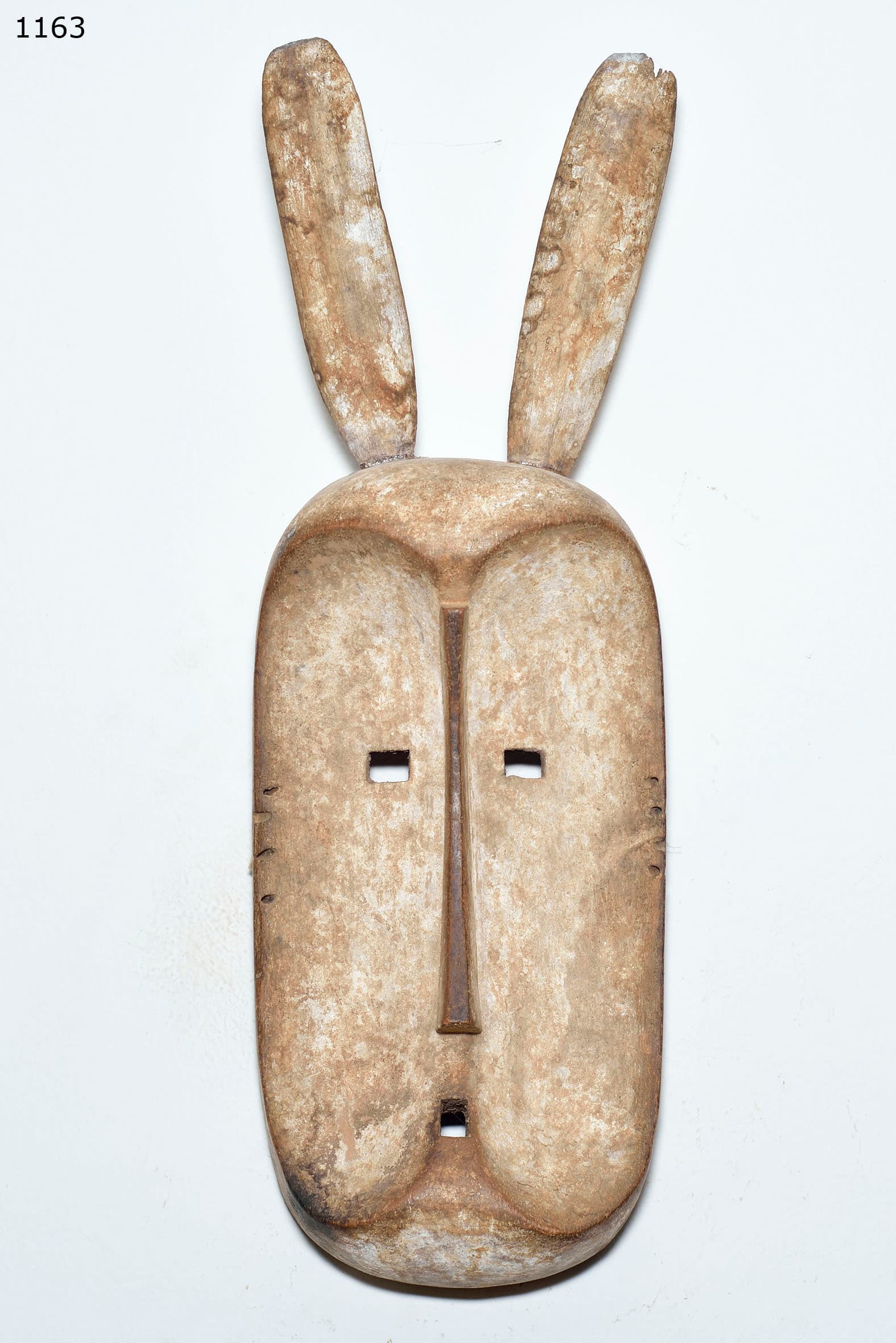
Eine sehr realistische Makonde Mapiko-Helmmaske (wohl 1. Hälfte 20. Jh., 24 cm) aus Mosambik - ein menschliches Gesicht mit geschwungenen dunklen Skarifikationslinien über Wangen und Stirn. Der Mund ist offen und zeigt Zähne, die Oberlippe ist deutlich vorgewölbt (pelele labret), und der Scheitel besteht aus echtem Menschenhaar. Das Holz hat eine reiche rötlich-braune Patina.
1. Mapiko Realismus und die Pelele
Die Makonde sind berühmt für ihre Mapiko-Helmmasken, die zu den eindringlichsten und realistischsten Darstellungen Ostafrikas gehören.
- Physiologische und kulturelle Merkmale: Der Schnitzer hat die Merkmale eines Makonde-Individuums mit hohem Status detailliert festgehalten - die ausladenden, erhabenen Skarifikationen (oft mit Bienenwachs oder Ruß verdunkelt) verweisen auf die Identität des Clans.
- Pelele Labret-Indikator: Die hervorstehende Oberlippe stellt das Einsetzen eines Pelele (Lippenpfropf) dar - ein traditionelles Zeichen für Schönheit und den Beginn des Erwachsenseins in der historischen Makonde-Gesellschaft.
2. Die Mapiko Initiationsriten
Die Mapiko-Maskerade gilt als ein zentrales Element der männlichen Initiation der Makonde.
- Verkörperung des Shetani-Geistes: Während der Riten, bei denen Jungen beschnitten und die Gesetze der Männlichkeit gelehrt werden, werden diese Helmmasken von erwachsenen Männern getanzt - sie stellen Shetani (Naturgeister) oder wiedererweckte Geister der Vorfahren dar.
- Schreckenerregende athletische Darbietung: Der Tänzer, der vollständig in einem schweren Stoffkostüm verborgen ist, führt athletische, oft unvorhersehbare Bewegungen aus - er fungiert sowohl als Disziplinierer für die Jungen als auch als physische Manifestation der Macht der Geisterwelt.
3. Gemischte Medien und Tannin-Patinierung
Die komplexe Materialalterung spricht für eine authentische Nutzung.
- Farbstoff aus roter Erde und pflanzlichen Gerbstoffen: Traditionell gefärbt mit einer Mischung aus roter Erde und pflanzlichen Gerbstoffen, was zu dem tiefen, gesättigten rotbraunen Farbton führt.
- Angeschlossenes menschliches Haar: Die Integration von tatsächlichem menschlichem Haar, das in die Kopfhaut eingesteckt ist (eine Technik, die entwickelt wurde, um die lebensechte Qualität zu erhöhen), zeigt Altersspuren und umweltbedingte Staubansammlung; der dunkle, stark oxidierte Rand auf der Innenseite legt einen intensiven rituellen Gebrauch nahe.
Zusammenfassung
Diese Makonde-Helmmaske ist ein ausdrucksstarkes Beispiel des ostafrikanischen Realismus, das die Ästhetik der Skarifikationen und Lippenpfropfen dieser Epoche anschaulich wiedergibt. Das angebrachte menschliche Haar und die tiefe Patina machen sie zu einem bemerkenswerten Artefakt der Mapiko-Riten.
KI-unterstützt erstellt aus Sammlungsgutachten, Objektfotografie und eigener Recherche, redaktionell geprüft. Fehler sind möglich — Hinweise darauf sind uns willkommen. Zum Verfahren →