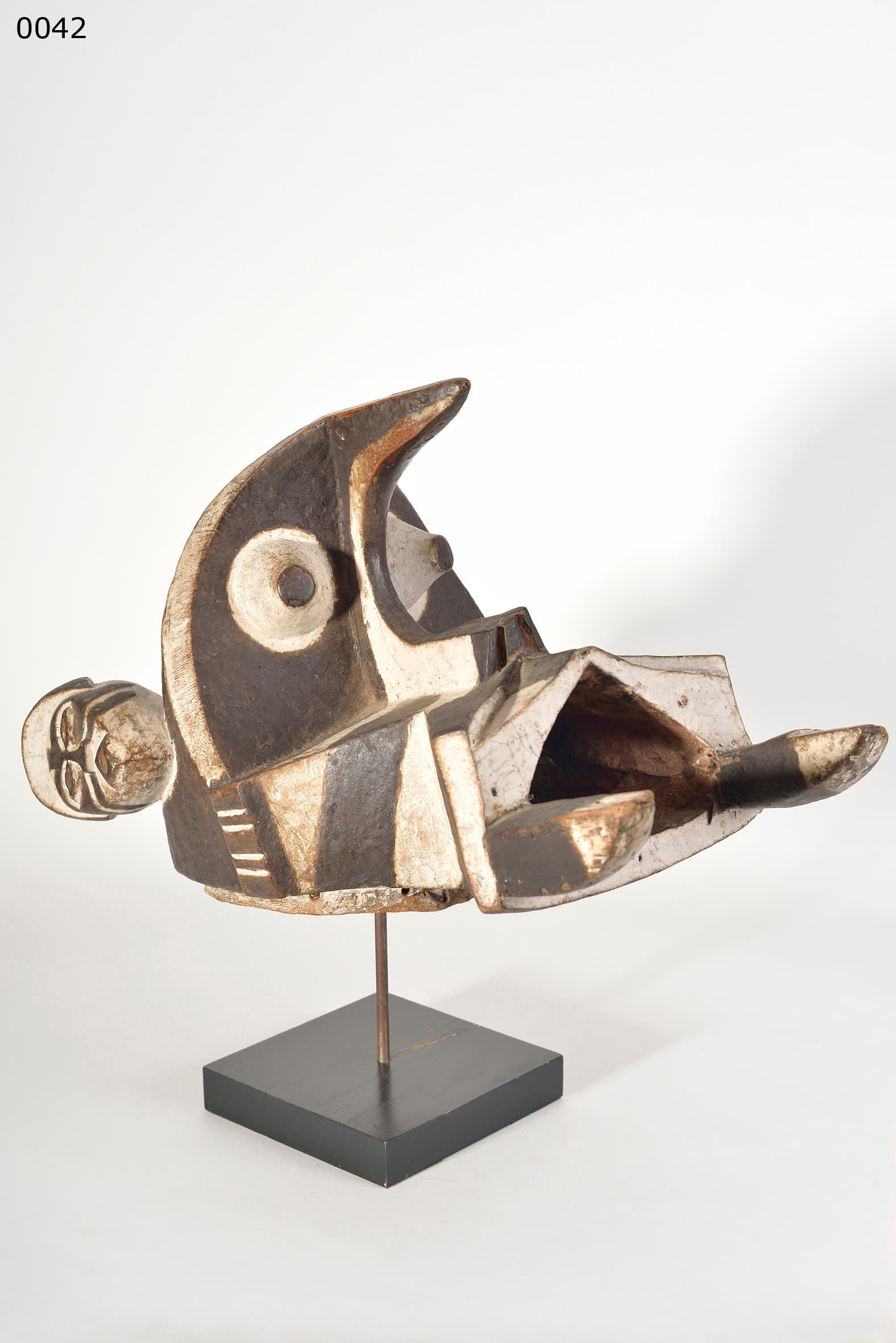
Eine schwere, aggressiv geschnitzte Igbo / Izi Ogbodo Enyi Elefantenkopfmaske (1. Hälfte 20. Jh., 60 cm) aus Nigeria - ein stark stilisierter, kubistischer Elefantenkopf mit einem massiven, nach unten gebogenen Rüssel, scharfen, geometrischen Ohren und tiefen Augenhöhlen. Das Holz trägt die Reste von stark verblichenem weißem Kaolin-Ton und dunklen Pigmenten, am Scheitel ist ein Besatz aus gewebten organischen Fasern angebracht.
1. Zoomorpher Kubismus und der Ogbodo Enyi
Die Izi (Izzi)-Untergruppe der Igbo im Nordosten Nigerias entwickelte mit dem Ogbodo Enyi (Elefantengeist)-Wappen eine radikal andere Maskentradition.
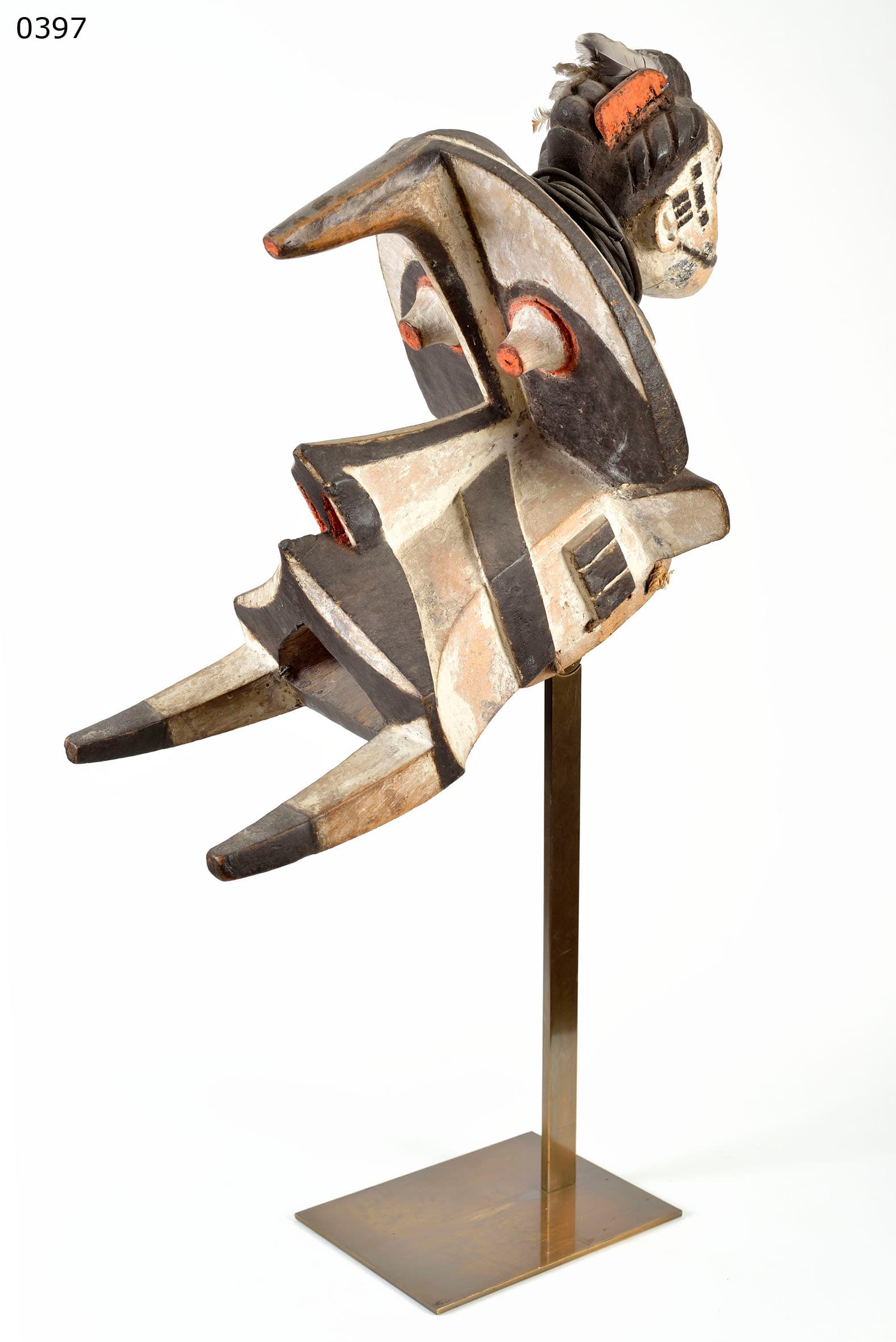
- Anatomie als sich überschneidende Ebenen: Der Künstler hat die massive Masse eines Elefanten vollständig dekonstruiert und seine Anatomie in einen aerodynamischen Block aus sich scharf überschneidenden, stoßenden dreieckigen Ebenen umgestaltet.
- Silhouette der unaufhaltsamen Kraft: Die schwungvolle Kurve des Rüssels und die aggressiven, klingenartigen Ohren projizieren eine Aura roher, unaufhaltsamer Kraft - ein charakteristisches Beispiel des nigerianischen zoomorphen Kubismus.
2. Reinigung des Dorfes durch Kraft
Trotz seiner erschreckend schweren Erscheinung ist der Ogbodo Enyi eine Kraft der notwendigen Reinigung.
- Horizontales Angreifen in gebückter Haltung: Der Tänzer, der von den Eingeweihten horizontal auf dem Kopf getragen wird, nimmt eine gebückte, aggressive Haltung ein und stürmt schnell und heftig über den Dorfplatz.
- Zertrümmern von unsichtbarer Hexerei: Die Maske kanalisiert physisch die überwältigende Masse des Elefanten, um unsichtbare Barrieren zu zertrümmern, böswillige Geister zu erschrecken und die Gemeinschaft aggressiv von Hexerei, Krankheit und sozialem Unfrieden zu reinigen - und so das spirituelle Gleichgewicht wiederherzustellen.
3. Kaolinabbau und strukturelle Abnutzung
Der physische Zustand spiegelt die Spuren eines aktiven rituellen Gebrauchs wider.
- Spirit-Realm Kaolin Ghosting: Das ursprüngliche leuchtend weiße Kaolin (nzu), das aufgetragen wurde, um das Reich der Geister zu kennzeichnen, ist tief oxidiert und verblasst - und hinterlässt nur einen gespenstischen kreidigen Rückstand, der in die trockene Holzmaserung eingebettet ist.
- Kollisionsabstumpfung + Abplatzungen: Die schärfsten Kanten des massiven Stammes und der geometrischen Ohren weisen starke glatte Abstumpfungen und altersbedingte Abplatzungen auf - was auf die für den Ogbodo Enyi-Tanz typischen Stöße und Reibungen hindeuten kann.
Zusammenfassung
Diese Izi-Elefantenwappen-Maske ist eine brillante Umsetzung des nigerianischen zoomorphen Kubismus und destilliert massive physische Kraft in einen aerodynamischen Schubblock. Die stark verblasste Kaolinpatina und die starken strukturellen Abnutzungserscheinungen zeugen von einem sehr aktiven Leben als Instrument der Dorfreinigung.
KI-unterstützt erstellt aus Sammlungsgutachten, Objektfotografie und eigener Recherche, redaktionell geprüft. Fehler sind möglich — Hinweise darauf sind uns willkommen. Zum Verfahren →

Kopfbedeckung (Elefantenmaske genannt)
Aufsatzmaske mit mehreren Gesichtern (Elefantenmaske genannt)
Kopfaufsatz Elefantenmaske auf METRA-Sockel