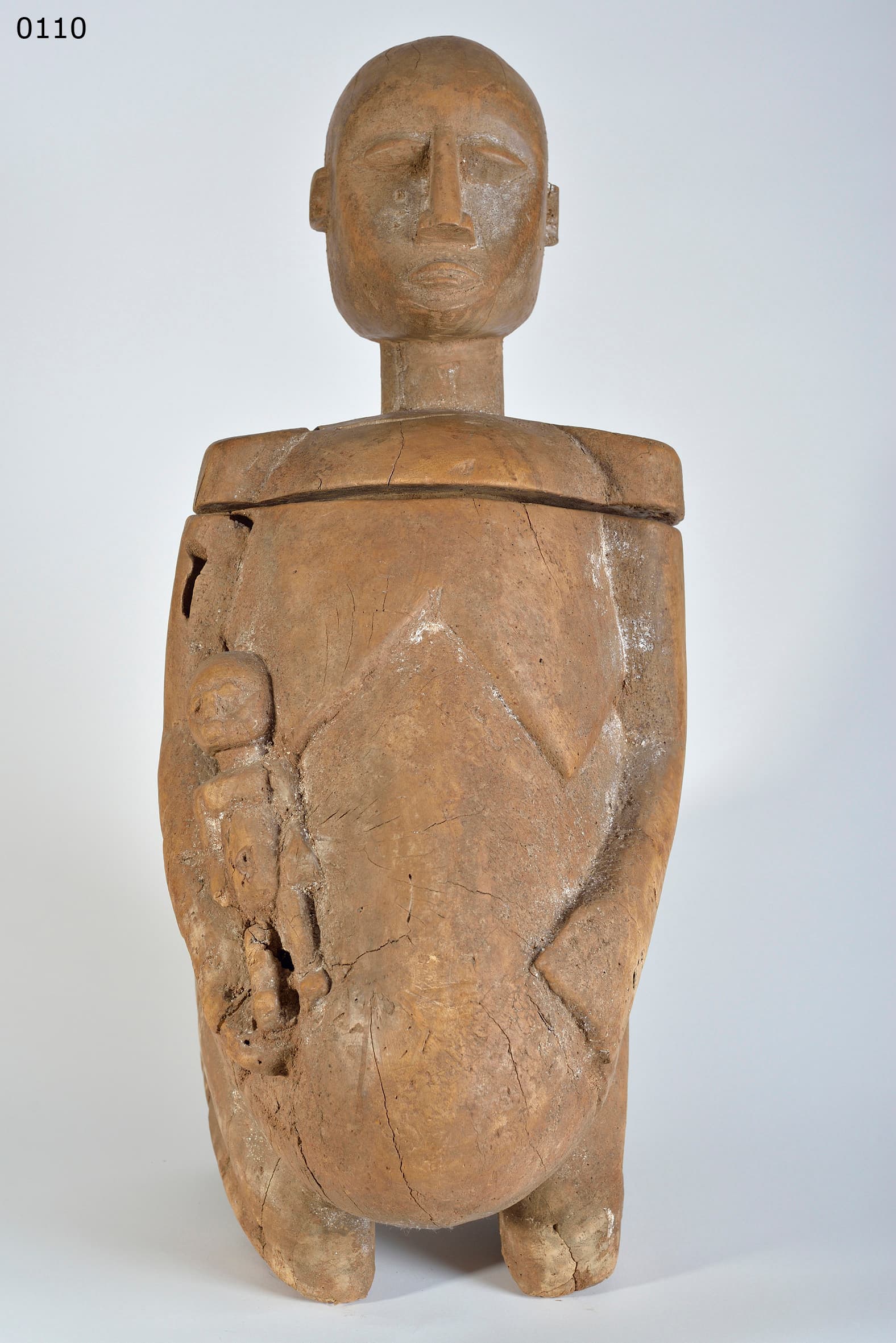
Diese höchst ungewöhnliche Terrakottafigur stellt ein stehendes Wesen mit dicken, rudimentären Beinen, einem verkürzten Oberkörper und einem gewölbten, fast vogelartigen oder stark stilisierten Gesicht dar. Der gebrannte Ton ist porös, blass und mit einer staubigen, erodierten und verkalkten archäologischen Kruste bedeckt.
1. Ästhetischer Stil und regionale Charakteristika
Während das Volk der Lobi in Burkina Faso allgemein für seine steifen, strengen Bateba-Figuren aus Holz bekannt ist, sind in Terrakotta ausgeführte Exemplare äußerst selten. Dieses Stück überträgt die klassische geometrische Strenge der Lobi in Ton. Der Schnitzer hat jeglichen Naturalismus abgelehnt und den Körper als schwere, unnachgiebige architektonische Masse dargestellt, während das Gesicht zu einem strengen, schnabelartigen Vorsprung ausgezogen ist. Diese strenge Abstraktion unterstreicht, dass es sich bei der Figur nicht um ein menschliches Porträt, sondern um die physische Manifestation eines übernatürlichen Wesens handelt.
2. Rituelle Funktion und Geheimbund-Kontext
In der Lobi-Kosmologie ist Gott (Tangba) weit entfernt, so dass sich die Menschen auf die Naturgeister (thila) verlassen müssen, die die Regeln der Gemeinschaft diktieren. Die thila verlangen die Erschaffung von Bateba-Figuren, die als ihre lebenden Vermittler fungieren. Diese Figuren werden auf komplexen, dunklen irdenen Schreinen im thil-du (Schreinraum) aufgestellt und sind "aktiv" Es wird angenommen, dass sie sich bewegen, bösartige Hexerei abwehren, Krankheiten absorbieren, die für ihre Besitzer bestimmt sind, und den Familienverband vor geistigem und körperlichem Unheil schützen.
3. Physische Patina und Altersnachweis
Eine Datierung in das 19. Jahrhundert wird durch den fortgeschrittenen Verfall des Tons nahegelegt. Die niedrig gebrannte Terrakotta ist stark verwittert, ihre Außenhaut ist durch Zeit und Umwelteinflüsse völlig abgetragen. Die Oberfläche ist sehr porös und weist eine tiefe, verkalkte Verkrustung aus sahelischem Staub, Trankopferresten und gehärteter Erde auf. Diese Kruste ist chemisch mit der Keramikmatrix verschmolzen, was für eine jahrzehntelange Platzierung auf einem aktiven irdenen Altar spricht.
Zusammenfassung
Als seltene Terrakotta-Variante der Lobi-Schreinkunst ist diese Bateba-Figur ein eindringliches Beispiel für diese abstrakte, schützende Bildsprache. Ihre unnachgiebige, nicht-menschliche Geometrie und die tiefgreifenden Verkrustungen machen sie zu einem bedeutenden Artefakt des burkinischen Animistenkults.
KI-unterstützt erstellt aus Sammlungsgutachten, Objektfotografie und eigener Recherche, redaktionell geprüft. Fehler sind möglich — Hinweise darauf sind uns willkommen. Zum Verfahren →
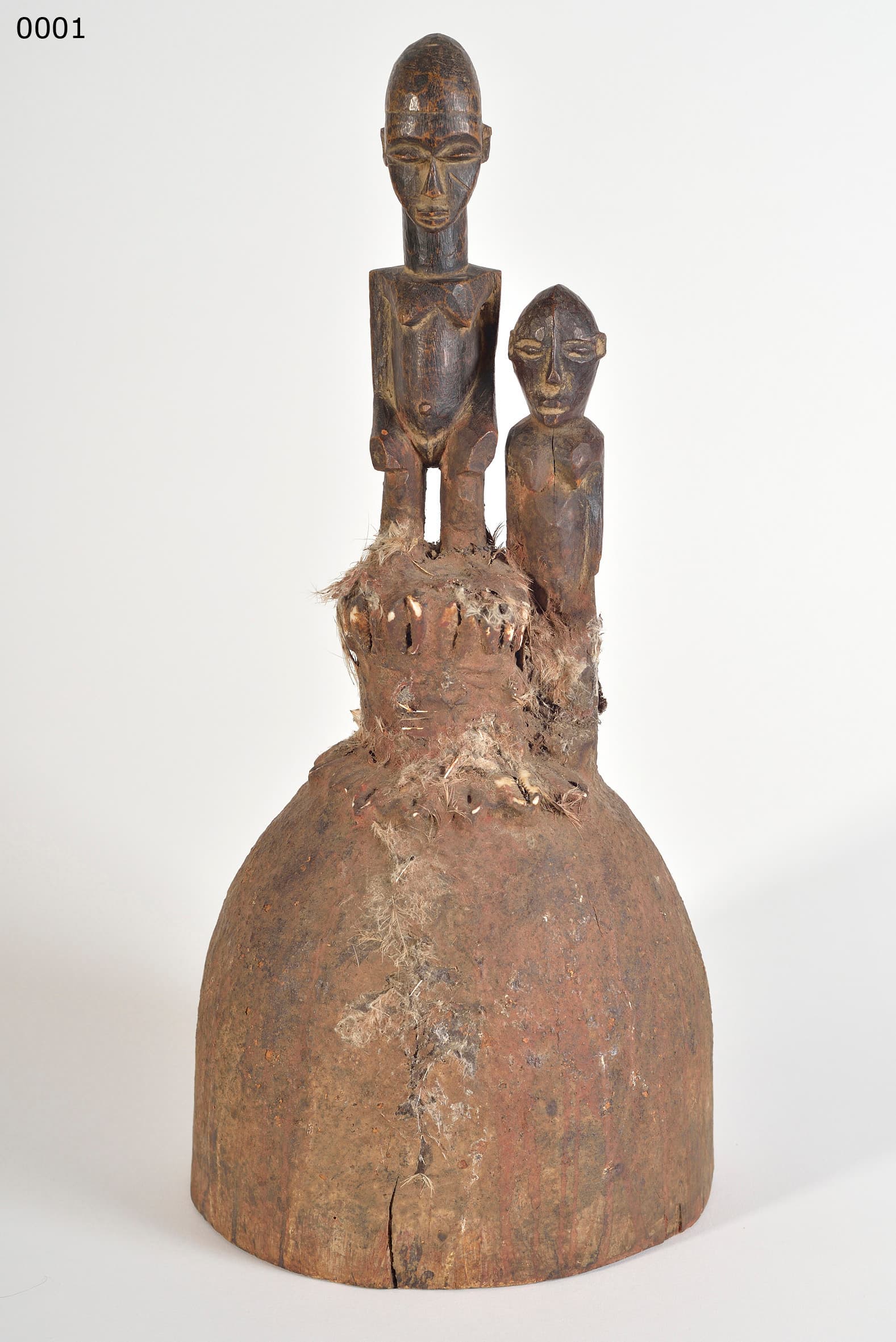
Schreinaltar mit Ehepaar BATEKE
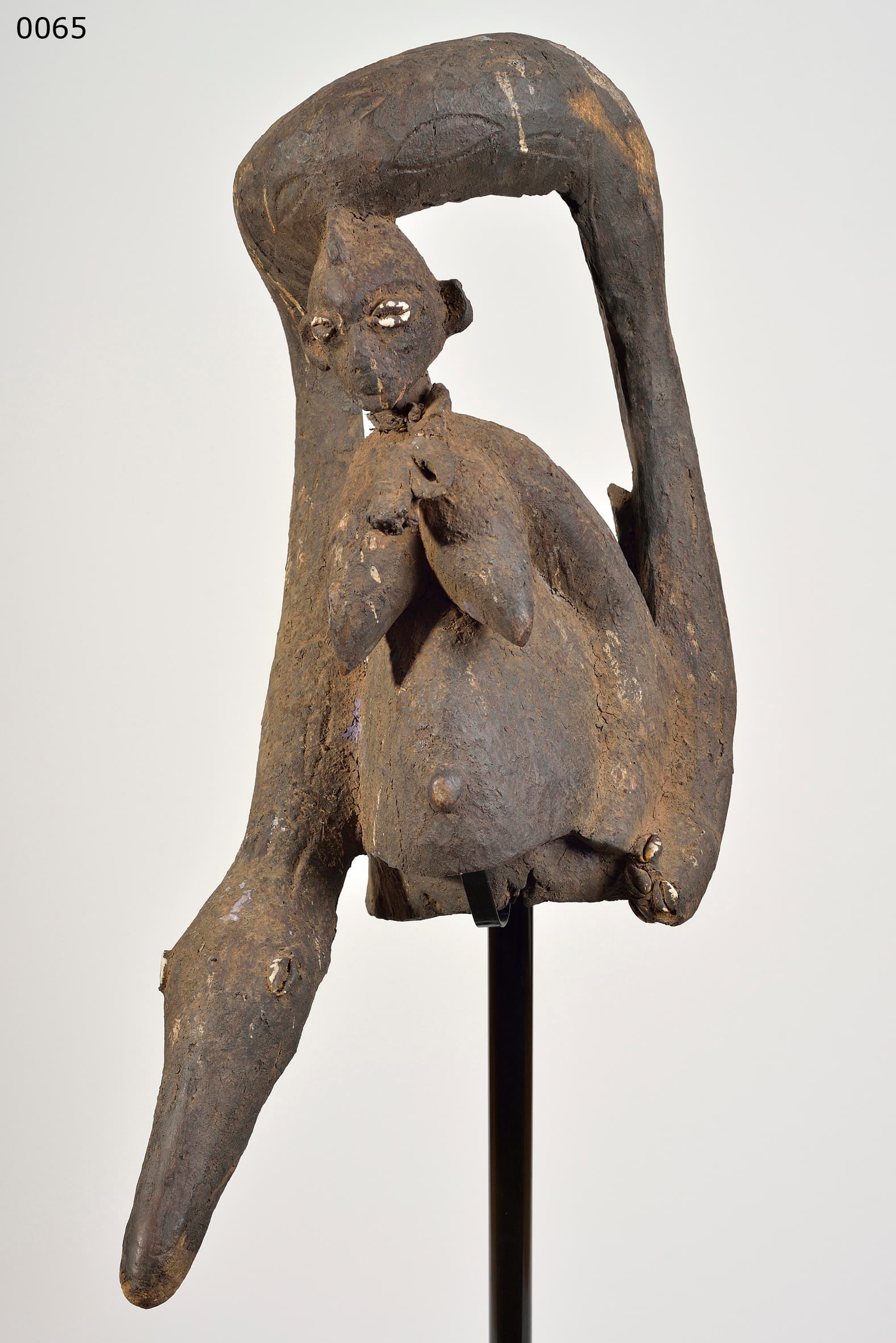
Seltene Kopfhaubenmaske
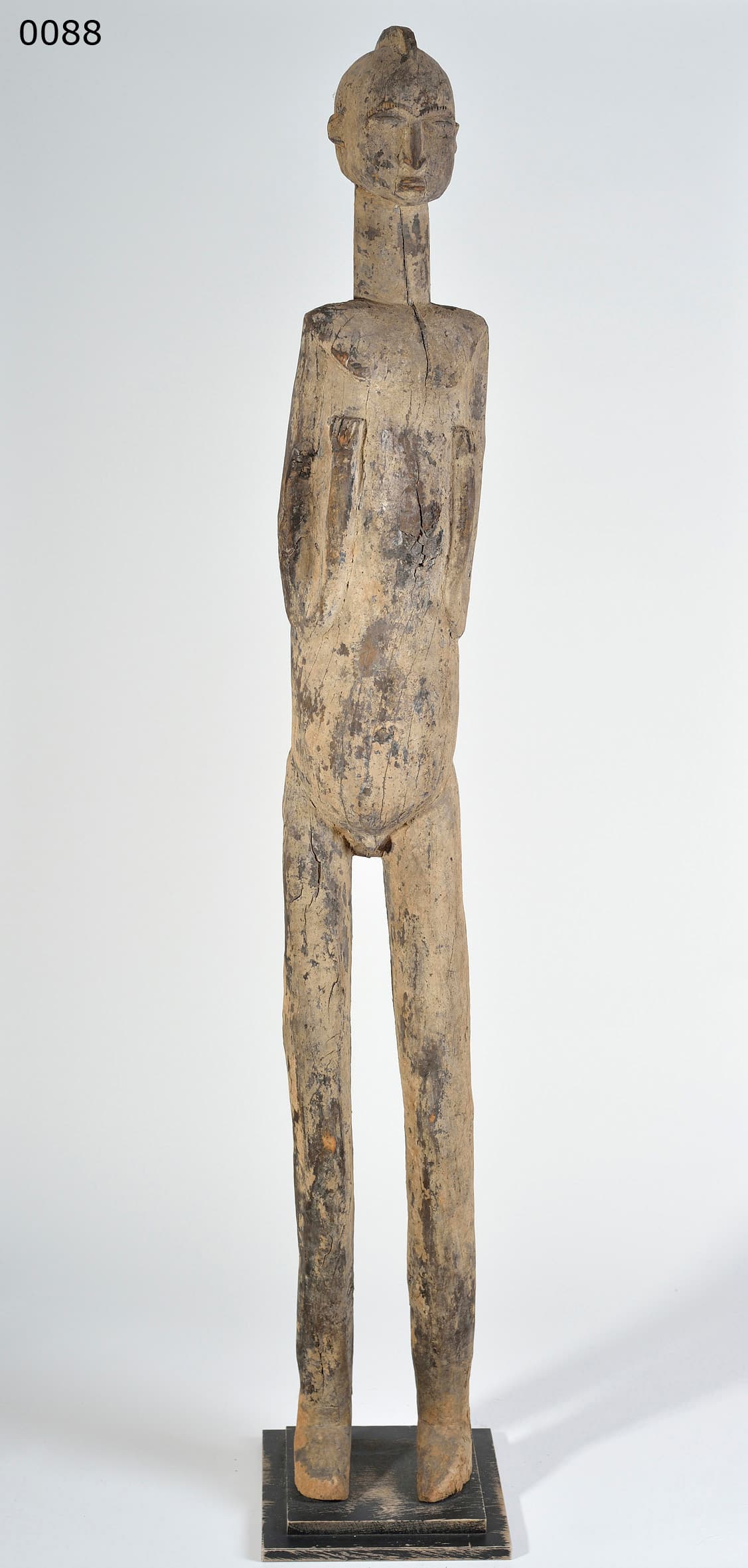
Schreinfigur, die einen BATEBA-Geist darstellt (ungewöhnlich groß, selten)