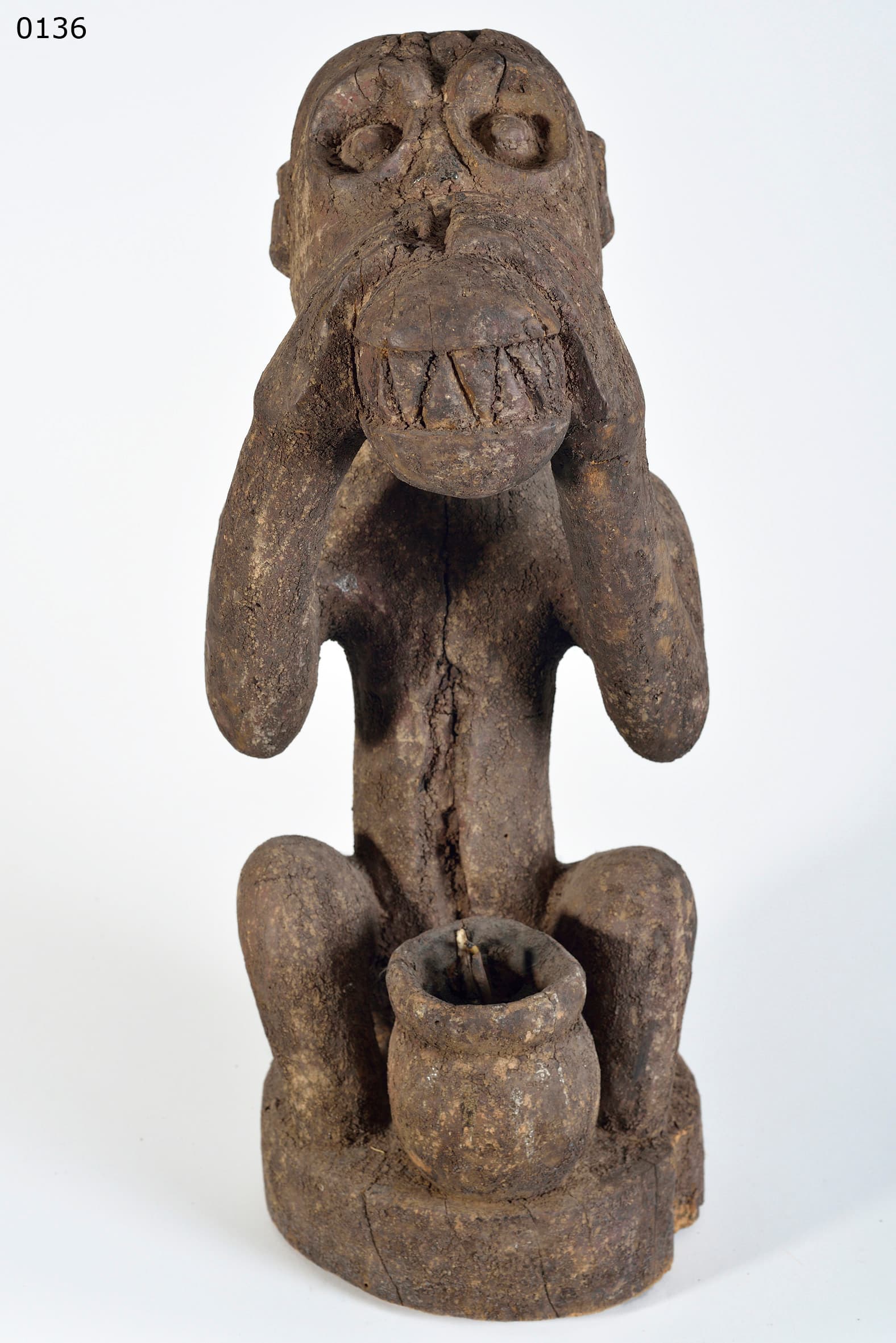
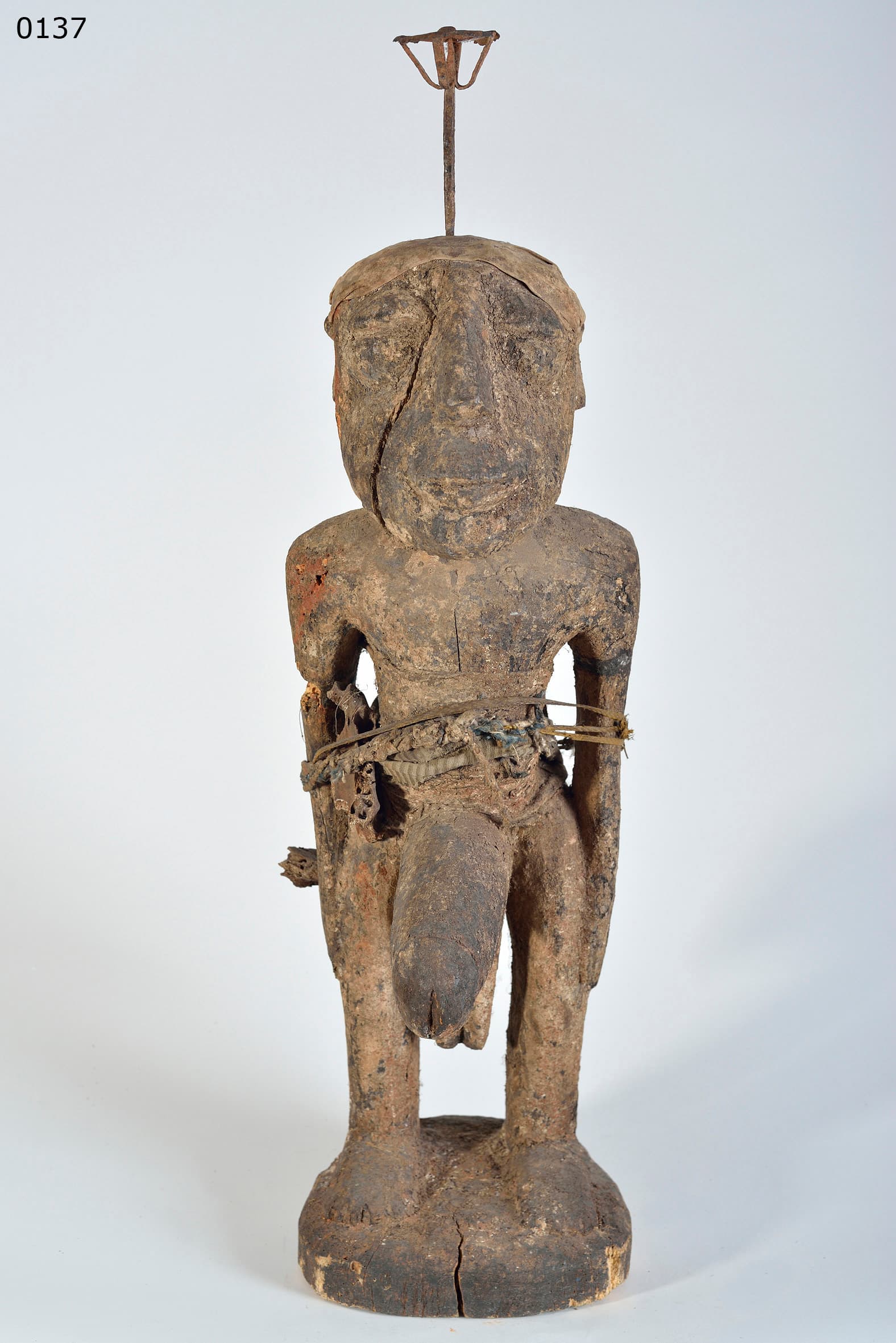
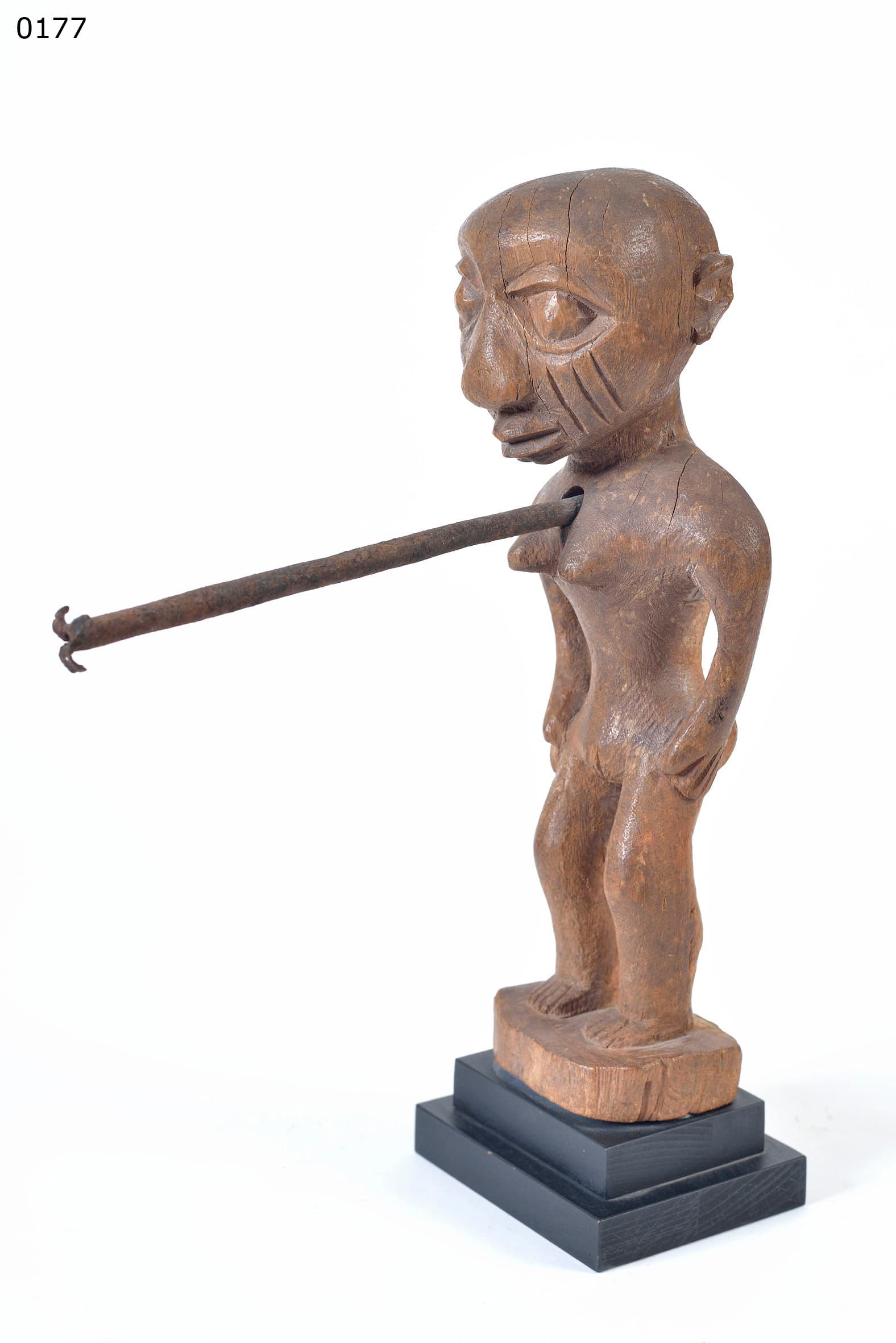
Eine seltene, stark aktivierte Vodun-Kraftfigur (1. Hälfte 20. Jh., 73 cm) von den Fon und Ewe der Republik Benin. Ausgestellt in der französischen Botschaft in Wien.
1. Die Mechanik des Vodun
In der Fon- und Ewe-Kultur ist ein bocio (wörtlich "ermächtigter Körper") ein psychologischer und spiritueller Akkumulator. Im Gegensatz zu Theatermasken handelt es sich dabei um ein privates, zutiefst okkultes Objekt, das in Vodun-Zeremonien verwendet wird - ein Ersatzkörper, der dazu bestimmt ist, Bösartigkeit zu absorbieren, den Besitzer zu schützen oder Einfluss auf eine bestimmte Situation zu nehmen.
2. Aktivierung und Materialität
Die wahre Macht eines Bocio liegt nicht in der zugrundeliegenden Holzschnitzerei, sondern in seinen Aktivierungsmaterialien.
- Binden: Die Figur ist stark in einen dicken Rock aus Raphiabast eingewickelt und mit Schnüren gebunden. Das Binden ist ein universeller afrikanischer magischer Brauch, der verwendet wird, um einen Geist zu "fesseln", einen Feind einzuschränken oder eine Krankheit zu fangen.
- Schmuck: Kaurimuscheln (Währung) und die schwere, irdene Patina weisen auf wiederholte rituelle "Fütterung" hin. Der ausgeprägte Phallus ist ein Symbol für rohe, generative Lebenskraft und aggressive spirituelle Energie.
3. Ausstellung Provenienz
Historisch gesehen wurden Bocio-Figuren von frühen europäischen Sammlern als plumpe "Fetische" missverstanden. Die Aufnahme dieses Stücks in eine Ausstellung in der französischen Botschaft in Wien spricht für die heutige Anerkennung dieser Form als komplexes, psychologisches Zeugnis afrikanischer Kunst.
Zusammenfassung
Dieser Bocio ist ein aktivierter spiritueller Blitzableiter - eine dichte Ansammlung von Materialien, die dazu bestimmt sind, die psychologische und physische Umgebung ihres Besitzers zu verändern und die rohe, ungeschliffene Kraft des traditionellen beninischen Vodun zu repräsentieren.
KI-unterstützt erstellt aus Sammlungsgutachten, Objektfotografie und eigener Recherche, redaktionell geprüft. Fehler sind möglich — Hinweise darauf sind uns willkommen. Zum Verfahren →