Aus einem einzigen vertikalen Holzblock geschnitzt, besitzt diese stark abstrahierte Figur einen blockhaften Kopf, einen langgestreckten Rumpf und rudimentäre, gerade Beine. Um den Hals ist ein Strang von Kaurimuscheln gebunden. Das stark gealterte Holz ist stark verwittert und weist massive Austrocknungsrisse und eine trockene, verkrustete Oberfläche auf.
1. Ästhetischer Stil und regionale Eigenheiten
Diese Figur verdeutlicht den strengen, kompromisslosen Minimalismus des Volkes der Lobi in Burkina Faso. Der Bildhauer hat den menschlichen Körper nicht als ein Wesen aus Fleisch und Blut, sondern als eine starre, architektonische Säule behandelt. Das Gesicht wird nur durch eine vorspringende Stirn und ein flaches Kinn angedeutet, wobei naturalistische Details völlig außer Acht gelassen werden. Diese Ästhetik gibt der stoischen, rohen Kraft den Vorrang vor der Schönheit; die Figur soll unbeweglich wirken, ein ständiger und unnachgiebiger Schutz gegen geistige Angriffe.
2. Rituelle Funktion und Geheimbundkontext
Dies ist ein Bateba, eine Holzfigur, die auf Geheiß eines Wahrsagers geschnitzt wurde, um als physischer Körper für einen Thila (unsichtbarer Naturgeist) zu dienen. Der Bateba wird in den dunklen, dichten Schreinen eines Lobi-Geländes aufgestellt und ist kein passives Idol, sondern ein aktiver, aggressiver Beschützer. Er hat die Aufgabe, Hexen abzuwehren, Krankheiten, die für die Familie bestimmt sind, zu absorbieren und Wohlstand zu bringen. Die beigefügten Kaurimuscheln sind von Bedeutung; sie sind eine traditionelle Währung, die als ständige "Zahlung" an den Geist für seinen ständigen Schutz dient.
3. Physische Patina und Altersnachweis
Die Zuschreibung an das 19. Jahrhundert wird durch den extremen, versteinerten Zustand des Holzes gestützt. Die Figur war immensen Umwelteinflüssen ausgesetzt, was zu tiefen, kavernösen Austrocknungsrissen führte, die sich über die gesamte Länge des Rumpfes erstrecken. Die ursprüngliche Oberfläche ist zu einer trockenen, krustigen und stark strukturierten Patina aus gehärteter Opfererde und Ruß erodiert. Die Kaurimuscheln selbst zeigen den dunklen, löchrigen Verfall von stark gealterten Knochen oder Muscheln.
Zusammenfassung
Dieser Lobi Bateba, ein charakteristisches Beispiel der burkinischen Architekturschnitzerei, ist ein imposantes, unnachgiebiges Gefäß mit schützendem Zauber. Seine strenge vertikale Abstraktion und die extreme, versteinerte Verwitterung stützen eine Datierung in das 19. Jahrhundert und machen ihn zu einem ausdrucksstarken Schrein-Artefakt.
KI-unterstützt erstellt aus Sammlungsgutachten, Objektfotografie und eigener Recherche, redaktionell geprüft. Fehler sind möglich — Hinweise darauf sind uns willkommen. Zum Verfahren →
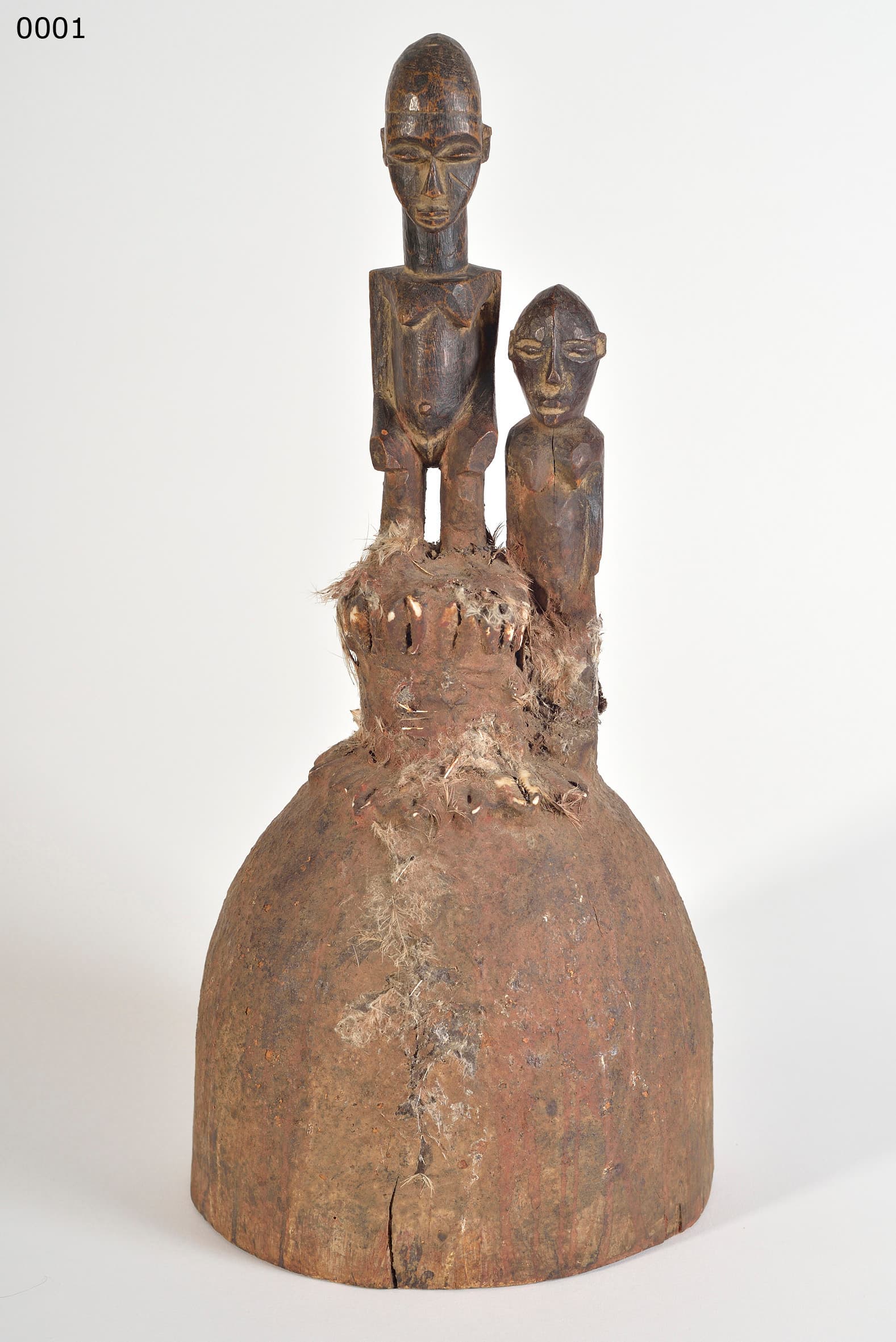
Schreinaltar mit Ehepaar BATEKE
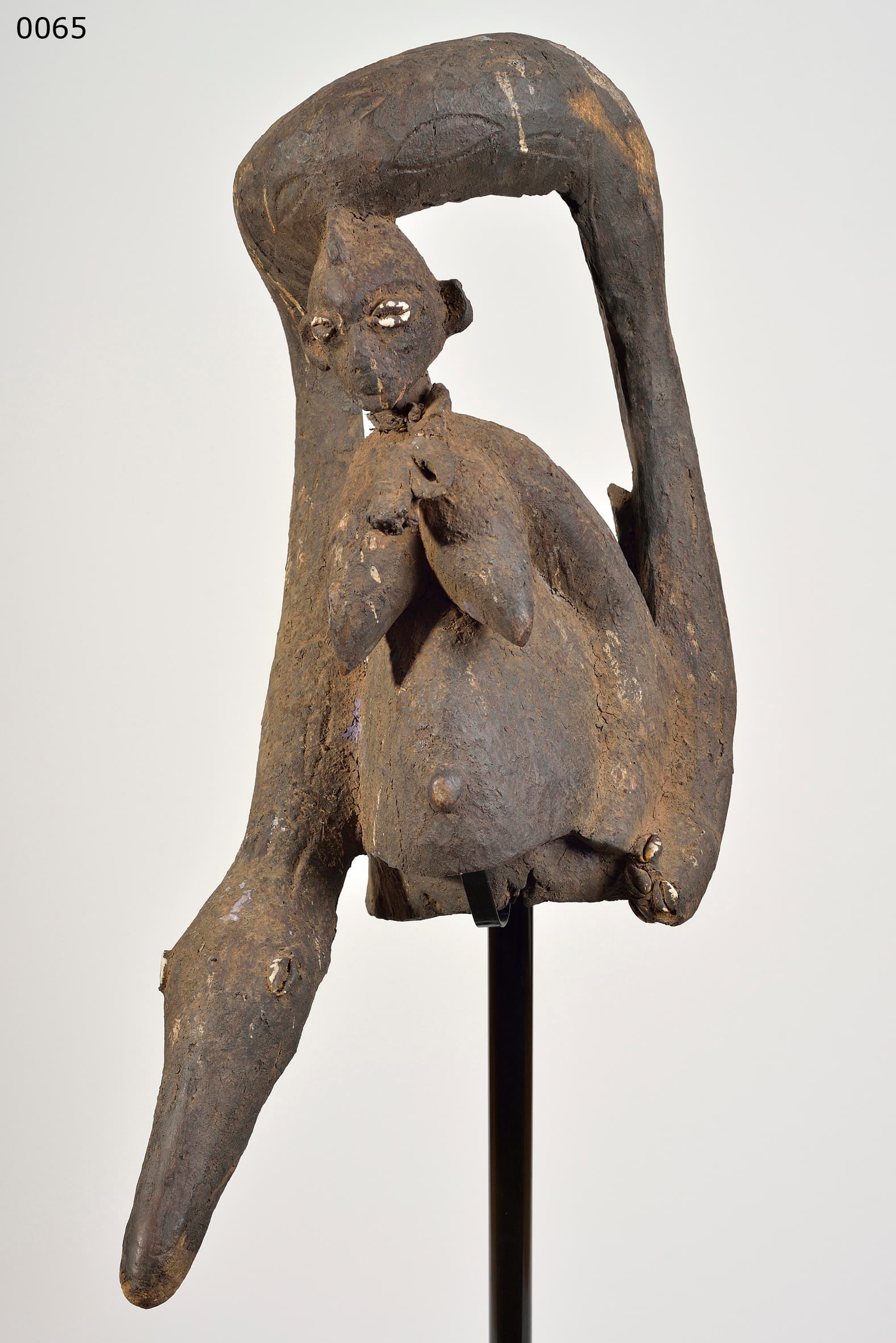
Seltene Kopfhaubenmaske
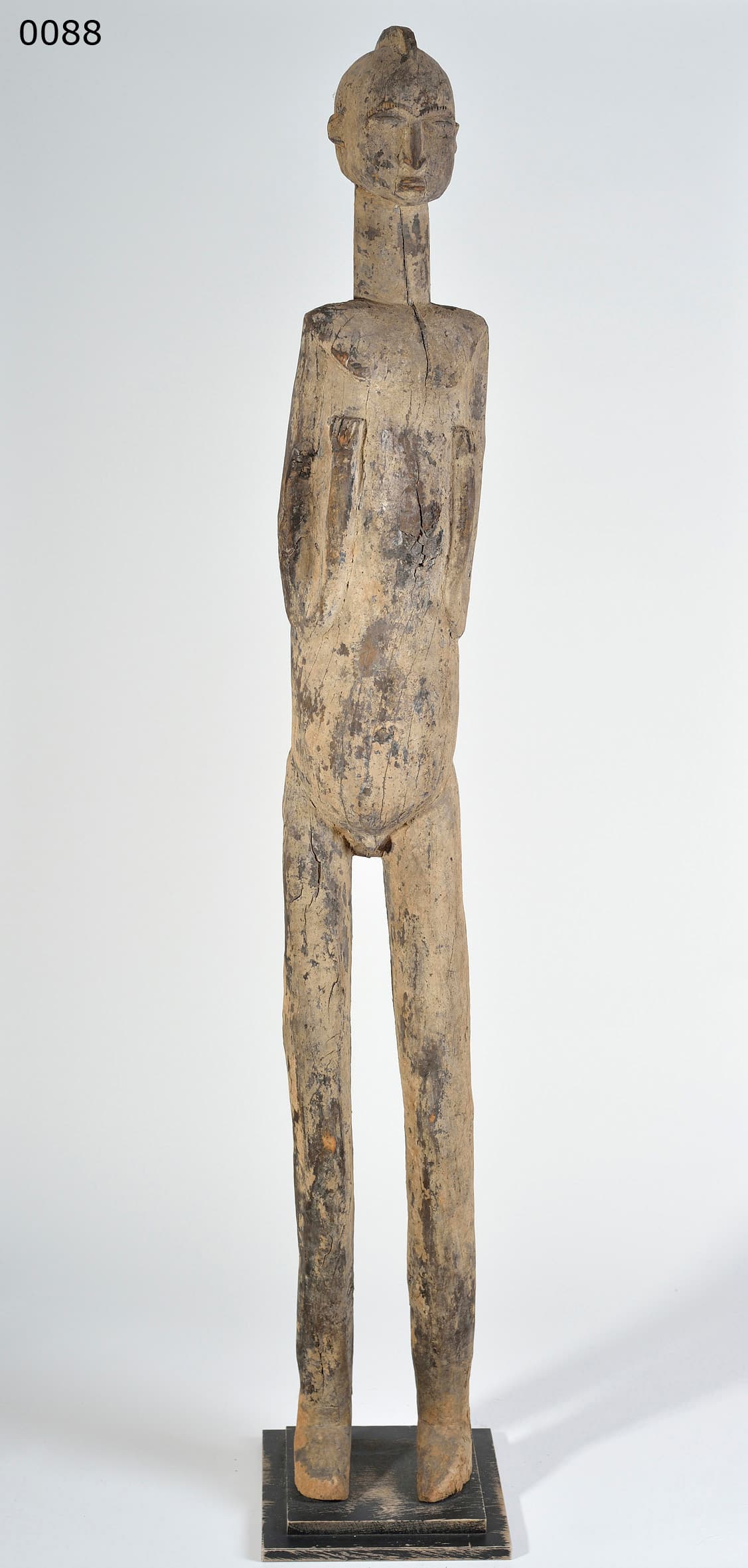
Schreinfigur, die einen BATEBA-Geist darstellt (ungewöhnlich groß, selten)