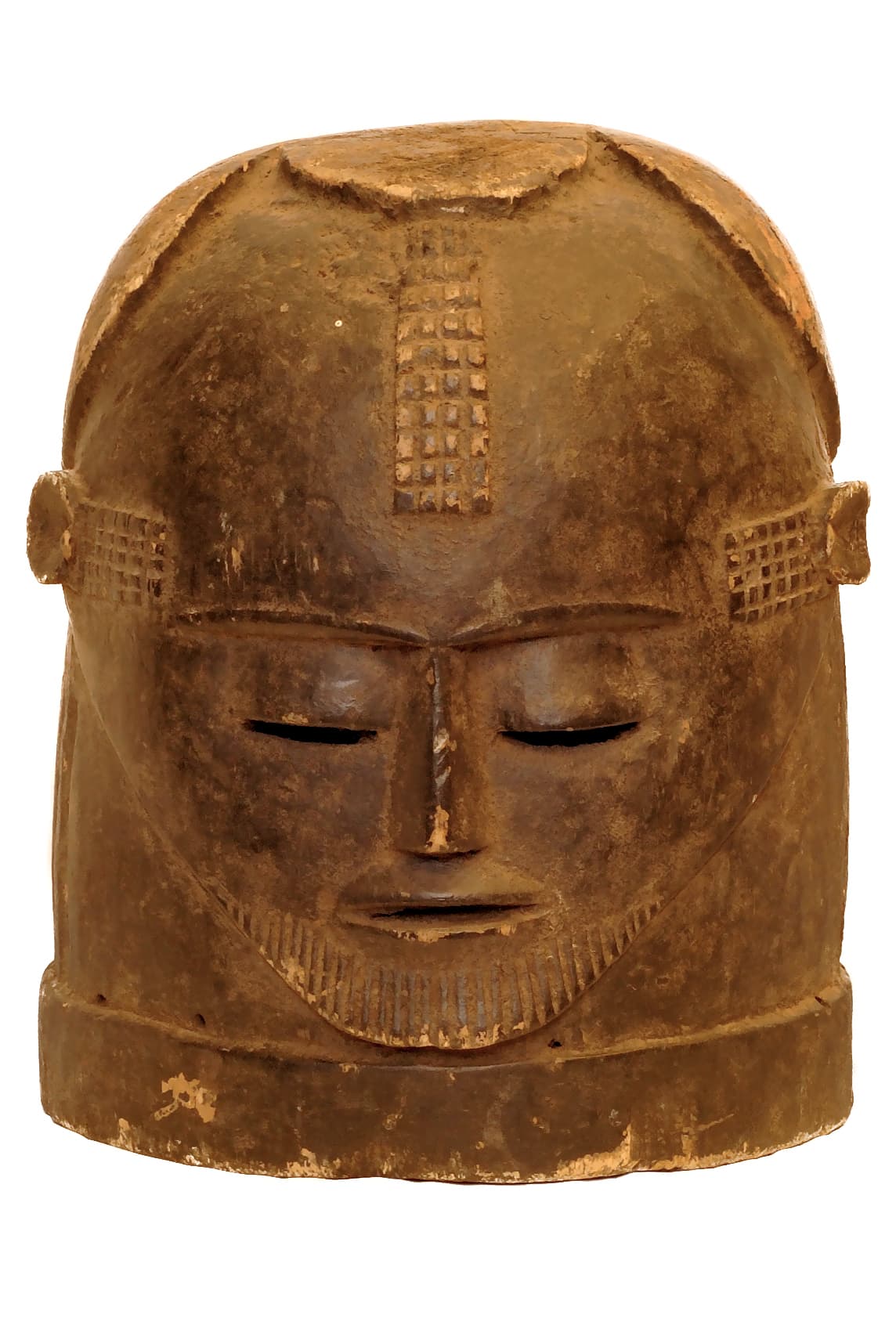
Diese kuppelförmige, doppelgesichtige (Janus) Holzhelm-Maske weist abgerundete, hervorstehende Gesichtselemente, durchbohrte Augen und einen dicken Fransenstreifen aus getrocknetem Raphia auf, der an der Krone und am Rand befestigt ist. Das Holz ist stark verwittert und weist dicke Reste von weißer Kaolin-Kreide über tief oxidierten Schichten auf.
1. Ästhetischer Stil und regionale Charakteristika
Diese aus dem Igala-Königreich am Zusammenfluss von Niger und Benue stammende Helmmaske verwendet das mächtige Janus-Motiv (mit zwei Gesichtern). Die Ästhetik ist robust und voluminös, mit wulstigen Stirnen und vorspringenden, geometrischen Mündern. Die beiden Gesichter, die in entgegengesetzte Richtungen blicken, stehen in der rituellen Tradition für Allwissenheit - die Fähigkeit der Ahnengeister, sowohl die physische als auch die spirituelle Welt, die Vergangenheit und die Zukunft zu sehen und Bösartigkeit aus jeder Richtung zu erkennen.
2. Rituelle Funktion und Geheimbund-Kontext
Diese Art von Kopfbedeckung, die oft mit dem Egu Orumamu oder ähnlichen königlichen Maskentraditionen in Verbindung gebracht wird, gilt als Instrument der sozialen Kontrolle und Reinigung. Die Maske wird bei großen gesellschaftlichen Ereignissen wie den jährlichen Yam-Erntefesten oder den Beerdigungen der adligen Elite getanzt und vermittelt die autoritative Macht der Igala-Ahnen. Die dicken Bastfransen verbergen die menschliche Identität des Tänzers und verwandeln ihn in der rituellen Aufführung in einen jenseitigen Vollstrecker, der die Gemeinschaft von Hexerei reinigen und die göttliche Autorität des Igala-Königs (Ata) bekräftigen soll.
3. Physische Patina und Altersnachweis
Eine Datierung dieser Maske in das 19. Jahrhundert wird durch ihren ausgeprägten Erhaltungszustand und die natürlichen Altersspuren gestützt. Der dick aufgetragene weiße Kaolin-Ton (nzu), der die Reinheit der Geisterwelt symbolisiert, ist über Generationen hinweg ausgetrocknet, gerissen und stark abgeblättert, so dass das darunter liegende, stark oxidierte Holz zum Vorschein kommt. Zudem sind die angebrachten Bastfasern stark ausgetrocknet, verdunkelt und brüchig, was dafür spricht, dass sie seit der ursprünglichen zeremoniellen Außerbetriebnahme der Maske über einen langen Zeitraum hinweg weitgehend unberührt geblieben sind.
Zusammenfassung
Diese Igala-Janus-Maske gilt als eindrucksvolle Manifestation der königlichen Allwissenheit und spirituellen Gerechtigkeit in dieser Region Nigerias. Ihre imposante doppelgesichtige Architektur und die dichte, verkrustete Patina, die für ein hohes Alter spricht, machen sie zu einem repräsentativen Beispiel der Maskenkunst des Benue-Tals.
KI-unterstützt erstellt aus Sammlungsgutachten, Objektfotografie und eigener Recherche, redaktionell geprüft. Fehler sind möglich — Hinweise darauf sind uns willkommen. Zum Verfahren →