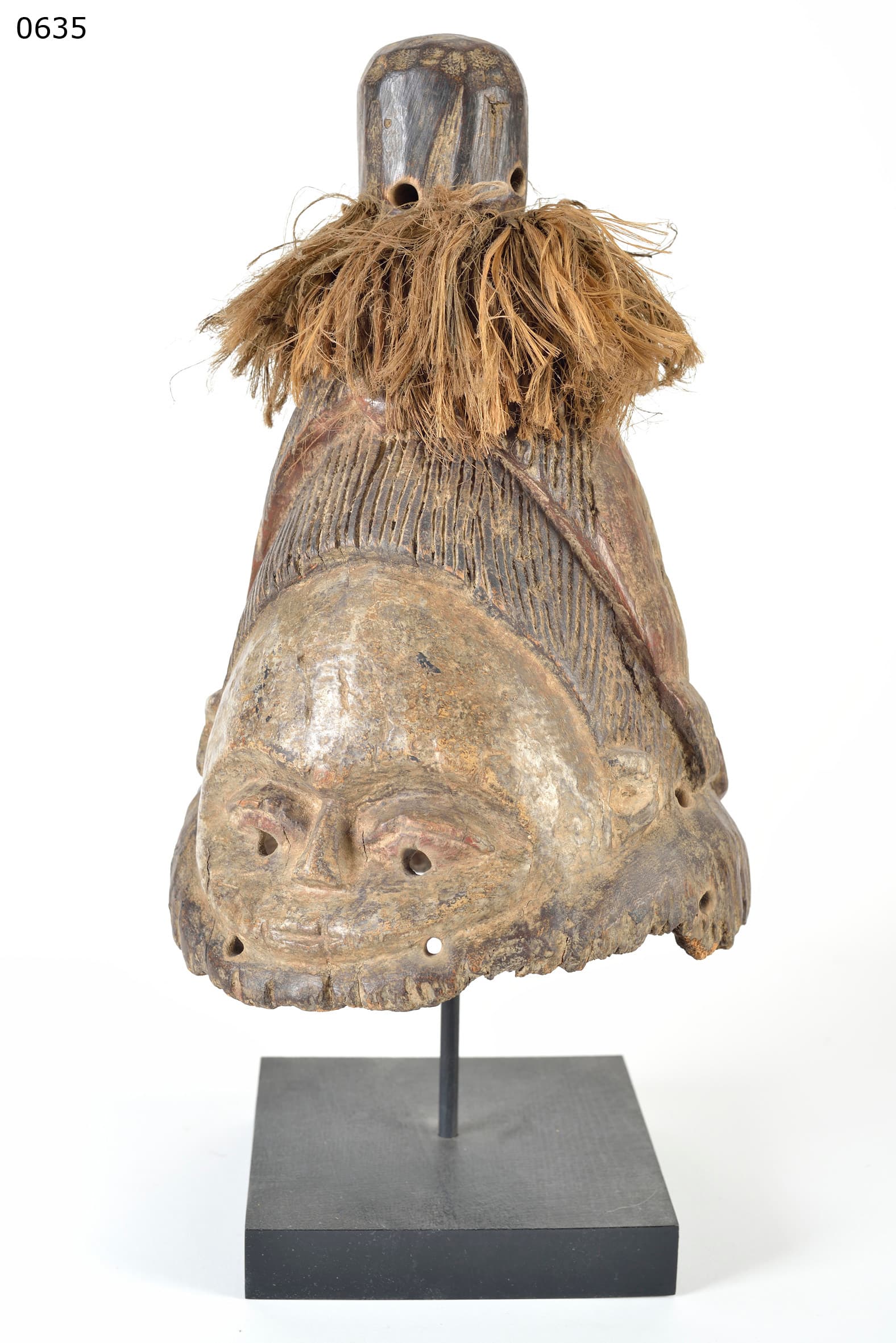
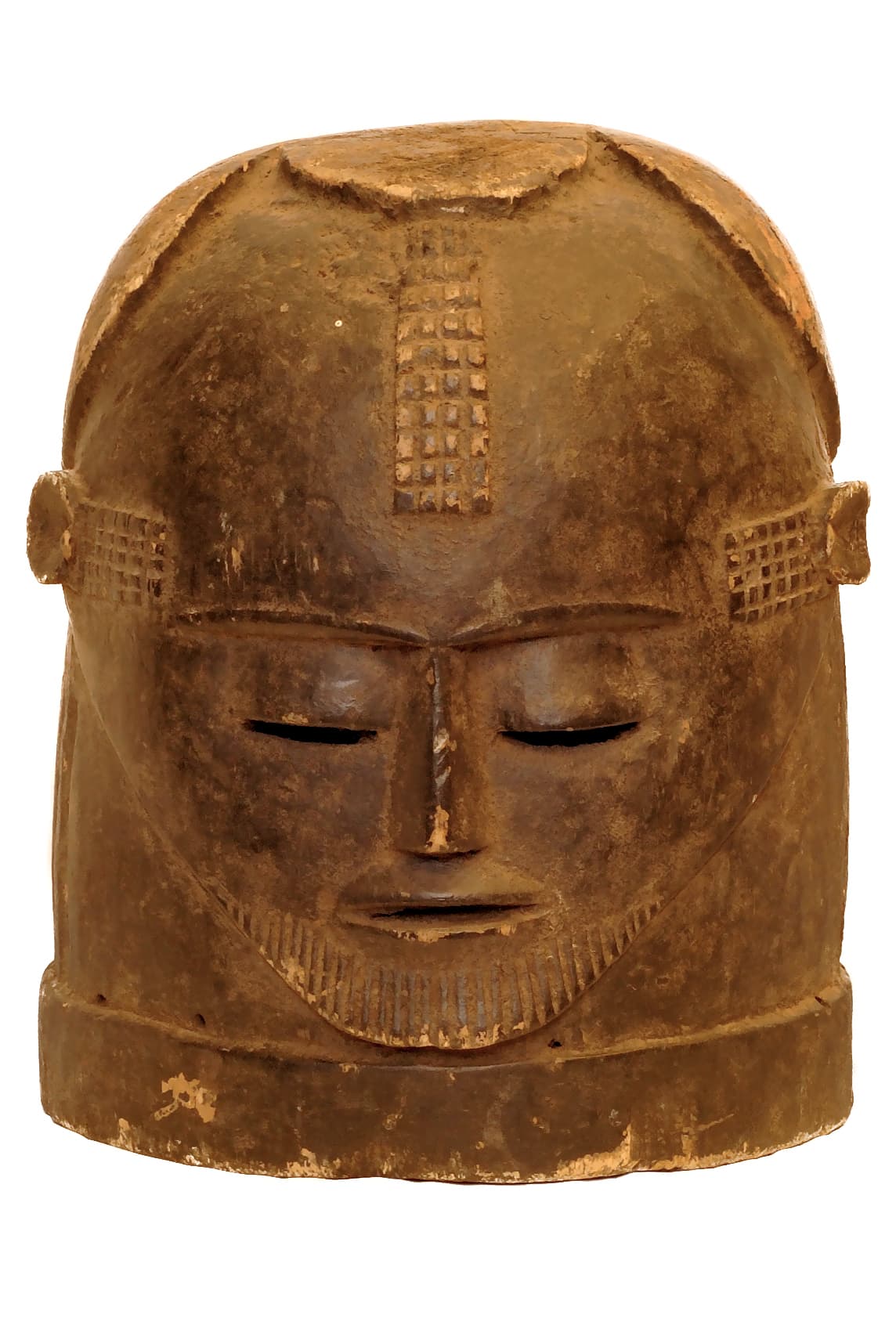
Ein stark minimalistischer Igala-Holzvogel (1. Hälfte 20. Jh., 43 cm) aus Nigeria - massiver, schwerer Schnabel, vereinfachter, blockartiger Körper und dicke, säulenförmige Beine. Die Oberfläche ist stark abgenutzt mit einer verwaschenen, blassen Patina, Spuren von Kaolin und tiefen strukturellen Rissen.
1. Zoomorphe Abstraktion des Benue-Zusammenflusses
Die Igala, die in der Nähe des Zusammenflusses von Niger und Benue leben, haben einen ausgeprägten Korpus an stark abstrahierten, schweren Holzschnitzereien geschaffen.
- Brutalistische Geometrie: Diese Vogelfigur verzichtet gänzlich auf den Naturalismus und reduziert den Vogel auf eine Anordnung reiner brutalistischer geometrischer Volumen.
- Unbewegliche Kraft: Die schiere Masse des übergroßen Schnabels und die dicken, unnachgiebigen Beine projizieren Unbeweglichkeit und latente Kraft - in krassem Gegensatz zu den zarten Vogelschnitzereien, die in anderen nigerianischen Kulturen zu finden sind.
2. Avian Familiars und Hexerei
In der komplexen spirituellen Landschaft der Igala sind Vögel hochgradig aufgeladene Grenzkreaturen.
- Himmelslenkende Gefahr: Da sie den Himmel navigieren, werden Vögel eng mit der unberechenbaren gefährlichen Macht der "Mütter" (Hexen) in Verbindung gebracht.
- Vertrauter des Wahrsagers: Ein schwerer, imposanter Holzvogel wie dieser wurde wahrscheinlich von einem Wahrsager oder traditionellen Heiler als Vertrauter benutzt - ein spiritueller Verbündeter, der eingesetzt wurde, um bösartige, gegen die Gemeinschaft gerichtete Hexerei abzufangen, zu bekämpfen oder umzukehren.
3. Rituelle Waschung und Austrocknung
Die Oberfläche erzählt die Geschichte einer intensiven, zyklischen rituellen Nutzung.
- Wiederholte Salbung mit Kaolin: Die stark abgenutzte, blasse Patina lässt vermuten, dass die Figur wiederholt mit heiliger weißer Kreide (Kaolin) bestrichen und anschließend gewaschen oder den Elementen ausgesetzt wurde.
- Natürliche Prüfung: Kontinuierliche Salbung und Verwitterung, kombiniert mit tiefen natürlichen Rissen, die durch die massiven Holzblöcke verlaufen, belegen die Entstehung im frühen 20. Jahrhundert und die aktive rituelle Lebensdauer.
Zusammenfassung
Diese Igala-Vogelfigur ist eine beeindruckende Übung in schwerer, brutalistischer Geometrie und fängt die rohe spirituelle Gefahr ein, die mit der Vogel-Ikonographie in Nigeria verbunden ist. Die tief gezeichnete, gewaschene Kaolin-Patina macht sie zu einem unwiderstehlichen und seltenen ethnografischen Altertum.
KI-unterstützt erstellt aus Sammlungsgutachten, Objektfotografie und eigener Recherche, redaktionell geprüft. Fehler sind möglich — Hinweise darauf sind uns willkommen. Zum Verfahren →