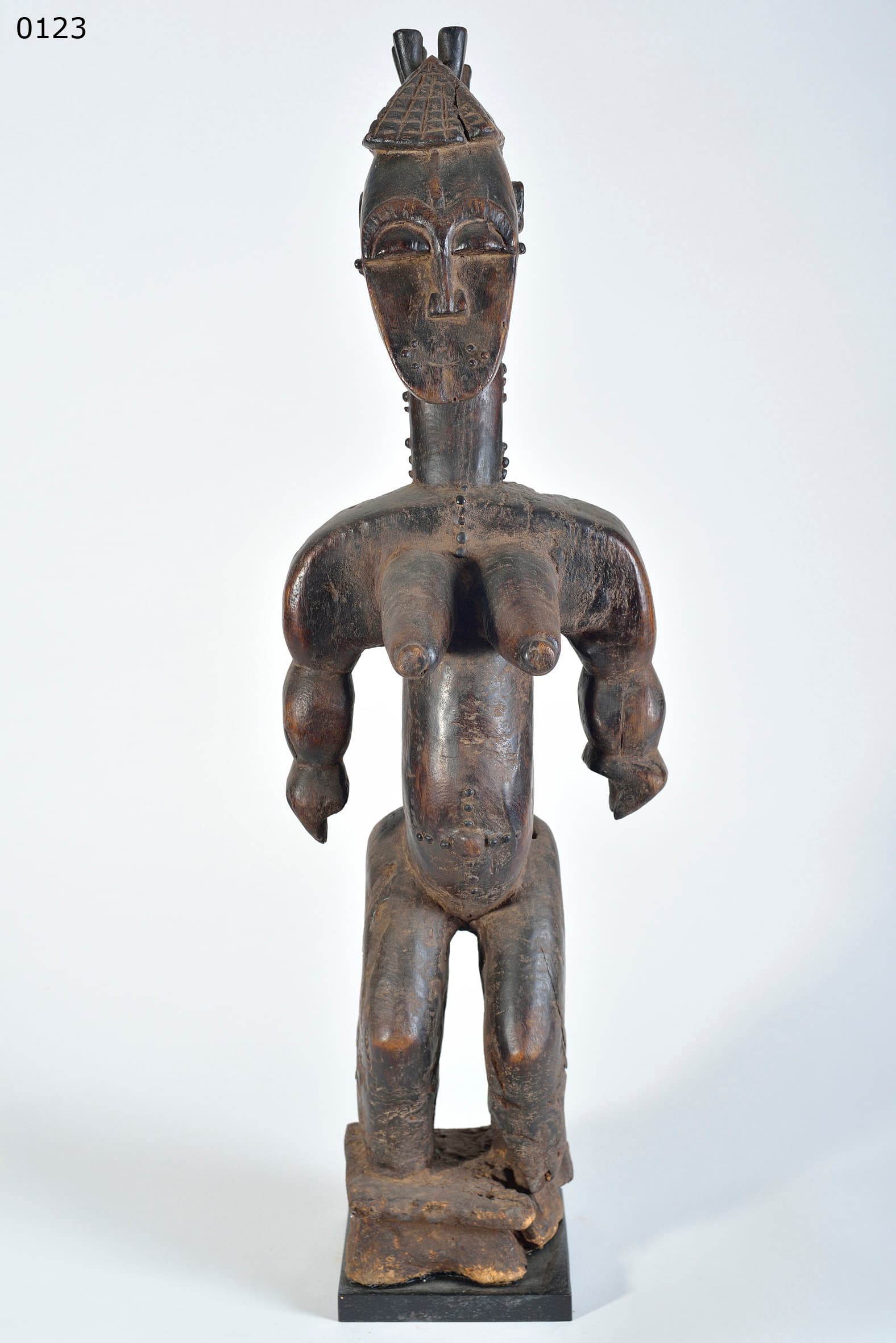
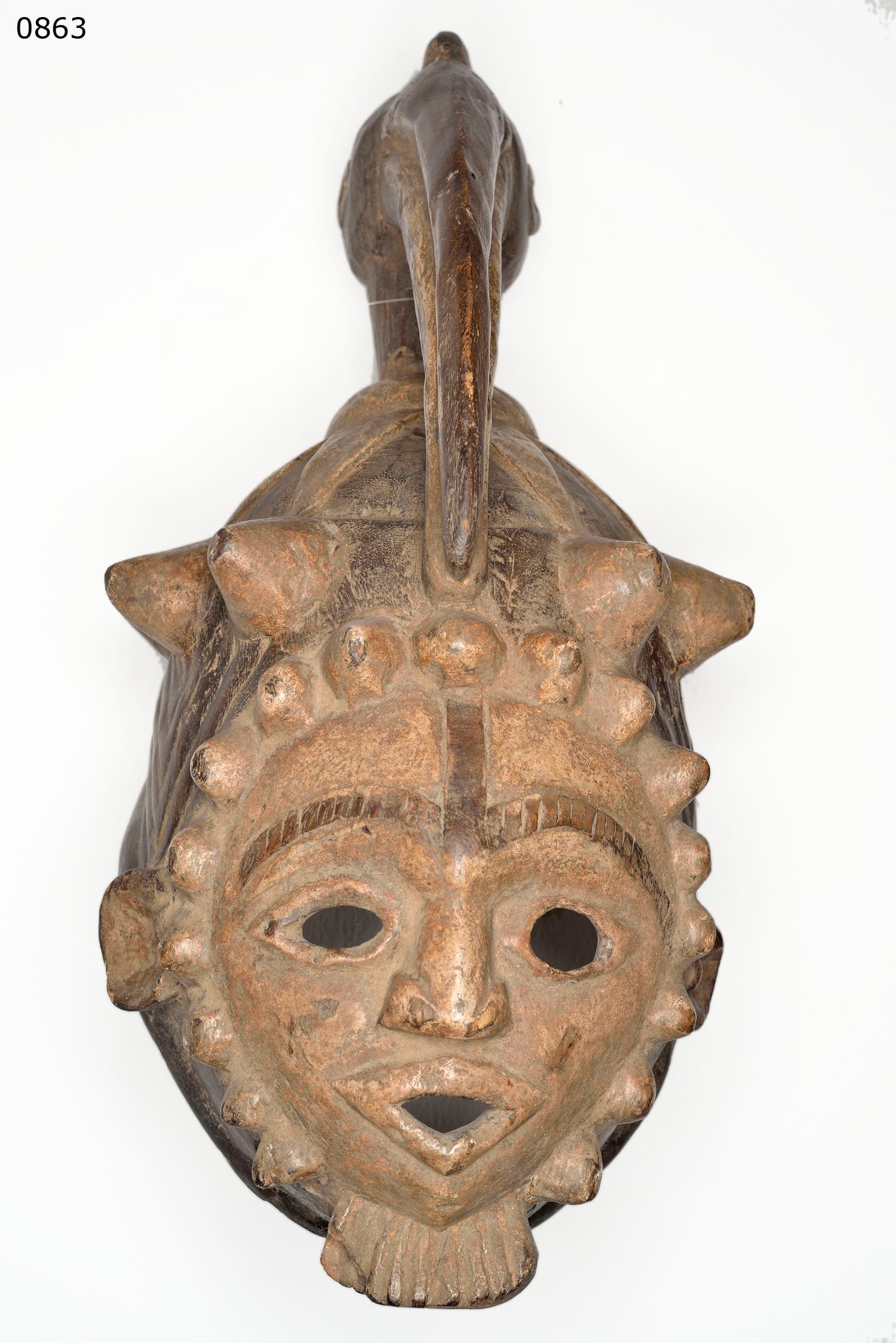
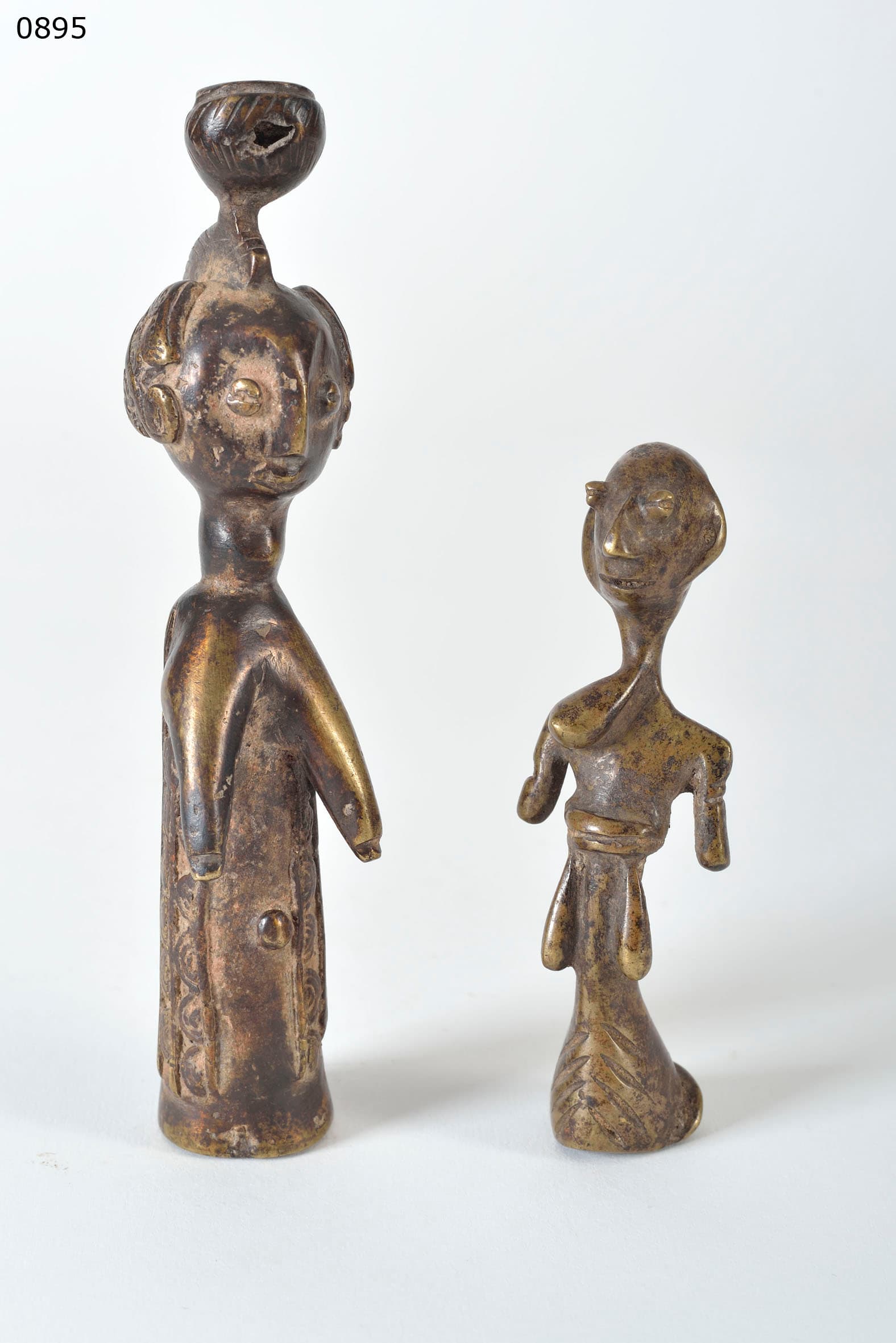
Dieser elegante hölzerne Festtagslöffel hat eine tiefe, geschwungene ovale Schale, die nahtlos in einen stark stilisierten, abstrakten Griff übergeht, der an ein Paar verschmolzener menschlicher Beine erinnert und in einer massiven, konischen Basis endet. Das dichte, schwere Holz ist zu einer reichen, dunklen und glänzenden Oberfläche poliert.
1. Ästhetischer Stil und regionale Eigenheiten
Das Volk der Kulango (oder Koulango) im Nordosten der Elfenbeinküste teilt mit den benachbarten Dan- und Wè-Kulturen die Tradition der monumentalen Festtagslöffel, bedient sich aber oft einer strengeren, architektonischen Abstraktion. Dieses Stück zeichnet sich durch eine ausgeprägte funktionale Eleganz aus. Die Gestaltung des Griffs in einen stilisierten unteren Rumpf und Beine schafft eine visuelle Metapher, die suggeriert, dass der Löffel aus eigener Kraft "steht". Der schwungvolle, aerodynamische Übergang von der breiten Schale in den geometrischen Griff unterstreicht das ausgewogene Verhältnis zwischen Alltagsnutzen und anthropomorpher Skulptur.
2. Rituelle Funktion und Geheimbund-Kontext
Es gilt traditionell nicht als einfaches kulinarisches Utensil, sondern als bedeutendes Abzeichen weiblichen Prestiges. Wie der Dan Wunkirmian wird er an die gastfreundlichste, großzügigste und erfolgreichste Bäuerin des Dorfes verliehen. Bei großen landwirtschaftlichen Festen oder beim Empfang wichtiger Gäste tanzt diese Frau mit dem Löffel und verteilt mit ihm Reis oder Geschenke an die Gemeinschaft. Es wird angenommen, dass der Löffel eine aktive spirituelle Kraft enthält, die die Matriarchin bei ihren landwirtschaftlichen Bemühungen unterstützt und ihren hohen sozialen Rang sichtbar macht.
3. Physische Patina und Altersnachweis
Eine Datierung dieses Löffels in das 19. bis frühe 20. Jahrhundert wird durch seine ausgeprägte Reibungspatina nahegelegt. Das gesamte Objekt wurde so häufig behandelt, dass das dichte Tropenholz einen glasigen, butterartigen Glanz erhalten hat, der nicht synthetisch aufgetragen werden kann. Das Innere der Schale weist deutliche, glatte, mikroskopisch kleine Kratzer auf, die von jahrzehntelangem Schöpfen und Verteilen der Maserung herrühren, während die Kanten der abstrakten Beine durch jahrelanges zeremonielles Tanzen und Hantieren sanft abgestumpft wurden.
Zusammenfassung
Dieser Kulango-Zeremonienlöffel zeigt eine feine Ausarbeitung, in der Nützlichkeit, anthropomorphe Architektur und weibliches Prestige miteinander verschmelzen. Seine klaren geometrischen Linien und seine tiefe, durch die Handhabung entstandene Reibungspatina machen ihn zu einem repräsentativen Symbol matriarchaler Großzügigkeit in Westafrika.
KI-unterstützt erstellt aus Sammlungsgutachten, Objektfotografie und eigener Recherche, redaktionell geprüft. Fehler sind möglich — Hinweise darauf sind uns willkommen. Zum Verfahren →