Dieses massive, zylindrische Gefäß aus Gussbronze weist einen stark verzierten Körper auf, der mit hochreliefierten Krokodilen und menschlichen Figuren geschmückt ist. Darüber befindet sich ein Scharnierdeckel, der von einer zentralen Figur mit einem Stab oder einer Pfeife überragt wird. Die stark oxidierte Bronze weist eine reiche, dunkelbraune Patina mit tiefgrünen Malachitverkrustungen in den Vertiefungen auf.
1. Ästhetischer Stil und regionale Eigenheiten
Der Kuduo gilt als ein gestalterischer Höhepunkt des Asante (Ashanti) Messing- und Bronzegusses mit verlorenem Wachs. Beeinflusst von islamischen Metallarbeiten, die über die Handelsrouten durch die Sahara gebracht wurden, passten die Asante-Gießer die Formen zu einzigartigen Akan-Objekten an. Die komplizierte Oberflächendekoration wird traditionell kosmologisch gedeutet. Die auffälligen Krokodile sind ein klassisches Symbol der Akan-Sprichwörter - sie stehen für Anpassungsfähigkeit, Überleben und die Häuptlinge, die sowohl das Land als auch das Wasser beherrschen. Die komplexen geometrischen Bänder und der sitzende Anführer auf dem Deckel verleihen dem Gefäß den Charakter einer schweren, opulenten Darstellung der königlichen Erzählkunst.
2. Rituelle Funktion und Geheimbund-Kontext
Kuduo waren hochheilige, persönliche Gefäße, die ausschließlich Königen (Asantehene) und übergeordneten Häuptlingen gehörten. Sie wurden nie für die weltliche Aufbewahrung verwendet, sondern dienten zur Aufbewahrung von Goldstaub, kostbaren Perlen und Schutzzaubern (Suman). Man glaubte, dass das Gefäß eng mit der Seele (kra) des Besitzers verbunden war. Bei großen Staatszeremonien wurde es neben das Oberhaupt gestellt, um dessen spirituelle Essenz aufzunehmen. Nach seinem Tod wurde das Kuduo oft mit ihm begraben oder in das königliche Mausoleum gestellt, das mit Opfergaben gefüllt war, um ihn im Jenseits zu unterstützen.
3. Physische Patina und Altersindizien
Die Zuschreibung dieses schweren Gefäßes in das 19. Jahrhundert ist mit seiner umfassenden metallurgischen Alterung vereinbar. Die Bronze ist völlig unpoliert und trägt eine dicke, ungestörte Kruste aus dunkler Oxidation und auffälligem, körnigem, grünem Malachit, der in den komplizierten linearen Schnitzereien und unter den Hochrelief-Krokodilen blüht. Das massive Scharnier des Deckels und die Griffe weisen glatte, abgestumpfte Reibungsspuren auf, die auf ein langes zeremonielles Öffnen, Schließen und Aufbewahren hindeuten.
Zusammenfassung
Dieser monumentale Asante Kuduo ist eine bedeutende Leistung des westafrikanischen Wachsausschmelzverfahrens und veranschaulicht den Reichtum und die spirituelle Komplexität des ghanaischen Königshofs. Seine kunstvollen, sprichwörtlichen Hochrelieffiguren und seine tiefe grüne Patina machen ihn zu einem repräsentativen Artefakt aristokratischer Macht.
KI-unterstützt erstellt aus Sammlungsgutachten, Objektfotografie und eigener Recherche, redaktionell geprüft. Fehler sind möglich — Hinweise darauf sind uns willkommen. Zum Verfahren →

Zeremonienstab eines offiziellen Redners
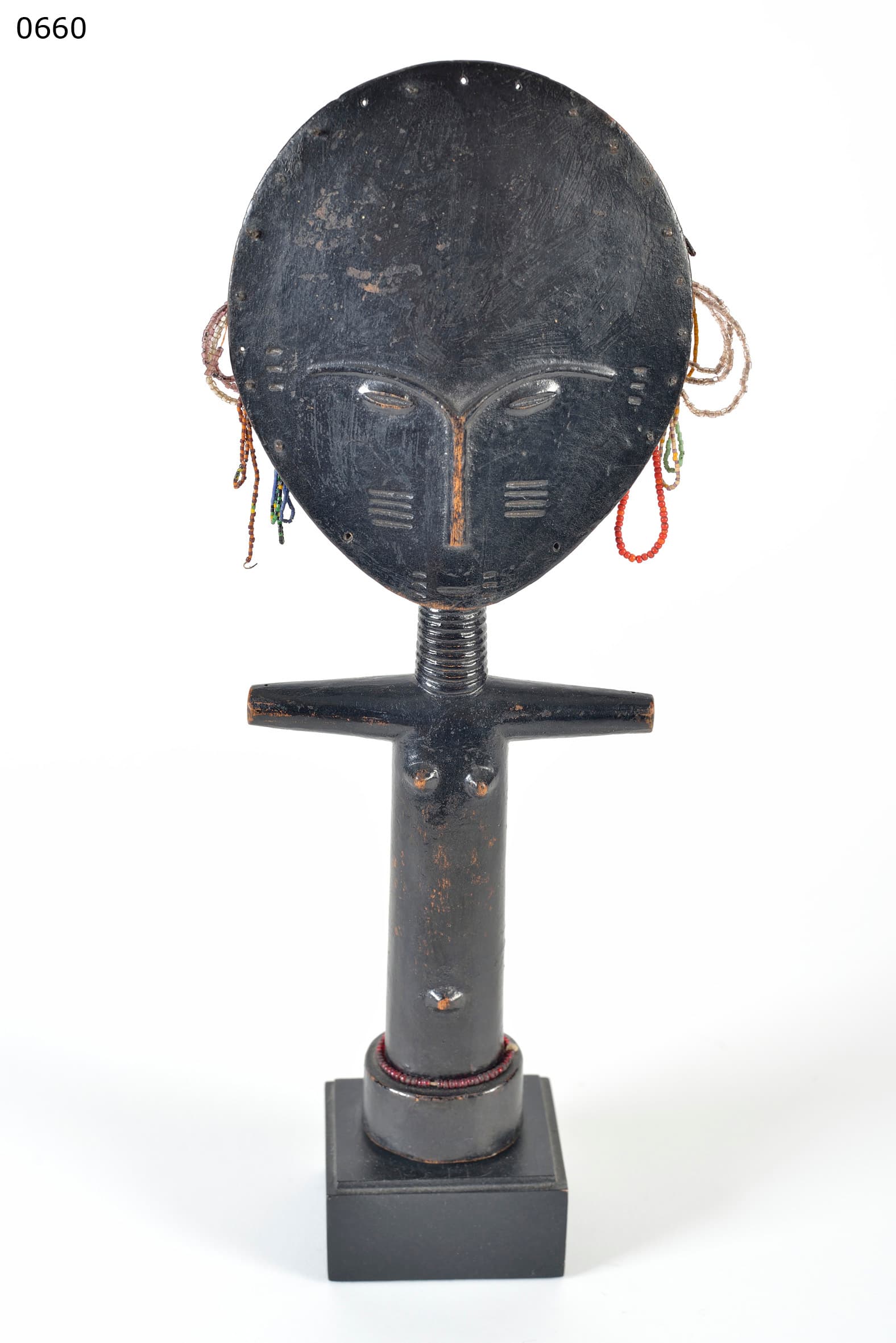
Akua-ba Fruchtbarkeitspuppe (Asante-Scheibenkopfvariante)

Fruchtbarkeitspuppe (AKUABA)
