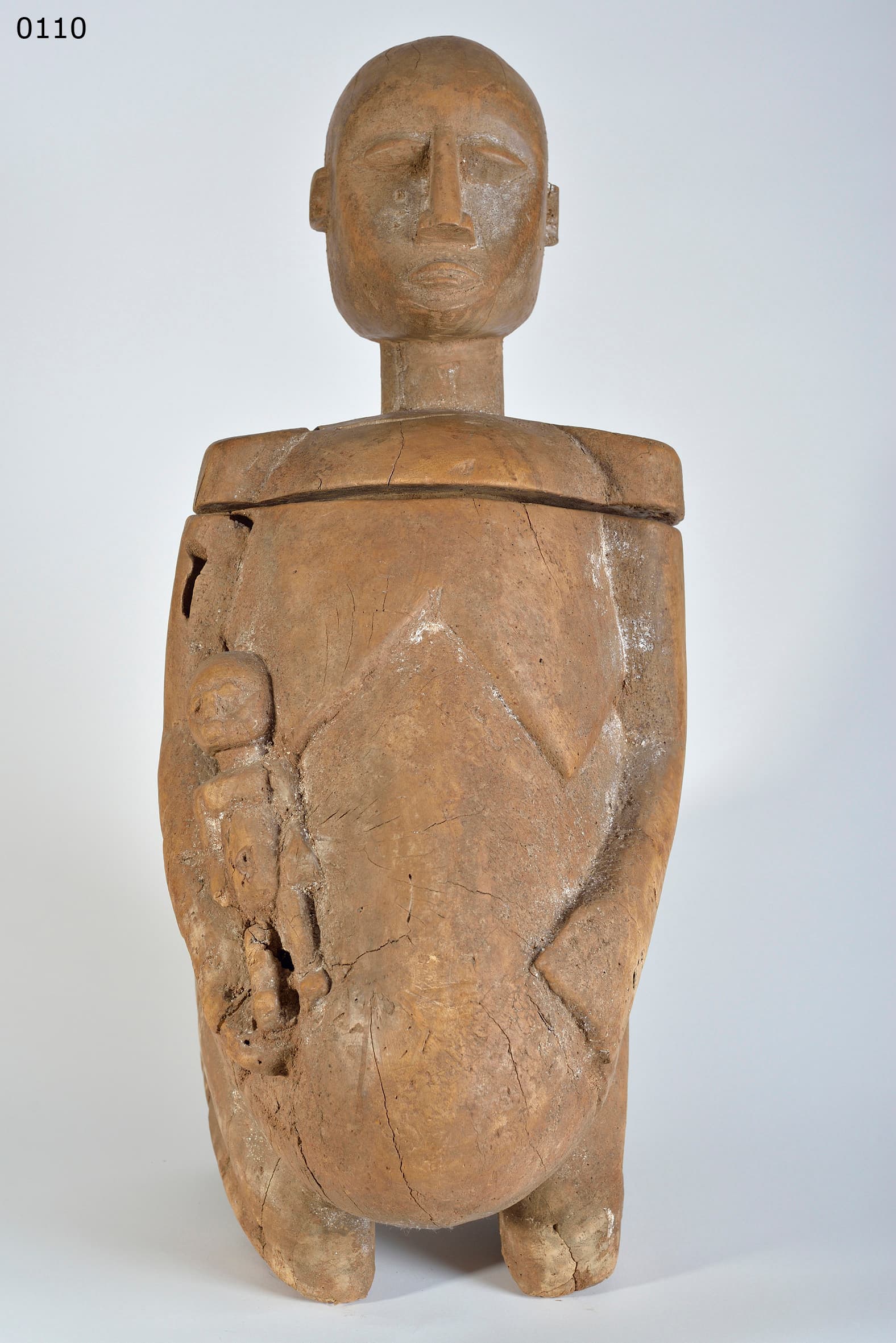
Diese robuste, stark abstrahierte Holzfigur steht mit dicken, gespreizten Beinen und stark angewinkelten Armen, die die Brust umklammern. Der blockhafte, stilisierte Kopf weist eine feine, gewölbte Stirn auf. Das dunkle Holz ist stark ausgetrocknet und weist tiefe Altersrisse und eine krustige, erdige Patina auf.
1. Ästhetischer Stil und regionale Eigenheiten
Dieses Stück ist eine klassische Darstellung der straffen, architektonischen Geometrie, die für die Schnitzerei von Lobi Bateba charakteristisch ist. Der Bildhauer hat den menschlichen Körper als einen unnachgiebigen, spannungsgeladenen Block dargestellt. Die hervorstechende Haltung - die Arme eng an der Brust angewinkelt oder den Unterleib umklammernd - ist eine spezifische ikonografische Haltung der Lobi, die mit Trauer, zurückgehaltener Energie oder der Bewahrung esoterischer Geheimnisse assoziiert wird. Die Figur strahlt eine stoische, grüblerische Kraft aus, ganz ohne zarten Naturalismus oder dekorative Raffinesse.
2. Rituelle Funktion und Geheimbundkontext
Es handelt sich um eine aktive Schreinfigur, die auf direkten Befehl eines thila (unsichtbarer Naturgeist) durch einen Wahrsager geschaffen wurde. Diese spezielle Bateba-Haltung, die im dunklen, dichten thil-du (Schreinraum) eines Lobi-Geländes platziert wird, wird oft als Schutzwächter interpretiert. Sie hat die Aufgabe, bösartige Hexen abzuwehren, Krankheiten, die für die Familie bestimmt sind, zu absorbieren und Wohlstand zu bringen. Die starre, geschlossene Haltung signalisiert visuell seine undurchdringliche Verteidigung gegen unsichtbare spirituelle Angriffe.
3. Physische Patina und Altersnachweis
Der physische Verfall dieser Statue bestätigt ein jahrzehntelanges aktives, traditionelles Schreinleben. Das dichte Tropenholz ist vollständig ausgetrocknet, was zu einem stark oxidierten Kern mit schweren, natürlichen Altersrissen führt, die sich durch den Rumpf und die Beine ziehen. Die Oberfläche ist stark verkrustet mit einer dicken, brüchigen Schicht aus getrockneten Opferflüssigkeiten, Ruß und angesammeltem sahelischen Staub, der die ursprünglichen Schnitzspuren aufgeweicht und verwischt hat, was von einer intensiven rituellen Nutzung in der ersten Hälfte des 20.
Zusammenfassung
Dieser Lobi Bateba ist ein beeindruckendes Beispiel für die architektonische Schnitzkunst der Burkinabäume und zeugt von roher physischer Spannung und unerschütterlicher spiritueller Verteidigung. Seine starre, kommunikative Haltung und seine tief verkrustete, ausgetrocknete Patina machen ihn zu einem der wichtigsten Artefakte des Schreinschutzes.
KI-unterstützt erstellt aus Sammlungsgutachten, Objektfotografie und eigener Recherche, redaktionell geprüft. Fehler sind möglich — Hinweise darauf sind uns willkommen. Zum Verfahren →
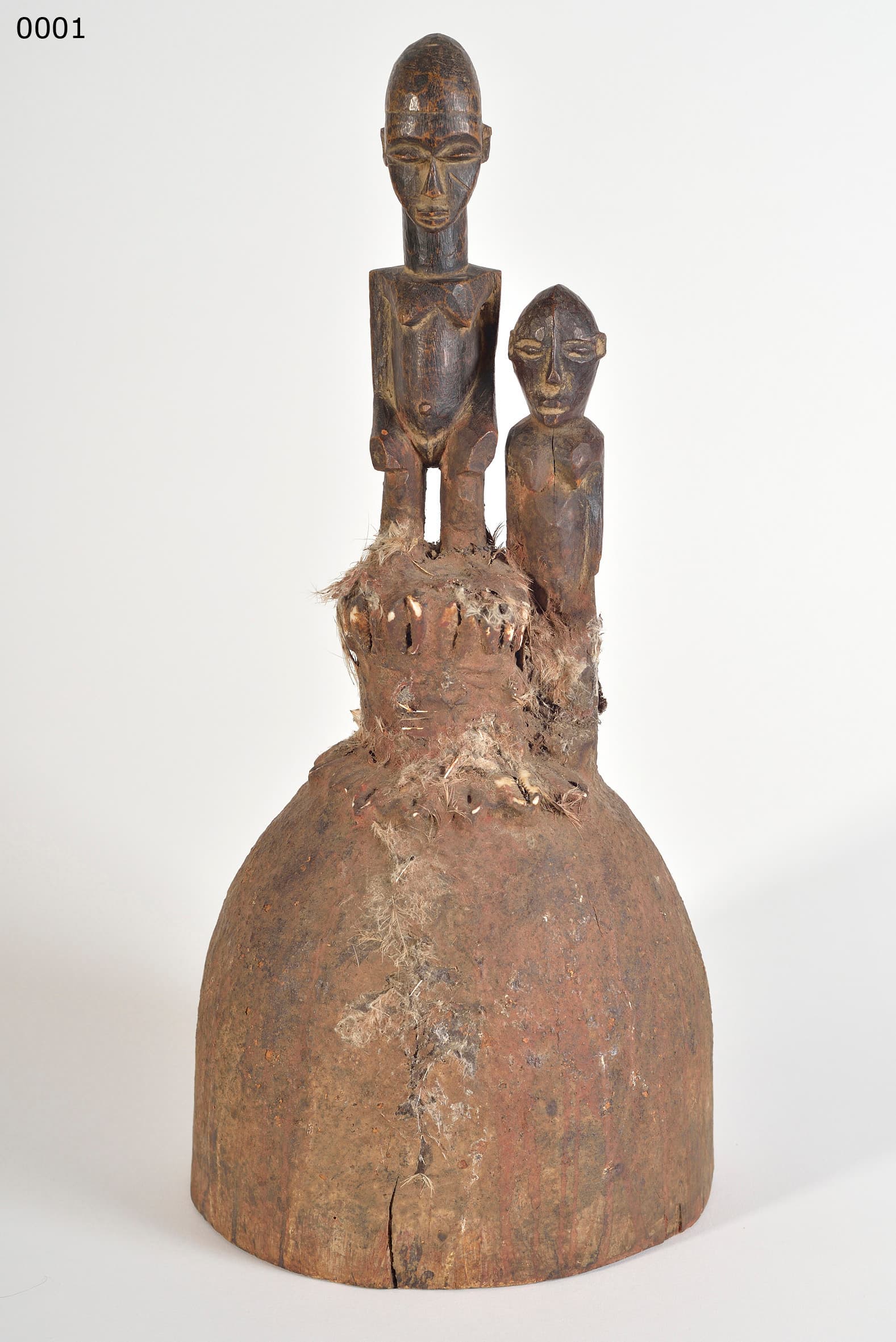
Schreinaltar mit Ehepaar BATEKE
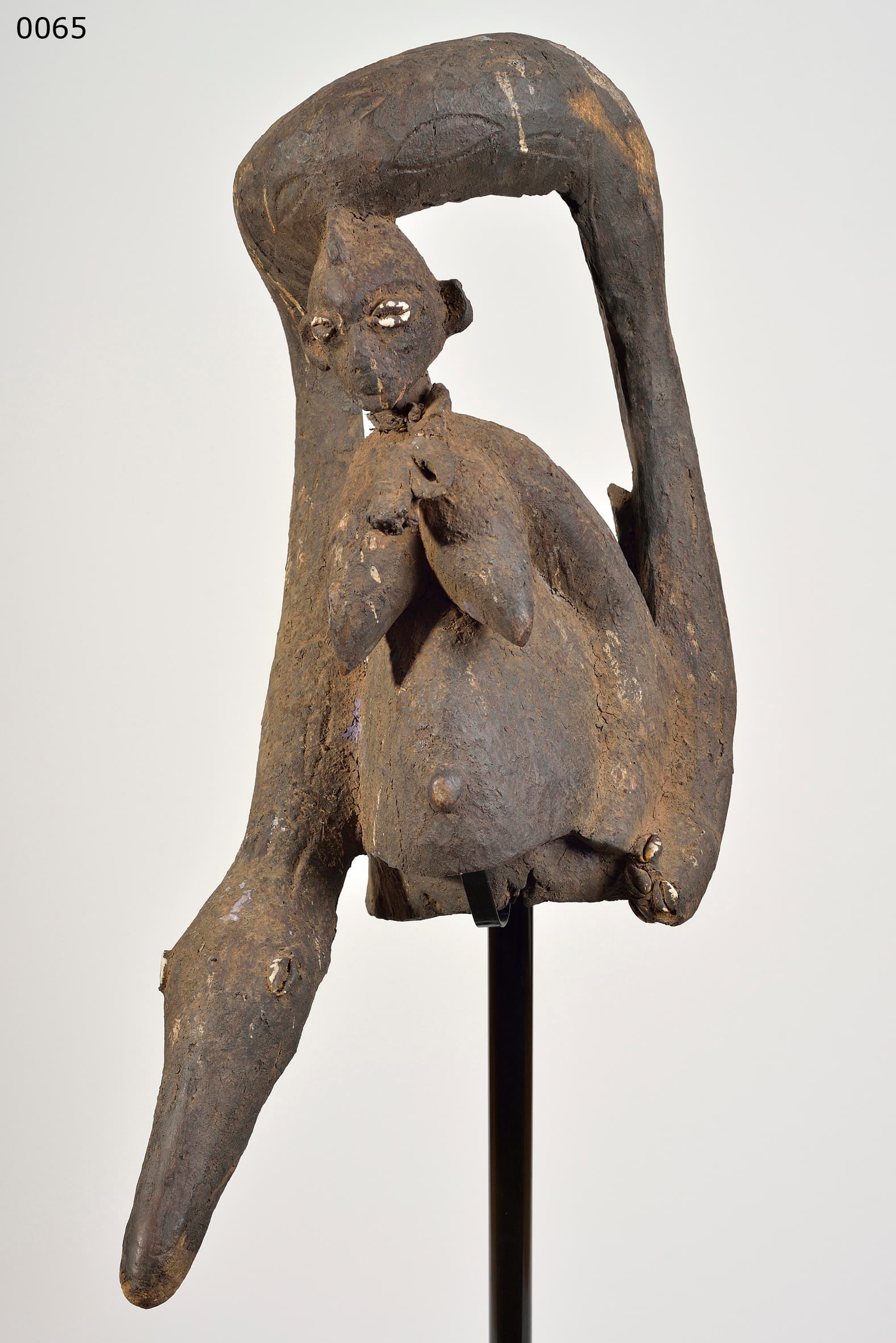
Seltene Kopfhaubenmaske
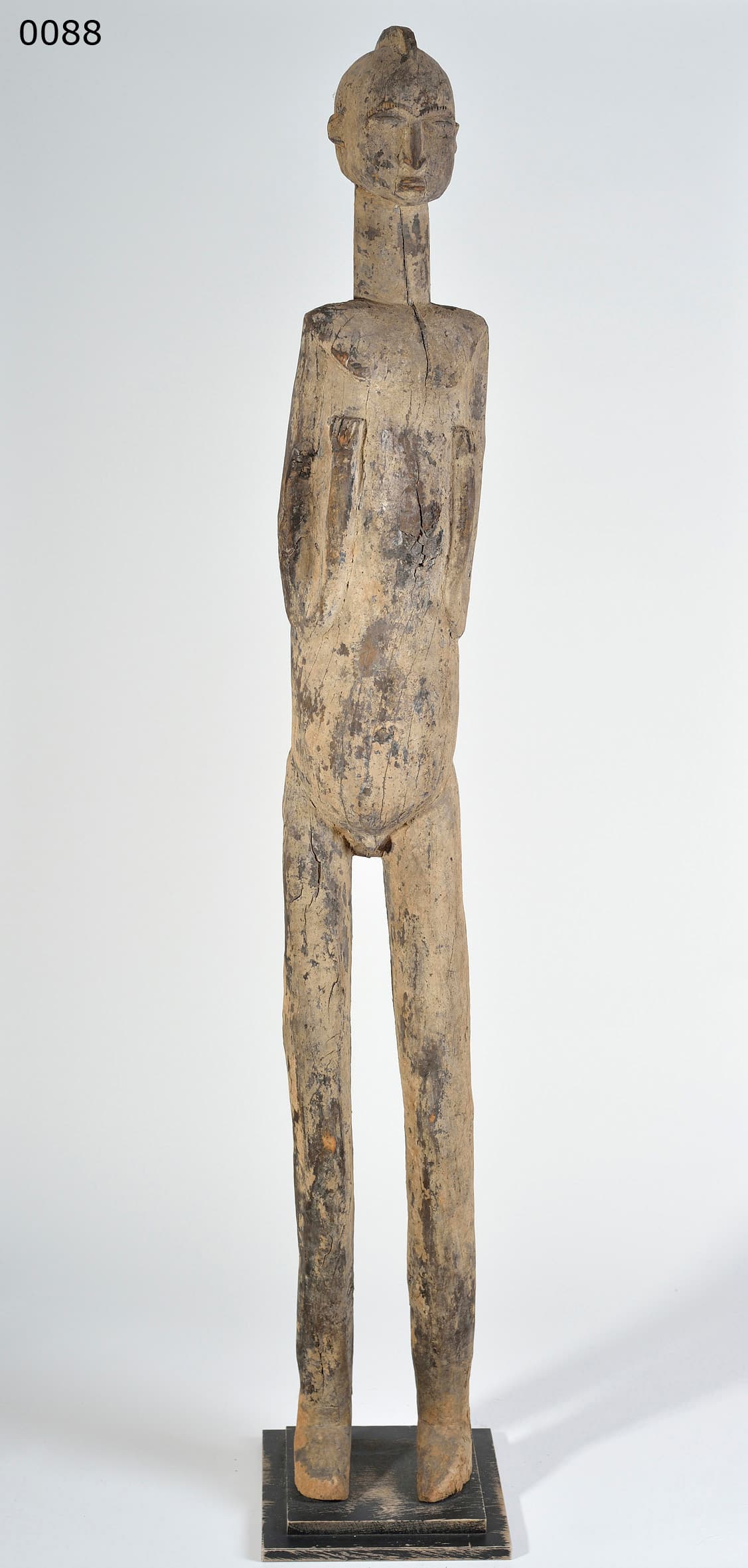
Schreinfigur, die einen BATEBA-Geist darstellt (ungewöhnlich groß, selten)