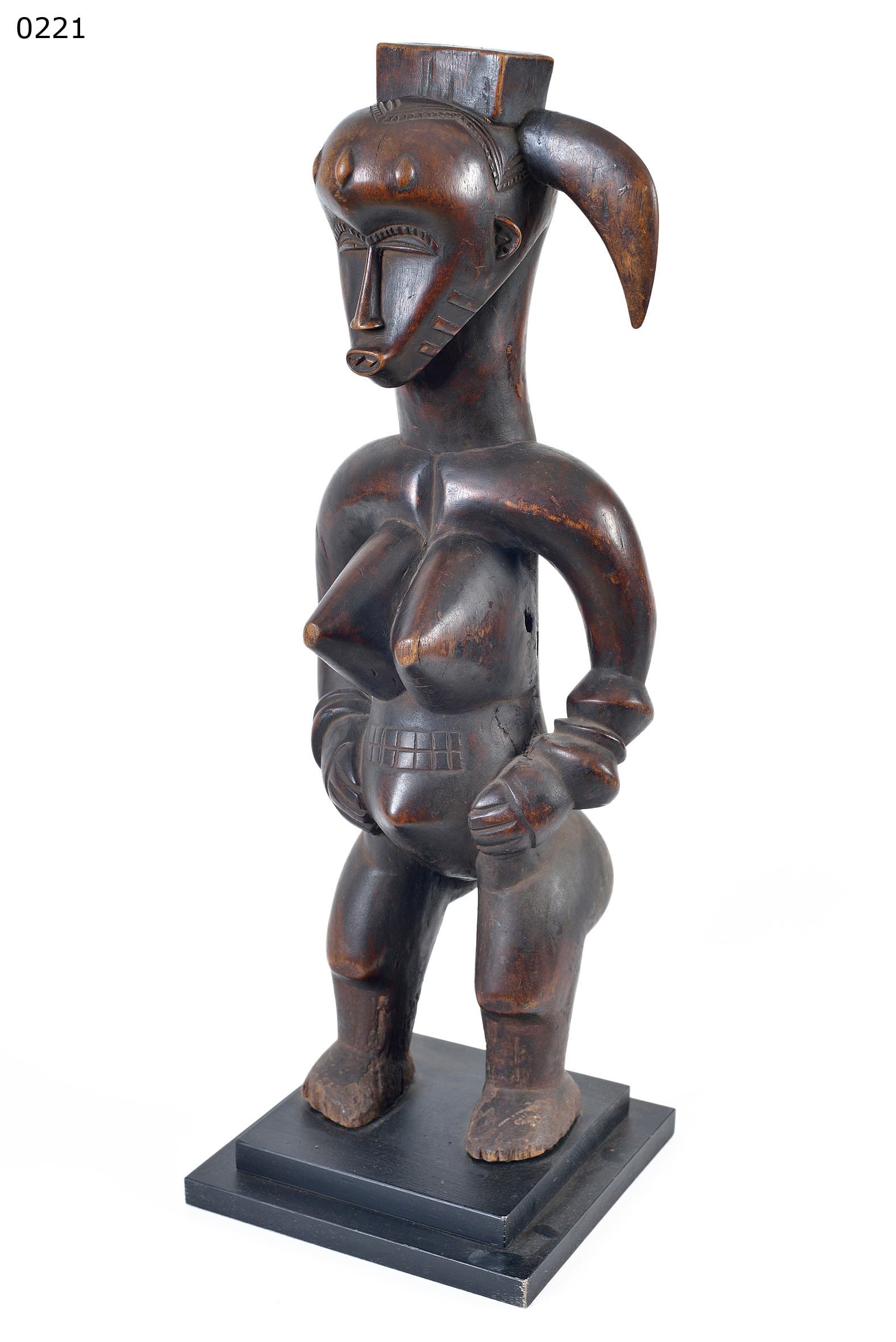
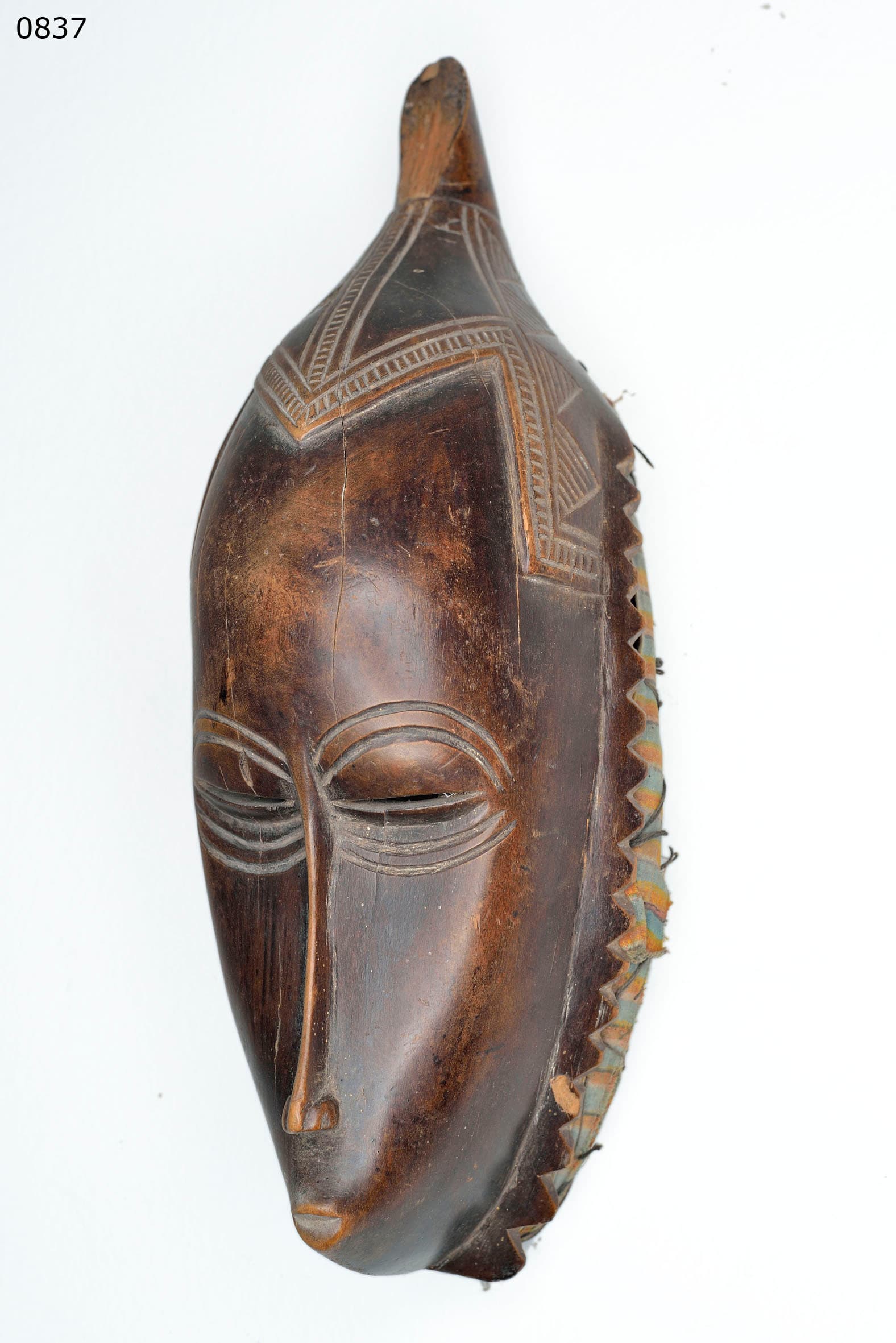
Ein elegant gewölbter Holzstab, der in einem fein geschnitzten, mit roten und weißen Pigmenten bemalten Elefantenkopf endet. Der lange, geschwungene Rüssel, die markanten Stoßzähne und die in der Nähe des Sockels eingelassenen Kaurimuscheln zeichnen ihn aus.
1. Ästhetischer Stil und regionale Merkmale
Die Guro sind für ihren raffinierten, fließenden Schnitzstil bekannt, der in diesem Stab anschaulich zum Ausdruck kommt. Der Künstler hat die natürliche Krümmung des hölzernen Stiels harmonisch mit dem verlängerten Rüssel des Elefanten verbunden und so eine dynamische, geschwungene Linie geschaffen. Die Verwendung von roter und weißer Polychromie hebt die Schnitzerei hervor und verleiht der zoomorphen Form Lebendigkeit. Während bei vielen westafrikanischen Stäben das Endstück als separates skulpturales Element auf einem allgemeinen Schaft angebracht wird, sind bei Guro Endstück und Schaft zu einer einzigen, durchgehenden Geste verschmolzen.
2. Rituelle Funktion und der Geheimbund der Jäger
In den Waldregionen der Elfenbeinküste gilt der Elefant traditionell als ein bedeutendes Symbol für ungezähmte Kraft und Buschintelligenz. Stäbe wie dieser wurden von hochrangigen Mitgliedern der Geheimbünde der Jäger getragen. Der Stab fungierte im rituellen Kontext als Medium, das dem Jäger helfen sollte, die Kraft des Elefanten zu kanalisieren, um den Erfolg bei der Jagd und den Schutz vor den Geistern der Wildnis zu unterstützen. Die Autorität der Jägergesellschaft ging über die eigentliche Jagd hinaus - ihre Mitglieder kümmerten sich im weiteren Sinne um die Vermittlung von Buschgeistern, was den Elefanten-Finialstab sowohl zu einem Jagdinstrument als auch zu einem Stück soziopolitischer Inszenierung machte.
3. Physische Patina und Altersnachweis
Die eingebetteten Kaurimuscheln - universelle Symbole für Reichtum und göttliche Kommunikation - erheben den Stab von einem bloßen Werkzeug zu einem rituellen Gegenstand. Das Fortbestehen der zerbrechlichen einheimischen Pigmente in Verbindung mit einer dunklen, bearbeiteten Patina entlang des Schafts spricht für seine aktive zeremonielle Verwendung, die sich plausibel in die erste Hälfte des 20. Jahrhunderts einordnen lässt. Das Überleben der Pigmente auf diesem Objekt kann als chronologischer Hinweis gedeutet werden: Aufgetragene Pigmente nutzen sich normalerweise innerhalb weniger Jahrzehnte auf aktiv genutzten Stäben ab, sodass die verbliebenen Spuren auf eine mehrschichtige Repigmentierung über mehrere rituelle Zyklen hinweg hindeuten.
Zusammenfassung
Dieser Stab ist ein bemerkenswertes Beispiel für die zoomorphe Schnitzerei der Guro und verbindet auf elegante Weise eine fließende Ästhetik mit der Symbolik der Jägergesellschaft. Die Beibehaltung der Polychromie und der Kaurimuscheln stützt die Zuschreibung als authentisches Objekt von hohem rituellen Status.
KI-unterstützt erstellt aus Sammlungsgutachten, Objektfotografie und eigener Recherche, redaktionell geprüft. Fehler sind möglich — Hinweise darauf sind uns willkommen. Zum Verfahren →